
Natural remedies for skin
Direct answer
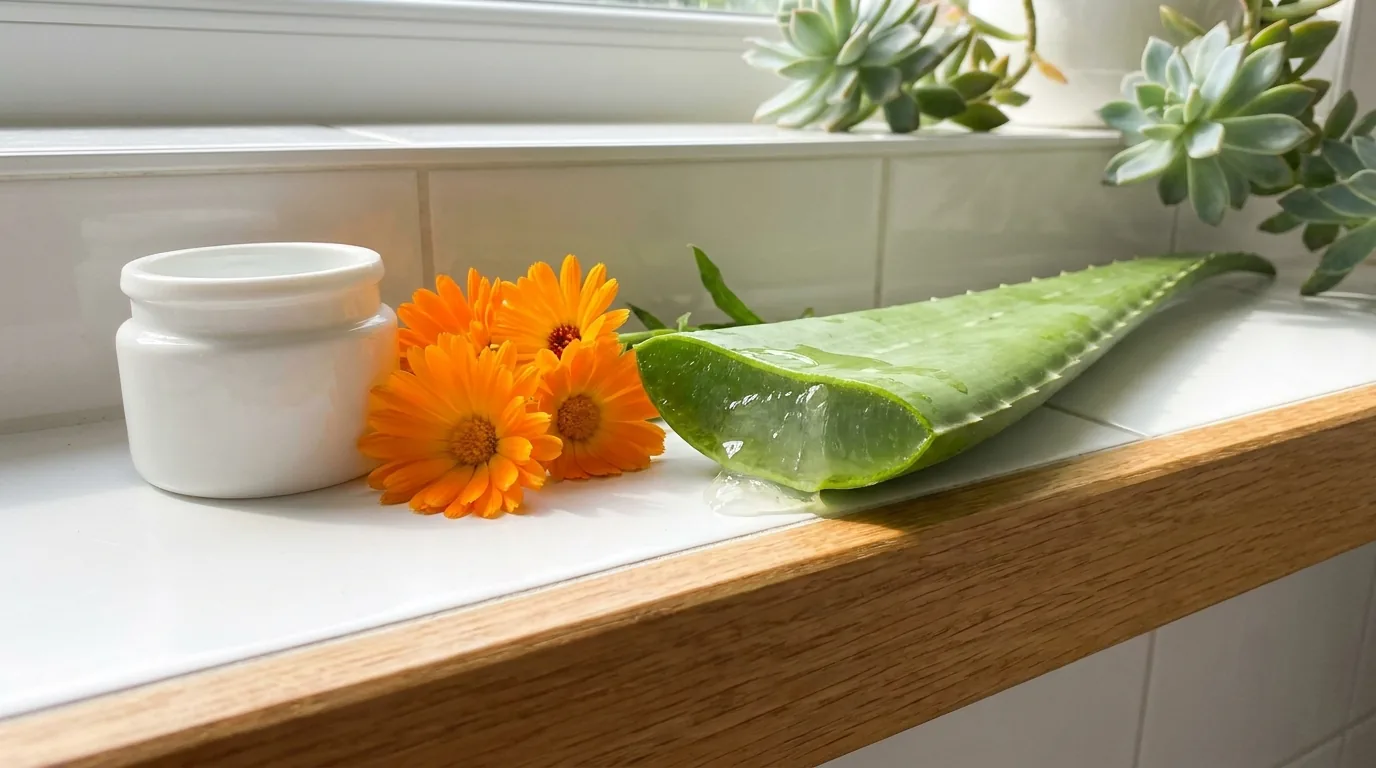
Aloe vera gel for minor second-degree burns has the firmest evidence here (Moderate, 3), healing them about 4 days sooner, and nine other options also reach Moderate (3), each for one specific use. Nearly everything else in the table is rated 1 or 2. The caution that matters most is allergy and irritation: stop anything that stings or makes the skin redder.
Besides aloe gel for burns, the Moderate (3) options are 5% tea tree oil for mild to moderate acne, topical vitamin C for photoageing, hyaluronic acid cream for skin hydration, and alpha hydroxy acids (glycolic or lactic acid, 5% to 12% creams) for skin texture and photoageing, with professional glycolic peels also rated 3 for acne.
Also rated Moderate (3): glycerin creams (about 20%) for dry skin, virgin coconut oil for dry skin and mild eczema, dexpanthenol (vitamin B5) cream for skin barrier repair, minor wounds and nappy rash, and zinc oxide or titanium dioxide mineral sunscreens (up to 25%) for UV protection.
None is as firm as the burns evidence. The sunscreen rating rests on FDA's 2019 proposed rule plus one trial of daily broad-spectrum sunscreen of unspecified filter (24% less skin ageing). The dexpanthenol reviews are narrative and manufacturer-associated. The AHA trials are small and short (the peel trials very low to moderate quality, and none tested a home product for acne), and in one trial glycerol alone did not differ from its cream base.
Of the rest, peptide creams and sandalwood oil reach Limited (2) on small, manufacturer-linked or open-label studies. The popular oils (argan, olive, sunflower, sweet almond, shea, rosehip, avocado, grapeseed, apricot kernel, cocoa butter, beeswax, castor) rest on small, short or no human trials.
So do carrot seed, raspberry seed, lemon and neroli oils, strawberry extract, silk amino acids, zinc ricinoleate deodorant, bentonite and kaolin clay, oral collagen, baking soda, citric acid, sea salt baths, lemongrass oil and CoQ10 cream. Treat all of these as pleasant moisturisers, masks or fragrances rather than treatments.
No plant oil is a natural sunscreen: carrot seed and raspberry seed oil, often sold with an SPF of 28 to 50, measured about SPF 0.1 to 2.6 in tests.
Beyond stopping anything that irritates: use sunscreen with AHAs and for a week after, keep coconut oil off acne-prone facial skin, keep baking soda off your face, keep cold-pressed lemon oil off skin before sun, and never swallow tea tree oil or eat raw apricot kernels.
Compare the options
Of the 51 remedies for skin we have rated, 10 have Moderate or Strong evidence for this use (none Strong). See our evidence report.
Click a column heading to sort.
| Rated for | Typical form & use | Main caution | |||
|---|---|---|---|---|---|
| Aloe Vera Aloe barbadensis (leaf gel and latex) | Moderate | GEL on skin: second-degree burns | Inner-leaf gel, applied to skin | Never swallow the latex or whole-leaf extract | About a week |
| Alpha hydroxy acids (glycolic, lactic) Glycolic, lactic, malic, citric acids | Moderate | Photoageing and skin texture, daily cream or lotion | Cream or lotion, 5–12% glycolic/lactic | Raises sunburn risk; use sunscreen and for a week after | 4+ weeks |
| Coconut oil Cocos nucifera (fruit oil) | Moderate | Dry skin and mild eczema | Virgin coconut oil, applied to skin | Avoid on acne-prone or oily facial skin | 2 weeks |
| Glycerin (glycerol) Glycerol (E 422), a polyol humectant | Moderate | Dry skin and atopic dermatitis dryness, in creams | Cream or lotion, about 20% glycerol | Cosmetic use judged safe; slush drinks harm under-7s | About a week |
| Hyaluronic acid Hyaluronan (glycosaminoglycan) | Moderate | Skin hydration and elasticity, topical | 0.1% cream or serum, twice daily | Fillers can cause blindness; use a licensed provider | 4+ weeks |
| Tea tree oil Melaleuca alternifolia (leaf oil) | Moderate | Mild to moderate acne | 5% gel or shampoo, applied to skin | Poisonous if swallowed; can cause contact allergy | 4+ weeks |
| Titanium dioxide Titanium dioxide (TiO2, mineral) | Moderate | Sunscreen (broad-spectrum UV filter) | Mineral sunscreen, up to 25% TiO2 | Avoid spray and powder forms that can be inhaled | Same night |
| Vitamin B5 (pantothenic acid) Pantothenic acid; dexpanthenol (topical) | Moderate | Skin barrier repair and dryness, topical dexpanthenol | Dexpanthenol 5% cream, applied to skin | Stop if it irritates broken or sensitive skin | About a week |
| Vitamin C Ascorbic acid (water-soluble vitamin) | Moderate | Photoageing and hyperpigmentation, topical | 5% cream or 5–20% serum | Stinging, redness on broken or sensitive skin | 4+ weeks |
| Zinc oxide Zinc oxide (ZnO, mineral) | Moderate | Sunscreen (broad-spectrum UV filter) | Mineral sunscreen, up to 25% zinc oxide | Sunscreen alone is not enough; reapply every 2 hours | 2–3 days |
| Argan oil Argania spinosa (kernel oil) | Limited | Skin elasticity and hydration in postmenopausal women | 25 mL a day eaten, or applied nightly | Rare contact allergy; anaphylaxis reported | 4+ weeks |
| Avocado oil Persea americana (fruit oil) | Limited | Plaque psoriasis (B12 cream containing avocado oil) | Vitamin B12 cream containing the oil | Latex allergy: avocado often cross-reacts | 4+ weeks |
| Bentonite clay Montmorillonite-rich volcanic clay | Limited | Oily and acne-prone skin (mask) | Face mask, twice weekly (formulated) | Keep out of eyes; don't breathe in the dry powder | 4+ weeks |
| Black seed oil Nigella sativa (seed oil) | Limited | Hand eczema, acne and vitiligo (on the skin) | Oil, ointment or gel, twice daily | Stop if a rash appears; blistering reactions reported | 4+ weeks |
| Calendula Calendula officinalis (flower) | Limited | Minor skin inflammation and wounds | Ointment or cream, 2–10% flower extract | Avoid if allergic to daisy-family plants | About a week |
| Centella (gotu kola) Centella asiatica (aerial parts) | Limited | Preventing or softening scars (topical) | Cream, about 1% extract | Allergy to celery, carrot, parsley-family plants | 4+ weeks |
| Collagen Hydrolysed collagen (cattle, fish) | Limited | Skin hydration and elasticity, oral peptides | Oral hydrolysed peptides (dose varies) | Fish or bovine allergy: check the source | 4+ weeks |
| Frankincense (Boswellia) Boswellia spp. (resin oil or extract) | Limited | Plaque psoriasis (cream containing frankincense oil and other ingredients) | Cream with frankincense oil and extracts | Rash in 2 of 48 trial users; never swallow | 4+ weeks |
| Grapeseed oil Vitis vinifera (seed oil) | Limited | Facial skin (oil-based gel) | Oil-loaded gel, not the bottled oil | Little human evidence; not the same as the extract | 2 weeks |
| Jojoba oil Simmondsia chinensis (seed wax ester) | Limited | Mild acne and blemish-prone skin (clay mask) | Clay and jojoba mask, 2–3 times a week | For skin only; patch test first, allergy is rare | 4+ weeks |
| Lemon Balm Melissa officinalis (leaf) | Limited | Cold sores (cream applied to skin) | Cream, 1% extract, 4 times daily | Pregnancy and breastfeeding: safety not established | About a week |
| Lemongrass Cymbopogon citratus (leaf and oil) | Limited | Fungal skin and mouth infections (pityriasis versicolor, oral thrush) | Shampoo and cream, 1.25 µL/mL oil | Common skin sensitiser; dilute and patch-test | About a week |
| Oats Avena sativa (grain) | Limited | Eczema (atopic dermatitis) itch and severity | Colloidal oatmeal cream, 1% | Under 2s: irritant reactions; stop if it stings | 4+ weeks |
| Oregano oil Origanum vulgare (leaf and flower oil) | Limited | Healing small surgical wounds (ointment) | 3% oregano extract ointment | Irritant: dilute on skin, and never give to children | 2 weeks |
| Peptides (in skincare) Short amino-acid chains (cosmetic) | Limited | Fine lines and wrinkles, signal peptides (palmitoyl pentapeptide) | Moisturiser with 3 ppm pentapeptide | Skincare only; injected "research" peptides are risky | 4+ weeks |
| Propolis Bee propolis (resin from beehives) | Limited | Cold sores (herpes labialis) | Lip cream, 0.5% special extract | A known contact allergen; can cause a rash | 2–3 days |
| Rosehip oil Rosa canina and relatives (seed oil) | Limited | Post-surgical scars | Seed oil, twice daily on scar | Start after stitches are out; allergy reported | 4+ weeks |
| Sandalwood oil Santalum album (heartwood essential oil) | Limited | Eczema (atopic dermatitis) in children | Bath, cream and cleanser with the oil | Often adulterated; can cause skin allergy | 2 weeks |
| Sea salt Sodium chloride from evaporated seawater | Limited | Dead Sea salt baths for psoriasis | Dead Sea salt bath, then UVB light | Irritation and itch reported; avoid broken skin | About a week |
| Shea butter Vitellaria paradoxa (nut fat) | Limited | Skin protection and dry skin (emollient) | Shea butter, applied to skin | Tree nut allergy: low risk, ask your allergist first | 2 weeks |
| Sunflower oil Helianthus annuus (seed oil) | Limited | Adult dry skin and skin barrier | Oil, six drops twice daily in the trial | Ask a clinician before using on preterm babies | 4+ weeks |
| Sweet almond oil Prunus dulcis (seed oil) | Limited | Dry skin and hand dermatitis | Oil or cream, applied to skin | Avoid with tree-nut allergy, especially on eczema | 2 weeks |
| Vitamin E Tocopherols (fat-soluble vitamin) | Limited | Scars, topical | Vitamin E ointment, twice daily | Contact dermatitis reported; patch test first | 4+ weeks |
| Witch hazel Hamamelis virginiana (leaf, bark, twig) | Limited | Minor skin inflammation and irritation | Distillate cream/ointment, 5–30% | Known allergy: contact dermatitis is reported | About a week |
| Apricot kernel (and apricot kernel oil) Prunus armeniaca (kernel, kernel oil) | Traditional | Skin (cosmetic oil) | Cosmetic oil, applied to skin | Don't swallow it; raw kernels release cyanide | 4+ weeks |
| Baking soda (sodium bicarbonate) Sodium bicarbonate (mineral salt) | Traditional | Skin, face and baths | Face paste: not recommended | Raises skin pH, which can harm the skin barrier | Same night |
| Beeswax Cera alba / cera flava (bee wax) | Traditional | Dry skin and lips (occlusive) | Beeswax in balms, applied to skin | Contact allergy possible, mostly on the lips | 2–3 days |
| Carrot seed oil Daucus carota (seed essential oil) | Traditional | Skin care and anti-ageing | Essential oil, diluted; no studied dose | Gives no sun protection; avoid in pregnancy | 4+ weeks |
| Castor oil Ricinus communis (seed oil) | Traditional | Dry skin and general moisturising | Oil on skin; no studied dose | Patch test first; keep out of eyes | Same night |
| Citric acid Organic acid (fermentation or citrus) | Traditional | Cosmetic pH adjuster and skin exfoliation (AHA-type use) | Cosmetic pH adjuster; dose per product | Acids can irritate skin; no trial as exfoliant | 4+ weeks |
| Cocoa butter Theobroma cacao (seed fat) | Traditional | Dry skin (as an emollient) | Cocoa butter, applied to skin | Can clog pores; does not prevent stretch marks | 2 weeks |
| Coenzyme Q10 Ubiquinone / ubiquinol (body coenzyme) | Traditional | Wrinkles and skin ageing, topical | Topical cream; product-specific | Pregnancy and breastfeeding: no safety data | 4+ weeks |
| Kaolin clay Hydrated aluminium silicate (clay) | Traditional | Face and skin masks | Clay and water mask; not established | Don't breathe in the dry clay dust | Same night |
| Lemon essential oil Citrus limon (peel essential oil) | Traditional | Skin care | Diluted on skin, 2% maximum (industry) | Cold-pressed oil on skin burns in sunlight | 2–3 days |
| Neroli oil Citrus aurantium (bitter orange blossom) | Traditional | Skin | Diluted in carrier oil; not studied | Undiluted oil can sensitise skin; do not swallow | Same night |
| Olive oil Olea europaea (fruit oil) | Traditional | Dry skin and infant massage | Skin oil: not recommended | Not for baby or eczema-prone skin; not in a perforated ear | 4+ weeks |
| Red raspberry seed oil Rubus idaeus (seed oil) | Traditional | Sun protection (the SPF claim) | Cold-pressed oil, applied to skin | Not a sunscreen; the SPF 28–50 claim is wrong | 2 weeks |
| Silk amino acids (silk protein) Silkworm (Bombyx mori) silk protein | Traditional | Hair and skin conditioning in cosmetic products | Hydrolysed silk in skin products | Avoid if you react to silk or have silk-triggered asthma | 2 weeks |
| Slippery elm Ulmus rubra (inner bark) | Traditional | Skin irritation and rash (applied to skin) | Powder or paste applied to skin | No proven dose; safety in pregnancy unknown | About a week |
| Strawberry (fruit and extract) Fragaria x ananassa (fruit) | Traditional | Skin and hair products (extract) | Extract in skin or hair products | Strawberry allergy or oral allergy syndrome | 4+ weeks |
| Zinc ricinoleate Zinc salt of ricinoleic acid (castor) | Traditional | Underarm odour control (deodorant) | Deodorant spray or stick, up to 2.3% | Can cause contact allergy in some users | Same night |
- Rated for
- GEL on skin: second-degree burns
- Form
- Inner-leaf gel, applied to skin
- Onset
- About a week
- Rated for
- Photoageing and skin texture, daily cream or lotion
- Form
- Cream or lotion, 5–12% glycolic/lactic
- Onset
- 4+ weeks
- Rated for
- Dry skin and mild eczema
- Form
- Virgin coconut oil, applied to skin
- Onset
- 2 weeks
- Rated for
- Dry skin and atopic dermatitis dryness, in creams
- Form
- Cream or lotion, about 20% glycerol
- Onset
- About a week
- Rated for
- Skin hydration and elasticity, topical
- Form
- 0.1% cream or serum, twice daily
- Onset
- 4+ weeks
- Rated for
- Mild to moderate acne
- Form
- 5% gel or shampoo, applied to skin
- Onset
- 4+ weeks
- Rated for
- Sunscreen (broad-spectrum UV filter)
- Form
- Mineral sunscreen, up to 25% TiO2
- Onset
- Same night
- Rated for
- Skin barrier repair and dryness, topical dexpanthenol
- Form
- Dexpanthenol 5% cream, applied to skin
- Onset
- About a week
- Rated for
- Photoageing and hyperpigmentation, topical
- Form
- 5% cream or 5–20% serum
- Onset
- 4+ weeks
- Rated for
- Sunscreen (broad-spectrum UV filter)
- Form
- Mineral sunscreen, up to 25% zinc oxide
- Onset
- 2–3 days
- Rated for
- Skin elasticity and hydration in postmenopausal women
- Form
- 25 mL a day eaten, or applied nightly
- Onset
- 4+ weeks
- Rated for
- Plaque psoriasis (B12 cream containing avocado oil)
- Form
- Vitamin B12 cream containing the oil
- Onset
- 4+ weeks
- Rated for
- Oily and acne-prone skin (mask)
- Form
- Face mask, twice weekly (formulated)
- Onset
- 4+ weeks
- Rated for
- Hand eczema, acne and vitiligo (on the skin)
- Form
- Oil, ointment or gel, twice daily
- Onset
- 4+ weeks
- Rated for
- Minor skin inflammation and wounds
- Form
- Ointment or cream, 2–10% flower extract
- Onset
- About a week
- Rated for
- Preventing or softening scars (topical)
- Form
- Cream, about 1% extract
- Onset
- 4+ weeks
- Rated for
- Skin hydration and elasticity, oral peptides
- Form
- Oral hydrolysed peptides (dose varies)
- Onset
- 4+ weeks
- Rated for
- Plaque psoriasis (cream containing frankincense oil and other ingredients)
- Form
- Cream with frankincense oil and extracts
- Onset
- 4+ weeks
- Rated for
- Facial skin (oil-based gel)
- Form
- Oil-loaded gel, not the bottled oil
- Onset
- 2 weeks
- Rated for
- Mild acne and blemish-prone skin (clay mask)
- Form
- Clay and jojoba mask, 2–3 times a week
- Onset
- 4+ weeks
- Rated for
- Cold sores (cream applied to skin)
- Form
- Cream, 1% extract, 4 times daily
- Onset
- About a week
- Rated for
- Fungal skin and mouth infections (pityriasis versicolor, oral thrush)
- Form
- Shampoo and cream, 1.25 µL/mL oil
- Onset
- About a week
- Rated for
- Eczema (atopic dermatitis) itch and severity
- Form
- Colloidal oatmeal cream, 1%
- Onset
- 4+ weeks
- Rated for
- Healing small surgical wounds (ointment)
- Form
- 3% oregano extract ointment
- Onset
- 2 weeks
- Rated for
- Fine lines and wrinkles, signal peptides (palmitoyl pentapeptide)
- Form
- Moisturiser with 3 ppm pentapeptide
- Onset
- 4+ weeks
- Rated for
- Cold sores (herpes labialis)
- Form
- Lip cream, 0.5% special extract
- Onset
- 2–3 days
- Rated for
- Post-surgical scars
- Form
- Seed oil, twice daily on scar
- Onset
- 4+ weeks
- Rated for
- Eczema (atopic dermatitis) in children
- Form
- Bath, cream and cleanser with the oil
- Onset
- 2 weeks
- Rated for
- Dead Sea salt baths for psoriasis
- Form
- Dead Sea salt bath, then UVB light
- Onset
- About a week
- Rated for
- Skin protection and dry skin (emollient)
- Form
- Shea butter, applied to skin
- Onset
- 2 weeks
- Rated for
- Adult dry skin and skin barrier
- Form
- Oil, six drops twice daily in the trial
- Onset
- 4+ weeks
- Rated for
- Dry skin and hand dermatitis
- Form
- Oil or cream, applied to skin
- Onset
- 2 weeks
- Rated for
- Scars, topical
- Form
- Vitamin E ointment, twice daily
- Onset
- 4+ weeks
- Rated for
- Minor skin inflammation and irritation
- Form
- Distillate cream/ointment, 5–30%
- Onset
- About a week
- Rated for
- Skin (cosmetic oil)
- Form
- Cosmetic oil, applied to skin
- Onset
- 4+ weeks
- Rated for
- Skin, face and baths
- Form
- Face paste: not recommended
- Onset
- Same night
- Rated for
- Dry skin and lips (occlusive)
- Form
- Beeswax in balms, applied to skin
- Onset
- 2–3 days
- Rated for
- Skin care and anti-ageing
- Form
- Essential oil, diluted; no studied dose
- Onset
- 4+ weeks
- Rated for
- Dry skin and general moisturising
- Form
- Oil on skin; no studied dose
- Onset
- Same night
- Rated for
- Cosmetic pH adjuster and skin exfoliation (AHA-type use)
- Form
- Cosmetic pH adjuster; dose per product
- Onset
- 4+ weeks
- Rated for
- Dry skin (as an emollient)
- Form
- Cocoa butter, applied to skin
- Onset
- 2 weeks
- Rated for
- Wrinkles and skin ageing, topical
- Form
- Topical cream; product-specific
- Onset
- 4+ weeks
- Rated for
- Face and skin masks
- Form
- Clay and water mask; not established
- Onset
- Same night
- Rated for
- Skin care
- Form
- Diluted on skin, 2% maximum (industry)
- Onset
- 2–3 days
- Rated for
- Skin
- Form
- Diluted in carrier oil; not studied
- Onset
- Same night
- Rated for
- Dry skin and infant massage
- Form
- Skin oil: not recommended
- Onset
- 4+ weeks
- Rated for
- Sun protection (the SPF claim)
- Form
- Cold-pressed oil, applied to skin
- Onset
- 2 weeks
- Rated for
- Hair and skin conditioning in cosmetic products
- Form
- Hydrolysed silk in skin products
- Onset
- 2 weeks
- Rated for
- Skin irritation and rash (applied to skin)
- Form
- Powder or paste applied to skin
- Onset
- About a week
- Rated for
- Skin and hair products (extract)
- Form
- Extract in skin or hair products
- Onset
- 4+ weeks
- Rated for
- Underarm odour control (deodorant)
- Form
- Deodorant spray or stick, up to 2.3%
- Onset
- Same night
Quick picks
Aloe gel on the skin is rated Moderate (3) for second-degree burns: a 2024 meta-analysis found healing 3.76 days shorter than with other topical treatments, with no rise in infection. It is Limited (2) for wounds and psoriasis, and the swallowed latex is a different, unsafe-to-take product.
Gentlest optionHyaluronic acidAs a 0.1% cream or serum, hyaluronic acid is rated Moderate (3) for skin hydration and elasticity: in 76 women aged 30 to 60, twice-daily use for 60 days beat a plain cream on the other side, though only the lower-molecular-weight creams reduced wrinkle depth. It hydrates the surface rather than filling wrinkles, and we found no trial against an ordinary moisturiser. Injected dermal fillers are a different, medical product with serious risks.
Traditional favouriteCalendulaCalendula ointment is rated Limited (2) for minor skin inflammation and wounds; the EU regulator recognises it on long-standing use alone, and the wound studies are mixed. The radiotherapy result has not held up in pooled analyses.
Key facts about skin
- Acne is the most common skin condition in the US, affecting up to 50 million Americans a year, and about 85% of people aged 12 to 24 have at least minor acne.9
- Acne affects an estimated 9.4% of people worldwide, making it the eighth most common disease. It is most common in teenagers after puberty, and boys are affected most often, particularly by severe forms.10
- Atopic eczema affects nearly 1 in 10 Americans of all ages and up to 1 in 5 children under 18.9
- Atopic eczema carries the highest disease burden of any skin condition worldwide, and the UK has the second-highest burden rate of any country, after Sweden.11
- About 3% of US adults have psoriasis, more than 7.5 million people. Rates are similar in women and men and have not changed significantly since 2003.12
- Leaving deaths aside, skin conditions were the fourth leading cause of disability worldwide in 2013.13
- See a GP if acne is not getting better with self-treatment, the spots are deep, painful or scarring, the skin looks infected, or it is affecting your mental health.14
Talk to a doctor first if…
Who should avoid
- Tea tree oil: never swallow it, never put it on skin undiluted or at 25% or stronger, and keep it out of children's reach.
- Apricot kernels: never swallow apricot kernel oil or eat raw apricot kernels; they release cyanide.
- Serious burns, wounds or radiotherapy: do not use any of these on deep, large or blistering burns, infected or worsening wounds, or skin being treated with radiotherapy without asking a clinician first.
- Pregnancy: the EU regulator advises against calendula and witch hazel, and carrot seed oil is best avoided. We found no safety data for propolis, hyaluronic acid, rosehip, grapeseed, frankincense, lemongrass oil or CoQ10.
- Alpha hydroxy acids: they raise sunburn risk, so use sunscreen during use and for a week after. They are best avoided on sensitive, broken or inflamed skin.
- Alpha hydroxy acid home peels, and products stronger than 10% bought online without guidance, are the main risks.
- Cold-pressed lemon oil: on skin before sun or sunbeds it can cause phototoxic burns.
- Lemon, neroli and sandalwood oils: undiluted, they can irritate or sensitise. About 1.8% of patch-tested people reacted to sandalwood, and cheap sandalwood oil is often adulterated.
- Children with eczema: use coconut oil only on the advice of the doctor treating the rash.
- Acne-prone or oily facial skin: keep coconut oil off it.
- Any new oil, butter or serum: patch test it first.
- Tree-nut allergy: avoid almond oil.
- Latex allergy: avoid avocado oil.
- Daisy-family allergy: avoid calendula.
- Propolis or beeswax allergy: avoid whichever you are allergic to.
- Fish or bovine allergy: avoid oral collagen.
- Silk or strawberry allergy: silk amino acids and strawberry extract can trigger allergy or rash in people already allergic.
- Zinc ricinoleate deodorant: it can trigger allergy or rash in people with earlier deodorant contact allergy, and it should stay off shaved or irritated skin.
- Babies and eczema-prone skin: olive oil is best skipped.
- Jojoba, castor oil, vitamin E oil, frankincense and undiluted lemongrass oil: these can also cause contact dermatitis.
- Baking soda: keep it off your face.
- Clay masks: keep them away from your eyes and don't breathe the dry powder.
- Titanium dioxide sunscreen: use it as a lotion or cream rather than a spray or powder.
- Dexpanthenol cream: stop it if it irritates broken skin.
- Skincare peptides: these are not the injected 'research' peptides, which FDA flags for immune-reaction risk.
Known interactions
- On the skin: none of the ingredients in this hub has a documented interaction when applied to the skin. The interaction warnings in their entries concern products taken by mouth.
- Oral CoQ10 and oral vitamin E: interaction warnings with blood thinners (CoQ10 and warfarin is severity 2, ask first).
- Swallowed aloe latex: may raise side-effect risk with digoxin and similar heart medicines.
- Vitamin C above 1 g a day: may weaken warfarin (severity 1, monitor).
- Swallowed kaolin: binds other medicines, so keep them 3 hours apart.
- Aloe gel, vitamin C serum, CoQ10 cream and clay masks used on the skin: these are separate matters from the products taken by mouth.
Before you reach for an ingredient
For common skin problems, ordinary care does more than any herb: regular moisturising for eczema and dry skin, and correct first aid for burns.
- For atopic eczema, the NHS advises applying an emollient at least twice a day (and continuing when the skin improves), washing with an emollient instead of soap, and avoiding triggers such as soap, detergent and heat. It advises against aqueous cream, which can irritate the skin.6
- For a burn or scald, the NHS says to hold it under cool running water for 20 minutes, within 3 hours if possible, and not to put creams, oils or butter on it. Aloe vera gel is none of those: it is a water-based gel, and in trials on second-degree burns it sped healing without raising the infection rate. Large, deep burns, or burns on the face, genitals or bottom, need A&E.7
- Plant oils are not a natural sunscreen. A 2021 study that tested vegetable oils in the lab and on volunteers found carrot seed oil at about SPF 0.1 in the lab, the five most promoted oils at SPF 1.2 to 2.8 on people, and raspberry seed oil at 0.4 in the lab and 2.6 on people; the SPF 28 to 50 figures online came from methods that were not followed properly. Use a tested sunscreen.8
Questions people ask
Do zinc oxide and titanium dioxide sunscreens work, and are they safe?
They work as UV filters, but the evidence is regulatory more than trial-based. FDA proposed in 2019 that both are generally recognised as safe and effective at up to 25% and said they stay on the skin surface. The rule was a proposal and we could not confirm a final status.
The one trial we rely on (903 adults, 4.5 years) tested daily broad-spectrum sunscreen of unspecified filter and found 24% less skin ageing.
Use a lotion or cream rather than a spray or powder you could breathe in, reapply at least every two hours, and add shade and clothing, because sunscreen alone is not enough.
Do panthenol (vitamin B5) or glycerin creams help dry skin or wounds?
Probably, for the skin barrier. In an irritation model a dexpanthenol cream repaired the barrier faster than a plain cream, and a review concludes it speeds healing of minor and post-procedure wounds, though such reviews are narrative and manufacturer-associated. We rate topical dexpanthenol Moderate (3).
Glycerin is the other Moderate (3) option for dry skin. A 20% glycerol cream improved hydration in 24 adults with atopic dermatitis against a glycerol-free placebo, and a glycerol-plus-paraffin cream beat its vehicle in 251 children. In one trial glycerol alone did not differ from its base, and the effect fades when you stop.
Use both on intact skin and stop if either irritates, and see a clinician for a nappy rash that is severe, blistered or not improving.
Do skin oils, clays, baking soda or citric acid actually work?
Mostly they moisturise or absorb oil and little more. Argan, shea, sweet almond and rosehip each rest on one small or indirect study (rated Limited, 2), olive oil reduced skin barrier integrity in 19 adults, apricot kernel oil has no human skin trial, and avocado oil and cocoa butter failed to prevent stretch marks in two placebo-controlled trials.
Virgin coconut oil is the exception, cutting eczema scores more than mineral oil in small trials in children, though not against no treatment.
A formulated clay mask lowered sebum in a 75-adult study with no comparison group and industry authors. We found no trial showing baking soda or citric acid improves skin, and baking soda raises skin pH, which can harm the barrier.
Carrot seed, raspberry seed, lemon and neroli oils have no human skin trial either, and cold-pressed lemon oil is phototoxic, so it can burn skin in sunlight.
Does tea tree oil work for acne?
Probably, modestly. A 2026 meta-analysis of 7 studies (445 people) found lower acne severity than with controls (odds ratio 0.74), and in one trial 5% tea tree oil gel cut spots about as well as 5% benzoyl peroxide lotion, more slowly but with fewer side effects.
Use it at about 5% only, because undiluted oil is more likely to cause contact allergy, and it is poisonous if swallowed.
Professional-strength glycolic acid peels also beat placebo in a systematic review of 12 trials (387 people; risk ratio 2.30 for good or excellent improvement), but the trials were of very low to moderate quality and none tested a home product.
Sources (14)
- Systematic review Huang YN, Chen KC, Wang JH, Lin YK. Effects of Aloe vera on Burn Injuries: A Systematic Review and Meta-Analysis of Randomized Controlled Trials. J Burn Care Res. 2024.
- Meta-analysis Ye Y, Lim JJ, Huang Z, Chew FT. Efficacy and Safety of Melaleuca alternifolia (Tea Tree) Oil for Acne-A Systematic Review and Meta-Analysis. Phytother Res. 2026.
- Randomised controlled trial Pavicic T, Gauglitz GG, Lersch P, et al. Efficacy of cream-based novel formulations of hyaluronic acid of different molecular weights in anti-wrinkle treatment. J Drugs Dermatol. 2011.
- Regulator proposal US Food and Drug Administration. Sunscreen Drug Products for Over-the-Counter Human Use (proposed rule). Federal Register. 2019.
- Randomised controlled trial Hughes MC, Williams GM, Baker P, Green AC. Sunscreen and prevention of skin aging: a randomized trial. Ann Intern Med. 2013.
- Clinical guidance NHS. Atopic eczema: treatment and things you can do. nhs.uk.
- Clinical guidance NHS. Burns and scalds. nhs.uk (last reviewed 31 March 2026).
- Laboratory and human study Ácsová A, Hojerová J, Janotková L, et al. The real UVB photoprotective efficacy of vegetable oils: in vitro and in vivo studies. Photochem Photobiol Sci. 2021.
- Professional body American Academy of Dermatology Association. Skin conditions by the numbers. AAD (accessed October 2026).
- Review Tan JK, Bhate K. A global perspective on the epidemiology of acne. Br J Dermatol. 2015.
- Global Burden of Disease analysis Laughter MR, Maymone MBC, Mashayekhi S, et al. The global burden of atopic dermatitis: lessons from the Global Burden of Disease Study 1990-2017. Br J Dermatol. 2021.
- Cross-sectional study Armstrong AW, Mehta MD, Schupp CW, Gondo GC, Bell SJ, Griffiths CEM. Psoriasis Prevalence in Adults in the United States. JAMA Dermatol. 2021.
- Global Burden of Disease analysis Karimkhani C, Dellavalle RP, Coffeng LE, et al. Global Skin Disease Morbidity and Mortality: An Update From the Global Burden of Disease Study 2013. JAMA Dermatol. 2017.
- Clinical guidance NHS. Acne. nhs.uk (last reviewed 22 September 2026).
Reviewed by Healthy and Herbal editors · 10 October 2026 · Next review April 2027
Reader notes
Experiences and questions from readers, read by an editor before they appear. They are personal accounts, not evidence, and are not medical advice.