
Alpha hydroxy acids (glycolic, lactic)
Alpha hydroxy acids (AHAs) such as glycolic and lactic acid exfoliate the skin, and small controlled trials found that daily creams of 5% to 12% improved texture and some signs of photoageing over 3 to 6 months, while salon-strength glycolic peels gave more people good or excellent acne improvement than placebo in a systematic review of mostly low-quality trials.
The caution that matters is sun: in an FDA study, four weeks of AHA use increased skin reddening from UV light by 18% and doubled cell damage, so use sunscreen while using them and for a week afterwards. Fruit-derived AHAs (malic, citric, tartaric) are the same class of acid, but we found no trials of "natural fruit extracts" as such.
At a glance
Last reviewed 10 October 2026What it's used for
Evidence is rated per use. The same ingredient can be strong for one thing and traditional for another.
| Use | Evidence | What the research shows |
|---|---|---|
| Photoageing and skin texture, daily cream or lotionCompare remedies for skin → | Moderate | In a double-blind trial of 75 volunteers, a 5% glycolic acid cream on the face and neck for 3 months gave significantly better skin texture and discolouration than placebo; the reduction in wrinkles was a trend that did not reach significance. A trial comparing 5% and 12% lactic acid twice a day for 3 months found both improved smoothness and lines, but only 12% thickened and firmed the dermis. A small pilot applied 25% glycolic, lactic or citric acid to one forearm for about 6 months and found roughly 25% thicker skin on biopsy compared with placebo; that strength is above the consumer cap. These are small, short trials and none tested a current cosmetic product over years.1,2,3 |
| Acne, chemical peels (professional strength) | Moderate | A systematic review of 12 randomised trials (387 participants) found that glycolic acid peels beat placebo (risk ratio 2.30 for good or excellent improvement, 95% CI 1.40 to 3.77) and were no different from salicylic acid or Jessner's solution peels. The authors rated the trials very low to moderate quality, could not pool them, and say no peel can be called better than another. This is peel evidence; no trial we read tested a home product for acne.4 |
| Melasma and hyperpigmentation, peels | Limited | A systematic review of 24 studies (15 randomised, 1,075 patients, 8 to 36 weeks) concluded that chemical peels are safe and effective for melasma and found glycolic acid the safest and most effective of them. Only 8 studies were split-face, studies were too varied to pool, and melasma is chronic and relapsing, so peels are used to speed up treatment alongside other agents. We did not find a trial of an over-the-counter AHA product for melasma, so this rating applies to supervised peels.5 |
| Dry, scaly skin (xerosis), lactic acid and ammonium lactate | Limited | Both lactic acid lotions improve dry skin, but the trials we read compare products rather than against a plain vehicle. In a double-blind study, 12% ammonium lactate lotion was significantly better than 5% lactic acid lotion at 3 weeks and kept its advantage during 3 weeks off treatment. In 25 people with moderate to severe xerosis (18 completed), a 40% urea cream beat 12% ammonium lactate at day 14 on roughness, fissures and dryness. So ammonium lactate works on xerosis but is not the strongest option.6,7 |
| Sun sensitivity (a harm, not a benefit) | Moderate | In FDA's own study of 14 volunteers, 10% glycolic acid applied daily for 3.5 weeks increased reddening, DNA damage and sunburn-cell formation after simulated sunlight, while 2% salicylic acid did not. The FDA reports an 18% increase in UV reddening and a doubling of cellular damage on average, with large differences between people, and says the effect is reversible soon after stopping. The FDA recommends the label warning: use a sunscreen, wear protective clothing and limit sun exposure while using the product and for a week afterwards.8,9 |
How much
Ranges below are what studies used and what supplements commonly contain. They are not a recommendation for you. Start at the low end.
How people take it
Safety
Who should avoid
- Anyone spending time in strong sun without sunscreen, during use and for a week after
- Sensitive, broken or inflamed skin — burning, rash and swelling are the common reactions
- Stronger-than-10% products bought online with no professional guidance
- Peels at home — FDA says the more serious reactions come with the strongest exfoliating products
Known interactions
Questions people ask
What are the benefits of AHAs for skin?
Small controlled trials found smoother skin and less discolouration with 5% glycolic or 5–12% lactic acid creams over about 3 months. Professional glycolic peels improved acne and melasma in systematic reviews, though the trials were mostly low quality. They have not been shown to replace prescription treatments.
What are the side effects of AHAs?
The main ones are burning, redness, itching, swelling and peeling, and stronger products cause more. The FDA received 114 adverse-event reports between 1992 and February 2004, including burns and pigment changes. They also make skin more sensitive to sun for about a week after you stop.
Do I need sunscreen with glycolic or lactic acid?
Yes. FDA found 4 weeks of AHA use increased UV reddening by 18% and doubled cell damage on average, and advises sunscreen, protective clothing and less sun exposure while using AHAs and for a week afterwards.
Are natural fruit extracts good for skin the way AHAs are?
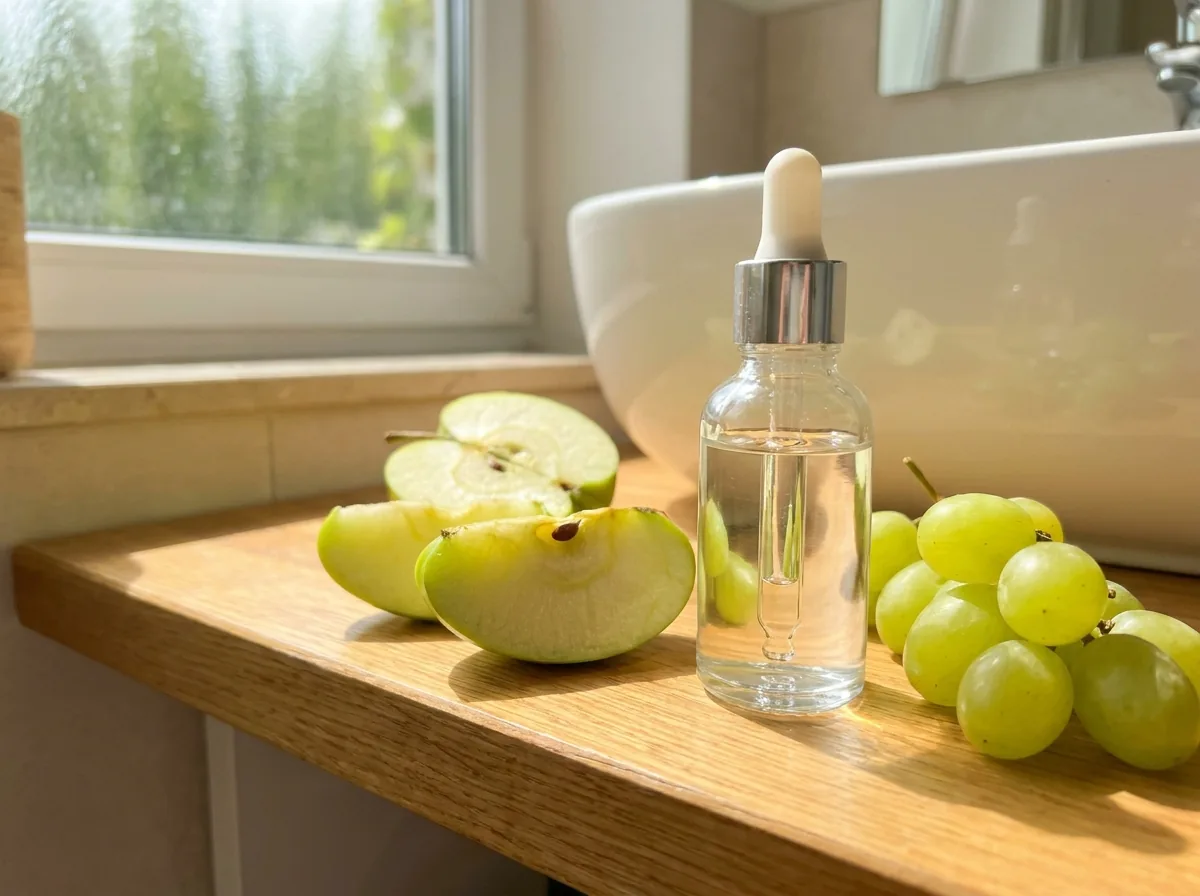
Fruit acids are AHAs: malic acid from apples, tartaric from grapes and citric from citrus. A product labelled as a fruit extract does not tell you the dose or the pH, so you cannot know whether it exfoliates, and we found no trials of such extracts. Measured glycolic or lactic acid products are the ones that have been tested.
Sources (10)
- Randomised controlled trial Thibault PK, Wlodarczyk J, Wenck A. A double-blind randomized clinical trial on the effectiveness of a daily glycolic acid 5% formulation in the treatment of photoaging. Dermatol Surg. 1998.
- Clinical study Smith WP. Epidermal and dermal effects of topical lactic acid. J Am Acad Dermatol. 1996.
- Clinical study Ditre CM, Griffin TD, Murphy GF, et al. Effects of alpha-hydroxy acids on photoaged skin: a pilot clinical, histologic, and ultrastructural study. J Am Acad Dermatol. 1996.
- Systematic review Chen X, Wang S, Yang M, Li L. Chemical peels for acne vulgaris: a systematic review of randomised controlled trials. BMJ Open. 2018.
- Systematic review Sarkar R, Lakhani R. Chemical peels for melasma: a systematic review. Dermatol Surg. 2024.
- Clinical study Rogers RS 3rd, Callen J, Wehr R, Krochmal L. Comparative efficacy of 12% ammonium lactate lotion and 5% lactic acid lotion in the treatment of moderate to severe xerosis. J Am Acad Dermatol. 1989.
- Randomised controlled trial Ademola J, Frazier C, Kim SJ, Theaux C, Saudez X. Clinical evaluation of 40% urea and 12% ammonium lactate in the treatment of xerosis. Am J Clin Dermatol. 2002.
- Clinical study Kornhauser A, Wei RR, Yamaguchi Y, et al. The effects of topically applied glycolic acid and salicylic acid on ultraviolet radiation-induced erythema, DNA damage and sunburn cell formation in human skin. J Dermatol Sci. 2009.
- Regulator guidance US Food and Drug Administration. Alpha hydroxy acids. Cosmetic ingredients (page updated 22 November 2022).
- Review Almeman AA. Evaluating the efficacy and safety of alpha-hydroxy acids in dermatological practice: a comprehensive clinical and legal review. Clin Cosmet Investig Dermatol. 2024.
Last reviewed 10 October 2026 · Next review April 2027 · How we rate evidence
Reader notes
Experiences and questions from readers, read by an editor before they appear. They are personal accounts, not evidence, and are not medical advice.