
Argan oil
Eaten in place of butter, argan oil lowered LDL cholesterol in a meta-analysis of five small trials, though it was not better than olive oil in the one trial that compared them. On skin it improved elasticity and hydration in one 60-woman trial in postmenopausal women; for hair, frizz, shine and growth, we found no human trials. Contact allergy to argan oil is rare but documented, including one case of anaphylaxis.
At a glance
Last reviewed 10 October 2026What it's used for
Evidence is rated per use. The same ingredient can be strong for one thing and traditional for another.
| Use | Evidence | What the research shows |
|---|---|---|
| Blood cholesterol and lipids (eaten)Compare remedies for heart health → | Moderate | A meta-analysis of 5 randomised trials (292 people, at least 2 weeks each) found argan oil lowered LDL cholesterol by 11.7 mg/dL and triglycerides by 13.7 mg/dL, and raised HDL by 4.1 mg/dL, against control treatments. The trials are small, short and Moroccan, and most controls were butter, so part of the effect is swapping saturated for unsaturated fat. In a 60-person trial, LDL fell significantly with extra virgin olive oil but not with argan oil, so argan oil has not been shown to beat olive oil.5,6 |
| Skin elasticity and hydration in postmenopausal womenCompare remedies for skin → | Limited | In 60 healthy postmenopausal women, 60 days of eating 25 mL a day of argan oil, or of applying about 240 mg to a forearm nightly, improved skin elasticity measures and lowered water loss through the skin compared with baseline, with significant results reported for each route. The controls ate olive oil, and both reports come from the same research team and appear to be the same 60 women. It says nothing about younger skin or wrinkles seen in a mirror.1,2 |
| Hair frizz, shine and breakageCompare remedies for hair & nails → | Traditional | A 2022 systematic review of 22 articles found argan oil has no significant evidence supporting it for hair growth, hair quality or lice. The only supportive data we found are laboratory work: on hair tresses cut from people, argan oil applied before chemical (oxidative) damage cut protein loss. That does not show less frizz or breakage on a head of hair.3,4 |
| Hair growth and thinning | Traditional | The same 2022 systematic review found no significant evidence that argan oil improves hair growth. We found no trial in people with hair loss.3 |
| Acne-prone and oily facial skin | Traditional | We found no clinical trial of argan oil for acne or oily skin, so any benefit is unproven. An Australian clinical update recommends combination topical therapy such as benzoyl peroxide plus a retinoid as first-line, and does not mention argan oil.10 |
How much
Ranges below are what studies used and what supplements commonly contain. They are not a recommendation for you. Start at the low end.
How people take it
Safety
Who should avoid
- Nut or plant-oil allergy history — contact allergy and one case of anaphylaxis are reported
- Skin that reacts easily — patch-test first, allergic contact dermatitis is documented
- Acne-prone skin — no trial shows it helps, so it is not a substitute for proven treatments
- High cholesterol — do not swap it in for prescribed treatment; ask your doctor
- Children and babies — an infant case of contact allergy has been reported
Known interactions
Questions people ask
Is argan oil good for hair?
It makes hair feel smoother for many people, but the evidence for it is thin. A 2022 systematic review found no significant evidence that argan oil improves hair growth, quality or lice, and the only support we found is a laboratory study on cut hair tresses showing less protein loss after chemical damage.
Is argan oil good for your skin and face?
In 60 postmenopausal women, eating or applying argan oil for 60 days improved skin elasticity and lowered water loss. That is one small trial on the forearm, not the face. We found no trial for acne or oily skin, and contact allergy to argan oil is documented, so patch-test it first.
What are the benefits of argan oil?
The best-supported benefit is eating it in place of butter, which lowered LDL cholesterol and triglycerides in a meta-analysis of five small trials. Skin elasticity in postmenopausal women has limited support, and hair benefits are unproven. It did not beat olive oil for LDL in the one trial that compared them.
Can argan oil cause allergic reactions?
Yes, though it is rare. Case reports describe allergic contact dermatitis in adults and in an infant, and one report describes anaphylaxis after applying it to skin. Stop using it if you get redness, itching or swelling.
Make it yourself
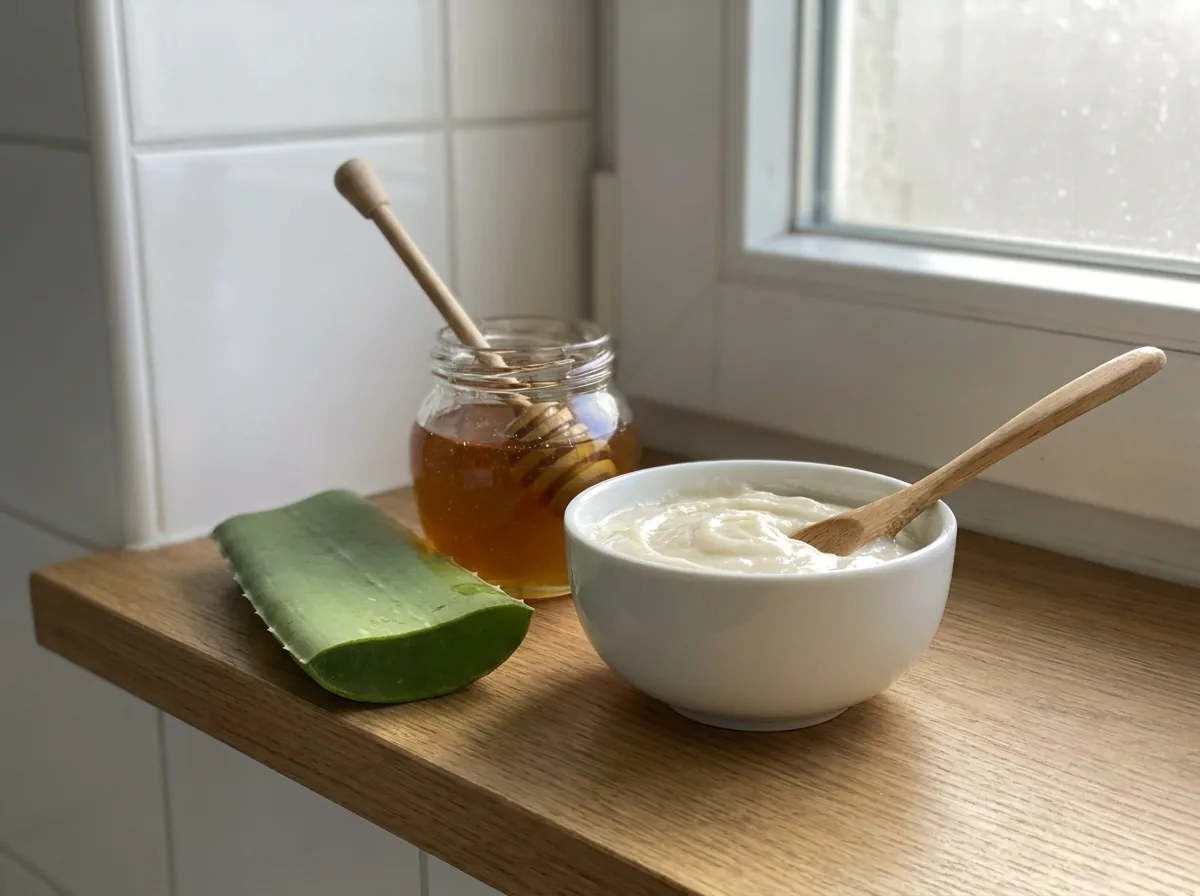
DIY guides that use argan oil, with quantities, safety notes and an honest word on what they do.
Sources (10)
- Randomised trial Boucetta KQ, Charrouf Z, Aguenaou H, Derouiche A, Bensouda Y. The effect of dietary and/or cosmetic argan oil on postmenopausal skin elasticity. Clin Interv Aging. 2015.
- Randomised trial Boucetta KQ, Charrouf Z, Derouiche A, Rahali Y, Bensouda Y. Skin hydration in postmenopausal women: argan oil benefit with oral and/or topical use. Prz Menopauzalny. 2014.
- Systematic review Phong C, Lee V, Yale K, Sung C, Mesinkovska N. Coconut, Castor, and Argan Oil for Hair in Skin of Color Patients: A Systematic Review. J Drugs Dermatol. 2022.
- Laboratory study Sharifi N, Hamedeyazdan S, Shokri J, Monajjemzadeh F. Argan oil as a pretreatment of human hair before exposure to oxidative damage: Attenuated total reflectance and protein loss studies. J Cosmet Dermatol. 2022.
- Meta-analysis Ursoniu S, Sahebkar A, Serban MC, Banach M. The impact of argan oil on plasma lipids in humans: Systematic review and meta-analysis of randomized controlled trials. Phytother Res. 2018.
- Randomised trial Derouiche A, Cherki M, Drissi A, et al. Nutritional intervention study with argan oil in man: effects on lipids and apolipoproteins. Ann Nutr Metab. 2005.
- Case report Foti C, Romita P, Ranieri LD, Bonamonte D. Allergic contact dermatitis caused by argan oil. Contact Dermatitis. 2014.
- Case report de Las Marinas Alvarez MD, Martorell Calatayud C, Castillo Fernandez M, et al. Anaphylaxis After Cutaneous Application of Argan Oil. J Investig Allergol Clin Immunol. 2021.
- Case report Allergic contact dermatitis caused by argan oil in an infant. Contact Dermatitis. 2014.
- Clinical guidance Iyengar L, Welsh B. Acne vulgaris: a clinical update. Aust Prescr. 2026.
Last reviewed 10 October 2026 · Next review April 2027 · How we rate evidence
Reader notes
Experiences and questions from readers, read by an editor before they appear. They are personal accounts, not evidence, and are not medical advice.