
Oats
Eaten regularly, oats lower LDL cholesterol modestly but reliably: about 0.2 mmol/L at 3 g or more of beta-glucan a day, according to two meta-analyses. On the skin, colloidal oatmeal is a recognised US skin protectant and is widely used for dry, itchy skin and eczema, but the evidence that it beats a plain moisturiser is weak.
The main caution for skin use is that a minority of eczema-prone skin reacts to it, so stop if it stings or the rash worsens.
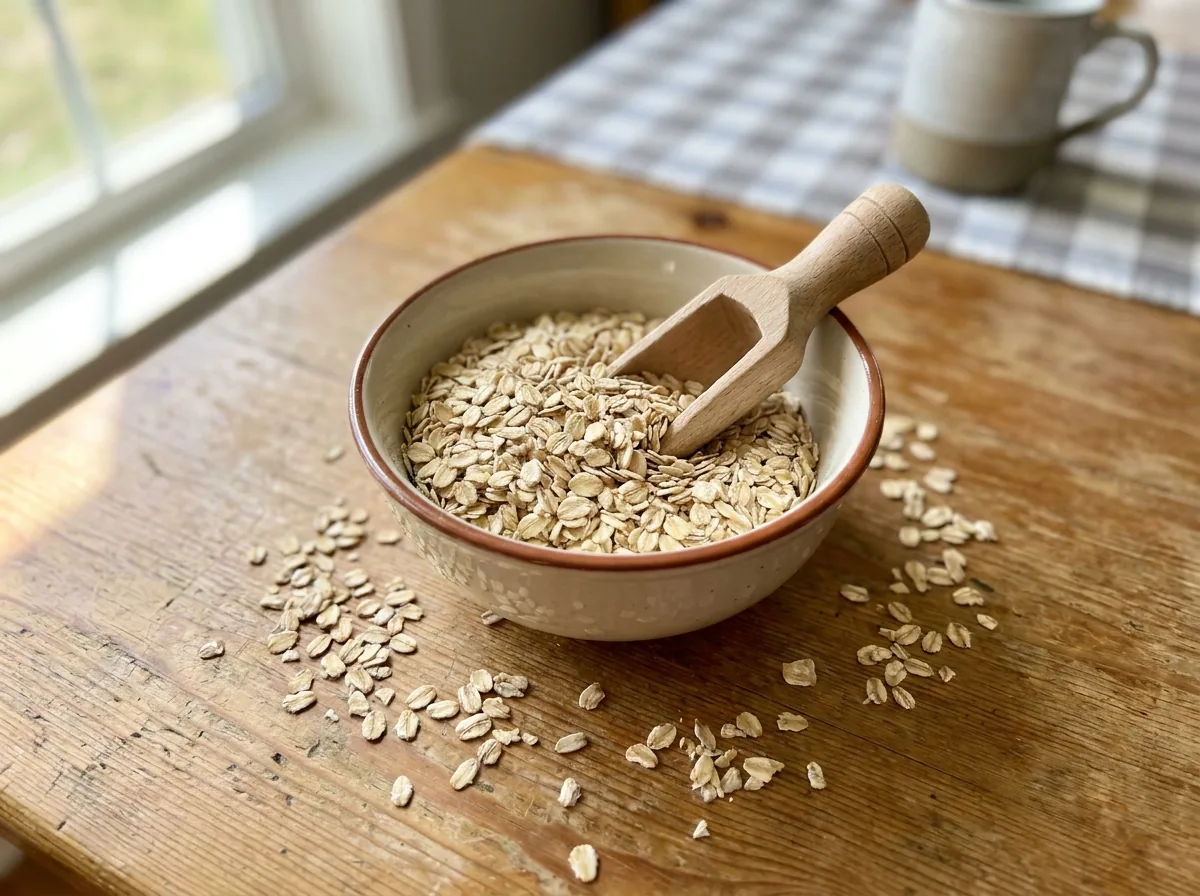
At a glance
Last reviewed 10 October 2026What it's used for
Evidence is rated per use. The same ingredient can be strong for one thing and traditional for another.
| Use | Evidence | What the research shows |
|---|---|---|
| Lowering LDL cholesterol (eaten)Compare remedies for heart health → | Strong | A meta-analysis of 28 randomised trials found at least 3 g a day of oat beta-glucan lowered LDL by 0.25 mmol/L (95% CI 0.20 to 0.30) and total cholesterol by 0.30 mmol/L, with no effect on HDL or triglycerides. A second meta-analysis of 58 trials (median 3.5 g a day) found LDL down 0.19 mmol/L, though with high heterogeneity (I2 79%). This is a modest reduction, not a replacement for lipid-lowering medicines.1,2 |
| Dry skin (xerosis) | Limited | One randomised, double-blind trial found a colloidal oatmeal lotion beat its own vehicle on several measures of skin dryness, but the abstract gives no figures and we could not read the full text. Colloidal oatmeal is an FDA-listed skin protectant. The trial evidence for dry skin is small and comes from products, not the ingredient alone.5,8 |
| Eczema (atopic dermatitis) itch and severityCompare remedies for skin → | Limited | In 90 children with mild to moderate eczema, a 1% colloidal oatmeal cream was non-inferior to a prescription barrier cream over 3 weeks; that shows it is as good as another moisturiser, not that it beats one, and the authors worked for the manufacturer. The 2017 Cochrane review of moisturisers pooled four oat trials against no treatment or vehicle and found no significant difference in disease severity (low-quality evidence), fewer flares in one study of 43 people, and more adverse events in one study (Peto OR 7.26, 95% CI 1.76 to 29.92). Moisturisers in general do help eczema.3,4 |
| Chronic irritant hand eczema (add-on) | Limited | In one trial of 79 people (50 completed), everyone used a steroid ointment for 2 weeks, then 1% colloidal oatmeal cream or base cream for 4 weeks. Symptoms returned to baseline in the base-cream group but not in the oatmeal group. It is a single small trial with heavy dropout.6 |
How much
Ranges below are what studies used and what supplements commonly contain. They are not a recommendation for you. Start at the low end.
How people take it
Safety
Who should avoid
- Children under 2 with eczema — irritant patch reactions in 5 of 43 in one study
- Skin that stings, burns or gets redder after use — stop using it
- Severe, infected or weeping eczema — needs medical treatment, not a moisturiser alone
Known interactions
Questions people ask
Does colloidal oatmeal help eczema?
It soothes some people, and moisturisers in general reduce eczema flares. The Cochrane review found no significant difference in severity between oat-containing moisturisers and vehicle or no treatment, and one study reported more adverse events with oat. Treat it as a moisturiser, not a treatment.
Can oatmeal cause a skin reaction?
It can. In a patch test of 65 young children, none had an allergic reaction to oat or rice colloidal suspensions, but 5 of 43 children with eczema had irritant reactions. The Cochrane review also saw more adverse events with oat in one study.
Does eating oats lower cholesterol?
Yes, modestly. Meta-analyses of randomised trials found at least 3 g a day of oat beta-glucan lowered LDL cholesterol by about 0.19 to 0.25 mmol/L, with no change in HDL or triglycerides.
Is a 1% oatmeal cream better than an ordinary moisturiser?
We found no trial showing that. The main paediatric trial found a 1% cream was as good as a prescription barrier cream, which shows equivalence, not superiority.
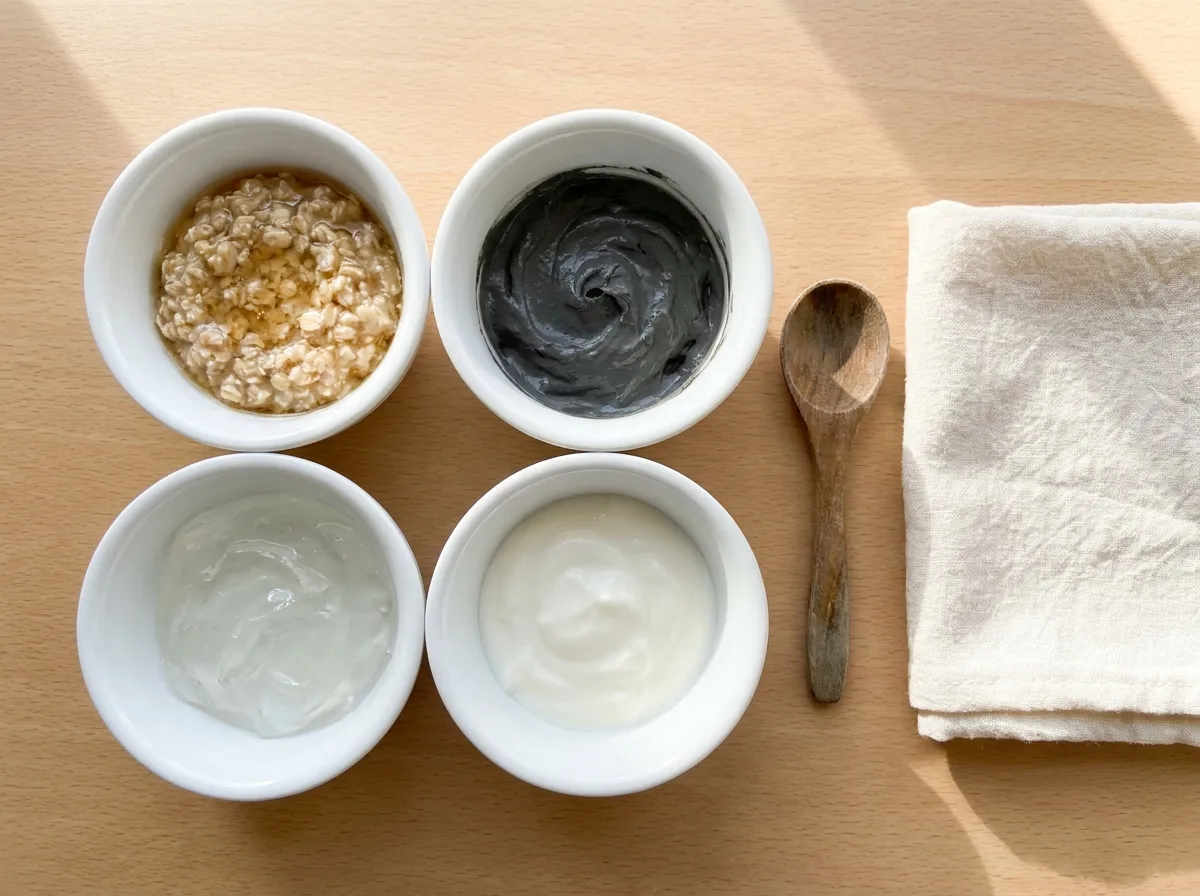
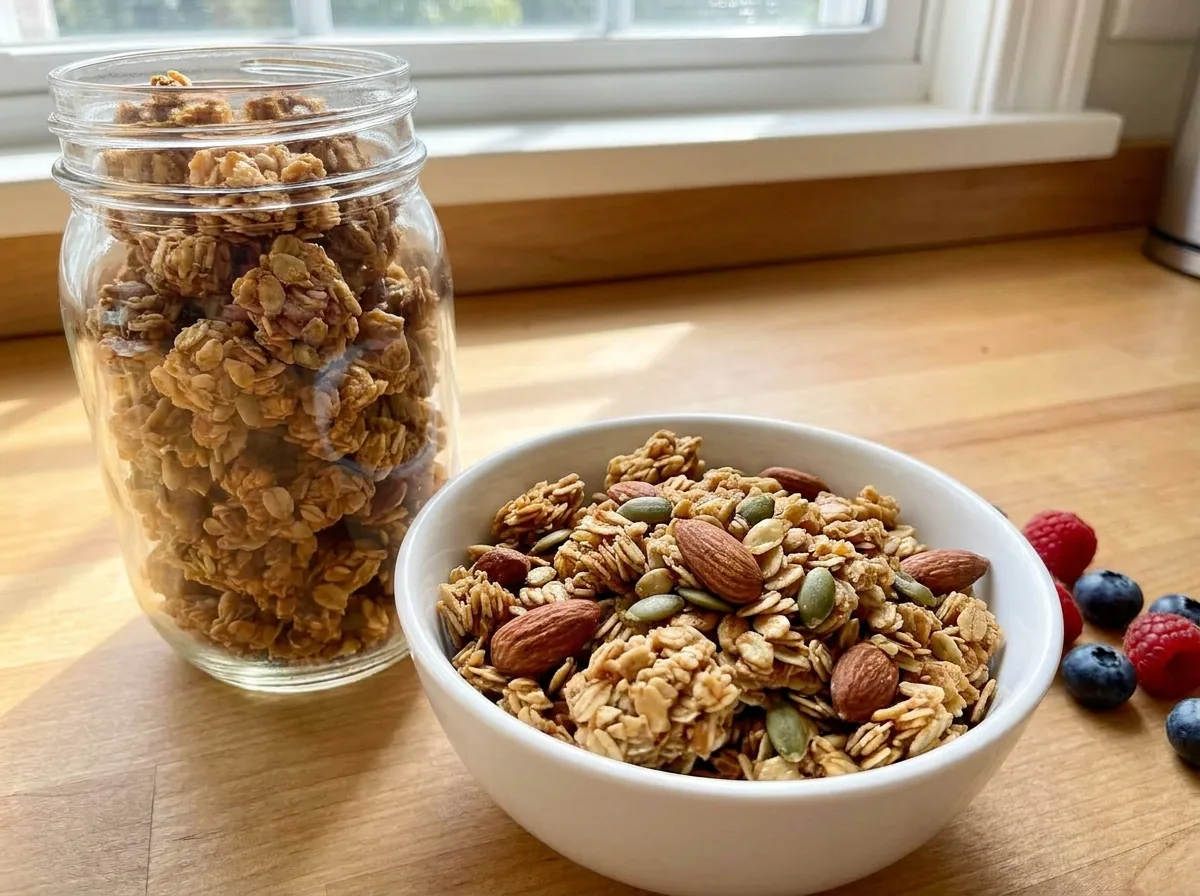
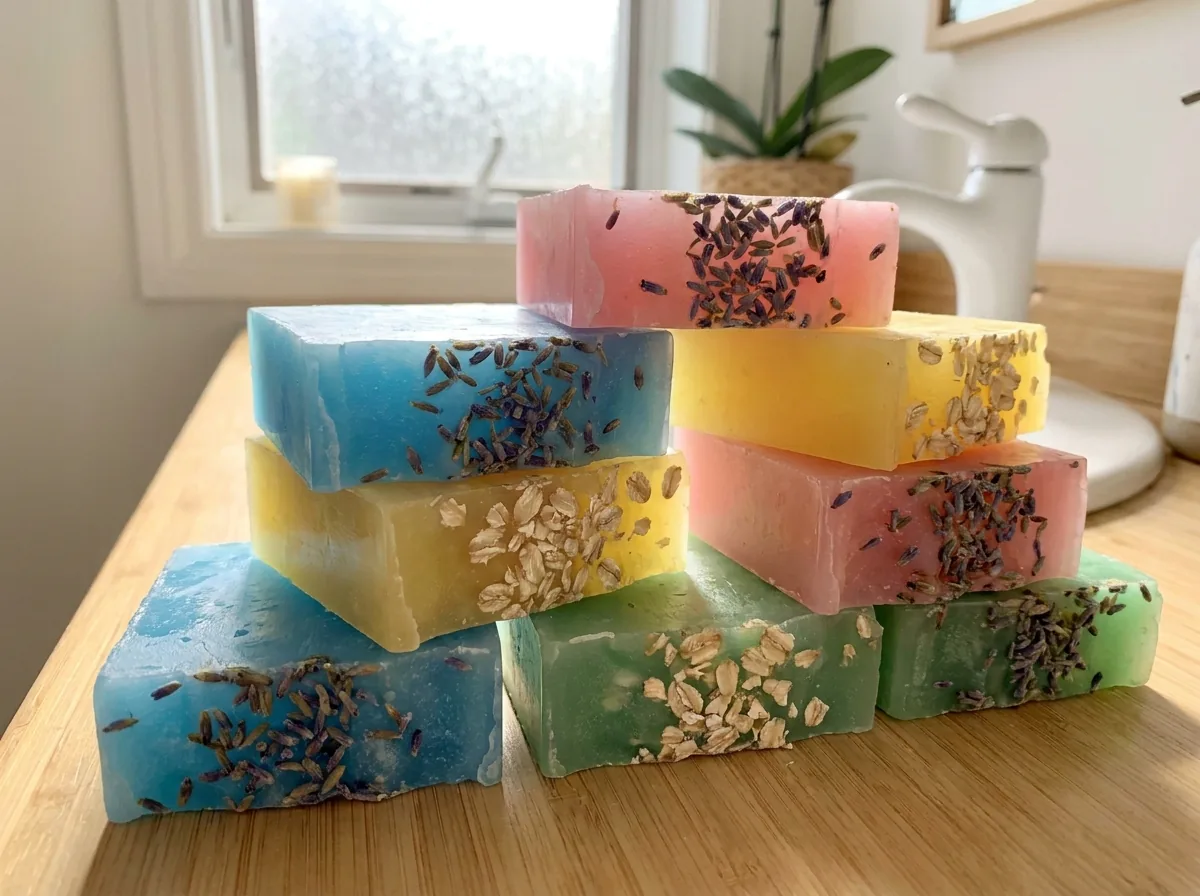
Make it yourself
DIY guides that use oats, with quantities, safety notes and an honest word on what they do.
Sources (8)
- Meta-analysis Whitehead A, Beck EJ, Tosh S, Wolever TM. Cholesterol-lowering effects of oat beta-glucan: a meta-analysis of randomized controlled trials. Am J Clin Nutr. 2014.
- Systematic review Ho HV, Sievenpiper JL, Zurbau A, et al. The effect of oat beta-glucan on LDL-cholesterol, non-HDL-cholesterol and apoB for CVD risk reduction: a systematic review and meta-analysis of randomised-controlled trials. Br J Nutr. 2016.
- Cochrane review van Zuuren EJ, Fedorowicz Z, Christensen R, Lavrijsen A, Arents BWM. Emollients and moisturisers for eczema. Cochrane Database Syst Rev. 2017.
- Randomised trial Lisante TA, Nunez C, Zhang P. Efficacy and safety of an over-the-counter 1% colloidal oatmeal cream in the management of mild to moderate atopic dermatitis in children: a double-blind, randomized, active-controlled study. J Dermatolog Treat. 2017.
- Randomised trial Kalaaji AN, Wallo W. A randomized controlled clinical study to evaluate the effectiveness of an active moisturizing lotion with colloidal oatmeal skin protectant versus its vehicle for the relief of xerosis. J Drugs Dermatol. 2014.
- Randomised trial Sobhan M, Hojati M, Vafaie SY, et al. The efficacy of colloidal oatmeal cream 1% as add-on therapy in the management of chronic irritant hand eczema: a double-blind study. Clin Cosmet Investig Dermatol. 2020.
- Patch-test study Pigatto P, Bigardi A, Caputo R, et al. An evaluation of the allergic contact dermatitis potential of colloidal grain suspensions. Am J Contact Dermat. 1997.
- Regulator monograph US Code of Federal Regulations, 21 CFR 347.10. Skin protectant drug products for over-the-counter human use: skin protectant active ingredients.
Last reviewed 10 October 2026 · Next review April 2027 · How we rate evidence
Reader notes
Experiences and questions from readers, read by an editor before they appear. They are personal accounts, not evidence, and are not medical advice.