
Red raspberry seed oil
Red raspberry seed oil is a polyunsaturated, vitamin E-rich cosmetic oil with no human trial showing it improves skin. It is not a sunscreen: the widely repeated "SPF 28 to 50" claim traces to a 2000 laboratory paper, and when the oil was tested properly it measured SPF 0.4 in the lab and 2.6 on volunteers, far below the SPF 15 to 30 that sunscreens are expected to deliver. Use it as a moisturiser if you like it, and wear real sunscreen.
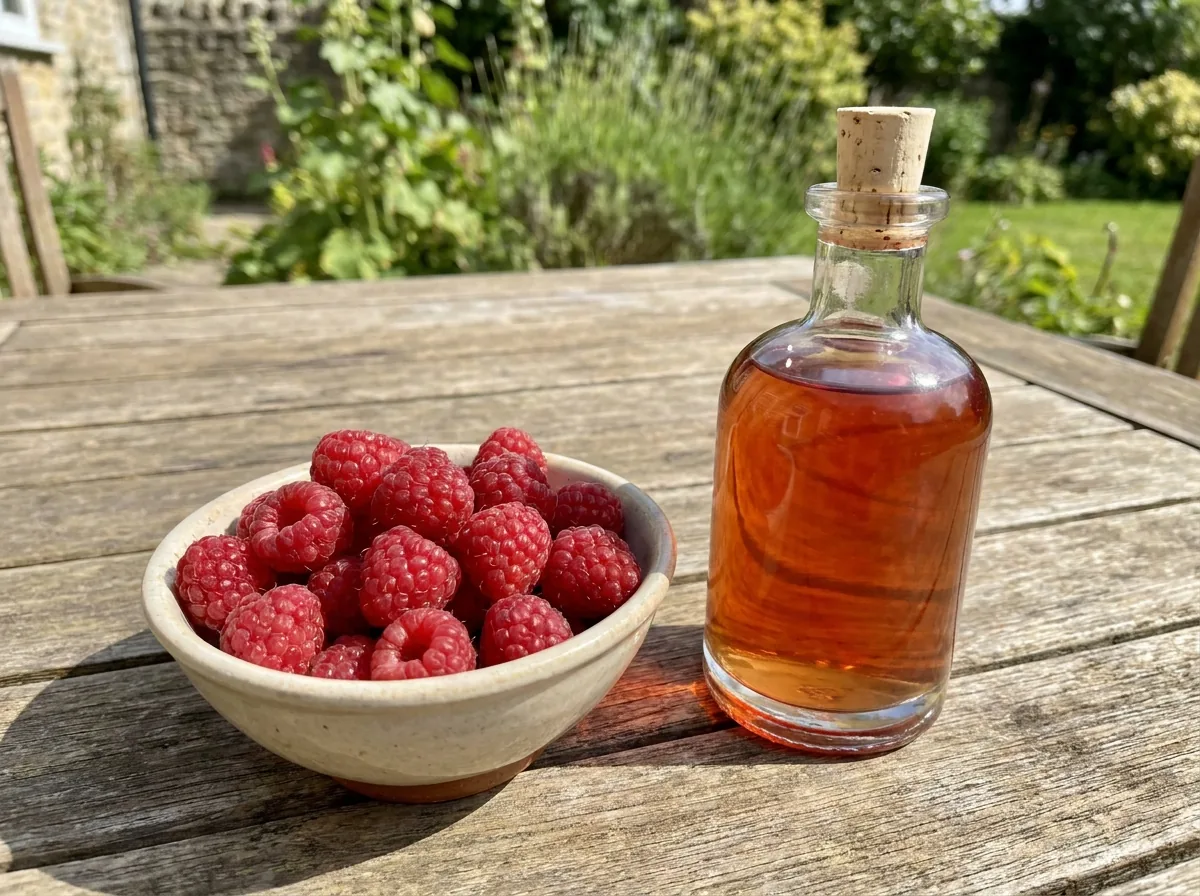
At a glance
Last reviewed 30 September 2026What it's used for
Evidence is rated per use. The same ingredient can be strong for one thing and traditional for another.
| Use | Evidence | What the research shows |
|---|---|---|
| Sun protection (the SPF claim) | Traditional | Not supported. A 2021 study tested five of the most promoted oils, including raspberry seed oil, both in the lab and on volunteers with the ISO method: raspberry seed oil gave SPF 0.4 in vitro and 2.6 in vivo. The authors found the earlier, much higher values came from not following the original method, and that the dilution method is unreliable for substances with such little protection. A 2026 lab study of eleven plant oils found raspberry seed oil had negligible in vitro SPF and UVA protection. A 2025 study of a homemade sunscreen that contained red raspberry seed oil with zinc oxide, and other oils, tested on skin explants found it did not prevent sunburn cells, where an SPF 50+ sunscreen did.1,2,3,4 |
| Moisturising and skin conditioning | Traditional | We found no human trial of raspberry seed oil on skin, for dryness, ageing, scars, acne or anything else. Reviews describe the bioactivity as mainly measured in test tubes, and current commercial use as limited to cosmetics. It is an emollient oil like many others, and any moisturising effect is an assumption, not a finding.4,6 |
| Antioxidant | Traditional | In the laboratory the oil contains tocopherols and carotenoids and quenched free radicals in a test tube. That is a property of the oil, not evidence that it protects skin cells when applied, and no trial shows it.5 |
How much
Ranges below are what studies used and what supplements commonly contain. They are not a recommendation for you. Start at the low end.
How people take it
Safety
Who should avoid
- Using it in place of sunscreen — it measured SPF 0.4 to 2.6
- Homemade sunscreen recipes built on it — one tested failed to prevent sunburn cells
- Relying on an SPF 28–50 claim from a brand or website
Known interactions
Questions people ask
Does raspberry seed oil have an SPF of 28 to 50?
No. The claim circulates online and traces back to a 2000 laboratory paper that described the oil as a possible broad-spectrum UV protectant. When a 2021 study tested it on volunteers with the standard ISO method, the oil measured SPF 2.6, and in the lab 0.4. It is not a sunscreen.
Is raspberry seed oil good for the face or skin?
We found no human trial showing that it improves skin. It is a polyunsaturated oil with vitamin E in it, so using it as a moisturiser is reasonable, but claims about anti-ageing or blemishes are unproven. We found no patch-test safety data, so try a small area first.
What is in raspberry seed oil?
A review reports about 85% polyunsaturated fatty acids, mainly linoleic (54%) and alpha-linolenic (32%) acid, and about 300 mg of vitamin E per 100 g, mostly gamma-tocopherol. These are laboratory measurements of the oil, not proof of any effect on skin.
Can I use raspberry seed oil in a homemade sunscreen?
Not as a source of protection. One homemade recipe containing red raspberry seed oil and zinc oxide reduced some markers of UV damage in skin samples but did not prevent sunburn cells, unlike an SPF 50+ sunscreen. Use a regulated sunscreen.
Sources
- Laboratory and human study Ácsová A, Hojerová J, Janotková L, et al. The real UVB photoprotective efficacy of vegetable oils: in vitro and in vivo studies. Photochem Photobiol Sci. 2021.
- Laboratory study Popiół-Adamska J, Kolisz M, Pękala E, Gunia-Krzyżak A. Natural photoprotection under scrutiny: an in vitro evaluation. Photochem Photobiol Sci. 2026.
- Skin explant study Ince FA, Nayar JC, Wong AL, et al. Uncovering the efficacy of a natural homemade sunscreen in protection from ultraviolet radiation. Photochem Photobiol Sci. 2025.
- Review Ispiryan A, Viškelis J, Viškelis P. Red Raspberry (Rubus idaeus L.) Seed Oil: A Review. Plants (Basel). 2021.
- Chemical analysis Parry J, Su L, Luther M, et al. Fatty acid composition and antioxidant properties of cold-pressed marionberry, boysenberry, red raspberry, and blueberry seed oils. J Agric Food Chem. 2005.
- Review Lopes P, Ferreira IMPLVO, Petronilho S, Passos CP. The road for red raspberry seeds valorization: A comprehensive review on the chemical composition, extraction techniques, bioactivity and applications. Food Chem. 2025.
Last reviewed 30 September 2026 · Next review March 2027 · How we rate evidence
Reader notes
Experiences and questions from readers, read by an editor before they appear. They are personal accounts, not evidence, and are not medical advice.