
Sea salt
Eating sea salt offers no established health advantage over table salt: WHO and NHS salt limits (under 5 g and 6 g a day) are set for salt in general, and neither makes an exception for sea salt. Used outside the diet, saline nasal rinses have limited evidence for colds and chronic sinus symptoms, and Dead Sea salt baths with ultraviolet light may help plaque psoriasis (low-certainty evidence).
Sea salt hair sprays are cosmetic, and we found no trial supporting any benefit for hair or for skin beyond the bath studies.
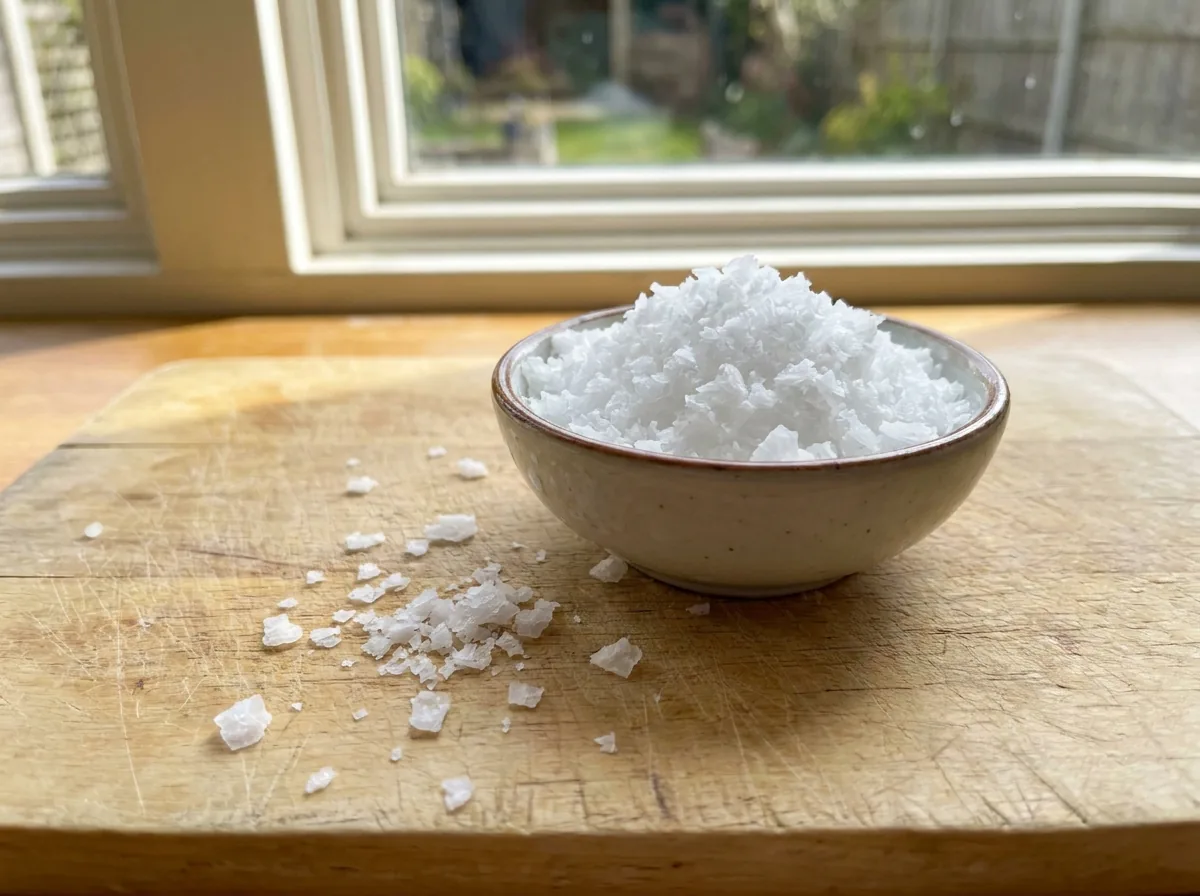
At a glance
Last reviewed 10 October 2026What it's used for
Evidence is rated per use. The same ingredient can be strong for one thing and traditional for another.
| Use | Evidence | What the research shows |
|---|---|---|
| Nasal saline irrigation for colds and sinus symptomsCompare remedies for coughs & colds → | Limited | The Cochrane review of saline nasal irrigation for acute upper respiratory infections (5 trials: 544 children and 205 adults) found most results showed no difference from routine care, though one larger children's trial showed small improvements in nasal secretion and obstruction scores; the authors said it possibly helps but the trials were small and at high risk of bias. The Cochrane review for chronic rhinosinusitis found only 2 trials (116 adults); large-volume 2% hypertonic saline improved quality of life scores (6.3 points at 3 months, low-quality evidence), and 23% had side effects including nosebleeds. These trials used prepared saline solutions, not a pinch of sea salt, and the studies do not test sea salt specifically.4,5 |
| Dead Sea salt baths for psoriasisCompare remedies for skin → | Limited | A Cochrane review of 8 trials of indoor salt baths followed by UVB light found that salt bath plus UVB may improve chronic plaque psoriasis compared with UVB alone (PASI 75 risk ratio 1.71, 95% CI 1.24 to 2.35; 278 people), but the certainty was low, seven of eight trials had high risk of bias and some were funded by spa or salt companies. A separate 60-person trial of Dead Sea salt soaks plus narrowband UVB in Dundee found no clinically important improvement over UVB alone. Neither tests a home sea salt bath without light.6,7 |
| Dead Sea salt baths for atopic (eczema-prone) dry skin | Limited | In one small trial, volunteers with atopic dry skin soaked one forearm for 15 minutes in a 5% magnesium-rich Dead Sea salt solution and the other in tap water. Skin barrier function, hydration, roughness and redness improved on the salt-treated arm, but it was a single short, small study on a magnesium-rich salt from the deep Dead Sea, not ordinary sea salt.8 |
| Salt-water gargle for sore throat | Traditional | The NHS lists gargling warm salty water (half a teaspoon of salt in a glass of warm water, then spit it out) as self-care for a sore throat, and says children should not try it. We did not find a trial of it in the sources we opened, so this is self-care advice rather than trial evidence.9 |
| Sea salt for hair (texturising spray, scalp scrubs)Compare remedies for hair & nails → | Traditional | We found no clinical trial of sea salt on hair or scalp. Sea salt sprays are sold as cosmetic styling products, and there is no evidence they grow or strengthen hair. |
| Eating sea salt instead of table salt | Traditional | We found no trial showing sea salt is healthier. WHO advises under 2,000 mg sodium (under 5 g salt) a day and NHS says no more than 6 g of salt for adults; neither offers a sea salt exemption. WHO advises that salt should be iodised. In one Korean laboratory study, unrefined solar sea salts contained 434 micrograms of iodine per 100 g, against almost none in refined salts, so iodine in sea salt varies by source and should not be relied on.1,2,3 |
How much
Ranges below are what studies used and what supplements commonly contain. They are not a recommendation for you. Start at the low end.
How people take it
Safety
Who should avoid
- Anyone told to limit sodium (high blood pressure, kidney disease) — sea salt counts as salt
- Children — the NHS says children should not gargle salt water
- Broken or very irritated skin — skin irritation and severe itch were reported with salt baths
Known interactions
Questions people ask
Is sea salt healthier than table salt?
We found no evidence that it is. WHO and NHS set salt limits without exempting sea salt, and the main health effect of too much sodium is raised blood pressure. Iodine is the one real difference: iodised table salt supplies it by design, whereas sea salt's iodine varies and is not something to rely on.
Is sea salt good for hair?
It is a cosmetic, not a treatment. Sea salt sprays add texture and hold, but we found no trial showing any effect on hair growth, strength or scalp health.
Is sea salt good for skin, such as psoriasis or eczema?
Some, with caveats. A Cochrane review found Dead Sea salt baths plus UVB light may improve plaque psoriasis more than UVB alone, based on low-certainty evidence, and one small trial found a magnesium-rich Dead Sea salt bath improved atopic dry skin. Ordinary sea salt and baths without light were not tested.
Does gargling salt water help a sore throat, and does nasal rinsing work?
The NHS suggests a gargle of half a teaspoon of salt in a glass of warm water (not for children), though we found no trial in the sources we read. Cochrane says saline nasal irrigation possibly helps acute colds but the trials were small and low quality, and evidence for chronic sinus symptoms rests on two small trials.
Make it yourself
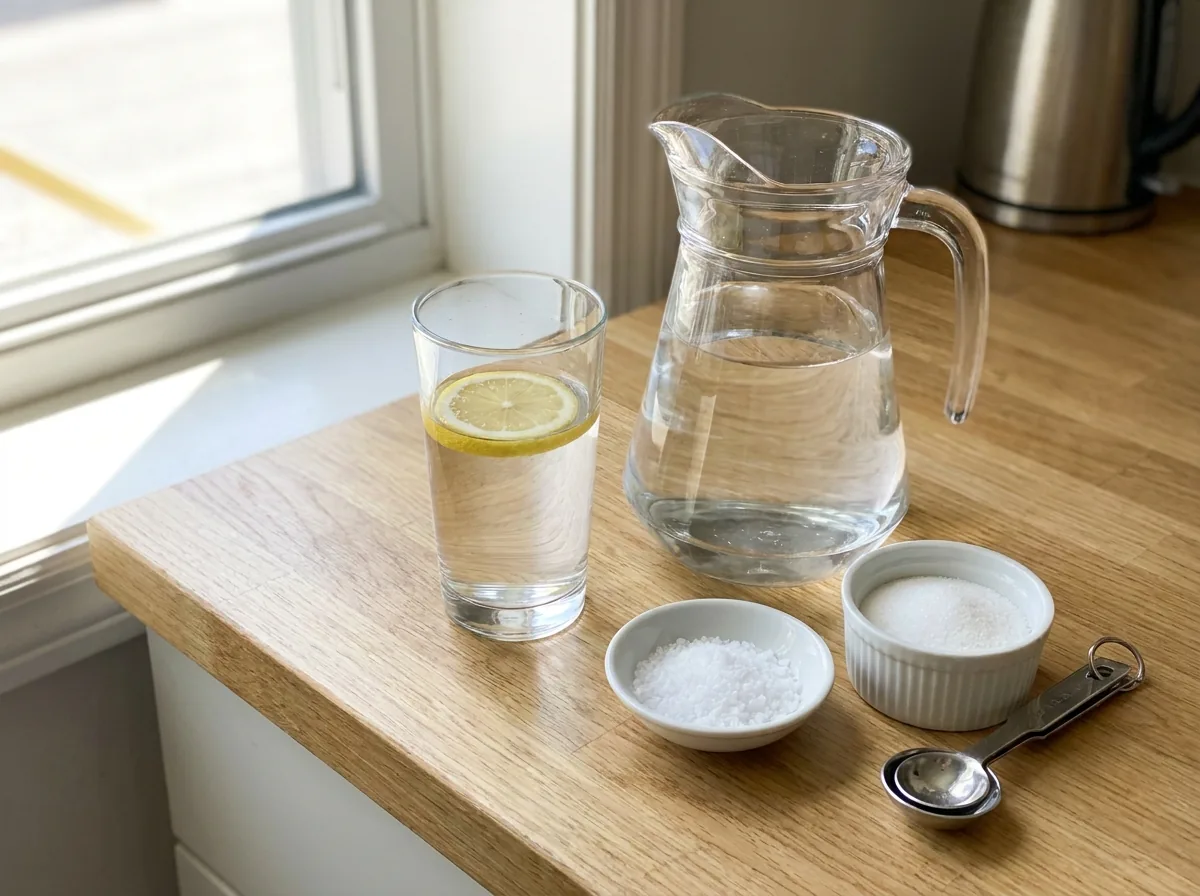
DIY guides that use sea salt, with quantities, safety notes and an honest word on what they do.

Sources (9)
- Regulator/health agency World Health Organization. Salt reduction (fact sheet).
- Regulator/health agency NHS. Salt in your diet.
- Laboratory study Analysis of Iodine Content in Salts and Korean Sauces for Low-Iodine Diet Education in Korean Patients with Thyroid Cancer Preparing for Radioiodine Therapy. Nuclear Medicine and Molecular Imaging. 2018.
- Cochrane review King D, Mitchell B, Williams CP, Spurling GK. Saline nasal irrigation for acute upper respiratory tract infections. Cochrane Database Syst Rev. 2015.
- Cochrane review Chong LY, Head K, Hopkins C, et al. Saline irrigation for chronic rhinosinusitis. Cochrane Database Syst Rev. 2016.
- Cochrane review Peinemann F, Harari M, Peternel S, et al. Indoor salt water baths followed by artificial ultraviolet B light for chronic plaque psoriasis. Cochrane Database Syst Rev. 2020.
- Randomised trial Dawe RS, Yule S, Cameron H, et al. A randomized controlled comparison of the efficacy of Dead Sea salt balneophototherapy vs. narrowband ultraviolet B monotherapy for chronic plaque psoriasis. Br J Dermatol. 2005.
- Clinical study Proksch E, Nissen HP, Bremgartner M, Urquhart C. Bathing in a magnesium-rich Dead Sea salt solution improves skin barrier function, enhances skin hydration, and reduces inflammation in atopic dry skin. Int J Dermatol. 2005.
- Regulator/health agency NHS. Sore throat.
Last reviewed 10 October 2026 · Next review April 2027 · How we rate evidence
Reader notes
Experiences and questions from readers, read by an editor before they appear. They are personal accounts, not evidence, and are not medical advice.