Awaiting clinical review. This page is built from sourced entries but has not yet been signed off by a pharmacist or clinician.
Natural remedies for heart health
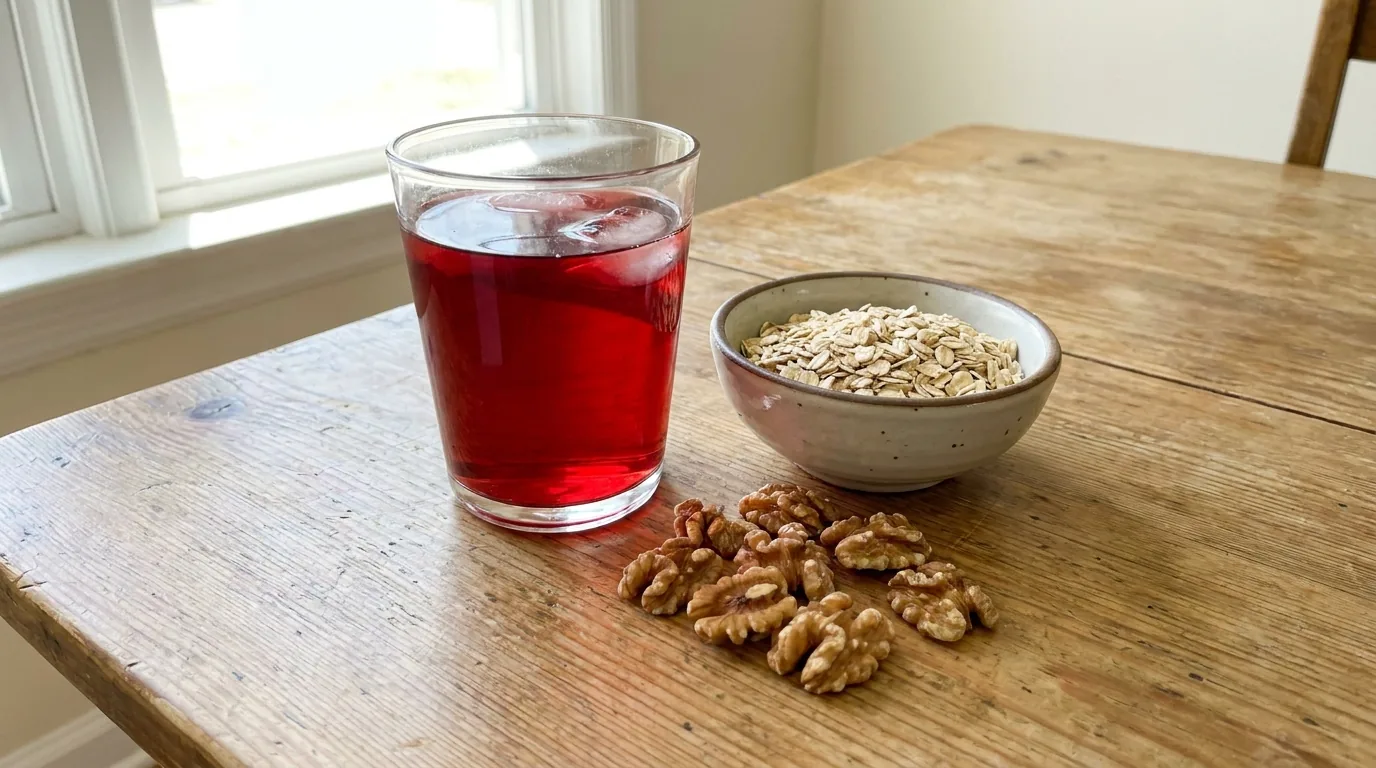
Direct answer
The best-supported options are soluble fibres: psyllium husk and oats are both rated 4 (strong) for modestly lowering LDL cholesterol, by about 0.2 to 0.3 mmol/L, which is a blood-fat measure rather than proof of fewer heart attacks. For blood pressure nothing here is better than 3 (quercetin, about 2 mmHg) and most options are rated 2, and omega-3 lowers triglycerides but shows little or no effect on heart attacks and strokes. These are at best small add-ons and never a replacement for blood pressure, cholesterol or blood-thinning medicines, and the caution that matters most is interactions with those medicines.
Compare the options
Click a column heading to sort.
| Rated for | Typical form & use | Main caution | |||
|---|---|---|---|---|---|
| Oats Avena sativa (grain) | Strong | Lowering LDL cholesterol (eaten) | Oat beta-glucan, 3 g+ a day (eaten) | Not a replacement for cholesterol medicines | 4+ weeks |
| Omega-3 Fish or algal oil (EPA and DHA) | Strong | Lowering triglycerides | EPA+DHA oil, up to 4 g daily | Higher doses linked to atrial fibrillation | 4+ weeks |
| Psyllium Plantago ovata (seed husk) | Strong | Lowering LDL cholesterol | Husk powder, about 10 g a day in water | Needs plenty of water; can cause choking or blockage | 4+ weeks |
| Artichoke Cynara scolymus (leaf extract) | Moderate | Raised cholesterol | Leaf extract, 400–1,320 mg daily | Not for gallstones or bile-duct blockage | 4+ weeks |
| Green Tea Extract Camellia sinensis (leaf extract) | Moderate | Cholesterol (total and LDL) | Catechin extract, taken with food | May weaken atorvastatin; rare liver injury | 4+ weeks |
| Quercetin Plant flavonoid (isolated compound) | Moderate | Lowering blood pressure | Capsule; BP trial dose not extracted | Can change how some medicines are absorbed | 4+ weeks |
| Spirulina Arthrospira platensis (blue-green algae) | Moderate | Cholesterol and triglycerides | Tablet, capsule or powder, 1–10 g daily | Product quality varies; may aggravate autoimmune disease | 4+ weeks |
| Ginkgo Ginkgo biloba (leaf extract) | Limited | Leg pain on walking (claudication) | Standardised leaf extract, 240 mg/day | Raises bleeding concern; stop 3–4 days before surgery | 4+ weeks |
| Grape seed extract Vitis vinifera (seed) | Limited | Blood pressure | Seed extract, about 150–300 mg a day | Not a substitute for prescribed BP treatment | 4+ weeks |
| Hibiscus Hibiscus sabdariffa (calyces) | Limited | Lowering blood pressure | Tea from dried calyces, about 10 g a day | May add to blood pressure and diuretic drugs | 4+ weeks |
| Rooibos Aspalathus linearis (leaf, as tea) | Limited | Cholesterol and oxidative stress markers | Fermented tea, six cups a day | Rare liver injury case reports | 4+ weeks |
| Yerba mate Ilex paraguariensis (leaf) | Limited | Cholesterol | Tea or capsules, about 3 g leaf a day | Caffeine raises heart rate and blood pressure | 4+ weeks |
- Rated for
- Lowering LDL cholesterol (eaten)
- Form
- Oat beta-glucan, 3 g+ a day (eaten)
- Onset
- 4+ weeks
- Rated for
- Lowering triglycerides
- Form
- EPA+DHA oil, up to 4 g daily
- Onset
- 4+ weeks
- Rated for
- Lowering LDL cholesterol
- Form
- Husk powder, about 10 g a day in water
- Onset
- 4+ weeks
- Rated for
- Raised cholesterol
- Form
- Leaf extract, 400–1,320 mg daily
- Onset
- 4+ weeks
- Rated for
- Cholesterol (total and LDL)
- Form
- Catechin extract, taken with food
- Onset
- 4+ weeks
- Rated for
- Lowering blood pressure
- Form
- Capsule; BP trial dose not extracted
- Onset
- 4+ weeks
- Rated for
- Cholesterol and triglycerides
- Form
- Tablet, capsule or powder, 1–10 g daily
- Onset
- 4+ weeks
- Rated for
- Leg pain on walking (claudication)
- Form
- Standardised leaf extract, 240 mg/day
- Onset
- 4+ weeks
- Rated for
- Blood pressure
- Form
- Seed extract, about 150–300 mg a day
- Onset
- 4+ weeks
- Rated for
- Lowering blood pressure
- Form
- Tea from dried calyces, about 10 g a day
- Onset
- 4+ weeks
- Rated for
- Cholesterol and oxidative stress markers
- Form
- Fermented tea, six cups a day
- Onset
- 4+ weeks
- Rated for
- Cholesterol
- Form
- Tea or capsules, about 3 g leaf a day
- Onset
- 4+ weeks
Quick picks
Rated 4 for lowering LDL cholesterol: a meta-analysis of 28 trials (1,924 people) found about 10 g a day lowered LDL by 0.33 mmol/L. The EU regulator notes there are no data on heart attacks or deaths, and it must be taken with plenty of fluid.
Gentlest optionOatsRated 4 for lowering LDL cholesterol when eaten: 3 g or more of oat beta-glucan a day lowered LDL by 0.25 mmol/L in a meta-analysis of 28 trials. It is a food, the effect is modest, and the entry calls it not a replacement for lipid-lowering medicines.
Traditional favouriteHibiscusRated 2 for blood pressure: the Cochrane review found only one eligible trial and no clear effect, while broader meta-analyses of small, inconsistent trials found falls of roughly 5 to 8 mmHg systolic. It is a widely drunk tea, but no one has properly tested it with blood pressure tablets.
Talk to a doctor first if…
Who should avoid
Do not use these to replace prescribed blood pressure, cholesterol or blood-thinning medicines. Avoid artichoke with gallstones, bile-duct blockage or liver disease, avoid green tea extract and rooibos with liver disease or unexplained abnormal liver tests, and ask first about omega-3 if you have atrial fibrillation or other rhythm problems. Psyllium is unsuitable with swallowing difficulty or a bowel blockage, hibiscus may lower low blood pressure further, and yerba mate's caffeine matters with high blood pressure or heart rhythm problems.
Known interactions
Ginkgo may increase bleeding risk with anticoagulants and antiplatelets, and green tea extract can lower blood levels of atorvastatin and, at high doses, of the beta-blocker nadolol (all rated 2, caution). Omega-3 and psyllium have severity 1 blood-thinner notes, psyllium can delay absorption of digoxin, and hibiscus may add to blood pressure drugs and diuretics though the interaction is unestablished, so ask your prescriber or pharmacist before combining any of them with your medicines.
Before you reach for an ingredient
Diet and activity changes that lower blood pressure have larger trial evidence than any supplement here, and they work alongside medication rather than instead of it.
- Cutting salt: a 2013 systematic review of 34 trials (3,230 people) found that reducing salt by about 4.4 g a day for four weeks or more lowered blood pressure by 4.18/2.06 mmHg overall, and by 5.39/2.82 mmHg in people with hypertension.1
- The DASH eating pattern: a meta-analysis of 30 trials (5,545 people) found it lowered blood pressure by 3.2/2.5 mmHg compared with a control diet, in people with and without hypertension, with moderate-certainty evidence.2
- Regular exercise: a network meta-analysis of 270 trials (15,827 people) found aerobic exercise lowered resting blood pressure by 4.49/2.53 mmHg and isometric exercise by 8.24/4.00 mmHg compared with no exercise training.3
Questions people ask
What supplements actually lower cholesterol?
Soluble fibre has the best evidence: psyllium lowered LDL by about 0.33 mmol/L and oat beta-glucan by about 0.25 mmol/L in meta-analyses (both rated 4). Artichoke leaf extract, green tea extract and spirulina lower it by smaller, less certain amounts (rated 3). None replaces prescribed cholesterol treatment.
Does fish oil protect the heart?
It reliably lowers triglycerides (rated 4), but a Cochrane review of 86 trials found little or no effect on deaths, heart attacks or stroke (rated 2). Higher doses were linked to a greater risk of atrial fibrillation, so ask your doctor first if you have a rhythm problem.
Can hibiscus tea lower blood pressure?
Possibly a little, but the evidence is weak (rated 2). The Cochrane review found one eligible trial and no clear effect, while broader meta-analyses of small trials reported falls of roughly 5 to 8 mmHg systolic. If you take blood pressure tablets or diuretics, ask your prescriber first.
Is green tea extract safe for the heart?
It lowers total and LDL cholesterol by a small amount (rated 3) and blood pressure by about 2 mmHg (rated 2), but concentrated extracts have caused rare, sometimes severe liver injury, and EFSA flagged 800 mg or more of EGCG a day. It can also lower blood levels of atorvastatin and nadolol.
Sources
- Systematic review He FJ, Li J, Macgregor GA. Effect of longer term modest salt reduction on blood pressure: Cochrane systematic review and meta-analysis of randomised trials. BMJ. 2013.
- Meta-analysis Filippou CD, Tsioufis CP, Thomopoulos CG, et al. Dietary Approaches to Stop Hypertension (DASH) Diet and Blood Pressure Reduction in Adults with and without Hypertension: A Systematic Review and Meta-Analysis of Randomized Controlled Trials. Adv Nutr. 2020.
- Network meta-analysis Edwards JJ, Deenmamode AHP, Griffiths M, et al. Exercise training and resting blood pressure: a large-scale pairwise and network meta-analysis of randomised controlled trials. Br J Sports Med. 2023.
- Systematic review Jovanovski E, Yashpal S, Komishon A, et al. Effect of psyllium (Plantago ovata) fiber on LDL cholesterol and alternative lipid targets, non-HDL cholesterol and apolipoprotein B: a systematic review and meta-analysis of randomized controlled trials. Am J Clin Nutr. 2018.
- Meta-analysis Whitehead A, Beck EJ, Tosh S, Wolever TM. Cholesterol-lowering effects of oat beta-glucan: a meta-analysis of randomized controlled trials. Am J Clin Nutr. 2014.
- Systematic review Abdelhamid AS, Brown TJ, Brainard JS, et al. Omega-3 fatty acids for the primary and secondary prevention of cardiovascular disease. Cochrane Database Syst Rev. 2020.
- Cochrane review Pattanittum P, Ngamjarus C, Buttramee F, Somboonporn C. Roselle for hypertension in adults. Cochrane Database Syst Rev. 2021.
- Systematic review Ellis LR, Zulfiqar S, Holmes M, Marshall L, Dye L, Boesch C. A systematic review and meta-analysis of the effects of Hibiscus sabdariffa on blood pressure and cardiometabolic markers. Nutr Rev. 2022.
Draft, awaiting clinical review