
Spirulina
Spirulina probably lowers LDL cholesterol and triglycerides modestly: several meta-analyses of small randomised trials agree, though the trials vary widely and are mostly short. Effects on fasting blood sugar and body weight are smaller and less certain. The main caution is product quality, because retail supplements have contained microcystin toxins and toxic metals, and people with autoimmune disease should ask first.
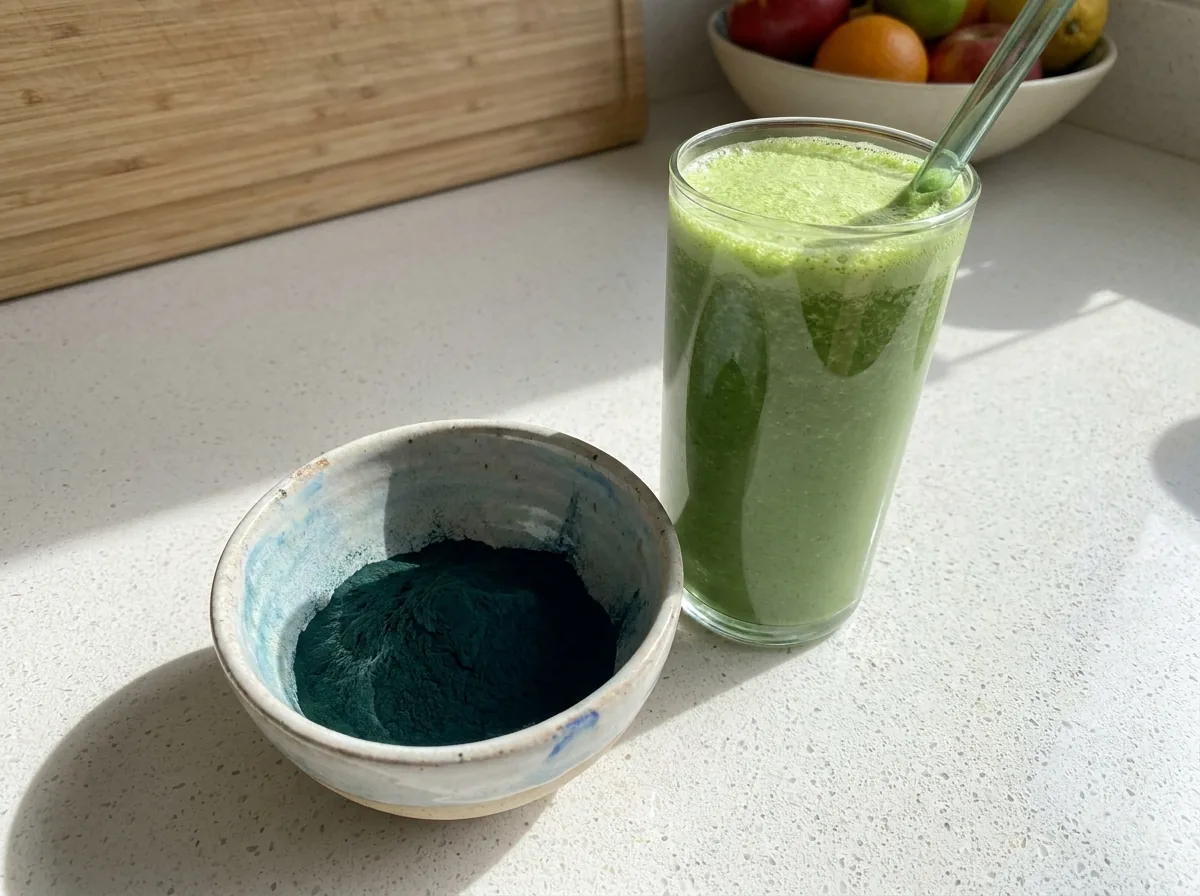
At a glance
Last reviewed 10 October 2026What it's used for
Evidence is rated per use. The same ingredient can be strong for one thing and traditional for another.
| Use | Evidence | What the research shows |
|---|---|---|
| Cholesterol and triglyceridesCompare remedies for heart health → | Moderate | A 2023 dose-response meta-analysis of 20 studies (1,076 participants) found lower LDL cholesterol, total cholesterol and triglycerides (each SMD about -0.6) and higher HDL. A 2025 meta-analysis in overweight and obese adults reached the same direction, and a 2021 meta-analysis in type 2 diabetes reported LDL down by about 20 mg/dl. Study-to-study variation is high (I² 73–75% in the diabetes analysis), the trials are small and short, and we did not extract the GRADE certainty for lipids.1,2,3 |
| Fasting blood sugarCompare remedies for blood sugar → | Limited | In type 2 diabetes, a 2021 meta-analysis of eight studies found fasting glucose 17.9 mg/dl lower, but no significant change in HbA1c or post-meal glucose. A 2025 meta-analysis in overweight and obese adults concluded the overall impact on glycaemic control appears limited. HbA1c is the measure of long-term control, so the benefit is unproven.2,3 |
| Weight and body fat | Limited | A 2025 meta-analysis of 17 trials found about 1.07 kg lower body weight, 0.40 lower BMI and 0.84 percentage points lower body fat, with no change in waist circumference. A 2025 analysis in overweight and obese adults also found a small weight fall. The average change is small and the trials were short; it is not a weight-loss treatment.4,3 |
How much
Ranges below are what studies used and what supplements commonly contain. They are not a recommendation for you. Start at the low end.
How people take it
Safety
Who should avoid
- Autoimmune disease (e.g. pemphigus, dermatomyositis) — flares reported in case series
- Pregnancy and breastfeeding — no safety data in the sources we read
- Products without third-party testing for microcystins and metals
- Infants and young children — one study flagged metal intake from spirulina
Known interactions
Questions people ask
Does spirulina lower cholesterol?
Probably, modestly. Meta-analyses of small randomised trials show lower LDL cholesterol and triglycerides, but the trials vary a lot and are short. It is not a substitute for prescribed treatment.
Is spirulina safe to take?
Trials have used up to 10 g a day, but safety depends on the product. Spirulina itself (Limnospira) has no known microcystin-making genes, but open-pond supplements can be contaminated by other toxin-producing cyanobacteria: one study found microcystins in all five retail products tested, at levels that could exceed recommended daily limits.
Another found spirulina botanicals raised aluminium, arsenic and nickel intake concerns.
Can spirulina cause autoimmune flares?
A 2004 case series described three people whose pemphigus or dermatomyositis flared or began after immunostimulatory supplements, two including spirulina. That is a small report and cannot prove cause, but it is why people with autoimmune disease should ask their doctor first.
Will spirulina help me lose weight?
Slightly at best. A 2025 meta-analysis of 17 trials found about 1 kg more weight lost than with placebo, with no change in waist circumference.
Sources (8)
- Meta-analysis Rahnama I, Arabi SM, Chambari M, et al. The effect of Spirulina supplementation on lipid profile: GRADE-assessed systematic review and dose-response meta-analysis of data from randomized controlled trials. Pharmacol Res. 2023.
- Meta-analysis Hatami E, Ghalishourani SS, Najafgholizadeh A, et al. The effect of spirulina on type 2 diabetes: a systematic review and meta-analysis. J Diabetes Metab Disord. 2021.
- Meta-analysis Fu Z, Zhou S, Gu X. Effects of spirulina supplementation alone or with exercise on cardiometabolic health in overweight and obese adults: a systematic review and meta-analysis. Front Nutr. 2025.
- Meta-analysis Lak M, Karimi M, Akhgarjand C, et al. Effects of spirulina supplementation on body composition in adults: a GRADE-assessed and dose-response meta-analysis of RCTs. Nutr Metab (Lond). 2025.
- Case series Lee AN, Werth VP. Activation of autoimmunity following use of immunostimulatory herbal supplements. Arch Dermatol. 2004.
- Laboratory study Rhoades J, Fotiadou S, Paschalidou G, et al. Microbiota and Cyanotoxin Content of Retail Spirulina Supplements and Spirulina Supplemented Foods. Microorganisms. 2023.
- Genomic study Pinchart PE, Marter P, Brinkmann H, et al. The genus Limnospira contains only two species, both unable to produce microcystins: L. maxima and L. platensis. iScience. 2024.
- Laboratory study Varrà MO, Husáková L, Lanza GT, et al. Multi-elemental composition of botanical preparations and probabilistic evaluation of toxic metals and metalloids intake upon dietary exposure. Food Chem Toxicol. 2024.
Last reviewed 10 October 2026 · Next review April 2027 · How we rate evidence
Reader notes
Experiences and questions from readers, read by an editor before they appear. They are personal accounts, not evidence, and are not medical advice.