Awaiting clinical review. This entry is sourced but has not yet been signed off by a pharmacist or clinician.
Yerba mate
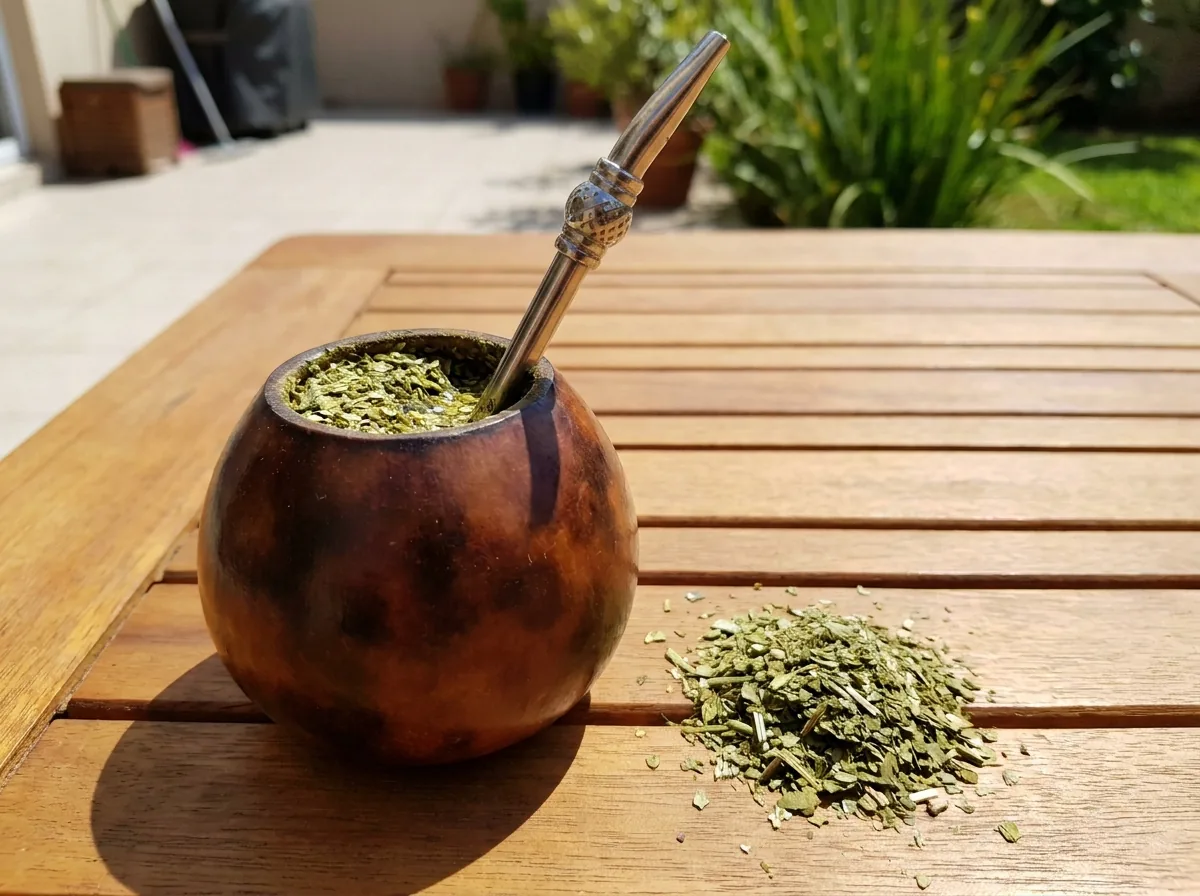
Yerba mate is a caffeinated South American tea. It will feel stimulating for the reason coffee does, but we found no trial that tested mate for alertness itself, and reviews of its effect on cholesterol and weight are mostly null. The main caution is temperature: the World Health Organization's cancer agency classes drinking any beverage above 65 °C as probably causing oesophageal cancer, and mate is traditionally drunk at about 70 °C. Caffeine also matters for sleep, anxiety, heart rate and pregnancy.
At a glance
Last reviewed 29 September 2026What it's used for
Evidence is rated per use. The same ingredient can be strong for one thing and traditional for another.
| Use | Evidence | What the research shows |
|---|---|---|
| Blood sugar in prediabetes | Limited | A 2025 meta-analysis of 13 randomised trials found that in people with prediabetes, mate lowered postprandial glucose (mean difference -12.76, 95% CI -16.78 to -8.74), HbA1c (-0.37, -0.56 to -0.18) and HOMA index (-0.24, -0.37 to -0.11). Each of these rests on only two trials, and fasting glucose and fasting insulin did not change overall. The authors say more research is needed.1 |
| Energy and alertness | Traditional | Mate contains caffeine, roughly 78–196 mg per 500 mL serving depending on preparation, and one 2025 review attributes its stimulating effects on alertness and mental fatigue to caffeine and theobromine. That review is narrative, and we did not find or read a controlled trial of mate for alertness. A 2023 systematic review reports benefits for mood and exercise performance but rates the certainty of evidence as moderate to very low and most included studies as high risk of bias. We rate this on the caffeine content and traditional use.2,3 |
| Body weight and body fat | Limited | One 12-week trial in 30 Korean adults with obesity, giving 3 g of mate capsules a day, found a greater fall in body fat mass and body fat percentage than placebo. The 2025 meta-analysis of 13 trials found no significant effect on waist circumference or BMI. Small trials, mixed results.1,4 |
| Cholesterol | Limited | A 2022 meta-analysis of 7 experimental studies (378 people) found no difference from control in total cholesterol (mean difference 6.4 mg/dl, 95% CI -2.2 to 15.0), LDL (5.5, -1.5 to 12.6), HDL or triglycerides. The 2025 meta-analysis agreed. Individual studies are conflicting, so the honest summary is that lipid lowering is not established.1,5 |
How much
Ranges below are what studies used and what supplements commonly contain. They are not a recommendation for you. Start at the low end.
How people take it
Safety
Who should avoid
- Very hot mate — drink below 65 °C; IARC links very hot drinks to oesophageal cancer
- Pregnancy and breastfeeding — ask your clinician about limiting caffeine
- Sensitivity to caffeine — palpitations, anxiety and poor sleep
- Heart rhythm problems or high blood pressure — caffeine raises heart rate and pressure
- Smokers and heavy drinkers — cancer risks from mate add to theirs (IARC notes both cause it)
Known interactions
Questions people ask
Does yerba mate have as much caffeine as coffee?
Usually somewhat less per serving. One 2025 review puts mate at about 78–196 mg per 500 mL, against roughly 95–200 mg for a 240 mL cup of filtered coffee. Strength varies a lot with brewing, and refilling the gourd raises your total.
Does yerba mate cause cancer?
IARC (2016) found drinking mate at temperatures that are not very hot could not be classified as to carcinogenicity, but drinking any very hot beverage (above 65 °C) is probably a cause of oesophageal cancer, and traditional mate is drunk at about 70 °C. A 2018 meta-analysis found raised odds of upper aerodigestive tract cancer with mate regardless of temperature (OR 2.24), so the two sources do not fully agree; letting it cool is sensible either way.
Will yerba mate help me lose weight or lower cholesterol?
Not reliably. A 2022 meta-analysis found no change in cholesterol or triglycerides, and a 2025 meta-analysis found no effect on BMI or waist circumference. One small 12-week trial found modest falls in body fat.
Is yerba mate safe every day?
A 12-week trial reported no clinically significant safety changes, though the 2025 meta-analysis listed insomnia, tachycardia, angina, headache and stomach upset as adverse events. Keep total caffeine under about 400 mg a day, and note that long-term safety of heavy daily use is not established by the trials we read.
Sources
- Meta-analysis Li D, Yue L, Peng X, et al. Yerba Maté and its impact on glycemic control and metabolic health: a systematic review and meta-analysis. Front Endocrinol (Lausanne). 2025.
- Review Palavicini SMS, Puton BMS, Jacques RA, et al. Bioactive Compounds of Ilex paraguariensis: A Critical Update on Extraction, Gastrointestinal Stability, and Technological Applications. J Food Sci. 2025.
- Systematic review José MFB, Machado RP, Araujo PAB, Speretta GF. Physiological effects of yerba maté (Ilex paraguariensis): a systematic review. Nutr Rev. 2023.
- RCT Kim SY, Oh MR, Kim MG, Chae HJ, Chae SW. Anti-obesity effects of Yerba Mate (Ilex Paraguariensis): a randomized, double-blind, placebo-controlled clinical trial. BMC Complement Altern Med. 2015.
- Meta-analysis Masson W, Barbagelata L, Lobo M, et al. Effect of Yerba Mate (Ilex paraguariensis) on Lipid Levels: A Systematic Review and Meta-Analysis. Plant Foods Hum Nutr. 2022.
- Regulator/health agency US Food and Drug Administration. Spilling the Beans: How Much Caffeine Is Too Much? FDA Consumer Update.
- Regulator/health agency IARC. IARC Monographs evaluate drinking coffee, maté, and very hot beverages. Press release N° 244, 15 June 2016.
- Meta-analysis Mello FW, Scotti FM, Melo G, Warnakulasuriya S, Guerra ENS, Rivero ERC. Maté consumption association with upper aerodigestive tract cancers: A systematic review and meta-analysis. Oral Oncol. 2018.
Last reviewed 29 September 2026 · Next review March 2027 · How we rate evidence