
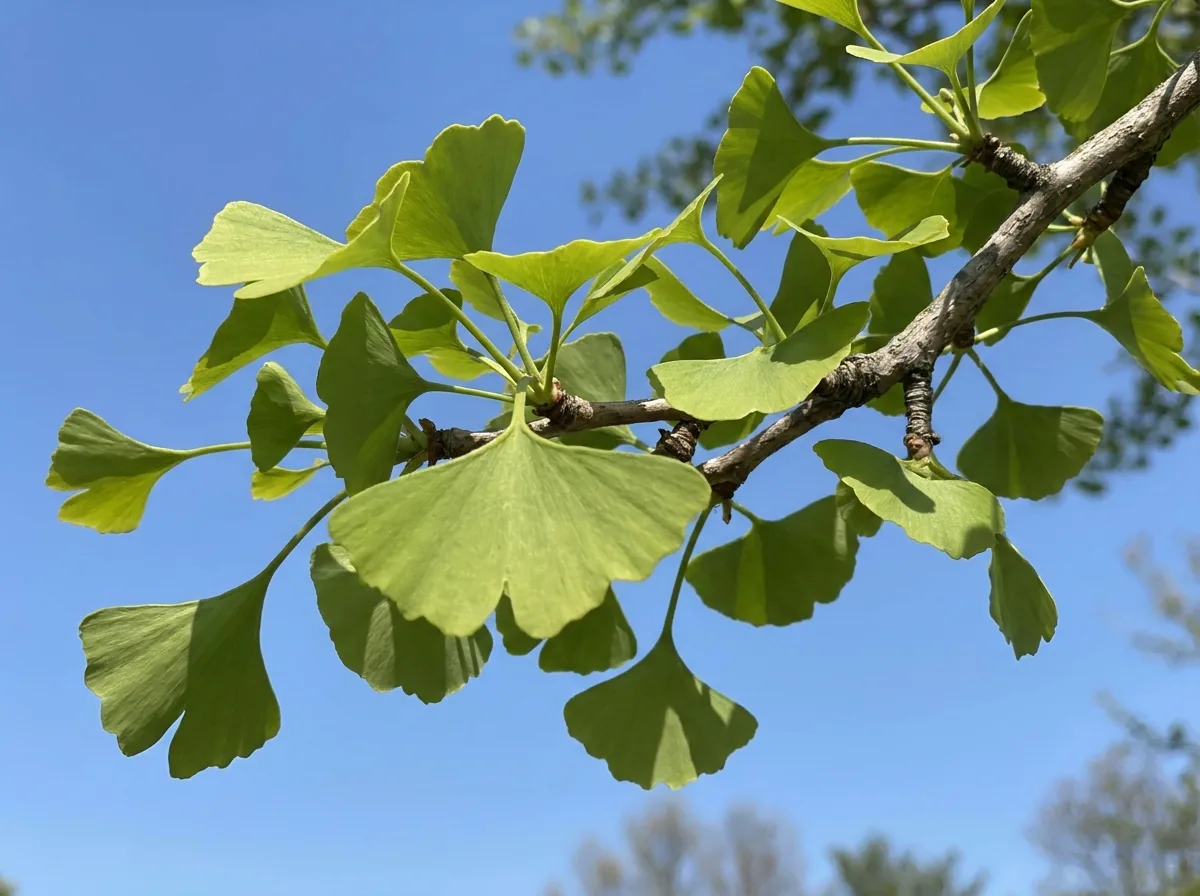
Ginkgo
Ginkgo has not been shown to prevent dementia or slow memory decline, and the large US trial of 3,069 older adults found no benefit over placebo. The main caution is bleeding: talk to a doctor before combining it with blood thinners, and the EU regulator advises stopping it 3 to 4 days before surgery.
A 2026 Cochrane review found low-certainty signs of small benefits for people who already have dementia, but not for mild cognitive impairment, tinnitus or leg pain on walking.
At a glance
Last reviewed 10 October 2026What it's used for
Evidence is rated per use. The same ingredient can be strong for one thing and traditional for another.
| Use | Evidence | What the research shows |
|---|---|---|
| Symptoms of dementia | Limited | The 2026 Cochrane review pooled 13 trials (3,288 people) in dementia and found low-certainty evidence of small improvements at six months in global status, a short cognitive test and daily activities. Results varied widely between trials (I² 88–96%), so the size of any benefit is unclear. The EU regulator recognises a standardised extract for age-associated cognitive impairment and quality of life in mild dementia.1,7 |
| Preventing dementia | Limited | The Ginkgo Evaluation of Memory (GEM) trial gave 120 mg twice daily or placebo to 3,069 people aged 75 or over for a median of 6.1 years. Dementia rates were 3.3 per 100 person-years on ginkgo and 2.9 on placebo (hazard ratio 1.12, 95% CI 0.94–1.33), so ginkgo did not lower the risk. It also made no difference to progression from mild cognitive impairment to dementia. NCCIH says three large studies found no reduction in dementia risk.2,8 |
| Memory and cognitive declineCompare remedies for focus and concentration → | Limited | In the same GEM cohort, annual decline in memory, attention, language and executive function was the same on ginkgo as on placebo, including in people with mild cognitive impairment. The Cochrane review found that ginkgo probably has little or no effect on global status, cognition or daily activities in mild cognitive impairment, and is unsure about people with subjective memory complaints. NCCIH says the evidence in healthy people is mostly low quality.3,1,8 |
| Tinnitus | Limited | A 2022 Cochrane review of 12 trials (1,915 people) could not say whether ginkgo helps. Two pooled trials showed little to no change in Tinnitus Handicap Inventory scores (mean difference −1.35 on a 0–100 scale, 95% CI −8.26 to 5.55), and the certainty was very low. NCCIH says research suggests ginkgo is not helpful for tinnitus.4,8 |
| Leg pain on walking (claudication)Compare remedies for heart health → | Limited | A Cochrane review of 11 placebo-controlled trials (477 people) found ginkgo extended pain-free walking by about 64 metres on average, with a confidence interval that crossed zero (−1.8 to 130.7 m). The reviewers concluded there is no evidence of a clinically significant benefit in peripheral arterial disease and that publication bias probably inflated the result. It was published in 2013 and we did not find a newer Cochrane update.5 |
| Heavy legs and cold hands and feet | Traditional | The EU regulator recognises a powdered leaf for relief of heaviness of legs and cold hands and feet from minor circulatory disorders, based on long-standing use alone and only after a doctor has excluded serious causes. We did not review clinical trials for this use.7 |
How much
Ranges below are what studies used and what supplements commonly contain. They are not a recommendation for you. Start at the low end.
How people take it
Safety
Who should avoid
- Pregnancy — EU regulator contraindicates the extract; NCCIH warns of bleeding
- Breastfeeding — safety unknown, not recommended
- Before surgery — EU regulator advises stopping 3 to 4 days beforehand
- Blood thinners or antiplatelets — ask your doctor first
- Bleeding disorders — use only after talking to a doctor
- Epilepsy — more seizures cannot be excluded
- Under 18 — no relevant use, safety not established
- Raw or roasted ginkgo seeds — toxic, not the same as leaf extract
Known interactions
Questions people ask
Does ginkgo improve memory or prevent dementia?
No. In the GEM trial of 3,069 people aged 75 or over, ginkgo did not reduce dementia and did not slow decline in memory or other thinking skills over about 6 years. There are small, low-certainty signs of benefit for people who already have dementia, but the trials disagree with each other.
Does ginkgo really thin the blood?
It is less clear than its reputation. A meta-analysis of 18 trials found no significant effect on clotting times or platelet aggregation, and no higher bleeding risk.
But bleeding has been reported in individual people, and NCCIH and the EU regulator both warn about combining it with anticoagulants or antiplatelets and advise stopping it before surgery, so check with your doctor.
Does ginkgo help with tinnitus or leg pain?
Reviews say no clear benefit. The Cochrane review on tinnitus found very low-certainty evidence, and the one on leg pain on walking found no clinically significant gain.
Is ginkgo safe to take every day?
Standardised leaf extract was taken for a median of 6 years in GEM with side effects similar to placebo, and NCCIH says it is likely safe for most adults in moderate amounts. Headache, dizziness and stomach upset are the usual complaints. Avoid it in pregnancy, and do not confuse the extract with raw or roasted seeds, which are toxic.
Sources (8)
- Systematic review Wieland LS, Ludeman E, Chi Y, et al. Ginkgo biloba for cognitive impairment and dementia. Cochrane Database Syst Rev. 2026.
- Randomised trial DeKosky ST, Williamson JD, Fitzpatrick AL, et al. Ginkgo biloba for prevention of dementia: a randomized controlled trial. JAMA. 2008.
- Randomised trial Snitz BE, O'Meara ES, Carlson MC, et al. Ginkgo biloba for preventing cognitive decline in older adults: a randomized trial. JAMA. 2009.
- Systematic review Sereda M, Xia J, Scutt P, Hilton MP, El Refaie A, Hoare DJ. Ginkgo biloba for tinnitus. Cochrane Database Syst Rev. 2022.
- Systematic review Nicolaï SP, Kruidenier LM, Bendermacher BL, et al. Ginkgo biloba for intermittent claudication. Cochrane Database Syst Rev. 2013.
- Meta-analysis Kellermann AJ, Kloft C. Is there a risk of bleeding associated with standardized Ginkgo biloba extract therapy? A systematic review and meta-analysis. Pharmacotherapy. 2011.
- Regulator monograph European Medicines Agency HMPC. European Union herbal monograph on Ginkgo biloba L., folium (EMA/HMPC/321097/2012). 2015.
- Regulator/health agency NCCIH. Ginkgo: Usefulness and Safety. National Center for Complementary and Integrative Health.
Last reviewed 10 October 2026 · Next review April 2027 · How we rate evidence
Reader notes
Experiences and questions from readers, read by an editor before they appear. They are personal accounts, not evidence, and are not medical advice.