
Green Tea Extract
Green tea extract lowers total and LDL cholesterol by a small amount and blood pressure by about 2 mmHg in pooled trials, but it does not produce clinically important weight loss. The main caution is the liver: concentrated extracts, unlike the drink, have caused rare but sometimes severe liver injury, and EFSA found that 800 mg or more of EGCG a day raised liver enzymes in trials.
A cup of green tea and a capsule of concentrated catechins are not the same exposure, and the safety reassurance for one does not carry over to the other.
At a glance
Last reviewed 10 October 2026What it's used for
Evidence is rated per use. The same ingredient can be strong for one thing and traditional for another.
| Use | Evidence | What the research shows |
|---|---|---|
| Cholesterol (total and LDL)Compare remedies for heart health → | Moderate | Two meta-analyses of randomised trials found green tea catechins or green tea lower total cholesterol by about 5 to 7 mg/dL and LDL cholesterol by about 2 to 5 mg/dL, with no effect on HDL or triglycerides in either. NCCIH describes the reduction as small. The effect is real across several pooled analyses but modest, and no trial tracked heart attacks or strokes.1,2,5 |
| Blood pressure | Limited | A meta-analysis of 13 trials found systolic pressure fell by 2.08 mmHg and diastolic by 1.71 mmHg, with larger drops in people whose systolic pressure started at 130 mmHg or above. The Cochrane review of tea for cardiovascular prevention found bigger drops for green tea but said the results were not stable to sensitivity analysis and rested on few trials. Rated 2 because the effect is small and the pooled result is fragile.3,4 |
| Weight loss | Limited | The Cochrane review of trials of at least 12 weeks found no meaningful loss outside Japan (mean difference −0.04 kg, 95% CI −0.5 to 0.4, six studies, 532 people). Japanese trials ranged from −0.2 to −3.5 kg and could not be pooled. The authors concluded any loss is small, not statistically significant and unlikely to be clinically important, and that green tea did not help maintain weight after weight loss. NCCIH says the effect is modest at most. A null Cochrane review caps this use at 2.6,5 |
How much
Ranges below are what studies used and what supplements commonly contain. They are not a recommendation for you. Start at the low end.
How people take it
Safety
Who should avoid
- Liver disease or a history of liver injury — rare severe cases, mainly from extracts
- Pregnancy and breastfeeding — France advises against supplements; ask a clinician
- Children and adolescents — French guidance advises against supplements
- Iron deficiency — EFSA's proposed label wording advises asking a professional first
- Caffeine sensitivity — green tea and its extracts contain caffeine
- On an empty stomach — higher blood levels of EGCG, more risk of harm
Known interactions
Questions people ask
Is green tea extract the same as drinking green tea?
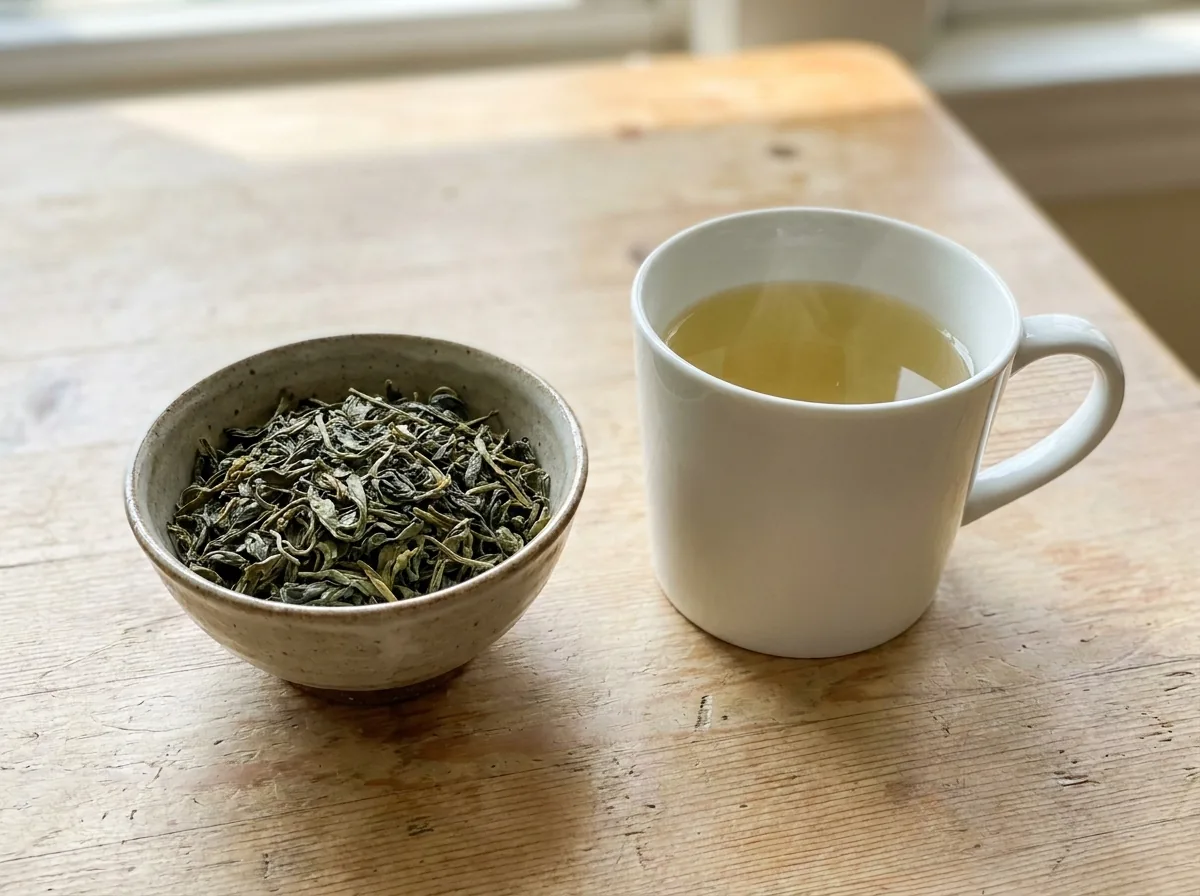
No. A cup of green tea delivers modest amounts of EGCG, and NCCIH reports no safety concerns for the drink in adults. Supplements can deliver several times that in one dose, and the liver injury reports involve mainly tablets and capsules.
Does green tea extract help you lose weight?
Not by a meaningful amount. The Cochrane review found weight change of −0.04 kg outside Japan and concluded any loss is too small to matter clinically. Effects in Japanese trials were larger but varied widely and could not be pooled.
Can green tea extract damage your liver?
Rarely, but yes. EFSA reviewed the evidence and concluded doses of 800 mg EGCG a day or more raised liver enzymes in trials, and a US registry study attributed 40 cases of serious liver injury to green tea products. Most had a gene variant called HLA-B*35:01, which suggests the reaction is immune-mediated and hard to predict.
Does green tea lower cholesterol and blood pressure?
Slightly. Pooled trials show LDL falling by roughly 2 to 5 mg/dL and systolic blood pressure by about 2 mmHg. These are small changes and no trial has shown fewer heart attacks or strokes.
Sources (8)
- Meta-analysis Zheng XX, Xu YL, Li SH, Liu XX, Hui R, Huang XH. Green tea intake lowers fasting serum total and LDL cholesterol in adults: a meta-analysis of 14 randomized controlled trials. Am J Clin Nutr. 2011.
- Systematic review Kim A, Chiu A, Barone MK, et al. Green tea catechins decrease total and low-density lipoprotein cholesterol: a systematic review and meta-analysis. J Am Diet Assoc. 2011.
- Meta-analysis Khalesi S, Sun J, Buys N, et al. Green tea catechins and blood pressure: a systematic review and meta-analysis of randomised controlled trials. Eur J Nutr. 2014.
- Cochrane review Hartley L, Flowers N, Holmes J, et al. Green and black tea for the primary prevention of cardiovascular disease. Cochrane Database Syst Rev. 2013.
- Regulator/health agency NCCIH. Green Tea: Usefulness and Safety. National Center for Complementary and Integrative Health.
- Cochrane review Jurgens TM, Whelan AM, Killian L, et al. Green tea for weight loss and weight maintenance in overweight or obese adults. Cochrane Database Syst Rev. 2012.
- Regulator opinion EFSA Panel on Food Additives and Nutrient Sources added to Food (ANS). Scientific opinion on the safety of green tea catechins. EFSA J. 2018.
- Cohort study Hoofnagle JH, Bonkovsky HL, Phillips EJ, et al. HLA-B*35:01 and green tea-induced liver injury. Hepatology. 2021.
Last reviewed 10 October 2026 · Next review April 2027 · How we rate evidence
Reader notes
Experiences and questions from readers, read by an editor before they appear. They are personal accounts, not evidence, and are not medical advice.