Why ‘natural’ does not mean safe
Short answer
A herb that has an effect on your body can also have side effects, and it can change how your medicines work. Where a plant came from tells you nothing about that. NCCIH puts it plainly: ‘natural’ does not always mean ‘safe’[1]. That is not a reason to avoid herbs. It is a reason to read the entry for the specific one, and to run your full list through our interaction checker first.
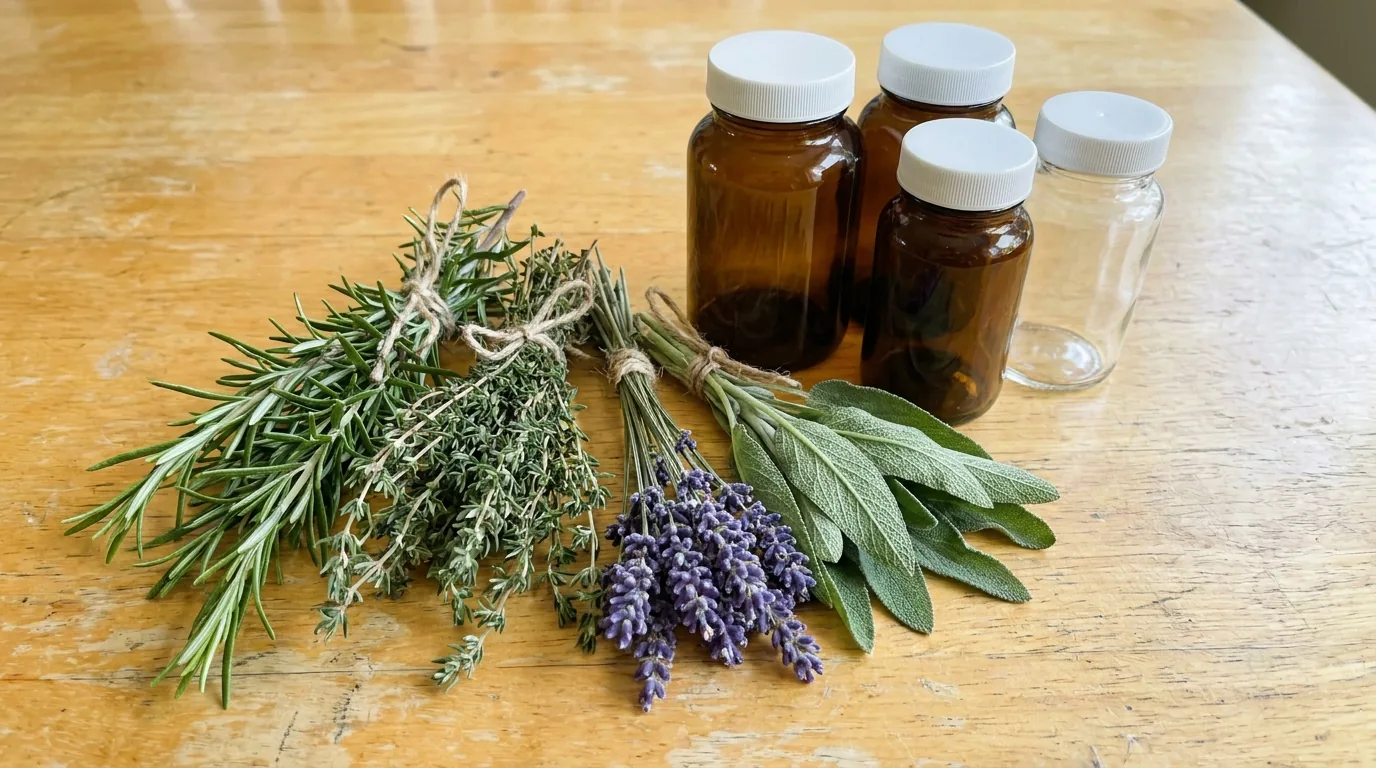
Active means side effects are possible
A plant makes compounds that do things in the body, which is why people use it. The same compounds can act on the liver, on blood pressure, on clotting or on the enzymes that break down other medicines. The examples below come from our ingredient entries, and each card links to the full entry.
Dose and form change the risk
The same herb can be a different proposition as a tea, a standardised extract or a concentrated capsule. Our ginkgo entry notes that the EU dose is for a specific dry extract and is not the same as raw leaf or tea[7]. The liquorice monograph gives a tea dose for digestive symptoms and then caps use at 4 weeks, because overdose effects (water retention, low potassium, high blood pressure, heart rhythm disorders) are reported with longer use or high intakes[6].
Length of use matters too. Senna is limited to 1 week by the EU regulator[8], butterbur to about 16 weeks, and even then only if PA-free[4]. NCCIH says kava in large amounts or for prolonged periods may increase liver risk[3]. For turmeric, NCCIH separates conventional formulations from the highly bioavailable ones, which are the ones linked to liver damage reports[5]. See also Is a tea as effective as a capsule?
Kava also shows why the answer is rarely just ‘the herb’: NCCIH says liver injury cases have involved alcohol-extracted, acetone-extracted and water-prepared products[3], and it advises against combining kava with alcohol or sedatives.
What is in the bottle
Supplements are not reviewed the way medicines are. NCCIH says FDA is not authorized to review dietary supplements for safety and effectiveness before they are marketed, and that FDA has found prescription drugs, including anticoagulants such as warfarin and anticonvulsants such as phenytoin, in products sold as dietary supplements[1].
Labels matter for a smaller reason too. Butterbur is the clearest case in our entries: only a product labelled PA-free is worth considering, and NCCIH says liver injury has still been reported rarely with products described as PA-free[4]. A label lowers the risk but is not a guarantee.
Who needs extra care
Our safety page covers four groups, and the entries above show why each one matters.
- Pregnant or breastfeeding. NCCIH says many dietary supplements have not been tested in pregnant women, nursing mothers or children[1]. Senna is contraindicated in both pregnancy and breastfeeding by the EU regulator[8], and the EU regulator advises against liquorice[6]. Ask a midwife or doctor first.
- Children. Senna is contraindicated under 12[8], willow bark under 18 because of Reye’s syndrome risk[9], and honey under 12 months because of infant botulism[10].
- Having surgery. NCCIH says certain supplements may increase the risk of bleeding or affect your response to anaesthesia[1]. The EU regulator advises stopping ginkgo 3 to 4 days beforehand[7]. Timings differ by herb, so tell your surgical team about everything you take.
- Taking several medicines. The more medicines, the more chances for an interaction. NCCIH says St John’s wort can weaken many medicines, including crucially important ones[2].
Natural is not the opposite of tested
Some herbs have solid trial evidence and a good safety record for a particular use, and some synthetic products have neither. The useful question is not ‘natural or not?’ but ‘what does the evidence show for this form and this use, and what are the cautions?’ Each ingredient page rates the evidence for named uses and lists cautions and interactions separately. Our methodology explains how ratings are assigned.
Practical steps
- Tell your pharmacist or doctor everything you take, including herbs, supplements and teas. NCCIH advises talking with your health care providers about any complementary health approaches you use[1].
- Run your list through the interaction checker and take the result with you. It prepares questions; it does not replace a pharmacist.
- Read the entry’s ‘who should avoid’ list and check the form and dose against the one that was studied.
- Watch for warning signs. For turmeric and curcumin, NCCIH lists fatigue, nausea, poor appetite, dark urine and jaundice as reasons to stop and talk to a healthcare provider[5]. Our butterbur entry gives yellow skin or eyes, dark urine or persistent tiredness. If you feel seriously unwell, get urgent medical help.
- Do not stop a prescribed medicine on your own because of something you read. Ask the prescriber.
Questions people ask
Does this mean herbs are dangerous?
No. The point is that a herb has to be checked like any other active substance. Most of the risks above are specific: a named medicine, a named condition, a stage of life or a long course. Several herbs in our entries have good evidence and a good safety record for the use they are rated for, and each entry says which uses those are.
If a supplement is sold in shops, has it been checked for safety?
Not in the way a medicine is. NCCIH says FDA is not authorized to review dietary supplements for safety and effectiveness before they are marketed, and reports that FDA has found prescription drugs, including warfarin and phenytoin, in products sold as dietary supplements.
What should I do if I think a herb is causing a problem?
Stop taking it and speak to a doctor or pharmacist, and get urgent help if you feel seriously unwell. For turmeric and curcumin products NCCIH lists fatigue, nausea, poor appetite, dark urine and jaundice as signs to stop and talk to a healthcare provider, and our butterbur entry gives yellow skin or eyes, dark urine or persistent tiredness. Do not stop a prescribed medicine on your own because of a herb: ask the prescriber.
Sources
- Regulator/health agency NCCIH. Using Dietary Supplements Wisely. National Center for Complementary and Integrative Health.
- Regulator/health agency NCCIH. St. John's Wort: Usefulness and Safety. National Center for Complementary and Integrative Health (last updated May 2025).
- Regulator/health agency NCCIH. Kava: Usefulness and Safety. National Center for Complementary and Integrative Health.
- Regulator/health agency NCCIH. Butterbur: Usefulness and Safety. National Center for Complementary and Integrative Health.
- Regulator/health agency NCCIH. Turmeric: Usefulness and Safety. National Center for Complementary and Integrative Health.
- Regulator monograph European Medicines Agency HMPC. European Union herbal monograph on Glycyrrhiza glabra L.; Glycyrrhiza inflata Bat.; Glycyrrhiza uralensis Fisch., radix (EMA/HMPC/108399/2024). Final, revision 1, 2026.
- Regulator monograph European Medicines Agency HMPC. European Union herbal monograph on Ginkgo biloba L., folium (EMA/HMPC/321097/2012). 2015.
- Regulator monograph European Medicines Agency HMPC. European Union herbal monograph on Senna alexandrina Mill. (Cassia senna L.; Cassia angustifolia Vahl), folium (EMA/HMPC/625849/2015). 2018.
- Regulator monograph European Medicines Agency HMPC. European Union herbal monograph on Salix [various species including S. purpurea L., S. daphnoides Vill., S. fragilis L.], cortex (EMA/HMPC/80630/2016 - Corr 1). 2017.
- Health agency NHS. Foods to avoid giving babies and young children.
Draft, awaiting clinical review