
Willow bark
Willow bark extract probably eases short-term flare-ups of low back pain better than placebo, and this is the one use with a decent trial record. Results for osteoarthritis are mixed, and other uses rest on tradition. It is a salicylate, related to aspirin, so it is not suitable for anyone allergic to aspirin, for under-18s, or for people on blood thinners without medical advice.
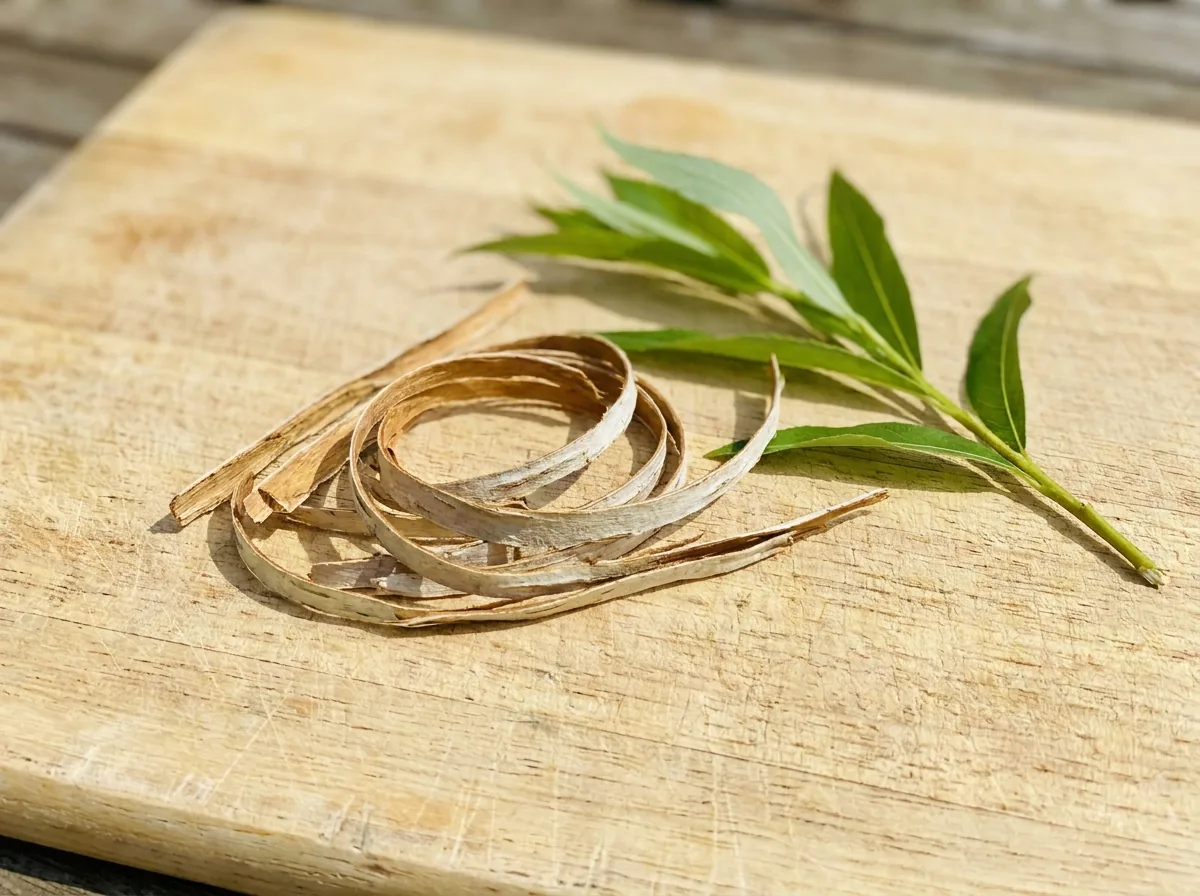
At a glance
Last reviewed 10 October 2026What it's used for
Evidence is rated per use. The same ingredient can be strong for one thing and traditional for another.
| Use | Evidence | What the research shows |
|---|---|---|
| Low back pain flare-upsCompare remedies for joints and inflammation → | Moderate | The 2014 Cochrane review rated the evidence for white willow bark extract standardised to 120 mg or 240 mg salicin a day as moderate quality: probably better than placebo for short-term pain and for less rescue medication (2 trials, 261 participants). In the larger trial (210 people, 4 weeks), 39% on 240 mg salicin were pain-free in the final week versus 21% on 120 mg and 6% on placebo. An open trial found it about as effective as rofecoxib, but that is graded very low quality. The trials were short and few, and the review's senior author disclosed past work for a company selling such extracts.1,2,3 |
| Osteoarthritis pain | Limited | A 2009 systematic review of herbal products for osteoarthritis found two willow bark extract studies with disparate results, and concluded that none of the herbal products was proven beyond doubt. A separate 2009 review of willow bark for musculoskeletal pain also found conflicting results in osteoarthritis.4,5 |
| Minor joint pain, headache and fever with a coldCompare remedies for headaches → | Traditional | The EU regulator recognises willow bark for these on the basis of long-standing use alone; no clinical trials are cited for them in the monograph. We did not review trials for these uses.6 |
How much
Ranges below are what studies used and what supplements commonly contain. They are not a recommendation for you. Start at the low end.
How people take it
Safety
Who should avoid
- Allergy to aspirin, other salicylates or NSAIDs — EU regulator contraindication
- Under 18 — contraindicated because of the risk of Reye's syndrome
- Third trimester of pregnancy — contraindicated; avoid in the first two too
- Breastfeeding — not recommended; salicylates pass into breast milk
- Active stomach ulcer — contraindicated
- Asthma triggered by aspirin or salicylates — contraindicated
- Bleeding or clotting disorders — contraindicated
- G6PD deficiency, or severe liver or kidney disease — contraindicated
- Taking aspirin or other NSAIDs — combining is not recommended without medical advice
Known interactions
Questions people ask
Does willow bark work for back pain?
Probably, for short-term flare-ups. The Cochrane review found moderate-quality evidence that extract giving 120 or 240 mg of salicin a day beat placebo, with the higher dose doing better. The trials were few and short, so this says little about long-term use.
Is willow bark the same as aspirin?
It is related but not the same. Salicin in the bark is converted in the body to salicylic acid, the active breakdown product of aspirin, so the same cautions apply. At 240 mg salicin the salicylic acid level matched roughly 87 mg of aspirin, and its effect on platelets was much smaller than low-dose aspirin in one small study.
Can I take willow bark if I am allergic to aspirin?
No. The EU regulator lists hypersensitivity to salicylates or other NSAIDs, including aspirin-sensitive asthma, as a contraindication. One participant in the large back pain trial had a severe allergic reaction that might have been due to the extract.
Is willow bark safe for children or in pregnancy?
Not for children or adolescents under 18, because of the risk of Reye's syndrome. In pregnancy the EU regulator contraindicates it in the third trimester and does not recommend it in the first two trimesters or while breastfeeding.
Sources (7)
- Systematic review Oltean H, Robbins C, van Tulder MW, Berman BM, Bombardier C, Gagnier JJ. Herbal medicine for low-back pain. Cochrane Database Syst Rev. 2014.
- Randomised controlled trial Chrubasik S, Eisenberg E, Balan E, Weinberger T, Luzzati R, Conradt C. Treatment of low back pain exacerbations with willow bark extract: a randomized double-blind study. Am J Med. 2000.
- Randomised controlled trial Chrubasik S, Künzel O, Model A, Conradt C, Black A. Treatment of low back pain with a herbal or synthetic anti-rheumatic: a randomized controlled study. Willow bark extract for low back pain. Rheumatology (Oxford). 2001.
- Systematic review Cameron M, Gagnier JJ, Little CV, Parsons TJ, Blümle A, Chrubasik S. Evidence of effectiveness of herbal medicinal products in the treatment of arthritis. Part I: Osteoarthritis. Phytother Res. 2009.
- Systematic review Vlachojannis JE, Cameron M, Chrubasik S. A systematic review on the effectiveness of willow bark for musculoskeletal pain. Phytother Res. 2009.
- Regulator monograph European Medicines Agency HMPC. European Union herbal monograph on Salix [various species including S. purpurea L., S. daphnoides Vill., S. fragilis L.], cortex (EMA/HMPC/80630/2016 - Corr 1). 2017.
- Randomised controlled trial Krivoy N, Pavlotzky E, Chrubasik S, Eisenberg E, Brook G. Effect of salicis cortex extract on human platelet aggregation. Planta Med. 2001.
Last reviewed 10 October 2026 · Next review April 2027 · How we rate evidence
Reader notes
Experiences and questions from readers, read by an editor before they appear. They are personal accounts, not evidence, and are not medical advice.