Awaiting clinical review. This entry is sourced but has not yet been signed off by a pharmacist or clinician.
St John's wort
St John's wort extracts probably help some people with mild to moderate depression: a Cochrane review found them better than placebo and about as effective as standard antidepressants, though the results were uneven and one large US trial in more severe depression found no benefit. It appears safe on its own for up to 12 weeks, but it speeds up the breakdown of many prescription medicines and can add to the effect of antidepressants, so check with a doctor or pharmacist before taking it alongside any medicine. The evidence cannot tell you whether it works for severe depression or beyond about 12 weeks.
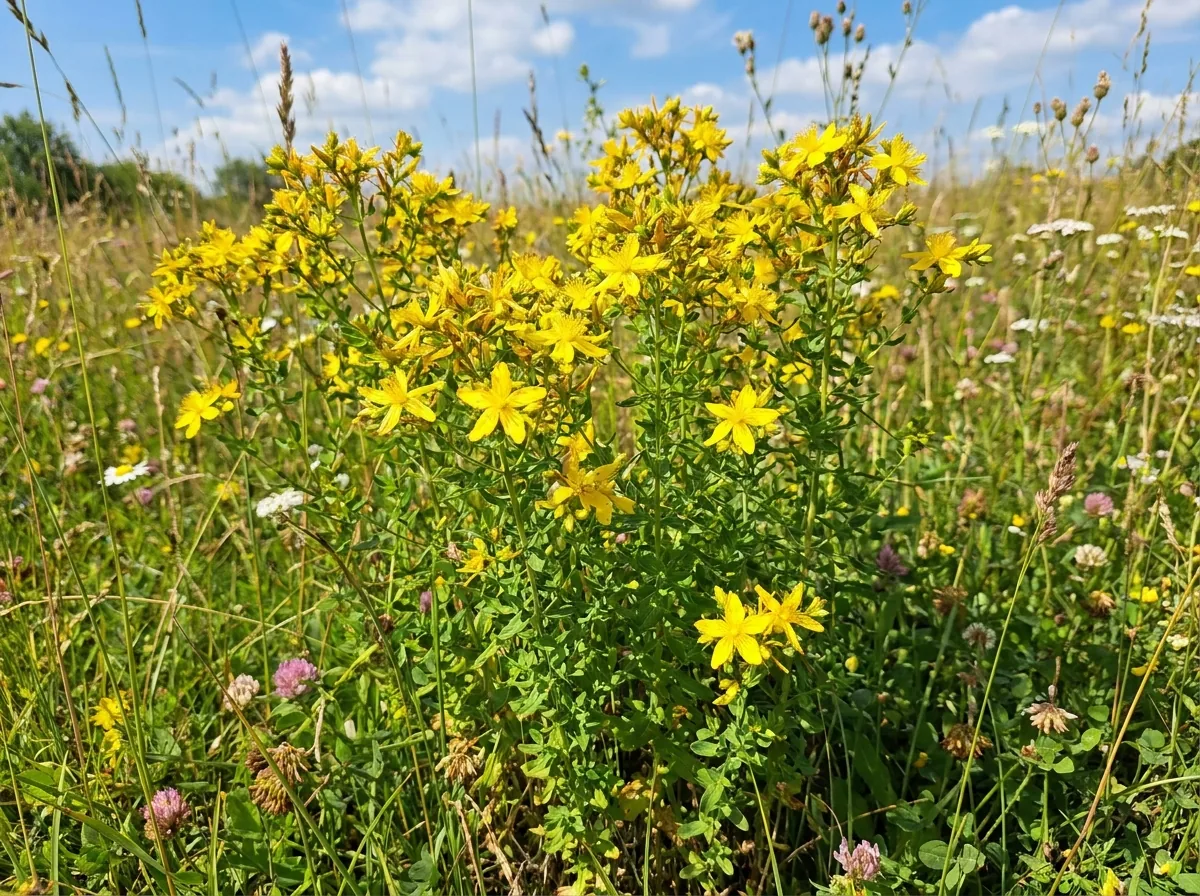
At a glance
Last reviewed 29 September 2026What it's used for
Evidence is rated per use. The same ingredient can be strong for one thing and traditional for another.
| Use | Evidence | What the research shows |
|---|---|---|
| Mild to moderate depression | Moderate | The Cochrane review (29 trials, 5,489 people, most with major depression) found extracts beat placebo: response rate ratio 1.28 (95% CI 1.10 to 1.49) in nine larger trials and 1.87 (1.22 to 2.87) in nine smaller ones, with marked heterogeneity and stronger results from German-speaking countries. Against standard antidepressants the response ratio was 1.00 for SSRIs (12 trials) and 1.02 for older antidepressants (5 trials), with fewer dropouts from side effects. A 2017 meta-analysis of 27 trials against SSRIs (4 to 12 weeks) agreed. We rate it 3 rather than 4 because of the heterogeneity and country effect, short trials, and manufacturer links among some reviewers.1,2,4,5 |
| Moderately severe major depression | Limited | In a US trial of 340 adults with major depression (HAM-D of 20 or more), St John's wort at 900 to 1,500 mg daily did not beat placebo at 8 weeks (full response 23.9% vs 31.9%), and neither did sertraline, so the trial may have been insensitive. NCCIH says it is uncertain whether the benefit holds for severe depression or beyond 12 weeks.3,4 |
| Menopausal hot flushes | Limited | NCCIH reports that a small number of studies suggest it may help hot flashes, but the evidence is not clear enough to draw conclusions. We did not read those trials ourselves, so this rests on NCCIH's summary.4 |
| Minor skin inflammation and wounds (topical) | Traditional | The EU regulator recognises oil-based and other preparations applied to the skin for minor inflammation such as sunburn and to aid healing of minor wounds, on the basis of long-standing use only. NCCIH says research on topical use for wounds is too limited to show benefit. Topical use can still cause photosensitive skin reactions.4,5 |
How much
Ranges below are what studies used and what supplements commonly contain. They are not a recommendation for you. Start at the low end.
How people take it
Safety
Who should avoid
- Anyone taking prescription medicines — ask a doctor or pharmacist first (see interactions)
- Pregnancy — NCCIH says it may raise the risk of birth defects; the EU regulator advises against
- Breastfeeding — infants have had colic, drowsiness and lethargy
- Under 18s — the EU regulator does not recommend it, too little data
- Severe depression or suicidal thoughts — see a doctor rather than self-treating
- Intense sun or sunbed exposure — photosensitive skin reactions, especially if fair-skinned
- Before elective surgery — tell the surgical team, it may interact with anaesthetic drugs
Known interactions
Questions people ask
Does St John's wort work as well as antidepressants?
For mild to moderate depression, the Cochrane review found extracts about as effective as standard antidepressants (response ratio 1.00 against SSRIs), with fewer dropouts from side effects. A large US trial in more severe depression found no benefit over placebo, and NCCIH says it is uncertain for severe depression or beyond 12 weeks.
Can I take St John's wort with the pill or other medicines?
Often not safely without advice. It speeds up how the body clears many drugs, and the EU regulator says it can reduce hormonal contraceptive levels and advises extra contraception. It is contraindicated with warfarin-type anticoagulants and several transplant and cancer drugs, so ask a doctor or pharmacist first.
Can I take St John's wort with an SSRI?
It is not advised. Both the EU regulator and NCCIH warn that the combination can add to serotonin effects, and the monograph describes rare cases of serotonin syndrome with sweating, fast heart rate, fever, agitation and tremor. Do not swap or stop an antidepressant yourself, and speak to the prescriber.
How long does St John's wort take to work?
The EU regulator says the effect can be expected within 4 weeks of treatment, so judge it after about a month, not a few days. If symptoms persist during use, see a doctor.
Sources
- Systematic review Linde K, Berner MM, Kriston L. St John's wort for major depression. Cochrane Database Syst Rev. 2008.
- Meta-analysis Ng QX, Venkatanarayanan N, Ho CY. Clinical use of Hypericum perforatum (St John's wort) in depression: A meta-analysis. J Affect Disord. 2017.
- Randomised controlled trial Hypericum Depression Trial Study Group. Effect of Hypericum perforatum (St John's wort) in major depressive disorder: a randomized controlled trial. JAMA. 2002.
- Regulator/health agency NCCIH. St. John's Wort: Usefulness and Safety. National Center for Complementary and Integrative Health (last updated May 2025).
- Regulator monograph European Medicines Agency HMPC. European Union herbal monograph on Hypericum perforatum L., herba, Final - Revision 1 (EMA/HMPC/7695/2021). 2022.
- Review Nicolussi S, Drewe J, Butterweck V, Meyer Zu Schwabedissen HE. Clinical relevance of St. John's wort drug interactions revisited. Br J Pharmacol. 2020.
Last reviewed 29 September 2026 · Next review March 2027 · How we rate evidence