
A simple wellness routine: what the evidence supports
Short answer
The habits with the strongest backing are ordinary ones. Sleep 7 or more hours on a regular basis[3], keep the same wake-up time[1], get at least 150 minutes of moderate activity a week[5], eat plenty of fruit and vegetables[7], keep alcohol to 14 units a week or less[8], and stay in touch with people[10]. None of it needs a product. The order of the day matters much less than doing the basics most days.
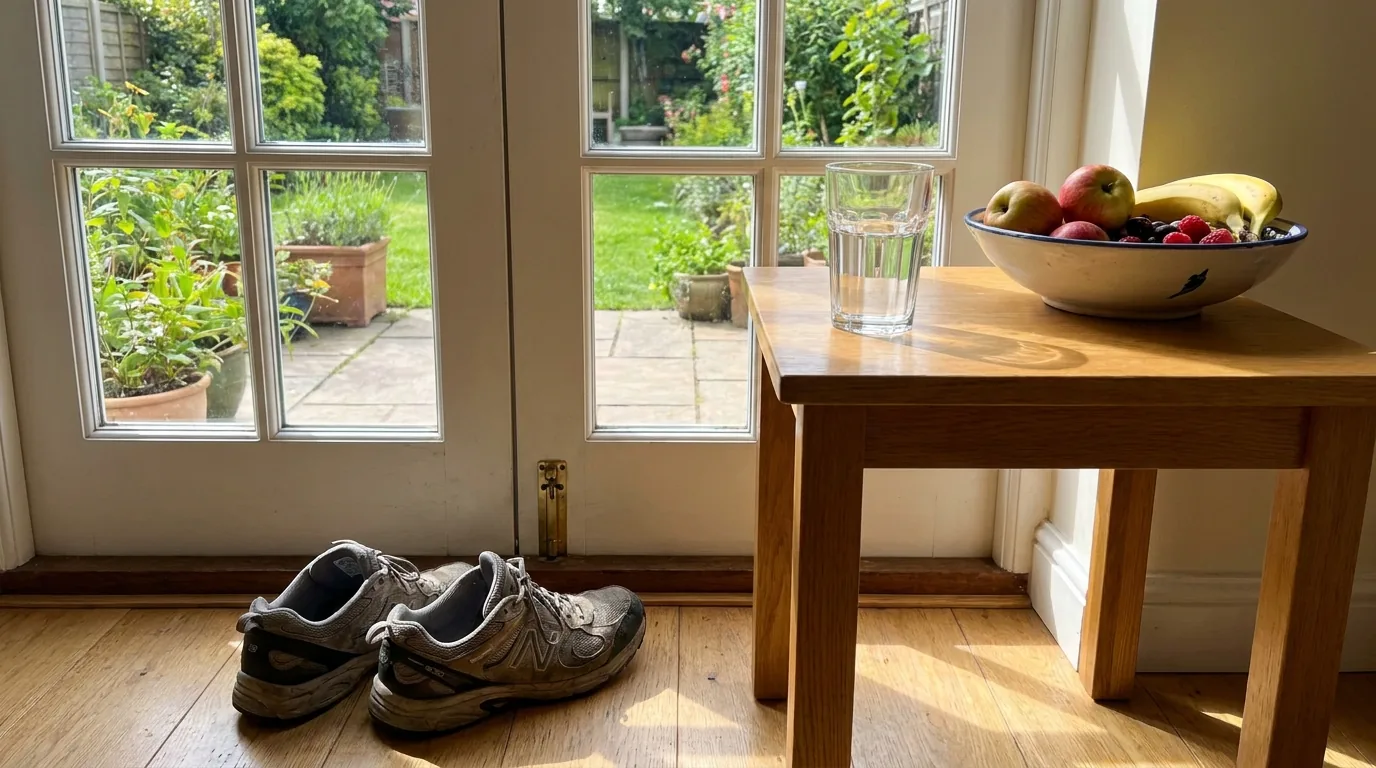
A routine is only a way of making these habits easier to repeat. We have kept to advice from health agencies and guideline bodies. Where a popular idea has no source we could open, it is left out. What follows is general advice for healthy adults and is not a substitute for care from a GP or pharmacist.
Morning
- Get up at the same time. The NHS advice for insomnia is to wake up and get out of bed at the same time every day[1]. NHLBI says to keep the same sleep schedule on weeknights and weekends[4]. A steady wake time is the anchor for the rest of the day.
- Go outside when you can. NHLBI lists spending time outside every day, when possible, and being physically active, among its healthy sleep habits[4]. That is the extent of what we can source: we have not found a health-agency figure for how much daylight you need or what time to get it, so we do not give one.
- Eat something you would call food. There is no evidence in our sources for a special breakfast. The Eatwell Guide is about the whole day: at least 5 portions of a variety of fruit and vegetables, and wholegrain or higher-fibre starchy foods such as brown rice and wholewheat pasta[7].
Through the day
- Move. The NHS guideline for adults 19 to 64 is at least 150 minutes of moderate-intensity activity a week or 75 minutes of vigorous activity, plus strengthening activities for the major muscle groups on at least 2 days a week[6]. WHO gives the same 150-minute figure and says to limit time spent sedentary[5]. Brisk walking, cycling and dancing count as moderate[6]. WHO links regular activity with improved mental health, cognitive health and sleep[5].
- Break up sitting. The NHS says to reduce time spent sitting or lying down and break up long periods of not moving with some activity[6].
- Eat and drink plainly. The Eatwell Guide says to eat at least 5 portions of fruit and vegetables a day, base meals on higher-fibre starchy foods, and have foods high in fat, salt and sugar less often and in small amounts. It suggests 6 to 8 cups or glasses of fluid a day, choosing water and sugar-free drinks, and limiting juice and smoothies to 150ml a day[7].
- Keep alcohol low. The NHS advises not drinking more than 14 units a week on a regular basis, spread over 3 or more days if you drink that much, with several drink-free days each week[8]. Fourteen units is about 6 pints of average-strength beer or 10 small glasses of lower-strength wine[8].
- See people. The NHS says good relationships are important for mental wellbeing: they can help you build a sense of belonging and self-worth and give emotional support[10]. It is a habit worth scheduling like any other.
- Watch caffeine late on. NHLBI says the effects of caffeine can last up to 8 hours, so a late-afternoon coffee can make it hard to fall asleep[4]. The NHS insomnia page advises no tea or coffee for at least 6 hours before bed[1].
Evening
- Wind down. The NHS says to relax at least 1 hour before bed, for example with a bath or a book[1], and that a calm bedtime routine can help you prepare for sleep[2].
- Turn screens off. NHS Every Mind Matters says the blue light from screens can make it harder to fall asleep and suggests avoiding phones, tablets and computers for an hour before bed[2]. NHLBI says bright artificial light may signal the brain that it is time to be awake[4].
- Go easy on alcohol near bedtime. The NHS sources differ on timing: one says to avoid alcohol and nicotine 1 to 2 hours before bed[2], the insomnia page says at least 6 hours[1]. Both say alcohol disrupts sleep. NHLBI agrees: avoid it before bed[4].
- Make the room quiet, dark and cool. The NHS says you may find it easier to sleep in a room like that[2]. If you are still awake after around 20 minutes, it suggests getting up and sitting somewhere comfortable until you feel sleepy[2].
- Protect the hours. NHS says adults need 7 to 9 hours[1]. The AASM and Sleep Research Society say less than 7 hours on a regular basis is associated with weight gain, diabetes, hypertension, heart disease, depression and greater risk of accidents, among other outcomes[3]. The statement is for healthy adults aged 18 to 60.
If broken sleep goes on, see our sleep hub, and speak to a GP if it affects your days.
Mindfulness and breathing: optional
NCCIH’s evidence summary is mixed. A 2021 analysis found mixed results for the short-term effectiveness of mindfulness for anxiety and depression. A 2019 analysis of 18 studies found mindfulness meditation improved sleep quality more than education-based treatments, though results were similar to standard therapies such as cognitive behavioural therapy[9]. NCCIH also reports that about 8% of practitioners experienced negative effects, mainly anxiety and depression, and that few studies have looked for harm[9].
The page does not give a recommended length of practice, so we do not either. Focusing on a sensation such as your breathing is one form it describes[9]. If you find it helps you settle, keep it short and keep it. If it makes you more anxious, stop and talk to a GP. For stress and worry, our stress and anxiety hub rates the herbs with evidence.
What you do not need to buy
No supplement, tea or powder is a routine, and nothing above depends on one. The advice from the NHS, WHO and NHLBI is about when you sleep, how you move, what you eat and drink, how much alcohol you have, and who you spend time with. Products sold for energy, relaxation or focus cannot stand in for that. If you are tired all the time, the usual causes are the ones in this guide, and persistent tiredness is worth raising with a GP.
If you do want to try a remedy for a particular problem, we rate each option for that problem separately: sleep, stress and anxiety, energy and fatigue and focus. Check cautions first, and see why ‘natural’ does not mean safe.
Questions people ask
How many hours of sleep do I need?
The NHS says adults need 7 to 9 hours. The American Academy of Sleep Medicine and Sleep Research Society consensus statement says adults should sleep 7 or more hours a night on a regular basis, and that regularly sleeping less is associated with adverse health outcomes. Both say to speak to a healthcare provider if you are worried you sleep too little or too much.
Do I need to meditate every day?
The sources do not say so. NCCIH describes mixed evidence: a 2021 analysis found mixed results for short-term effectiveness of mindfulness for anxiety and depression, and a 2019 analysis found it improved sleep quality more than education-based treatments. It is an option for some people, not a requirement, and a small share of people report negative effects.
Is there a supplement I should add to a routine?
None of the guidance cited here recommends one. The habits above are behaviours: sleep, movement, food, alcohol, light and company. If you want to try a remedy for a specific problem such as poor sleep, see the hub for that problem, which rates each option separately.
Sources (10)
- Health agency NHS. Insomnia.
- Health agency NHS Every Mind Matters. How to fall asleep faster and sleep better.
- Guideline body Watson NF, Badr MS, Belenky G, et al. Recommended Amount of Sleep for a Healthy Adult: A Joint Consensus Statement of the American Academy of Sleep Medicine and Sleep Research Society. J Clin Sleep Med. 2015;11(6):591–592.
- Regulator/health agency NHLBI, NIH. Sleep Deprivation and Deficiency: Healthy Sleep Habits.
- Guideline body World Health Organization. Physical activity. Fact sheet.
- Health agency NHS. Physical activity guidelines for adults aged 19 to 64.
- Health agency NHS. The Eatwell Guide.
- Health agency NHS. Calculating alcohol units.
- Regulator/health agency NCCIH. Meditation and Mindfulness: What You Need To Know. National Center for Complementary and Integrative Health.
- Health agency NHS. 5 steps to mental wellbeing.
Reviewed by Healthy and Herbal editors · 4 October 2026 · Next review April 2027
Reader notes
Experiences and questions from readers, read by an editor before they appear. They are personal accounts, not evidence, and are not medical advice.