Awaiting review. This guide is sourced but has not yet been checked by our reviewer.
How to Make Lipstick at Home
A lipstick is a firmer version of lip balm: 8 g beeswax, 4 g cocoa butter and 8 g jojoba oil, with about 1.5 g of cosmetic-grade iron oxide and mica for colour. Use only colourants sold for cosmetics and lips. Crayons and food colouring are not made or approved for lips, so leave them out.
Draft, awaiting clinical review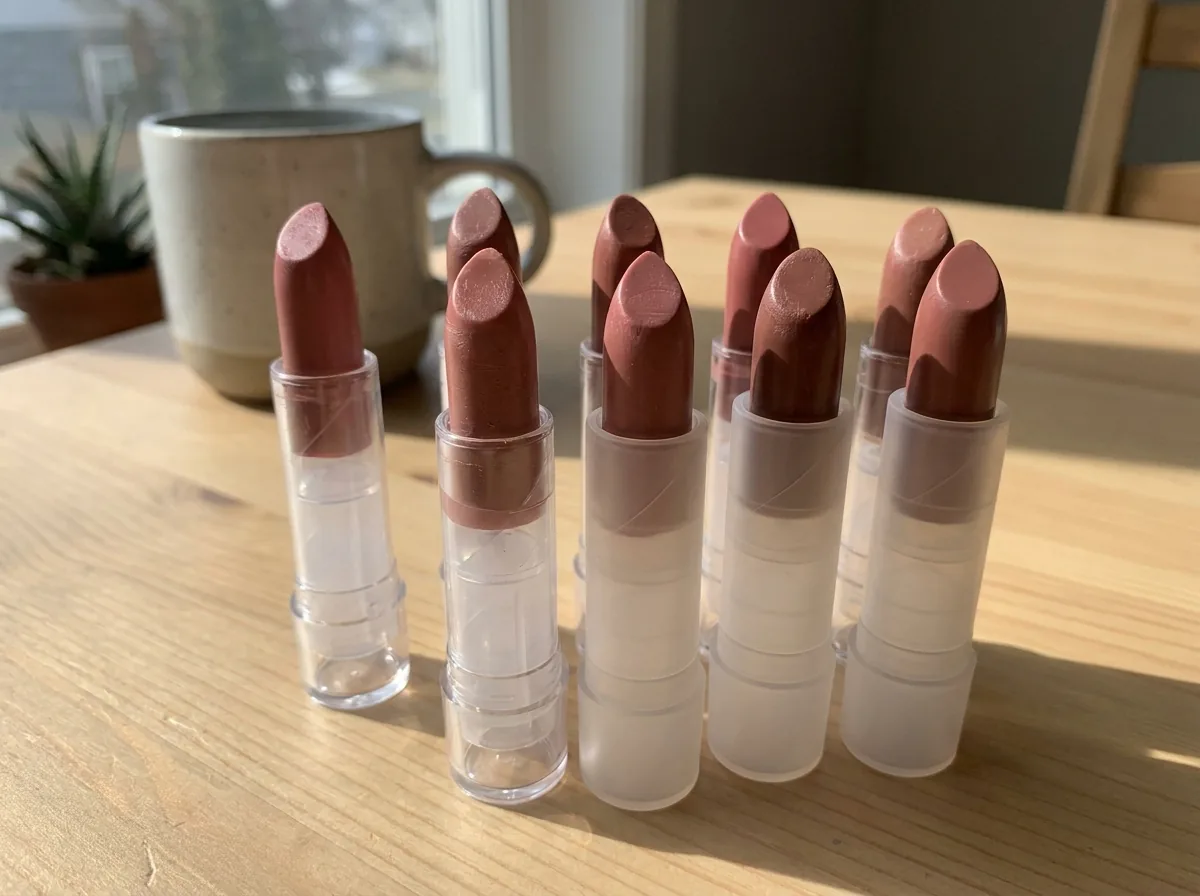
Ingredients
- 8 g (about 2½ tsp) Beeswax pelletsVegan swap: about 4 g candelilla wax, which is harder
- 4 g (about 1 tsp, packed) Cocoa butterGives a firm, glidey stick. Shea butter is softer
- 8 g (about 2 tsp) Jojoba oilMelted coconut oil works too. Avoid castor oil, a known cause of lip allergy
- About 1 g (roughly ½ tsp) Cosmetic-grade iron oxide pigment (red, brown or a blend)Sold for cosmetics; paint or ceramic pigments are not the same
- About 0.5 g (roughly ¼ tsp) Cosmetic-grade mica (optional)Adds a soft shimmer and lightens the colour
Equipment
- Digital scale that reads to 0.1 g if you can get one
- Heatproof jug or small glass bowl
- Saucepan for a water bath (bain-marie)
- Lipstick tubes, or a silicone lipstick mould, new or freshly washed and dried
- Small mixing tool such as a mini whisk or toothpick, and a saucer
- Fridge for setting
Method
Prepare the moulds
Use new tubes or moulds, or wash reusable ones in hot soapy water and dry them completely. Stand them upright, in the fridge if you have room, so the lipstick sets fast.7
Make the colour paste
Put the pigment and mica in a small dish with 2 g of the jojoba oil, taken from the 8 g. Mash with the back of a spoon until no dry specks are left. This stops gritty lumps.2,3
Melt the wax and butter
Weigh the beeswax, cocoa butter and remaining 6 g of oil into the jug. Stand it in a saucepan with about 3 cm (1 in) of barely simmering water and stir until clear, usually 5 to 10 minutes. Keep water out of the jug.
Stir in the colour
Take the jug off the heat and scrape in the colour paste. Stir well for a minute, and keep stirring as it cools slightly so the pigment does not sink.
Test the colour and firmness
Dip a cold spoon in, leave it for a minute, then rub a little on your hand. It dries darker and firmer than when hot. Add a pinch more pigment for colour, or 1 g of oil if the stick feels too hard.
Pour and chill
Pour into the moulds straight away, stirring the jug between each. Chill for 30 to 45 minutes. Top up any that sink, chill again, then cap.
Patch-test, then use
Try a little on your inner forearm for 24 hours, then on a small patch at the corner of your lips, before wearing it. Stop if you get redness, itching or swelling.5,6
Safety
- Every colour in a lipstick must be approved by FDA for that use, and lips are not "externally applied". Use only cosmetic-grade pigments sold for lips1
- FDA lists iron oxides and mica for cosmetics generally. Iron oxide for cosmetics is capped at 3 ppm arsenic and 10 ppm lead, so buy cosmetic grade2,3
- Never use crayons, eyeshadow, paint pigments or food colouring. They are not made or approved for lips, and traces are swallowed1
- Patch-test first. Waxes, castor oil, dyes and fragrances have all caused allergic lip reactions, so a new lipstick can still upset you5,6
- Leave out flavours and essential oils, and do not add water or juice. Use clean containers; dirty ones and fingers can carry microbes7
- Hot wax and oil can scald. Keep children away, and cool a burn under running water for 20 minutes8
Variations
Replace the pigment with 1 tsp cocoa powder for a sheer brown tint, or beetroot powder for a sheer pink that tends to fade. These are food ingredients, not colour additives on FDA's cosmetics list, so treat this as a home-use choice, do not sell it, and patch-test with care.
Halve the pigment and add 1 g more oil for a sheer, balm-like lipstick.
Swap the beeswax for about 4 g candelilla wax. It is harder, so test a spoonful before pouring.
Use shea butter in place of cocoa butter for a softer, creamier stick that melts sooner in a warm bag.
Does it actually work?
A lipstick colours and softens the lips; that is all it claims here. Wax and oil give a thin protective layer, but we found no evidence that a homemade lipstick heals dry lips or is better than a plain balm. Colour and wax bring their own risk: dyes, waxes and castor oil are recognised causes of allergic lip reactions, and clinical guidance is to patch-test. It has no sun protection. Learn more about the ingredients: beeswax, cocoa butter, jojoba oil, cocoa powder and beetroot powder.5,6
Evidence ratings for what goes in: Beeswax, Cocoa butter, Jojoba oil.
Questions people ask
Can I use crayons to make lipstick?
No. Crayons are made for paper, not lips, and their pigments and waxes are not sold as cosmetic ingredients. FDA requires every colour in a cosmetic to be approved for its intended use, and lips are treated separately from skin.
Can I use food colouring in lipstick?
No. A colour approved for food is not automatically approved for cosmetics, and FDA approves colours for a specific use. Food dyes are also water-based, so they do not mix into wax and oil.
What colourants are safe for homemade lipstick?
Cosmetic-grade iron oxides and mica are the standard choices. FDA lists both for use in cosmetics generally, with purity limits on iron oxides. Buy them from a cosmetic ingredient source, not a paint or craft shop.
Why is my homemade lipstick soft or crumbly?
Soft means too much oil, crumbly means too much wax or too much pigment. Change by 1 g of oil or wax at a time and test on a cold spoon before you pour.
How long does homemade lipstick last?
There is no reliable tested figure. A water-free stick is less hospitable to microbes but not sterile. Treat 6 months as a cautious guide and bin it if it smells off.
Sources
- Regulator US Food and Drug Administration. Color Additives and Cosmetics: Fact Sheet.
- Regulation 21 CFR 73.2496 - Mica. Legal Information Institute, Cornell Law School.
- Regulation 21 CFR 73.2250 - Iron oxides. Legal Information Institute, Cornell Law School.
- Regulation 21 CFR Part 73 Subpart C - Listing of Color Additives Exempt From Certification: Cosmetics. Legal Information Institute, Cornell Law School.
- Systematic review Pal B, et al. Allergic contact dermatitis to lip care cosmetic products - a systematic review. Cutaneous and Ocular Toxicology. 2024.
- Clinical reference DermNet NZ. Contact reactions to lipsticks and other lipcare products.
- Regulator US Food and Drug Administration. Microbiological Safety and Cosmetics.
- Public-health body NHS. Burns and scalds.
Educational only. Patch-test anything new on your skin, and stop if it irritates.