Awaiting review. This guide is sourced but has not yet been checked by our reviewer.
How to Make Body Butter (Whipped)
Whipped body butter is two-thirds solid butter and one-third liquid oil by weight: here 60 g shea butter, 30 g cocoa butter and 45 g jojoba oil. Melt, chill until soft-set, then whip until fluffy. It contains no water, so it needs no preservative, as long as you keep water out of it.
Draft, awaiting clinical review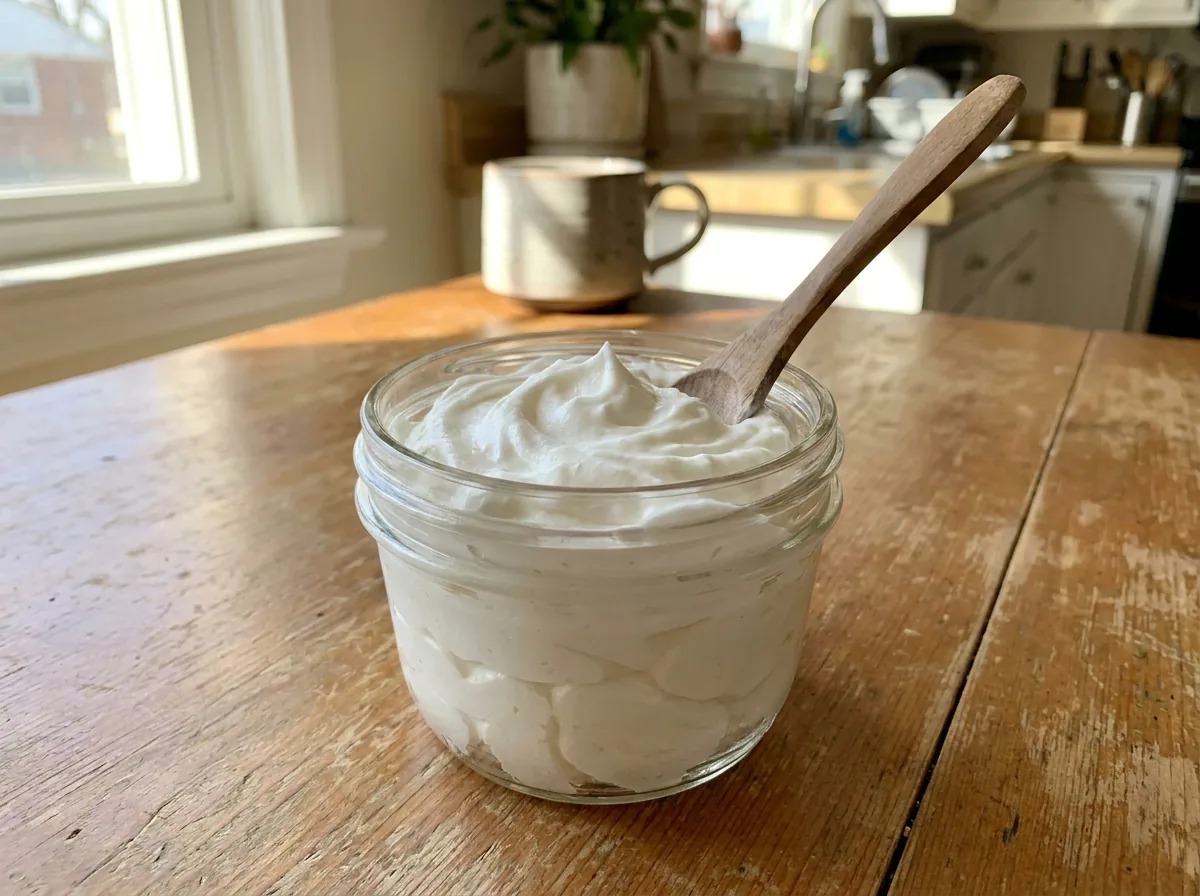
Ingredients
- 60 g (about ¼ cup, packed) Shea butterUnrefined smells nutty; refined has little scent
- 30 g (about 2 tbsp, packed) Cocoa butter (or mango butter)Adds firmness. Mango butter is softer and nearly scentless
- 45 g (about 3 tbsp) Liquid oil: jojoba or melted coconut oilCoconut oil is an alternative and gives a slightly heavier feel
Equipment
- Digital scale that reads to 1 g
- Heatproof bowl and a saucepan for a water bath (bain-marie)
- Hand-held electric whisk or stand mixer with a whisk attachment
- Two clean, dry 100 ml jars, new or washed and dried completely
- Fridge or freezer
Method
Prepare everything dry
Wash the jars, bowls and whisk in hot soapy water and dry them completely. Any water left behind can let microbes grow in the finished butter.2,3
Weigh the butters and oil
Weigh the shea butter, cocoa butter and jojoba oil into the heatproof bowl: 60 g, 30 g and 45 g. That is roughly 2 parts shea to 1 part cocoa to 1½ parts oil, a common starting ratio.
Melt gently
Set the bowl over a saucepan with about 3 cm (1 in) of barely simmering water. Stir now and then until every crystal has gone and the liquid is clear, usually 10 minutes. Keep water and steam out of the bowl.
Cool and chill
Leave the bowl on the counter for 10 minutes, then chill in the fridge or freezer for 20 to 40 minutes. It is ready when it is opaque and soft-set, like thick yogurt, but not hard. Do not let it freeze solid.
Whip
Whisk on medium for 3 to 5 minutes, scraping down the sides, until it holds soft peaks and looks like buttercream. If it is still runny, chill it for 10 more minutes and whip again.
Jar it
Spoon or pipe into the jars with a clean, dry spoon and put the lids on. Leave it in a cool place for a few hours to firm up before use.
Patch-test, then use
Rub a small amount on your inner forearm and leave it for 24 hours. If you get stinging, redness, itching or a rash, don't use it and speak to a GP, nurse or pharmacist.1
Safety
- Keep it water-free. Water-containing cosmetics need a preservative, so never add aloe, hydrosol, milk or honey, and keep wet hands and spoons out of the jar2,3
- Use scrupulously clean, dry jars, and scoop with a clean, dry spoon or spatula rather than wet fingers2
- Patch-test first. Emollients can sometimes cause stinging, blocked follicles or a rash1
- Emollient-soaked clothing, bedding and dressings can catch fire easily. Keep away from flames and cigarettes, and wash fabric often1
- Hot butter and oil can scald. Keep children away, and cool a burn under running water for 20 minutes4
Variations
Use 40 g shea, 20 g mango butter and 45 g oil. Less cocoa butter gives a softer butter that whips more easily but melts sooner.
Take 10 g off the oil for a firmer butter that holds peaks better in warm rooms.
Swap the jojoba for melted coconut oil, which sets firmer and leaves a slightly heavier film.
Use refined shea and mango butter and leave out fragrance. This recipe has no essential oils on purpose, as scents are a common source of contact reactions.
Does it actually work?
The NHS describes emollients as moisturising treatments applied to the skin to soothe and hydrate it. They work by forming a protective layer that holds moisture in, which is what a butter and oil blend does for dry skin. That is a different thing from a medicated treatment for eczema or psoriasis: the NHS advice concerns tested products, and we found no trial comparing homemade body butter with them. Ointments, being greasy and thick, are the NHS's suggestion for very dry skin, and body butter is a similar, greasy texture. It won't treat the underlying cause of dry skin. If your skin is cracked, weeping or itchy, see a pharmacist or GP. Learn more about the ingredients: shea butter, cocoa butter, jojoba oil and coconut oil.1
Evidence ratings for what goes in: Shea butter, Cocoa butter, Jojoba oil.
Questions people ask
Why is my homemade body butter grainy?
Grains come from butter, mostly shea, that cooled slowly and formed larger fat crystals. Melt everything fully until clear, chill it quickly in the fridge or freezer, then whip. If it has already gone grainy, remelt fully and repeat. This is established craft practice rather than something we could source.
How do I store whipped body butter?
Keep it in a clean, dry, lidded jar in a cool, dark place, out of the bathroom steam and direct sun. Heat melts the butter, and slow re-setting can bring the graininess back. Scoop with a dry spoon.
Does body butter need a preservative?
Not if it contains no water. Water is what lets microbes grow, and low water content limits it, so a butter and oil blend does not need a preservative in the way a lotion does. Any water you add, from aloe, hydrosol or wet hands, changes that. It is not sterile, so it still has a limited life.
How long does homemade body butter last?
There is no tested figure for a home recipe. Oils can go rancid over time even without microbes. Treat 3 to 6 months as a cautious guide, and bin it if it smells sharp, sour or like old crayons.
Why is my body butter greasy or hard to whip?
Too much oil makes it greasy and slack, and too little makes it stiff. Adjust by 5 to 10 g of oil, remelt, and chill again. Whip when it is soft-set, not when hot or rock-hard.
Sources
- Public-health body NHS. Emollients.
- Regulator US Food and Drug Administration. Microbiological Safety and Cosmetics.
- Review Halla N, et al. Cosmetics Preservation: A Review on Present Strategies. Molecules. 2018.
- Public-health body NHS. Burns and scalds.
Educational only. Patch-test anything new on your skin, and stop if it irritates.