Curcumin vs Turmeric
Which is better for joints and inflammation?
Awaiting clinical review. This comparison is built from sourced entries but has not yet been signed off by a pharmacist or clinician.
Short answer
For knee osteoarthritis, pick the curcumin extract: it is the form the trials tested, and it is rated Moderate against Limited for turmeric because the spice or plain root powder has not been shown to work. Even so, the direction is consistent but the size of benefit is uncertain (very high heterogeneity, and a 2026 critical review rated the reviews' methods extremely low quality). Extract is not the safer choice: liver injury reports involve supplements, particularly high-absorption, high-dose products.
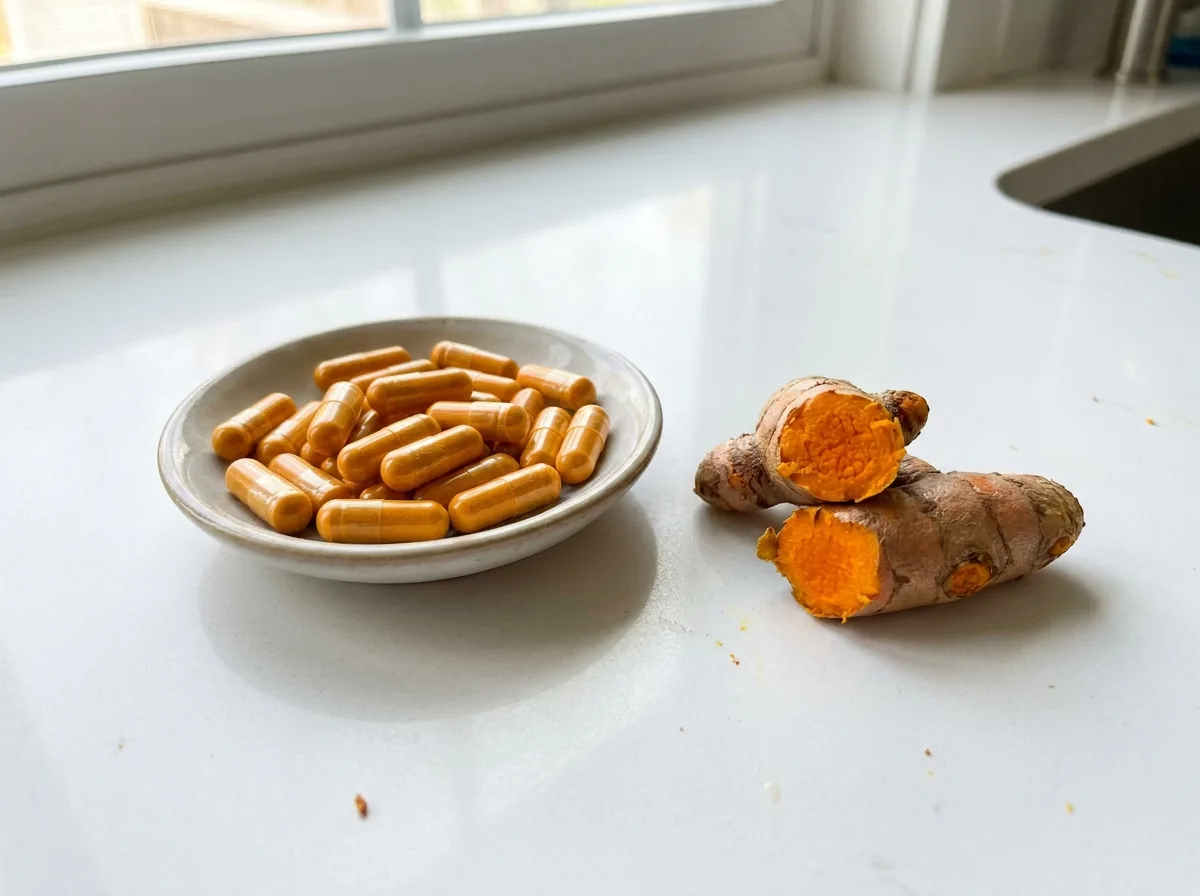
The form the knee osteoarthritis trials tested: pain SMD -0.82 in one meta-analysis, but high heterogeneity
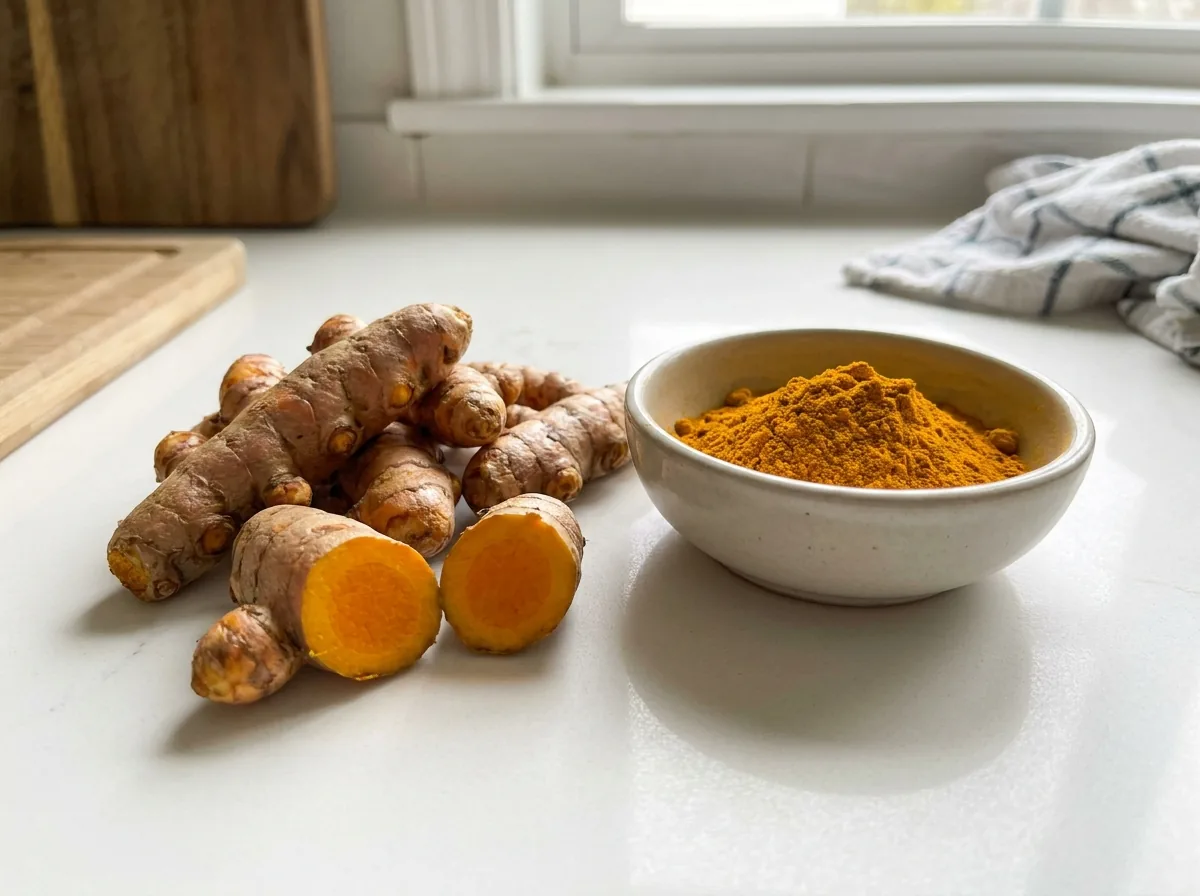
The spice or plain root: EU traditional-use dose, but not the form tested for joints
Side by side
| Attribute | Curcumin | Turmeric |
|---|---|---|
| Evidence for joints and inflammation | Moderate (knee osteoarthritis pain and function) | Limited (knee osteoarthritis pain and function) |
| Best for | Knee osteoarthritis pain | Knee osteoarthritis pain |
| How fast | 4+ weeks | 4+ weeks |
| Typical form | Curcuminoid extract; doses vary widely | Root powder, 0.5–1 g, 2–3 times daily |
| Main caution | Rare liver injury, esp. high-absorption products | Rare liver injury reported with supplements |
| Form behind the joint trials | Curcuminoid extracts; products vary widely | Extracts; not the spice or plain root powder |
| Liver injury | Rare; more with high-absorption, high-dose products | Rare; reported with supplements |
| Blood thinners | Monitor: one small, manufacturer-linked study | No interaction recorded |
Which should you pick?
Choose Curcumin if
- you want the form the knee osteoarthritis trials actually tested
- you have no liver disease, are not pregnant and have asked a pharmacist about any blood thinner
- you will judge it over a month or more, since trials ran up to 16 weeks
Choose Turmeric if
- you want it as a spice or a tea and do not expect it to treat joint pain
- your aim is mild indigestion, where the EU regulator recognises the root on traditional use alone
Questions people ask
Can I take curcumin and turmeric together?
No interaction between the two is recorded, but they come from the same plant, so taking both mainly adds to the same rare liver-injury caution rather than covering different ground. Neither entry tests the combination, and neither says how much curcumin the spice adds.
What is the difference between turmeric and curcumin?
Turmeric is the root (rhizome) of Curcuma longa, used as a spice, a powder or a tea; the EU traditional-use dose is 0.5 to 1 g, two to three times a day. Curcumin is a concentrated curcuminoid extract of the same plant, sold as capsules whose dose varies by product, and on its own it is poorly absorbed. Neither entry says how much curcumin the spice contains, and the knee osteoarthritis trials tested extracts.
Does adding black pepper (piperine) help?
Piperine raised curcumin blood levels about 20-fold in a small human study. But piperine was present in 3 of 7 products in a US liver-injury case series, so more absorption is not automatically safer, and no source in either entry shows that boosted absorption improves joint outcomes.
Is cooking with turmeric enough to help joint pain?
The evidence does not show that. The trials mostly tested curcumin or curcuminoid extracts, not culinary turmeric or plain root powder, so the results say nothing reliable about the spice. Turmeric root is rated only Traditional for mild indigestion.
Sources
- Meta-analysis Wang Z, Singh A, Jones G, et al. Efficacy and Safety of Turmeric Extracts for the Treatment of Knee Osteoarthritis: a Systematic Review and Meta-analysis of Randomised Controlled Trials. Curr Rheumatol Rep. 2021.
- Systematic review Chen J, Zhou Q, Yu W, et al. A critical review of systematic reviews and meta-analyses of curcumin for knee osteoarthritis. Front Pharmacol. 2026.
- Regulator/health agency NCCIH. Turmeric: Usefulness and Safety. National Center for Complementary and Integrative Health.
- Human pharmacokinetic study Shoba G, Joy D, Joseph T, Majeed M, Rajendran R, Srinivas PS. Influence of piperine on the pharmacokinetics of curcumin in animals and human volunteers. Planta Med. 1998.
- Case series Halegoua-DeMarzio D, Navarro V, Ahmad J, et al. Liver Injury Associated with Turmeric - A Growing Problem: Ten Cases from the Drug-Induced Liver Injury Network. Am J Med. 2023.
- Regulator monograph European Medicines Agency HMPC. European Union herbal monograph on Curcuma longa L., rhizoma (EMA/HMPC/329755/2017). 2018.