
Ashwagandha vs Magnesium glycinate
Which is better for stress and anxiety?
Short answer
For anxiety, ashwagandha has the better evidence: it is rated Moderate against Limited, with meta-analyses of small, short trials finding lower anxiety scores than placebo, though NCCIH still calls the findings inconclusive. Magnesium's anxiety evidence is poor quality, came mostly from lactate and oxide often combined with vitamin B6 or herbs, and none of it tests glycinate.
Glycinate is the lower-risk choice: ashwagandha carries rare liver injury, should be avoided in pregnancy and can interact with thyroid, sedative and immunosuppressant medicines.
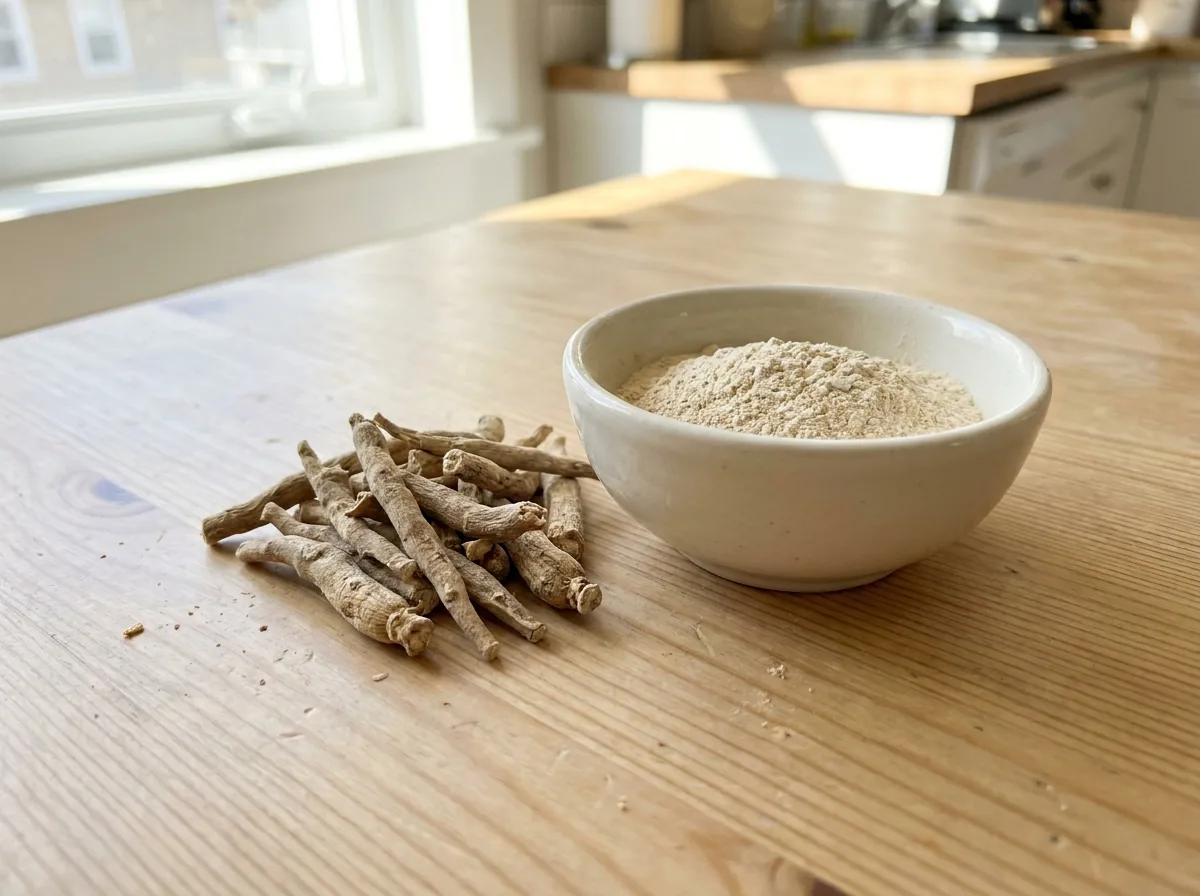
Lower anxiety scores than placebo in meta-analyses of 9 and 15 small trials; judge over about 8 weeks
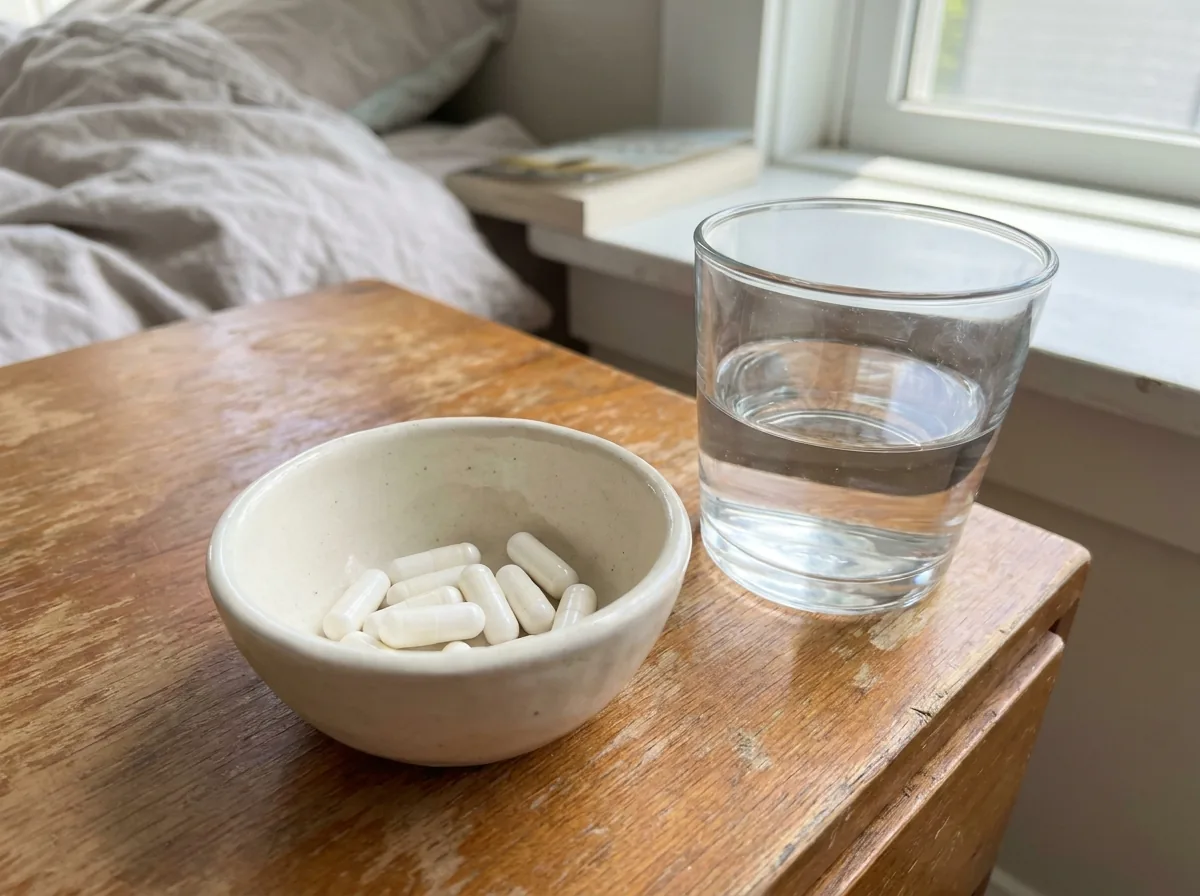
Fewer cautions, but its anxiety evidence is poor quality and none of it tests the glycinate form
Side by side
| Attribute | Ashwagandha | Magnesium glycinate |
|---|---|---|
| Evidence for stress and anxiety | Moderate (anxiety symptoms) | Limited (anxiety and stress) |
| Best for | Anxiety and sleep | Poor sleep |
| How fast | 4+ weeks | 4+ weeks |
| Typical form | Root extract, 250–600 mg a day | Bisglycinate, 250 mg elemental Mg |
| Main caution | Rare liver injury; avoid in pregnancy | Loose stools above about 250–350 mg supplemental Mg |
| Safe in pregnancy? | NCCIH advises avoiding it | Ask a clinician about dose first |
| How long to judge it | About 8 weeks, the length most trials ran | About 4 weeks in the one glycinate (sleep) trial |
| Interactions recorded | Thyroid, sedatives, immunosuppressants (Caution) | None; check regular medicines with a pharmacist |
Which should you pick?
Choose Ashwagandha if
- you want the option with more trial evidence for anxiety symptoms and can judge it over about 8 weeks
- you are not pregnant or breastfeeding and have no thyroid, autoimmune or liver condition and no surgery planned
- you do not take thyroid medicine, sedatives or immunosuppressants
Choose Magnesium glycinate if
- ashwagandha's liver, thyroid, autoimmune or pregnancy cautions rule it out for you
- you take a medicine ashwagandha's entry lists as an interaction (glycinate's lists none; ask a pharmacist)
- you have healthy kidneys and will keep supplemental magnesium within about 250 to 350 mg a day
Questions people ask
Can I take ashwagandha and magnesium glycinate together?
Neither entry tests the two together or names the other as an interaction: glycinate's entry records no interactions, and ashwagandha's rows cover thyroid medicine, sedatives, immunosuppressants, diabetes and blood pressure medicines but not magnesium. Whether they are safe or more effective combined is unknown, not cleared.
Is ashwagandha or magnesium better for anxiety?
Ashwagandha, on the evidence: a meta-analysis of 9 trials (558 people) found Hamilton Anxiety scores 2.19 points lower than placebo, and one of 15 trials found a 3.52-point fall at 8 weeks, though the trials were small and short.
A review of 18 magnesium studies found suggestive benefit in people prone to anxiety but called the evidence poor, and it covered other forms, mostly lactate and oxide, not glycinate.
Which is better for stress?
Neither is well supported, and both are rated Limited here. Ashwagandha lowered cortisol in trials, but reviews disagree on whether people felt less stressed: one review of six trials found no significant effect on perceived stress. The magnesium review that covered stress rated its evidence poor.
Which is better for sleep?
Ashwagandha is rated Moderate for sleep and glycinate Limited. A meta-analysis of 5 ashwagandha trials found a small-to-moderate improvement in overall sleep, larger in people with insomnia, at 600 mg a day or more and after 8 weeks or longer. Glycinate's one trial found a small drop in insomnia scores after four weeks at 250 mg of magnesium.
Sources (6)
- Systematic review Velan A, Venugopal V, Balakrishnan A, et al. Effects of Ashwagandha (Withania Somnifera) on stress and anxiety: A systematic review and meta-analysis. Explore (NY). 2024;20(6):103062.
- Systematic review Bachour G, Samir A, Haddad S, et al. Effects of Ashwagandha Supplements on Cortisol, Stress, and Anxiety Levels in Adults: A Systematic Review and Meta-Analysis. BJPsych Open. 2025.
- Systematic review Albalawi AA, et al. Dual impact of Ashwagandha: Significant cortisol reduction but no effects on perceived stress - A systematic review and meta-analysis. Nutrition and Health. 2025;31(4):1395-1408.
- Regulator / government health agency National Center for Complementary and Integrative Health (NCCIH). Ashwagandha: Usefulness and Safety.
- Systematic review Cheah KL, Norhayati MN, Husniati Yaacob L, Abdul Rahman R. Effect of Ashwagandha (Withania somnifera) extract on sleep: A systematic review and meta-analysis. PLoS One. 2021;16(9):e0257843.
- Systematic review Boyle NB, Lawton C, Dye L. The Effects of Magnesium Supplementation on Subjective Anxiety and Stress: A Systematic Review. Nutrients. 2017.
Reader notes
Experiences and questions from readers, read by an editor before they appear. They are personal accounts, not evidence, and are not medical advice.