
Sea moss
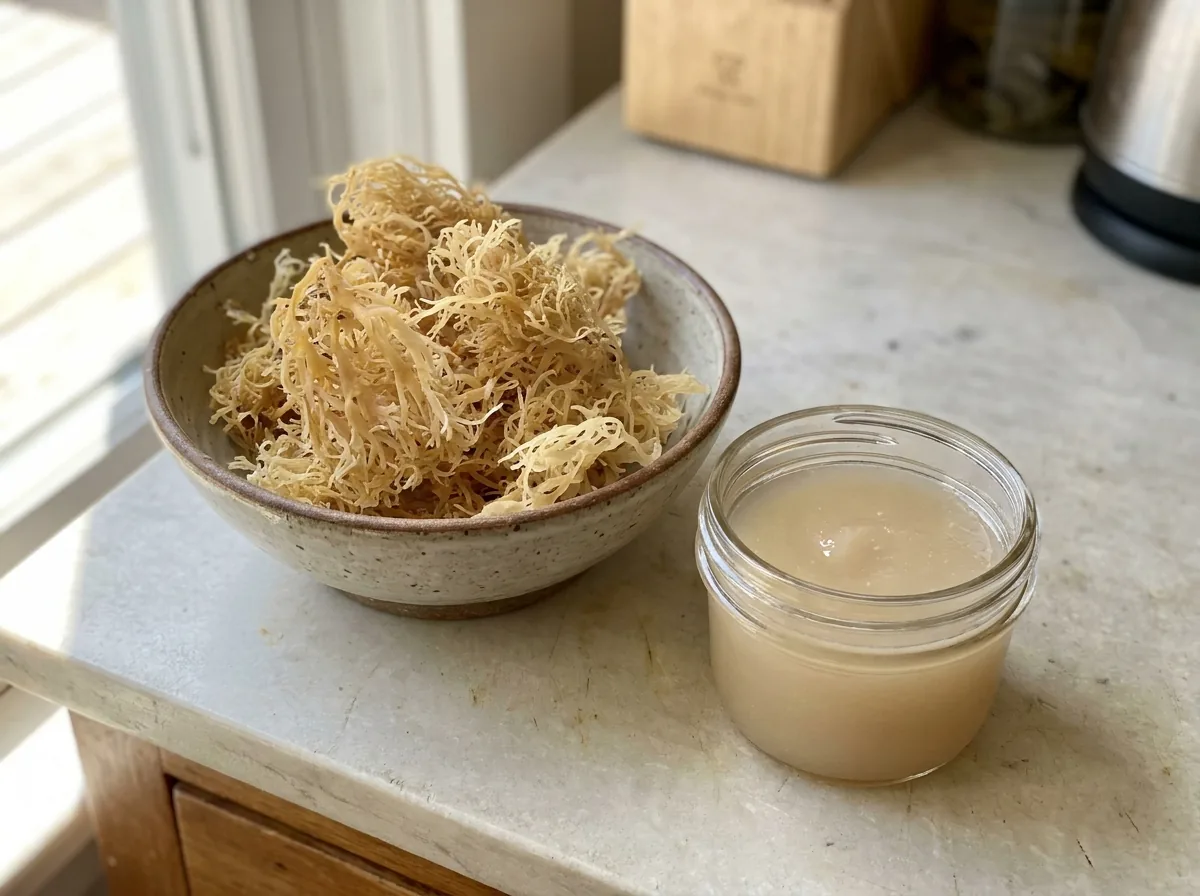
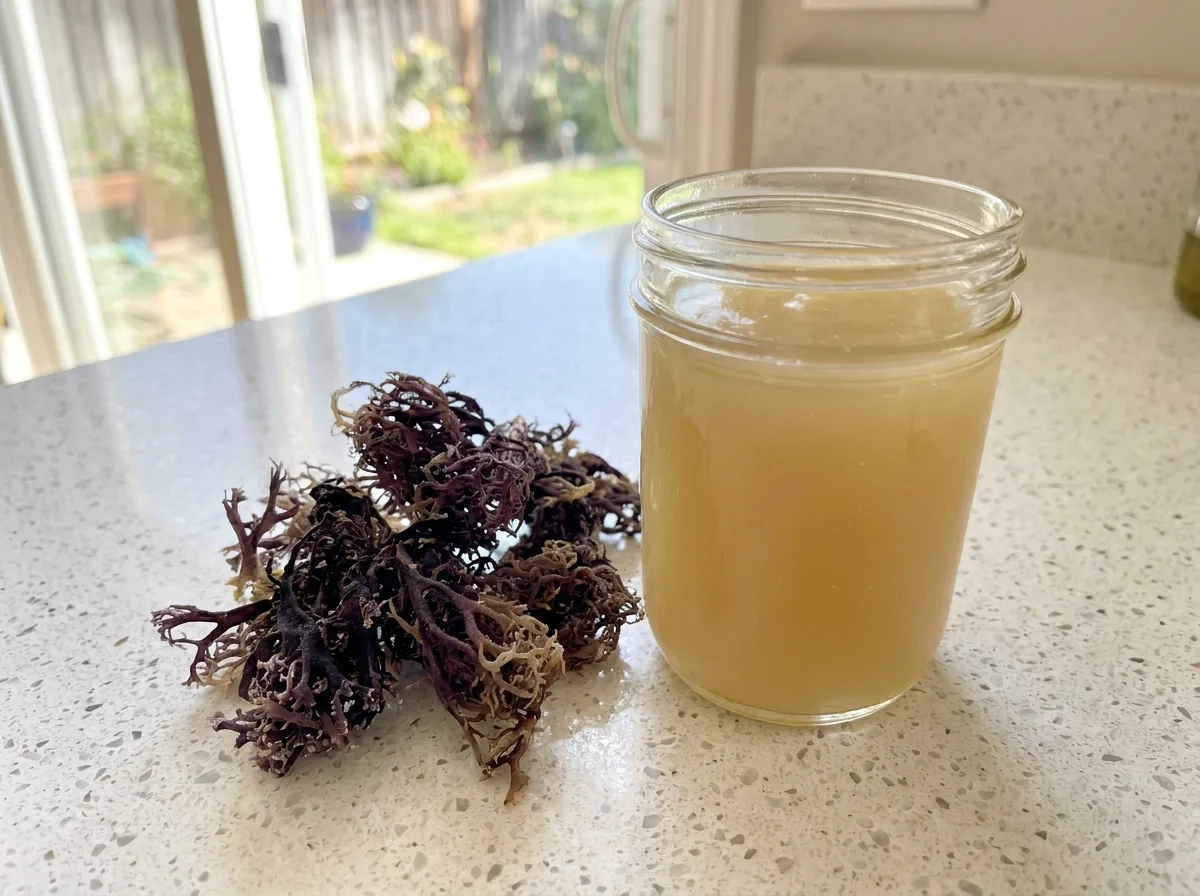
No human trial supports the popular claims for sea moss (Irish moss, Chondrus crispus), whether for thyroid health, immunity or its '92 minerals'; it is a seaweed with small amounts of some minerals, and LactMed notes that no medicinal value has been proven. The caution that matters most is iodine: measured levels in dried Irish moss differ almost fifty-fold between studies, and case reports link sea moss to dangerous thyroid over-activity.
It can also carry arsenic, cadmium, lead and mercury, so anyone with thyroid disease, or who is pregnant or breastfeeding, should ask a clinician before eating it regularly.
At a glance
Last reviewed 10 October 2026What it's used for
Evidence is rated per use. The same ingredient can be strong for one thing and traditional for another.
| Use | Evidence | What the research shows |
|---|---|---|
| Minerals and vitamins ('92 minerals') | Traditional | The USDA record for raw Irish moss lists 10 minerals, not 92, and no iodine value; one tablespoon (10 g) gives about 5 kcal, 0.9 mg iron, 14 mg magnesium, 7 mg calcium and 18 µg folate. We found no published analysis supporting the '92 minerals' claim and no trial testing sea moss as a way to correct any deficiency. The elements it does carry include arsenic, lead, cadmium and mercury from the water it grew in.9,4 |
| Thyroid support | Traditional | We found no trial showing sea moss helps any thyroid condition, but we did find harm: in one case report a woman's Graves' disease worsened while she used an Irish sea moss and bladderwrack supplement and improved after she stopped, and in another a woman developed thyroid storm after six days of fruit juice and sea moss supplements. People with existing or previously treated thyroid disease are most susceptible to iodine excess.5,6,10 |
| Iodine supply | Traditional | Sea moss does supply iodine, but not predictably. A Spanish analysis found about 3.9 mg per kg of dried Irish moss, while EFSA's dataset for dried carrageen mosses (4 samples) averaged about 186 mg per kg. At those figures, 4 g of dried moss would hold roughly 15 µg or 740 µg of iodine, the second above the 600 µg adult upper limit (our calculation).2,1 |
| Immunity, gut health and energy | Traditional | These are among the commonest marketing claims, but we found no human trial of sea moss for any of them. LactMed's record describes sea moss as used as food and medicine although no medicinal value has been proven.4 |
How much
Ranges below are what studies used and what supplements commonly contain. They are not a recommendation for you. Start at the low end.
How people take it
Safety
Who should avoid
- Thyroid disease, now or in the past — seaweed iodine can trigger over-activity
- Taking thyroid medication — ask your prescriber before eating sea moss regularly
- Pregnancy — high seaweed iodine may risk maternal health; ask your midwife
- Breastfeeding — LactMed advises avoiding it unless iodine and metals are shown low
- Children — the iodine upper limit for ages 1–3 is a third of the adult limit
- Weakened immunity — sea moss products have carried bacteria including Salmonella
Known interactions
Questions people ask
Does sea moss really contain 92 minerals?
We found no published analysis that supports the claim. The USDA's nutrient record for raw Irish moss lists 10 minerals, in modest amounts, and sea moss can also carry unwanted elements such as arsenic, lead, cadmium and mercury.
Is sea moss bad for your thyroid?
It can be. Its iodine content is unpredictable, and case reports describe sea moss worsening Graves' disease and, in another woman, thyroid storm after six days of sea moss supplements. People with a thyroid condition, or a past one, are the most susceptible.
Does sea moss contain heavy metals?
It can. A 2026 study of 53 dried sea moss products sold online detected arsenic, cobalt and mercury, and EFSA's data for dried carrageen mosses averaged about 23 mg of total arsenic, 0.8 mg of cadmium and 0.4 mg of lead per kg.
EFSA concluded that seaweed is a relevant source of heavy metals and iodine for the people who eat it, with iodine the main concern.
Is the carrageenan in sea moss safe?
Food-grade carrageenan is a permitted additive. EFSA's 2018 review found it is not absorbed intact and raised no cancer or genetic-damage concern, but called its acceptable daily intake temporary because of data gaps, including whether it affects inflammatory bowel disease, and said it remains inadvisable in infant formula fed from birth.
Those findings are about the purified additive; we found no safety assessment of eating whole sea moss gel.
Make it yourself
DIY guides that use sea moss, with quantities, safety notes and an honest word on what they do.
Sources (10)
- Regulator report European Food Safety Authority (EFSA), Dujardin B, Ferreira de Sousa R, Gómez Ruiz JÁ. Dietary exposure to heavy metals and iodine intake via consumption of seaweeds and halophytes in the European population. EFSA Journal. 2023.
- Product analysis Darias-Rosales J, Rubio C, Gutiérrez ÁJ, Paz S, Hardisson A. Risk assessment of iodine intake from the consumption of red seaweeds (Palmaria palmata and Chondrus crispus). Environ Sci Pollut Res Int. 2020.
- Product analysis Rejuso A, Çobo M, Curran JE, et al. Microbial and Heavy Metal Analyses of Commercially Available Sea Moss and Sea Moss Products. J Food Prot. 2026.
- Regulator/health agency Drugs and Lactation Database (LactMed). Sea Moss. National Institute of Child Health and Human Development. 2026.
- Case report (meeting abstract) Khalifa M, Aftab HB, Kantorovich V. "Fueling the Fire" - Irish Sea-Moss Resulting in Jod-Basedow Phenomenon in a Patient With Grave's Disease. J Endocr Soc. 2021.
- Case report Knaub A, Cecchini A, Janousek J, Strojny L, Noreña J, Pawlikowski Z. Thyroid Storm at Sea: A Case Report of Algae-Induced Thyrotoxicosis. Case Reports in Endocrinology. 2026.
- Regulator opinion EFSA Panel on Food Additives and Nutrient Sources added to Food (ANS). Re-evaluation of carrageenan (E 407) and processed Eucheuma seaweed (E 407a) as food additives. EFSA Journal. 2018.
- Regulator statement Committee on Toxicity of Chemicals in Food, Consumer Products and the Environment (COT). Lay summary of the statement on the potential effects that excess iodine intake may have during preconception, pregnancy and lactation. GOV.UK. 2022.
- Nutrient database US Department of Agriculture, FoodData Central. Seaweed, irishmoss, raw (FDC ID 168456, SR Legacy). 2019.
- Review Leung AM, Braverman LE. Iodine-induced thyroid dysfunction. Curr Opin Endocrinol Diabetes Obes. 2012.
Last reviewed 10 October 2026 · Next review April 2027 · How we rate evidence
Reader notes
Experiences and questions from readers, read by an editor before they appear. They are personal accounts, not evidence, and are not medical advice.