
How to Make a Sugar Scrub (2:1 Sugar and Oil)
Mix 1 cup (200 g) granulated sugar with 1/2 cup (about 110 g) of a liquid oil such as sweet almond, olive or melted coconut oil: two parts sugar to one part oil by volume. Rub it on damp skin below the neck for up to 30 seconds, then rinse. Use it at most once or twice a week, never on broken or inflamed skin, and keep water out of the jar.
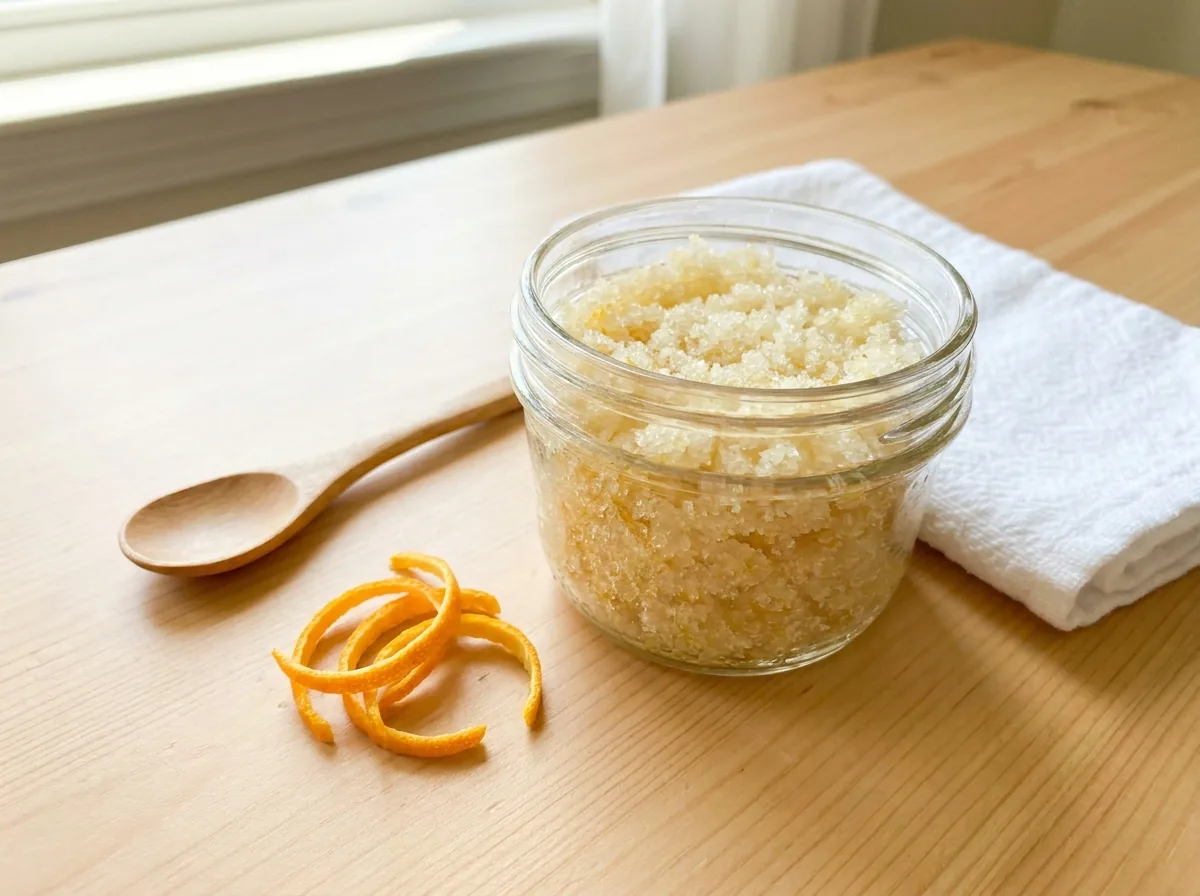
Ingredients
- 1 cup (about 200 g) Granulated sugar, white or brownWhite sugar is sharper; brown sugar is softer and slightly moister. Fine caster sugar is gentler still
- 1/2 cup (about 110 g) of oil, in total Melted coconut oilMelt it, then let it cool a little. It sets firmer than the other oils. Use one oil or split the half cup between two
- In place of some or all of the coconut oil Sweet almond oilLight and runny. Avoid it if you have a nut allergy
- In place of some or all of the coconut oil Olive oilCheap and widely available, slightly heavier in scent
- 1 tbsp (about 20 g) Runny honey (optional)Adds a little stickiness. It holds some moisture, so use a clean, dry spoon and use the scrub sooner
- 1 tsp, from an unwaxed lemon or orange Citrus zest, finely grated (optional)Adds scent only. Use it fresh and use the scrub within a week or so. Use zest, not juice, and keep it off skin you will expose to strong sun
Equipment
- Medium bowl and spoon
- Measuring cups and spoons (or a scale)
- Clean, dry 250 ml jar with a tight lid
- Non-slip mat for the bath or shower
Method
Patch-test
Rub a little of the scrub on the inside of your arm and leave it for 24 hours. Skip it if the skin turns red, itchy or swollen.2
Measure the sugar
Put 1 cup (200 g) of sugar in a clean, dry bowl. Keep it dry, since water will dissolve the sugar and dilute the scrub.3
Add the oil
Pour in 1/2 cup (about 110 g) of oil. If you use coconut oil, melt it first and let it cool until warm, not hot. The mix should look like wet sand.
Adjust the texture
If it is dry and dusty, add oil a teaspoon at a time. If it is sloppy and the oil pools, add a spoonful of sugar.
Add the extras
If you like, stir in 1 tbsp honey or 1 tsp finely grated citrus zest. Keep the extras small; they add moisture that shortens the life of the scrub.3
Jar it dry
Pack it into a clean, dry jar and close the lid. Use a clean, dry spoon every time, and keep the jar out of the direct shower spray.3
Use on damp skin below the neck
Standing on a non-slip mat, scoop a small handful onto damp skin and rub gently in small circles for up to 30 seconds. Rinse well with lukewarm, not hot, water, pat dry and moisturise.1,4
Safety
- Never use it on broken, sunburned or inflamed skin. Dermatologists say never exfoliate over open cuts, wounds or sunburn1
- Go gently. How often to exfoliate depends on your skin and method, and the more aggressive the scrub, the less often to use it. Start with once a week1
- Keep water out of the jar. Products that contain water need a preservative, so never add water and use a dry spoon3
- Oil makes the tub or shower floor slippery. Use a non-slip mat and rinse the floor before you step out4
- Patch-test first, and keep scrub off the face unless your skin is tolerant. Sugar crystals are coarse for facial skin1,2
Variations
Use 1 cup packed brown sugar with 1/2 cup oil. It is less sharp and suits drier skin.
Add 1 tbsp honey and 1 tsp orange zest. Use within a week or two and keep it in the fridge.
Use caster sugar and sweet almond oil for a finer, softer scrub.
Does it actually work?
A sugar scrub is a mechanical exfoliant: the crystals rub off loose dead cells from the surface of the skin, and the oil leaves a film on top that softens it. The American Academy of Dermatology says exfoliating removes dead skin cells, and that how often to exfoliate depends on skin type and method. It does not say a scrub improves skin health or treats acne or ageing, and we found no trial of homemade sugar scrubs.
The NHS describes oils and emollients as moisturisers that form a protective layer on the skin, which is the main reason it feels soft after. Scrubbing harder does not make it work better, and too much can irritate skin, especially dry or sensitive skin. Learn more about coconut oil, sweet almond oil, olive oil and honey.1,4
Evidence ratings for what goes in: Coconut oil, Sweet almond oil, Olive oil, Honey.
Questions people ask
How often should I use a sugar scrub?
The AAD says it depends on your skin and method: the more aggressive the exfoliation, the less often. Once a week is a cautious start, and stop if skin is red, dry or stinging.
Can I use a sugar scrub on my face?
We suggest not. Sugar crystals are coarse, and the AAD says sensitive or dry skin may find mechanical exfoliation too irritating. Keep the scrub below the neck.
Why did my sugar scrub go hard or mouldy?
Water got in. Water dissolves the sugar and supports microbes, and the FDA advises against adding water to cosmetics. Use a dry jar and a dry spoon, and keep it out of the shower spray.
What is the best oil for a sugar scrub?
Any liquid oil works. Sweet almond is light, olive is cheap and coconut sets firm. We found no trial comparing them for scrubs, so pick by feel, and avoid almond oil if you have a nut allergy.
Can I use a sugar scrub on broken or inflamed skin?
No. The AAD says never to exfoliate if you have open cuts or wounds or if your skin is sunburned. Wait until the skin has healed.
Sources (4)
- Professional body American Academy of Dermatology. How to safely exfoliate at home.
- Professional body American Academy of Dermatology. How to test skin care products.
- Regulator US Food and Drug Administration. Microbiological Safety and Cosmetics.
- Public-health body NHS. Emollients.
Educational only. Patch-test anything new on your skin, and stop if it irritates.
Reader notes
Experiences and questions from readers, read by an editor before they appear. They are personal accounts, not evidence, and are not medical advice.