
DIY Coffee Scrub for Body (With Used Grounds)
Stir 1/2 cup (about 50 g) cooled, used coffee grounds with 1/4 cup (50 g) sugar and 3 tbsp (45 g) melted coconut or olive oil. It makes a gritty body scrub that leaves skin smooth and lightly oiled. Make only what you will use in a week, because damp grounds go mouldy. There is no good evidence that caffeine scrubs reduce cellulite.
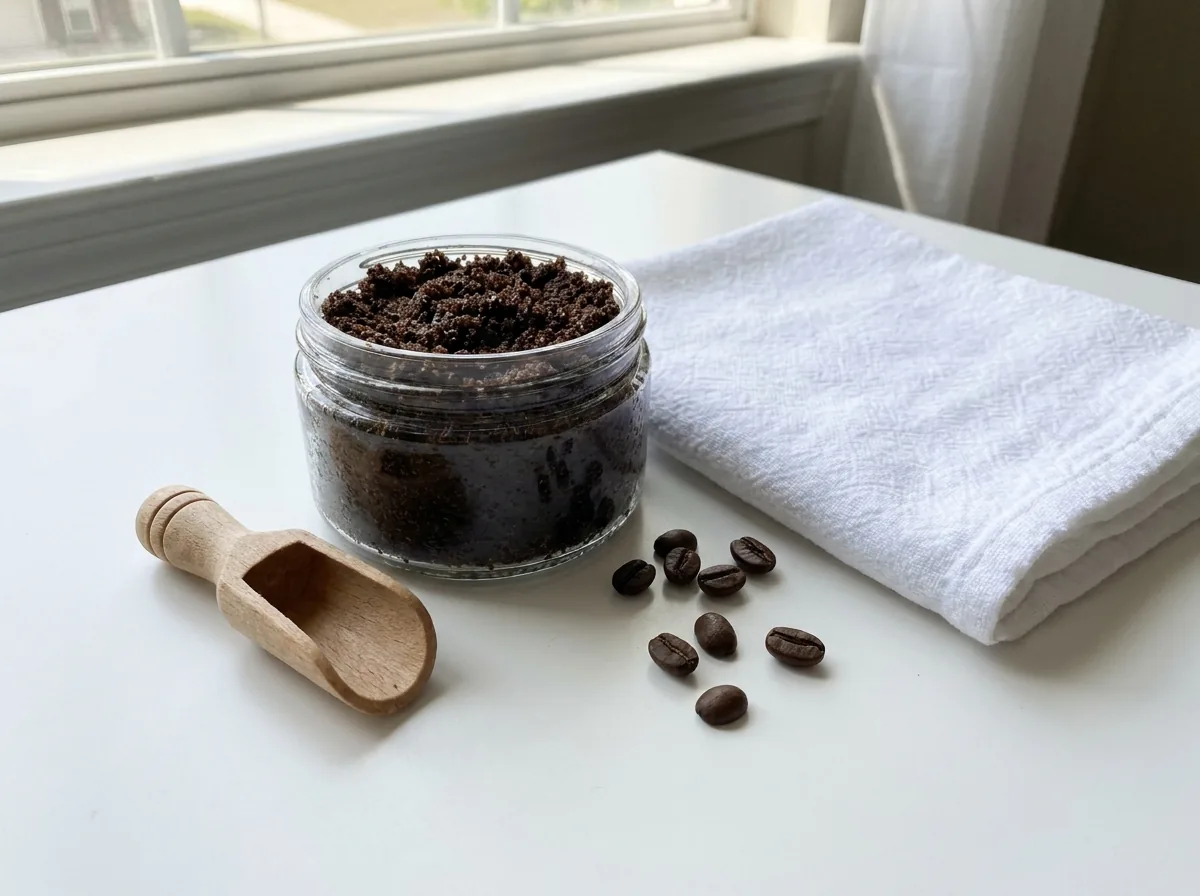
Ingredients
- 1/2 cup (about 50 g) Used coffee grounds, cooledFrom a filter, cafetiere or pot. Let them cool and drain so they are damp, not wet
- 3 tbsp (about 45 g) Melted coconut oil, or olive oilOlive oil (olive-oil) is a liquid alternative that stays runnier. Coconut oil sets firmer in the fridge and is solid below about 24°C (75°F)
- 1/4 cup (about 50 g) Granulated or brown sugar (optional)Adds extra grit and helps the scrub hold together. Leave it out for a softer, purely coffee scrub
- 3 tbsp (about 45 g) Olive oil (alternative)Use instead of the coconut oil, not as well as it
Equipment
- Small bowl and spoon
- Measuring cups and spoons (or a scale)
- Small, clean, dry jar with a lid, about 250 ml
- Small plate or sieve to drain the grounds
- Non-slip mat for the shower or bath
- Bin or compost bin
Method
Patch-test the scrub
Rub a little of the finished scrub on the inside of your arm and leave it for 24 hours. Do not use it if the skin turns red, itchy or swollen.5
Cool and drain the grounds
Spread the used grounds on a plate or in a sieve and let them cool and drip for 10 minutes. They should feel damp but not dripping.
Melt the oil
If you are using coconut oil, warm it in a small bowl over hot water until just liquid, and let it cool a little. Olive oil needs no melting.
Mix
Stir the grounds, sugar if using, and oil until it looks like wet sand. Add a spoonful more oil if it is too dry to spread, or more grounds if it is too oily.
Jar a small batch
Scoop it into a clean, dry jar, and label the date. Keep it in the fridge rather than the bathroom. Use a clean, dry spoon each time, not wet fingers.4
Use it on damp skin below the neck
Standing on a non-slip mat, rub a small handful over damp arms, legs and torso in gentle circles for up to 30 seconds per area, then rinse well with lukewarm water.3,6
Bin the mess, not down the drain
Wipe grounds out of the tub with a paper towel and put them in the bin or compost, rather than rinsing them down the plughole. Pat your skin dry and moisturise if it feels tight.2
Safety
- Not for the face. Coarse grounds and sugar can be too harsh, and the AAD says sensitive or dry skin may find mechanical exfoliation too irritating3
- Never scrub broken, sunburned or inflamed skin. Dermatologists say never exfoliate over open cuts, wounds or sunburn3
- Make small batches. Damp grounds and oil carry microbes, and a home scrub has no preservative. Bin it if it smells sour or grows mould4
- Don't wash grounds and oil down the drain. Fats and oils solidify in pipes and cause blockages, so wipe and bin2
- Oil makes the tub or shower floor slippery. Use a non-slip mat and rinse the floor well before you step out6
- Patch-test first: dab a little on your inner arm for 24 hours and stop if skin reddens or itches5
Variations
Mix 1/2 cup grounds with 3 tbsp melted coconut oil. It is softer and gentler, and rinses away more easily.
Use 3 tbsp olive oil in place of coconut oil for a runnier scrub that does not need melting.
Stir in 1/2 tsp vanilla extract. Skip it if you are prone to fragrance allergy, since vanilla adds scent.
Does it actually work?
A coffee scrub works as a physical exfoliant, like any gritty scrub: it rubs off loose surface skin cells, and the oil leaves a film that softens dry skin. The caffeine claim is another matter.
A 2023 review of cellulite, published in Aesthetic Surgery Journal Open Forum, reports that placebo-controlled trials of caffeine or retinol creams showed improvement but were small and short, and that none of the topical products used for cellulite are FDA approved because there is no robust data on effectiveness or lasting effect. The same review says there is no effective treatment for cellulite, only ways to reduce its appearance.
Those trials tested formulated creams left on the skin, not a scrub that is rinsed off after a minute or so, and we found no trial of coffee grounds. So treat this as a pleasant scrub, and not a cellulite treatment. A gentle rub may leave skin looking temporarily smoother and a little pinker, which is not a change in cellulite. Learn more about coconut oil and olive oil.1,3
Evidence ratings for what goes in: Coconut oil, Olive oil.
Questions people ask
Does a coffee scrub get rid of cellulite?
No. The best review we found says there is no effective cellulite treatment and no topical product is FDA approved for it. Small, short trials of caffeine creams were positive, but none tested a rinse-off scrub.
Can I use a coffee scrub on my face?
We suggest not. Ground coffee and sugar are coarse, and the AAD says sensitive or dry skin may find mechanical exfoliation too irritating. Keep it to body skin, and use a mild exfoliator on the face.
Can I put coffee grounds down the drain?
Better not to. Oil mixed with grounds can collect in pipes, and fats and oils are a leading cause of blockages. Wipe them into the bin or compost, and put a hair catcher in the plughole.
How long does a homemade coffee scrub last?
Make only about a week's worth and keep it in the fridge. The grounds are damp and there is no preservative, so any long storage is a risk. Bin it if it smells sour or looks fuzzy.
How often should I use a coffee scrub?
The AAD says frequency depends on your skin and method, and the more aggressive the exfoliation the less often. Once a week is a cautious start; stop if skin is red or stinging.
Sources (6)
- Review Gabriel A, Chan V, Caldarella M, et al. Cellulite: Current Understanding and Treatment. Aesthetic Surgery Journal Open Forum. 2023.
- University extension Clemson Cooperative Extension Home & Garden Information Center. F.O.G. (Fats, Oils, and Grease) Pollution.
- Professional body American Academy of Dermatology. How to safely exfoliate at home.
- Regulator US Food and Drug Administration. Microbiological Safety and Cosmetics.
- Professional body American Academy of Dermatology. How to test skin care products.
- Public-health body NHS. Emollients.
Educational only. Patch-test anything new on your skin, and stop if it irritates.
Reader notes
Experiences and questions from readers, read by an editor before they appear. They are personal accounts, not evidence, and are not medical advice.