
Kelp
Kelp is not a proven remedy for weight loss, energy or anything else we could find trial evidence for, and its main effect is to deliver iodine in amounts nobody can predict from the label. Too much iodine can cause an over- or under-active thyroid, and kelp products can also carry arsenic. If you take kelp at all, the caution that matters most is your thyroid, and anyone with thyroid disease or on thyroid treatment should ask a clinician first.
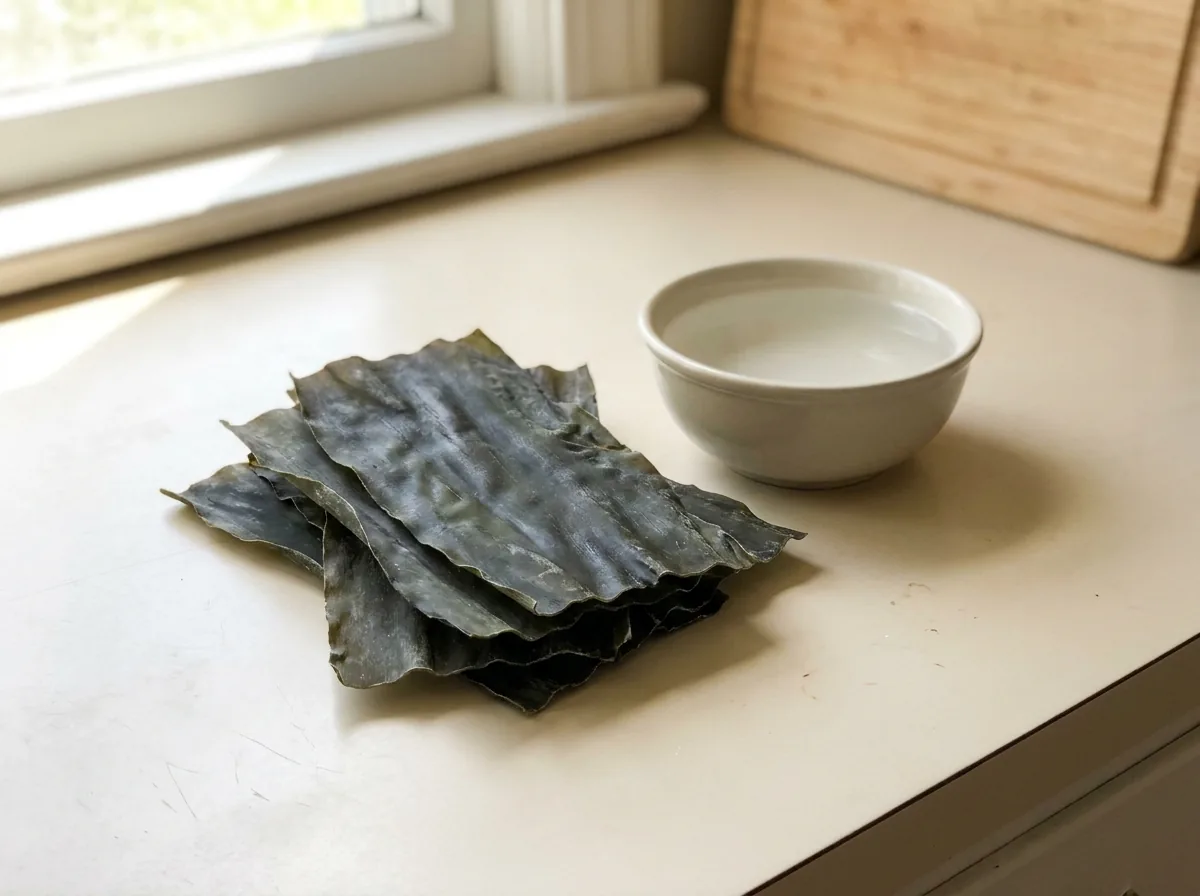
At a glance
Last reviewed 10 October 2026What it's used for
Evidence is rated per use. The same ingredient can be strong for one thing and traditional for another.
| Use | Evidence | What the research shows |
|---|---|---|
| Weight loss | Limited | We found no trial showing kelp helps you lose weight. In 56 overweight adults with prediabetes, 500 mg a day of a Fucus and Ascophyllum extract for 12 weeks on top of dietary advice had no effect on blood glucose and only small changes in secondary markers. Ten days of alginate (a fibre from Laminaria digitata, not whole kelp) did not change stomach emptying, fullness or food intake in 48 overweight adults. Both trials were small and short, and neither tested whole kelp capsules.8,7 |
| Iodine supply | Traditional | Kelp is rich in iodine, but that is the problem rather than a benefit: in 96 commercial seaweed products, supplements ranged from 5 to 5,600 µg iodine per daily dose, and 54 products exceeded the tolerable upper intake level in one portion or dose. A review of iodine in pregnancy concluded kelp and seaweed products should be avoided because of unacceptable variability. Where iodine is needed, a supplement with a stated dose is more predictable.1,6 |
| Thyroid support | Traditional | Marketing sometimes presents kelp as a thyroid tonic. In a 4-week double-blind trial in 36 healthy adults, kelp capsules raised TSH (a sign the thyroid is being pushed) in both dose groups, with values returning towards baseline two weeks after stopping. That is a warning sign, not a benefit. We found no trial showing kelp improves any thyroid condition.4,2 |
How much
Ranges below are what studies used and what supplements commonly contain. They are not a recommendation for you. Start at the low end.
How people take it
Safety
Who should avoid
- Any thyroid condition, including a history of one — iodine excess can worsen it
- Taking thyroid medication — ask your prescriber first
- Pregnancy — reviewers advise against kelp because iodine content is unpredictable
- Long-term daily use — chronic excess iodine is linked to thyroid disease
- Products with no stated iodine or heavy-metal testing
- Children — the iodine upper limit is much lower
Known interactions
Questions people ask
Does kelp help you lose weight?
We found no evidence that it does. The trials we opened, one of a brown seaweed extract and one of a kelp-derived fibre, were small and showed little or no effect on weight-related outcomes. Its iodine can disturb the thyroid, which is a poor trade.
Can kelp supplements damage your thyroid?
They can. High iodine intakes are tolerated by most healthy people, but in some they precipitate hyperthyroidism, hypothyroidism, goitre or thyroid autoimmunity. People with existing thyroid disease are more susceptible, sometimes at intakes only slightly above normal needs.
Do kelp supplements contain arsenic?
They can. A case report described a woman with hair loss, memory loss, fatigue and nausea whose daily kelp supplement contained 8.5 ppm arsenic; symptoms resolved after she stopped.
Eight of nine supplements tested in the same report had detectable arsenic above US food tolerance levels, and none warned of it. That is a small sample, so it shows a risk rather than how common it is.
Is kelp safe when pregnant or breastfeeding?
A review of iodine in pregnancy concluded that kelp and seaweed products should be avoided because their iodine content varies unacceptably. Mild iodine deficiency in pregnancy matters too, so the better route is a supplement with a stated iodine dose, chosen with a midwife or doctor. We did not find a listed source on kelp and breastfeeding.
Sources (8)
- Product analysis Aakre I, Solli DD, Markhus MW, et al. Commercially available kelp and seaweed products - valuable iodine source or risk of excess intake? Food Nutr Res. 2021.
- Review Leung AM, Braverman LE. Iodine-induced thyroid dysfunction. Curr Opin Endocrinol Diabetes Obes. 2012.
- Review Farebrother J, Zimmermann MB, Andersson M. Excess iodine intake: sources, assessment, and effects on thyroid function. Ann N Y Acad Sci. 2019.
- Randomised trial Clark CD, Bassett B, Burge MR. Effects of kelp supplementation on thyroid function in euthyroid subjects. Endocr Pract. 2003.
- Case report Amster E, Tiwary A, Schenker MB. Case report: potential arsenic toxicosis secondary to herbal kelp supplement. Environ Health Perspect. 2007.
- Review Zimmermann M, Delange F. Iodine supplementation of pregnant women in Europe: a review and recommendations. Eur J Clin Nutr. 2004.
- Randomised trial Odunsi ST, Vázquez-Roque MI, Camilleri M, et al. Effect of alginate on satiation, appetite, gastric function, and selected gut satiety hormones in overweight and obesity. Obesity. 2010.
- Randomised trial Vodouhè M, Marois J, Guay V, et al. Marginal impact of brown seaweed Ascophyllum nodosum and Fucus vesiculosus extract on metabolic and inflammatory response in overweight and obese prediabetic subjects. Mar Drugs. 2022.
Last reviewed 10 October 2026 · Next review April 2027 · How we rate evidence
Reader notes
Experiences and questions from readers, read by an editor before they appear. They are personal accounts, not evidence, and are not medical advice.