Awaiting clinical review. This entry is sourced but has not yet been signed off by a pharmacist or clinician.
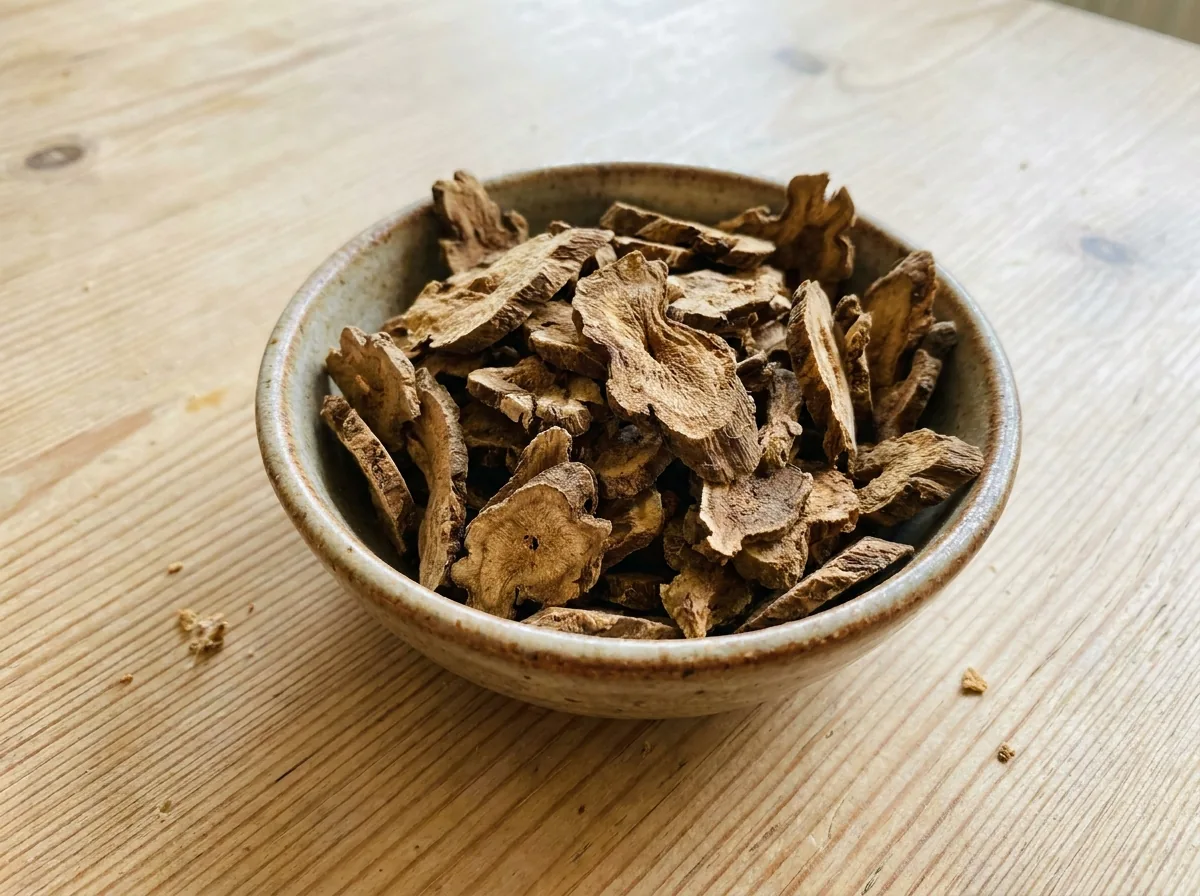
Devil's claw
Devil's claw may ease low back pain in the short term, but the Cochrane review rated that evidence low quality, and the evidence in osteoarthritis is weaker and mixed. It was well tolerated in trials, with mild stomach upset the most common side effect. The EU regulator lists active gastric or duodenal ulcer as a contraindication, and it is not recommended in pregnancy.
At a glance
Last reviewed 29 September 2026What it's used for
Evidence is rated per use. The same ingredient can be strong for one thing and traditional for another.
| Use | Evidence | What the research shows |
|---|---|---|
| Low back pain | Limited | The Cochrane review (2014) found that daily doses standardised to 50 mg or 100 mg harpagoside may be better than placebo for short-term pain relief and may reduce rescue medication use, from two trials with 315 participants, graded low quality. A third trial (88 participants) found rough equivalence to rofecoxib 12.5 mg a day but was graded very low quality. An earlier 2007 version of the review called the evidence strong; the 2014 update downgraded it.1,2 |
| Osteoarthritis pain | Limited | Results are mixed. A meta-analysis of herbal medicines used in Brazil found no difference between devil's claw and control in osteoarthritis (one trial), and rated the overall evidence low. An older best-evidence synthesis called the evidence for devil's claw limited. A small Iranian trial (60 people with knee osteoarthritis) found similar improvement on devil's claw for one month and on meloxicam for ten days, with no placebo arm, so it cannot show the herb beats placebo.3,4,5 |
| Mild digestive complaints and loss of appetite | Traditional | The EU regulator recognises devil's claw root for mild bloating, flatulence and temporary loss of appetite on the basis of long-standing use alone. We did not find or review clinical trials for this use.6 |
How much
Ranges below are what studies used and what supplements commonly contain. They are not a recommendation for you. Start at the low end.
How people take it
Safety
Who should avoid
- Active stomach or duodenal ulcer — EU regulator contraindication
- Pregnancy and breastfeeding — safety not established, not recommended
- Under 18 — not recommended, too little data
- Gallstones — EU regulator says consult a doctor first
- Taking warfarin or other blood thinners — ask your prescriber first
- Known allergy to devil's claw (rash, hives, facial swelling reported)
- Joint pain with swelling, redness or fever — see a doctor first
Known interactions
Questions people ask
Does devil's claw work for back pain?
Possibly, for short-term pain. The Cochrane review found that extracts standardised to 50 or 100 mg harpagoside a day may beat placebo, but it graded the evidence low quality and the trials were small and short. It is not a proven replacement for standard treatment.
Is devil's claw safe for your stomach?
In 28 clinical trials reviewed for safety, minor side effects occurred in around 3% of patients, mainly gastrointestinal, and none of the double-blind trials reported more side effects than placebo. The EU regulator still lists active gastric or duodenal ulcer as a contraindication and gastrointestinal symptoms as reported effects.
Can I take devil's claw with warfarin?
Ask your prescriber first. Reviews of case reports list devil's claw among herbs linked to over-anticoagulation on warfarin, but the evidence is anecdotal and the EU monograph reports no interactions. We did not find a controlled study either way.
Is devil's claw as good as an anti-inflammatory drug?
Not shown. One small trial found similar pain relief to meloxicam in knee osteoarthritis, and one low-quality back pain trial found rough equivalence to rofecoxib, but neither can establish equivalence.
Sources
- Systematic review Oltean H, Robbins C, van Tulder MW, Berman BM, Bombardier C, Gagnier JJ. Herbal medicine for low-back pain. Cochrane Database Syst Rev. 2014.
- Systematic review Gagnier JJ, van Tulder MW, Berman B, Bombardier C. Herbal medicine for low back pain: a Cochrane review. Spine. 2007.
- Meta-analysis Del Grossi Moura M, Lopes LC, Biavatti MW, et al. Oral herbal medicines marketed in Brazil for the treatment of osteoarthritis: a systematic review and meta-analysis. Phytother Res. 2017.
- Systematic review Ameye LG, Chee WS. Osteoarthritis and nutrition. From nutraceuticals to functional foods: a systematic review of the scientific evidence. Arthritis Res Ther. 2006.
- Randomised trial Farpour HR, Rajabi N, Ebrahimi B. The efficacy of Harpagophytum procumbens (Teltonal) in patients with knee osteoarthritis: a randomized active-controlled clinical trial. Evid Based Complement Alternat Med. 2021.
- Regulator monograph European Medicines Agency HMPC. European Union herbal monograph on Harpagophytum procumbens DC. and/or Harpagophytum zeyheri Decne., radix (EMA/HMPC/627057/2015). 2016.
- Systematic review Vlachojannis J, Roufogalis BD, Chrubasik S. Systematic review on the safety of Harpagophytum preparations for osteoarthritic and low back pain. Phytother Res. 2008.
- Review Izzo AA, Di Carlo G, Borrelli F, Ernst E. Cardiovascular pharmacotherapy and herbal medicines: the risk of drug interaction. Int J Cardiol. 2005.
Last reviewed 29 September 2026 · Next review March 2027 · How we rate evidence