Awaiting clinical review. This entry is sourced but has not yet been signed off by a pharmacist or clinician.
Peppermint
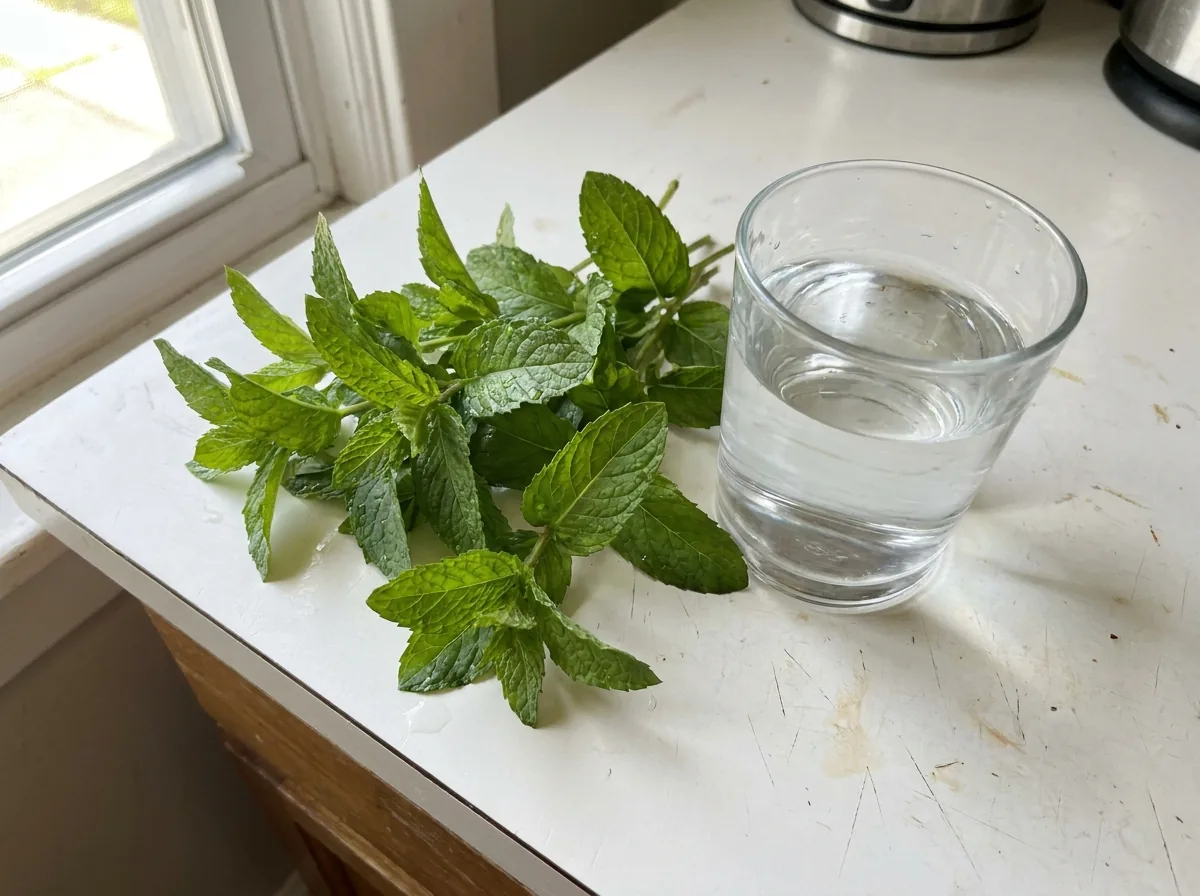
Enteric-coated peppermint oil capsules relieve irritable bowel syndrome (IBS) symptoms better than placebo in pooled trials, though the benefit is modest, the most recent large-ish trial was negative, and reviewers rate the evidence quality low. Peppermint tea and leaf are a different preparation: they have a traditional use for indigestion and wind but no trial evidence we could find, so do not assume the capsule results apply to a cup of tea. The main caution is that peppermint can make heartburn and reflux worse.
At a glance
Last reviewed 29 September 2026What it's used for
Evidence is rated per use. The same ingredient can be strong for one thing and traditional for another.
| Use | Evidence | What the research shows |
|---|---|---|
| IBS symptoms (enteric-coated oil capsules) | Moderate | A 2022 meta-analysis of 10 trials (1,030 patients) found oil beat placebo for global symptoms (relative risk of not improving 0.65, 95% CI 0.43–0.98; number needed to treat 4) and abdominal pain (0.76, 0.62–0.93; NNT 7), but rated the evidence quality very low and found more adverse events. Earlier meta-analyses, which lacked the newest trials, gave larger effects (risk ratio 2.39 for global improvement in one, 2.23 in another). A 2021 US trial of enteric-coated oil, 180 mg three times daily for 6 weeks, found no difference from placebo: both groups improved by about 90–100 points on the IBS Severity Scoring System.1,2,3,4 |
| Tension headache (oil applied to forehead and temples) | Limited | One randomised, double-blind crossover trial in 41 people (164 attacks) found a 10% peppermint oil in ethanol solution rubbed on the forehead and temples reduced headache intensity versus placebo from 15 minutes, with an effect no different from 1,000 mg paracetamol. NCCIH describes the evidence as limited. It is a single small study from 1996, so we cap the rating at 2.8,5 |
| Indigestion (oil plus caraway oil) | Limited | NCCIH says specific products combining peppermint oil with caraway oil may relieve indigestion, but that peppermint oil alone lacks supporting evidence, and that it may worsen indigestion in some people. We did not review the trials, so we rate this on NCCIH's summary.5 |
| Indigestion and wind (tea or dried leaf) | Traditional | The EU herbal regulator recognises peppermint leaf, including as a tea, for symptomatic relief of dyspepsia and flatulence on the basis of long-standing use alone. We found no controlled trial of the tea, and the IBS evidence above is for the oil capsule, not the leaf.7 |
How much
Ranges below are what studies used and what supplements commonly contain. They are not a recommendation for you. Start at the low end.
How people take it
Safety
Who should avoid
- Heartburn, reflux or hiatal hernia — peppermint can make it worse
- Gallstones or bile duct disorders — EU regulator advises caution or avoidance
- Liver disease — contraindicated for oil capsules in the EU monograph
- Pregnancy and breastfeeding — safety not established, EU regulator advises against
- Children under 8 for capsules; under 2 for oil on skin (menthol can cause apnoea)
- Allergy to menthol or peppermint
- Broken or irritated skin — do not apply the oil
Known interactions
Questions people ask
Does peppermint oil work for IBS?
Pooled trials say modestly yes: a 2022 meta-analysis found it beat placebo for global symptoms and abdominal pain, but rated the evidence quality very low and found more side effects. A 2021 trial of enteric-coated capsules found no difference from placebo, so it is worth a time-limited try rather than a sure thing.
Does peppermint tea help IBS or an upset stomach?
We found no trial showing that it does. The EU regulator recognises the leaf and tea for indigestion and wind on traditional use alone, and the IBS evidence is for enteric-coated oil capsules, not tea.
Can peppermint cause heartburn?
Yes. Heartburn is the most commonly reported side effect of peppermint oil, which is why capsules are enteric-coated, and the EU regulator says people who already have reflux should avoid peppermint leaf preparations and stop the oil if heartburn worsens.
Does peppermint oil on the temples help a tension headache?
One small crossover trial found 10% peppermint oil in ethanol reduced pain within 15 minutes, about as well as 1,000 mg paracetamol. NCCIH calls the evidence limited, so treat it as a low-risk option to try, not a proven treatment.
Sources
- Meta-analysis Ingrosso MR, Ianiro G, Nee J, Lembo AJ, Moayyedi P, Black CJ, Ford AC. Systematic review and meta-analysis: efficacy of peppermint oil in irritable bowel syndrome. Aliment Pharmacol Ther. 2022.
- Meta-analysis Alammar N, Wang L, Saberi B, et al. The impact of peppermint oil on the irritable bowel syndrome: a meta-analysis of the pooled clinical data. BMC Complement Altern Med. 2019.
- Systematic review Khanna R, MacDonald JK, Levesque BG. Peppermint oil for the treatment of irritable bowel syndrome: a systematic review and meta-analysis. J Clin Gastroenterol. 2014.
- Randomised controlled trial Nee J, Ballou S, Kelley JM, et al. Peppermint oil treatment for irritable bowel syndrome: a randomized placebo-controlled trial. Am J Gastroenterol. 2021.
- Regulator/health agency NCCIH. Peppermint Oil: Usefulness and Safety. National Center for Complementary and Integrative Health (last updated May 2025).
- Regulator monograph European Medicines Agency HMPC. European Union herbal monograph on Mentha x piperita L., aetheroleum, Final – Revision 1 (EMA/HMPC/522410/2013). 2020.
- Regulator monograph European Medicines Agency HMPC. European Union herbal monograph on Mentha x piperita L., folium, Final – Revision 1 (EMA/HMPC/572705/2014). 2020.
- Randomised controlled trial Göbel H, Fresenius J, Heinze A, Dworschak M, Soyka D. Effectiveness of Oleum menthae piperitae and paracetamol in therapy of headache of the tension type. Nervenarzt. 1996.
Last reviewed 29 September 2026 · Next review March 2027 · How we rate evidence