
How to Make Coconut Oil at Home (Wet Method)
To make coconut oil at home, grate the flesh of mature coconuts, blend it with warm water, strain out the coconut milk, then chill it so the cream rises and gently heat that cream until the water evaporates and the oil separates. Expect little oil for a lot of work. Any water left in the finished oil shortens its life, so dry it fully and keep it cold.
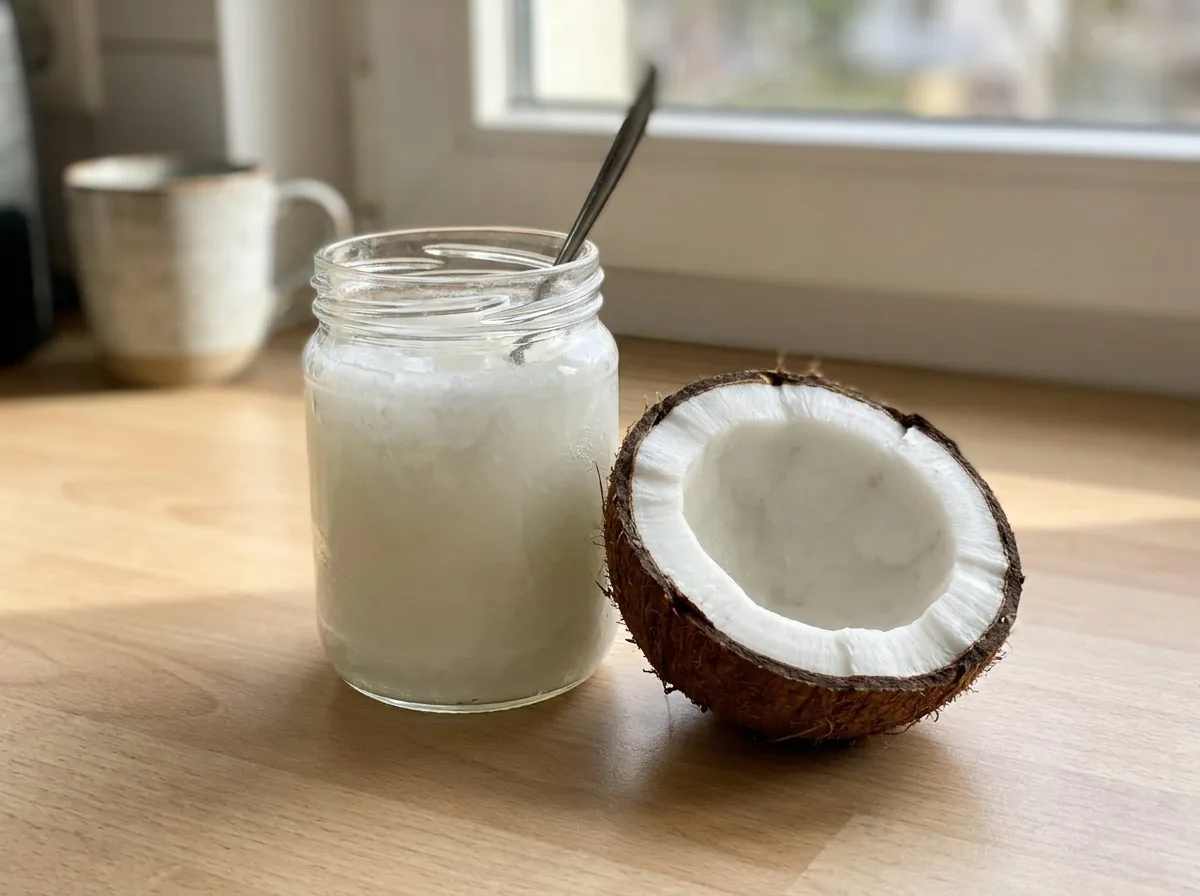
Ingredients
- 3 coconuts (about 600–700 g of flesh) Mature brown coconutsShake them: a good coconut sloshes with water. Reject any that are cracked, mouldy or smell sour
- About 750 ml (3 cups), around 50°C (120°F) Warm waterWarm, not hot. About 1 cup per coconut's worth of flesh is a good start
Equipment
- Hammer or skewer for opening the coconuts
- Vegetable peeler or sturdy knife, and a box grater
- Powerful blender or food processor
- Nut milk bag, muslin (cheesecloth) or fine sieve
- Wide bowl or tall container
- Heavy-based saucepan
- Clean, dry glass jar, sterilised and dried
Method
Open the coconuts and drain them
Pierce an eye with a skewer, drain the water, then crack the shell with a hammer. Mature coconut flesh, rather than young coconut, is what holds the fat, and it is the basis of both wet and dry oil processes.2
Pry out and trim the flesh
Lever the flesh out of the shell in pieces and peel off the thin brown skin with a vegetable peeler. Rinse the pieces and cut them small.
Grate or blend
Grate the flesh finely, or blitz it briefly in the blender with a splash of the warm water until it is a coarse crumb.
Blend with warm water
Blend the grated flesh with the warm water for 1 to 2 minutes until thick and creamy. Work in batches if needed. Keep the water warm rather than hot.
Strain the coconut milk
Pour through a nut milk bag or muslin over a bowl and squeeze hard. You want as much thick milk as possible. Keep the pulp for baking or compost, and the milk for the next steps.
Chill to separate
Cover the milk and refrigerate for 24 hours. The fat rises and sets as a white layer on top, with watery liquid beneath. Chilling and freezing-and-thawing are among the separation methods described for virgin coconut oil.1
Lift off the cream
Scoop the solid cream into a heavy saucepan, leaving the watery liquid behind. Drain it well, as any water you carry over must be cooked off in the next step.
Heat gently until the oil separates
Warm the cream on the lowest heat, stirring now and then, for about 45 to 90 minutes. The water evaporates, the oil turns clear, and the solids sink and brown slightly. Keep the heat low: hot cooking spoils the flavour and scorches the solids, and heating is one of the methods used for virgin coconut oil. Stop when the bubbling calms and the oil is clear.1
Strain and check for water
Strain the oil through muslin into a dry jar. Leave it to cool, then look for droplets or cloudiness under the oil. If there is any liquid, pour the oil off into a clean dry jar and heat it again briefly, or discard the watery layer.
Store it cold
Cap the jar, label it with the date, and keep it in the fridge. Coconut oil is solid at cool room temperatures, which is normal.
Safety
- Water is the risk. Extension advice for homemade oils says moisture allows bacteria such as C. botulinum to grow, so dry the oil fully3,4
- That advice covers herb and produce infusions, not coconut oil specifically. We apply it as the cautious option, as no source tests homemade coconut oil3,4
- Sterilise and dry the jar, keep the oil in the fridge, and throw it away if it smells sour or rancid, looks cloudy or grows mould
- Don't leave the pan unattended. Hot oil and steam burn badly, and the last stage is the easiest to scorch
Variations
Use 300 g of unsweetened desiccated coconut soaked in warm water for an hour before blending. It is faster to prepare and gives less oil.
Some makers simmer the strained milk on low heat until it splits, skipping the chill. It is quicker but easier to scorch. Heating is one of the reported methods.
Leaving the milk to ferment at room temperature for a day or so before skimming is another reported way to separate the oil. We don't advise it at home, since there is less control over what grows.
Does it actually work?
Homemade coconut oil is usable in cooking and on skin or hair, but it is not the refined product of a factory, and its yield and keeping quality are lower.
A narrative review finds limited but consistent evidence for topical coconut oil in atopic dermatitis and suggests it may help reduce hair damage, with more studies needed. The review covers commercial virgin and copra oil, not a home-made one. Our /ingredients/coconut-oil/ entry rates the uses.5
Evidence ratings for what goes in: Coconut oil.
Questions people ask
How much oil do you get from one coconut?
Not much. We found no published figure for home yields; in practice one coconut gives a few tablespoons at best, and the oil is easier to buy. Commercial oil starts with dried copra or industrial presses, which extract far more.
Can I make coconut oil without heat?
You can chill the milk and skim off the cream, but that cream is not pure oil: it still holds water and solids. Without a final drying step it would spoil, so we recommend gentle heating to drive off the water.
Why is my homemade coconut oil cloudy or short-lived?
Most likely there is water or fine solids in it, and both shorten the life of oil. Strain it through fresh muslin, separate any watery layer, and store it cold.
What are the wet and dry methods?
The dry method presses dried coconut meat (copra). The wet method extracts coconut milk from fresh flesh and separates the oil by chilling, heating, fermentation or centrifugation. The method here is the simplest home form of the wet process.
Sources (5)
- Review Ng YJ, et al. A comprehensive review on the techniques for coconut oil extraction and its application. Bioprocess Biosyst Eng. 2021.
- Review Divya PM, et al. A concise review on oil extraction methods, nutritional and therapeutic role of coconut products. J Food Sci Technol. 2023.
- University extension Schwan CL. How to Safely Make Infused Oils: Best Practices for Food Safety. University of Georgia Cooperative Extension Circular 1334. 2024.
- University extension University of Maine Cooperative Extension. Bulletin #4385, Safe Homemade Flavored and Infused Oils.
- Review Wallace TC. Health Effects of Coconut Oil-A Narrative Review of Current Evidence. J Am Coll Nutr. 2019.
Educational only. Patch-test anything new on your skin, and stop if it irritates.
Reader notes
Experiences and questions from readers, read by an editor before they appear. They are personal accounts, not evidence, and are not medical advice.