
How to Make Avocado Oil at Home (and the Real Yield)
Mash very ripe avocados, dry the pulp slowly in a low oven until the water has gone and the pulp turns crumbly and oily, then squeeze it through muslin. Expect a very small amount of oil, roughly a tablespoon or two from six avocados by our estimate, so this is a kitchen experiment, not a cheap way to get avocado oil. The water content is the food-safety risk, so dry it fully and keep the oil cold.
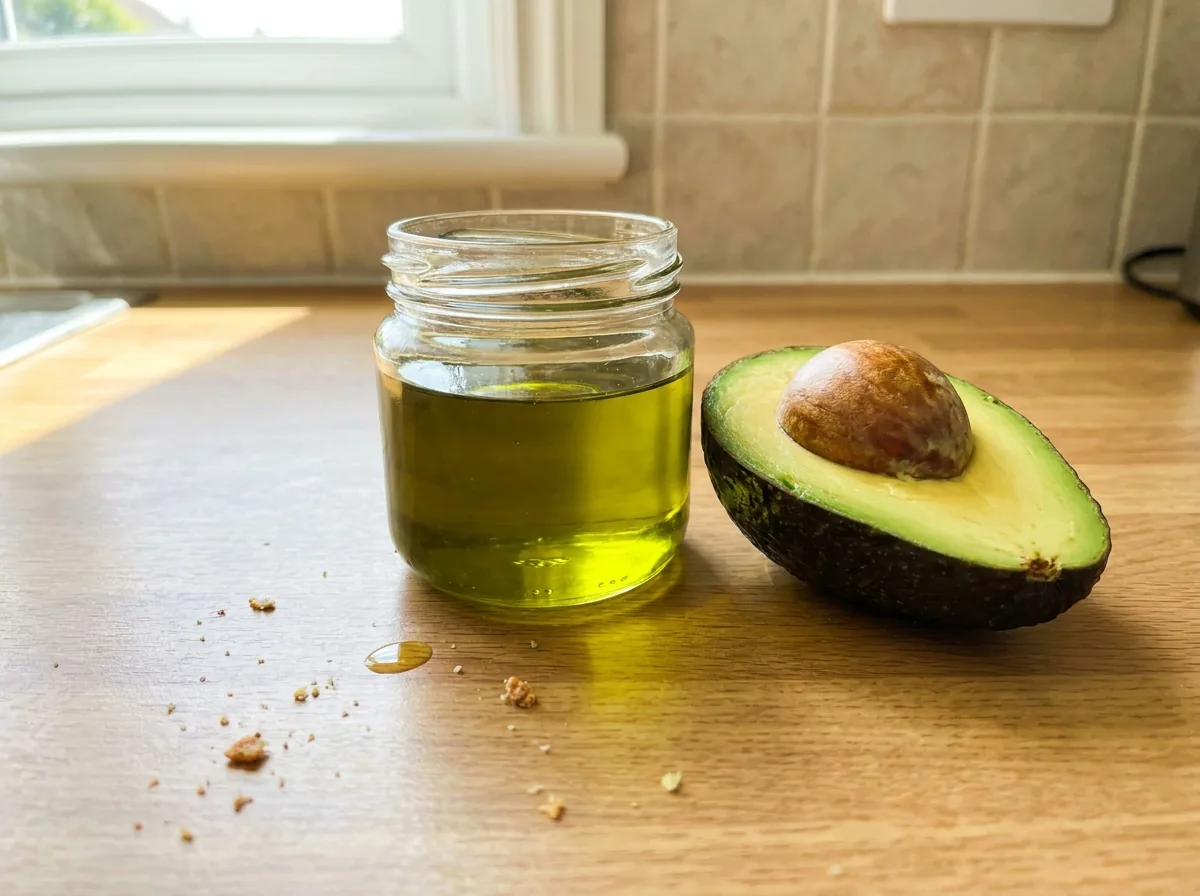
Ingredients
- 6 large avocados (about 1 kg of flesh) Very ripe avocadosSoft and ripe, even slightly overripe, but with no mould or sour smell. Remove skin and stones
Equipment
- Potato masher or food processor
- Large baking tray lined with baking paper
- Oven with a low setting and an oven thermometer
- Muslin (cheesecloth) or a nut milk bag
- Heavy-based frying pan or saucepan
- Clean, dry glass jar, sterilised and dried
- Large bowl and spatula
Method
Scoop and mash
Halve the avocados, remove the stones and scoop the flesh into a bowl. Mash it to a smooth paste with no lumps. Avocado pulp is fragile and oxidises quickly, which is one reason it is processed into oil promptly.1
Spread it thin
Spread the paste in a layer about 5 mm (¼ inch) thick on the lined tray. A thin layer dries faster and more evenly.
Dry it in a low oven
Heat the oven to about 80°C (175°F) and dry the paste for 2 to 3 hours, stirring every 30 minutes. Extraction methods differ in how heat affects yield and quality, so keep the temperature low. This oven temperature is our own suggestion, not a tested figure.1,2
Check that it is dry
The pulp is ready when it turns a dull olive brown, looks crumbly and slightly greasy, and no longer feels damp. If it is still wet and green, keep drying. Don't go hotter to rush it, which burns the flesh and spoils the flavour.
Press out the oil
Let the dried pulp cool until it is warm to touch, then tip it into muslin, twist tight and squeeze over a bowl, pressing hard against the side of the bowl. The oil runs out a little at a time. Repeat with the pulp in small batches.
Dry any leftover water
If the pressed liquid looks cloudy or has a watery layer, warm it gently in a pan on the lowest heat for about 10 minutes until it is clear and no bubbles rise, then pour it off. Water in oil is the food-safety problem.3,4
Strain and store
Strain through clean muslin into a dry jar, leave until cool, and refrigerate. Label with the date. Expect a green to yellow oil and only a tablespoon or two.
Safety
- Water in a homemade oil lets bacteria, including C. botulinum, grow, per extension advice on infused oils. Dry the pulp well and keep the oil cold3,4
- That advice covers herb and produce infusions, not avocado oil. We apply it as the cautious choice, because no source tests a home-made avocado oil3,4
- Use ripe, clean fruit with no mould. Throw the oil away if it smells sour, looks cloudy, or has bubbles or a watery layer
- Watch the oven and the pan. Oily paste scorches easily and hot oil causes burns
Variations
Homemade oil is best used quickly in dressings or on skin and hair. We found no evidence comparing home and commercial avocado oil for either use.
Some makers simmer mashed avocado in a little water and skim the oil that rises. It is quicker but leaves more water in the oil, so we don't advise it.
Does it actually work?
It works, but poorly. Industrial extraction uses solvents, centrifuges, enzymes and cold presses, and the review of extraction techniques says yield and oil quality vary with the method. We found no published yield for a home oven and cloth press, and in practice you get very little.
On benefits, a 2021 review says effects of avocado oil on cancer, diabetes and heart disease are shown in laboratory and animal studies, not in people, so there is no health reason to go to this trouble. Our /ingredients/avocado-oil/ entry rates the uses.1,2
Evidence ratings for what goes in: Avocado oil.
Questions people ask
How much oil does an avocado give?
Very little at home. We found no published figure for home methods; in practice one avocado gives a teaspoon or less. Commercial oil uses large presses or centrifuges and tonnes of fruit.
Is homemade avocado oil worth making?
Mainly as a project. Shop-bought avocado oil is cheaper per millilitre than the fruit you would use, and it is made and stored under controlled conditions. Homemade oil also carries the moisture risk that commercial oil avoids.
Can I make avocado oil without an oven?
You can dry the paste in a dehydrator at a low setting, which suits the method. Air-drying isn't safe, because avocado pulp browns and can spoil before it dries.
How long does homemade avocado oil last?
We suggest 2 to 4 weeks in the fridge. That is our cautious advice and not a tested figure, since water and pulp particles in the oil shorten its life.
Sources (4)
- Review Qin X, et al. A Review of Extraction Techniques for Avocado Oil. J Oleo Sci. 2016.
- Review Cervantes-Paz B, et al. Avocado oil: Production and market demand, bioactive components, implications in health, and tendencies and potential uses. Compr Rev Food Sci Food Saf. 2021.
- University extension Schwan CL. How to Safely Make Infused Oils: Best Practices for Food Safety. University of Georgia Cooperative Extension Circular 1334. 2024.
- University extension University of Maine Cooperative Extension. Bulletin #4385, Safe Homemade Flavored and Infused Oils.
Educational only. Patch-test anything new on your skin, and stop if it irritates.
Reader notes
Experiences and questions from readers, read by an editor before they appear. They are personal accounts, not evidence, and are not medical advice.