Awaiting review. This guide is sourced but has not yet been checked by our reviewer.
How to Make Homemade Shampoo (and Whether You Should)
A DIY natural shampoo can be liquid castile soap diluted in water, followed by a diluted vinegar rinse, or a paste of rye flour or bentonite clay and water. Soap is alkaline, and alkaline products can roughen the hair surface, especially in hard water, so the acidic rinse matters. Any homemade shampoo with water in it can grow bacteria and mould, so mix one wash at a time and throw the rest away. Honestly, a mild shop-bought shampoo is easier and safer for most people.
Draft, awaiting clinical review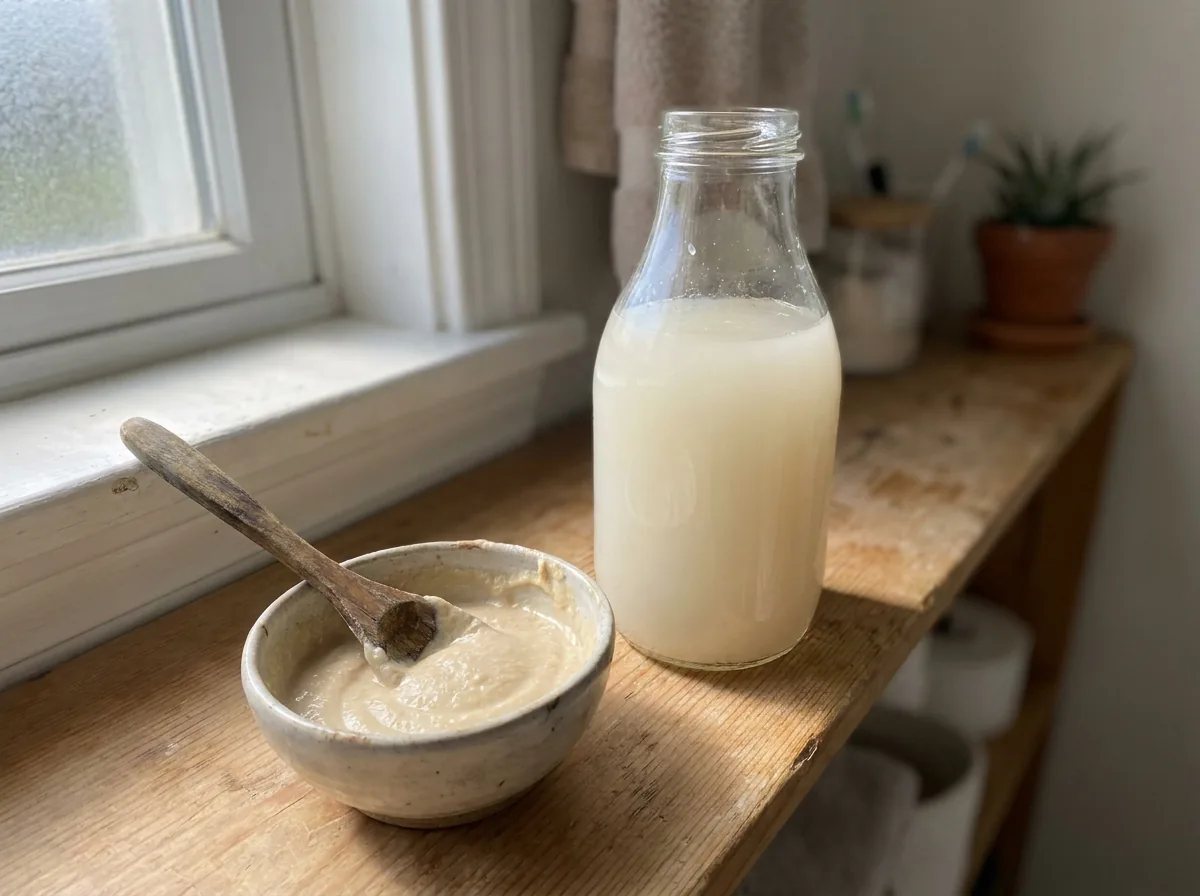
Ingredients
- 2 tbsp (30 ml) Liquid castile soap (castile shampoo)Plain, unscented liquid castile soap. A soap, not a detergent shampoo
- 120 ml (½ cup), warm Water (castile shampoo)Mix into the soap in a clean bottle. Soft or filtered water is kinder to soap
- 1 tbsp (15 ml) in 250 ml (1 cup) of water White or apple cider vinegar (acidic rinse)Mixed fresh for each wash
- 3 tbsp (about 25 g), wholegrain, finely milled Rye flour (no-poo option 1)Whisk to a smooth batter with 120 ml (½ cup) warm water; sieve out lumps
- 1 tbsp (about 10 g) Bentonite clay (no-poo option 2)Stir to a paste with 2 to 3 tbsp of warm water in a glass or plastic bowl; avoid metal utensils, which is common craft advice
- ½ tsp (2–3 ml) Jojoba oil (optional)A few drops on the ends afterwards if hair feels dry
Equipment
- Clean measuring spoons and jug
- Clean squeezy bottle or jar with a lid (for the castile mix)
- Small fine sieve (for rye flour)
- Non-metal bowl and spoon (for clay)
- Large cup or jug for the rinse
Method
Decide whether you need to
If your shampoo suits you, there is little reason to change. Homemade shampoo is for people who want a simpler routine or a shampoo without a long ingredients list; it is not a treatment for any scalp problem. If you have dandruff, itching or hair loss, see a GP or dermatologist.
Understand pH and the cuticle
Hair is covered in overlapping scales, the cuticle. A review of shampoo pH argues that alkaline pH raises the negative charge on the hair surface, which increases friction between fibres and may lead to cuticle damage and breakage. It found that shampoos ranged from pH 3.5 to 9.0, and that no ideal pH has been agreed. Soap is alkaline: a soap tested on infants' skin was pH 9.5.1,2
Check your water
Hard water leaves minerals behind. In a small laboratory study, hair washed in hard water for 30 days carried more calcium and magnesium and looked ruffled under a microscope, but its strength and elasticity did not change. Neither study used soap, so we cannot say soap in hard water is worse, only that hard water is the more likely place to see rough or dull hair.3,4
Castile shampoo: mix a single wash
Pour 2 tbsp (30 ml) of liquid castile soap and 120 ml (½ cup) of warm water into a clean bottle and swirl gently to avoid too much foam. These ratios are the widely used starting point, not from a trial. Mix it just before you shower and throw away any that is left.5
Wash the scalp, not the lengths
Wet your hair, massage the mixture into the scalp for about a minute, and let it run down the lengths as you rinse. Rinse thoroughly with warm water, because soap left in the hair makes it look dull and stiff. Keep it out of your eyes; castile soap stings.
Follow with an acidic rinse
Mix 1 tbsp (15 ml) of vinegar in 250 ml (1 cup) of water and pour it over your hair after the soap, then rinse again after about a minute if the smell bothers you. This is our suggestion, based on the pH argument (lower pH means less friction); we found no trial testing a vinegar rinse. Keep it out of your eyes and off any broken skin.1
Rye-flour no-poo
Whisk 3 tbsp of rye flour with 120 ml of warm water until smooth, sieve out lumps, and massage into wet hair for 2 minutes. Rinse thoroughly with warm water, for longer than you expect, since flour lumps stick. Make it fresh each time and do not keep it: a flour paste is a good place for bacteria to grow.5
Clay wash
Stir 1 tbsp of bentonite clay with 2 to 3 tbsp of warm water to a smooth paste, massage it into the scalp and hair, leave for a few minutes and rinse well. Clay is drying, so use it once a week at most and follow with oil on the ends if needed.
Do not store what is left
Water-containing mixtures need refrigeration or a preservative to stay safe, and a home cook has no way to test that a preservative works. So mix one wash at a time and pour away the rest.5
Safety
- Anything with water in it (castile mix, flour paste, clay paste, vinegar rinse) can grow bacteria and mould. Mix per wash and discard leftovers5
- If you must keep a mix, refrigerate it and use it within a day or two. We give no preservative recipe, as a home cook cannot test that one works5
- Alkaline soap raised skin pH and stripped skin fat more than mild cleansers in an infant study. Do not use it on babies' skin or hair2
- Rinse thoroughly and keep soap and vinegar out of your eyes
- Stop and switch to a mild shop shampoo if your scalp itches, flakes or stings, or your hair becomes brittle
Variations
Add ½ tsp (2–3 ml) of jojoba oil to the wash bottle for the dry ends. We found no study on oils in a soap wash, so treat it as a texture choice.
Mix 1 tbsp of clay into the rye paste for more cleansing. It is a matter of feel; no study compares them.
Skip the soap on days you do not need to wash properly, and rinse with plain water or the vinegar rinse only. It is a common way to wash less often, but we found no study on it.
Does it actually work?
A soap-based wash will clean hair, but there is a real trade-off: soap is alkaline, and a review of shampoo pH suggests that alkaline products increase friction between fibres and may damage the cuticle, which is why an acidic rinse is suggested. The evidence is limited: that review was of the literature and 123 shop shampoos and called for studies to find the best pH range, and we found no trial of castile soap, rye flour or clay on hair. The hard-water studies show mineral deposits but no loss of strength. Downsides people report are an adjustment period, a waxy or stiff feel and more work, but we found no source, so take these as anecdote. Homemade shampoo also has no preservative, which is why we make one wash at a time. It is a way to simplify, not a way to improve your hair.1,3,4,5
Evidence ratings for what goes in: Jojoba oil.
Questions people ask
Is homemade shampoo bad for your hair?
Not necessarily, but soap-based washes are alkaline, and a review of shampoo pH says alkaline products raise friction between fibres and can damage the cuticle. An acidic rinse helps in theory, but we found no trial of it. If your hair feels rough or dull, stop and switch back.
How do I make homemade shampoo with castile soap?
Mix 2 tbsp of liquid castile soap with 120 ml of warm water in a clean bottle, wash the scalp, rinse well, then rinse with 1 tbsp of vinegar in 250 ml of water. Make it fresh each time. The ratios are common practice, not from a trial.
How long does homemade shampoo last?
We recommend not keeping it. A shampoo with water in it can grow bacteria and mould without a preservative, and a fridge only slows that. Make one wash at a time.
Is the no-poo method with rye flour or clay any good?
There is no research on either for hair, so we can only say they are cleansing pastes that some people like. Rye flour must be sieved and rinsed out well, and clay can dry the hair, so use clay once a week at most.
Do I need a vinegar rinse after homemade shampoo?
For soap-based shampoo, yes, we suggest so. Soap is alkaline, and shampoo-pH research links lower pH to less friction and frizz. No trial has tested a vinegar rinse, so use a weak dilution.
Sources
- Review Gavazzoni Dias MF. The Shampoo pH can Affect the Hair: Myth or Reality? Int J Trichology. 2014.
- Randomised study Gfatter R, et al. Effects of soap and detergents on skin surface pH, stratum corneum hydration and fat content in infants. Dermatology. 1997.
- Laboratory study Srinivasan G, Chakravarthy Rangachari S. Scanning electron microscopy of hair treated in hard water. Int J Dermatol. 2016.
- Laboratory study Srinivasan G, et al. Effects of hard water on hair. Int J Trichology. 2013.
- Review Halla N, et al. Cosmetics Preservation: A Review on Present Strategies. Molecules. 2018.
Educational only. Patch-test anything new on your skin, and stop if it irritates.