DIY Dry Shampoo with Cornstarch or Arrowroot
Mix 2 tbsp (16 g) cornstarch or arrowroot powder with 1 tsp (2 g) cocoa powder for dark hair, or with nothing for light hair. Dust it on oily roots, leave for a couple of minutes and brush it out. It soaks up surface oil but does not clean your scalp, so it is a stopgap between washes and not a replacement for shampoo.
Reviewed by Healthy and Herbal editors · 30 September 2026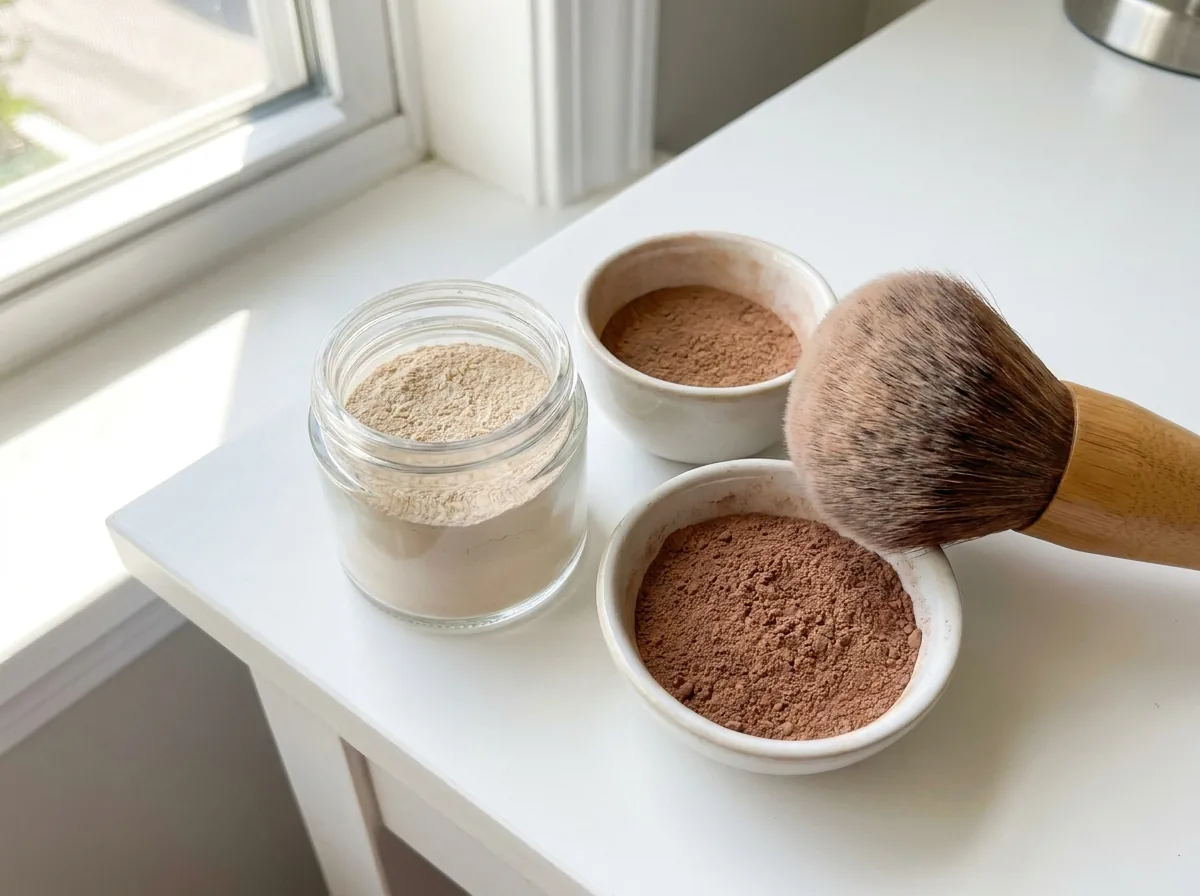
Ingredients
- 2 tbsp (about 16 g) Cornstarch (or arrowroot powder)Arrowroot is slightly silkier and is sold as a grain-free option. The two work in the same way and can be swapped one for one
- 1 tsp (about 2 g) for brown hair, 2 tsp for dark brown or black Cocoa powder, unsweetened (dark hair only)Only tints the powder. Skip it for blonde or grey hair. It can stain pale pillowcases
- 1 tsp (about 3 g), in place of 1 tsp of the starch Kaolin clay (optional, for very oily roots)A fine, pale clay that some people add for extra oil-soaking. We found no trial showing it works better than starch
Equipment
- Small, clean, dry jar with a lid
- Teaspoon and tablespoon measures
- Large, soft makeup brush
- Fine sieve (optional, for lumps)
- Hairbrush or comb
Method
Patch-test the ingredients
Dab a little of the finished powder on the inside of your arm, then again after 24 hours if it looks fine. Do not use it if the skin turns red, itchy or swollen.3
Measure the powders
Put 2 tbsp cornstarch or arrowroot in a dry bowl. For dark hair, add 1 to 2 tsp cocoa powder. For very oily roots you can swap 1 tsp of the starch for kaolin.
Mix until an even colour
Stir with a dry spoon, pressing out any lumps against the side of the bowl, or sift through a fine sieve. The mix should be one colour with no streaks. For brown hair, aim for a shade a little lighter than your hair; it darkens on the scalp.
Test the shade
Dab a small amount at your parting and brush it in. If it leaves a pale cast, add a little more cocoa. If it looks too brown, add more starch.
Jar it dry
Spoon the powder into a dry jar and close it tightly. Keep it away from the bathroom sink and shower, because damp will make it clump.
Apply at the roots
Section your hair and dip a big soft makeup brush in the powder. Tap off the excess and dust it along the parting and any oily areas, using a light hand. A little goes a long way.
Wait, then brush out
Leave it for 2 to 5 minutes so the powder can absorb oil. Massage it gently with your fingertips, then brush or comb it through from roots to ends until no powder is visible.
Safety
- Patch-test the powder on your inner arm for 24 hours first, especially if you add cocoa or clay3
- It absorbs oil but does not wash the scalp. Dermatology advice is to shampoo at least weekly and use dry shampoo only between washes1
- Used day after day, dry shampoo may encourage scalp problems such as seborrhoeic dermatitis or folliculitis, so don't build up a run of dry-only days1
- Skip it if you already have a scalp condition such as dandruff, eczema or psoriasis, and ask your doctor or pharmacist what to use instead1
Variations
Use plain cornstarch or arrowroot with no cocoa. A white powder can look ashy on fair hair if you use too much, so brush well.
Use 2 tsp cocoa to 2 tbsp starch, and add a little more if you still see a grey cast. Test on a small section first.
Swap 1 tsp of the starch for kaolin clay. Mix it in thoroughly and keep the total amount on your scalp small.
Does it actually work?
Dry shampoo is an oil absorber, and starch is what does the absorbing. A dermatologist writing in Dermatology Times describes commercial dry shampoo as an alcohol aerosol spray containing starch to absorb sebum, so a home mix of starch is doing the same job without the propellant. Absorbing oil makes hair look and feel fresher for a day, and it does not clean: the same article says dry shampoo does not replace traditional shampoo and water cleansing. The AAD advises shampooing based on how oily your scalp is, with daily washes for some people with oily scalps and as little as every two to three weeks for dry, textured or thick hair; the point of shampoo is to wash away built-up products, dead skin and excess oil. The Dermatology Times piece warns that frequent dry shampoo use can encourage seborrhoeic dermatitis from fungal overgrowth, and that it may cause folliculitis. We found no trials of homemade starch dry shampoo, cocoa tinting, or kaolin for hair. Learn more about cocoa powder and kaolin clay.1,2
Evidence ratings for what goes in: Cocoa (powder and flavanols), Kaolin clay.
Questions people ask
Is cornstarch or arrowroot better for dry shampoo?
They work in the same way, because both are fine starch powders that soak up oil. Arrowroot is a little silkier and is grain-free, and cornstarch is cheaper. We found no comparison of the two, so use whichever you have.
How often can I use dry shampoo?
Only between washes. A dermatologist quoted in Dermatology Times advises that people without scalp problems shampoo at least once a week, and that frequent dry shampoo may encourage seborrhoeic dermatitis and folliculitis. One or two days between washes is a sensible limit.
Why does my scalp feel itchy or flaky after dry shampoo?
Powder left on the scalp can irritate it and build up with sebum and dead skin, and the AAD says shampoo is what washes that away. Brush out as much as you can, wash with shampoo, and stop using it if the itch keeps coming back.
How do I stop white powder showing on dark hair?
Add cocoa powder to tint it, use a very small amount and brush it out thoroughly. For black hair, use about 2 tsp cocoa to 2 tbsp starch and test a small section before doing your whole head.
Sources
- Clinical commentary Draelos ZD. Does dry shampoo work? Dermatology Times. 2017 (updated 2023).
- Professional body American Academy of Dermatology. Tips for healthy hair.
- Professional body American Academy of Dermatology. How to test skin care products.
Educational only. Patch-test anything new on your skin, and stop if it irritates.