Awaiting clinical review. This page is built from sourced entries but has not yet been signed off by a pharmacist or clinician.
Natural remedies for bladder & urinary
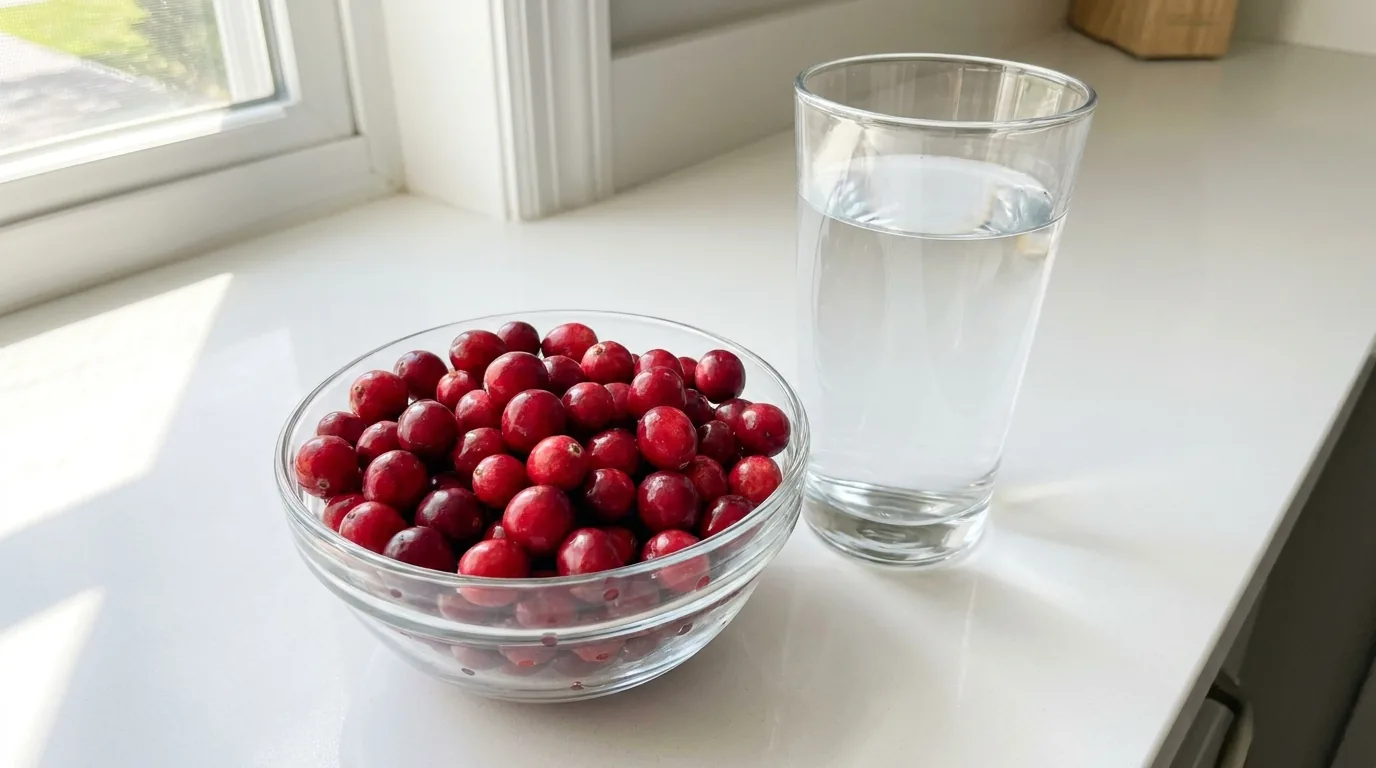
Direct answer
Cranberry is the best-supported option for preventing recurrent urinary tract infections, rated Moderate (3), while D-mannose is rated Limited (2) because the largest UK trial found no benefit over placebo. Nothing herbal here is shown to treat an infection you already have: nettle root for prostate-related urinary symptoms and bearberry for mild cystitis are both rated 2, and the best bearberry trials were negative. The caution that matters most is that urinary symptoms need checking, not just treating: see a doctor if you have a fever, blood in your urine, or symptoms and you are a man, pregnant, or keep getting infections; and cranberry is not advised with warfarin.
Compare the options
Click a column heading to sort.
| Rated for | Typical form & use | Main caution | |||
|---|---|---|---|---|---|
| Cranberry Vaccinium macrocarpon (fruit) | Moderate | Preventing recurrent UTIs in women | Juice or PAC-standardised capsule, daily | UK advice: avoid if taking warfarin | 4+ weeks |
| Bearberry (uva ursi) Arctostaphylos uva-ursi (leaf) | Limited | Symptoms of uncomplicated cystitis | Leaf extract, 200–840 mg arbutin daily | Max one week; not in pregnancy, kidney disease, under 18 | 2–3 days |
| D-mannose D-mannose (a simple sugar) | Limited | Preventing recurrent UTIs in women | Powder, 2 g daily | Not a treatment for an active infection | 4+ weeks |
| Horsetail Equisetum arvense (aerial parts) | Limited | Urinary flushing (mild diuretic) | Dry aqueous extract, about 900 mg/day | Not with fluid restriction (heart or kidney disease) | 2–3 days |
| Nettle Urtica dioica (root and leaf) | Limited | Prostate urinary symptoms (root) | Root extract, about 300–720 mg a day | See a doctor for urinary symptoms before self-treating | 4+ weeks |
- Rated for
- Preventing recurrent UTIs in women
- Form
- Juice or PAC-standardised capsule, daily
- Onset
- 4+ weeks
- Rated for
- Symptoms of uncomplicated cystitis
- Form
- Leaf extract, 200–840 mg arbutin daily
- Onset
- 2–3 days
- Rated for
- Preventing recurrent UTIs in women
- Form
- Powder, 2 g daily
- Onset
- 4+ weeks
- Rated for
- Urinary flushing (mild diuretic)
- Form
- Dry aqueous extract, about 900 mg/day
- Onset
- 2–3 days
- Rated for
- Prostate urinary symptoms (root)
- Form
- Root extract, about 300–720 mg a day
- Onset
- 4+ weeks
Quick picks
Cranberry is rated Moderate (3) for preventing recurrent UTIs in women: the 2023 Cochrane review of 8 trials in 1,555 women found fewer infections (risk ratio 0.74, 95% CI 0.55 to 0.99), though the trials were inconsistent. It aims to cut future infections, not treat one you have, and the NHS and MHRA advise avoiding it with warfarin.
Traditional favouriteBearberry (uva ursi)Bearberry leaf is registered in the EU only as a traditional medicine for mild cystitis symptoms in women. In 382 women it made no difference to symptoms versus placebo, and in another trial it left women with more symptoms than a single antibiotic dose. Use for one week at most.
Talk to a doctor first if…
Who should avoid
Cranberry should not be taken with warfarin, has shown no UTI benefit in pregnancy, and does not treat an active infection. D-mannose is untested in pregnancy and breastfeeding, and the sources we read covered adults only. Bearberry should not be used in pregnancy or breastfeeding, kidney disorders, by anyone under 18, by men without medical supervision, or for longer than one week. Horsetail and nettle leaf should not be used where fluid intake has to be limited. Anyone with fever, back or side pain, blood in the urine or worsening symptoms should see a doctor rather than self-treat.
Known interactions
Cranberry with warfarin is the one that matters: the MHRA and NHS advise people on warfarin to avoid cranberry products because of case reports of raised INR or bleeding, although two small controlled trials found no effect on warfarin levels, so ask your anticoagulant clinic. Horsetail has two case reports of viral rebound with HIV antiretroviral medicines, and the authors advise avoiding the combination, though it is unproven. D-mannose, bearberry and nettle list no interactions we could source, which is not the same as none existing.
Before you reach for an ingredient
For a suspected bladder infection or an enlarged prostate, the NHS route comes first, and fluids and everyday habits are the main self-care measures; cranberry and D-mannose are for preventing recurrences, not for treating one.
- For a suspected UTI, the NHS advises paracetamol for pain, resting, and drinking enough that you pass pale urine regularly, and avoiding fruit juices, coffee and alcohol, which may irritate the bladder. Many UTIs need antibiotics; a pharmacist can help women aged 16 to 64 who are not pregnant.7
- To help prevent UTIs, the NHS suggests wiping front to back, peeing soon after sex, not holding urine in, emptying the bladder fully, wearing cotton underwear and avoiding scented soap around the genitals.7
- For an enlarged prostate, the NHS says doctors usually recommend lifestyle changes first if symptoms are mild, and that a GP should check the symptoms because they can sometimes be caused by more serious conditions such as prostate cancer.8
Questions people ask
Does cranberry prevent UTIs?
In women with recurrent UTIs the 2023 Cochrane review found fewer infections (risk ratio 0.74), but the trials disagreed and the products varied. It found little or no benefit in older people in care, in pregnancy or with bladder-emptying problems, and no trials showing cranberry treats an infection you already have.
Does D-mannose work for UTIs?
Probably not to a degree you would notice. In the largest placebo-controlled trial, of 598 women in UK primary care, 51.0% on D-mannose and 55.7% on placebo saw a doctor or nurse for a suspected UTI over 6 months. Older, smaller studies looked more positive, but Cochrane rates that evidence as very low certainty.
When should I see a doctor for urinary symptoms?
The NHS advises an urgent GP appointment or 111 if you have a very high or low temperature or are shivering, blood in your urine, pain in the lower tummy or back, or are a man, pregnant, aged 65 or over or have diabetes. Also go if symptoms do not improve within 48 hours, or if you get 2 UTIs in 6 months or 3 in 12.
Does uva ursi (bearberry) work for cystitis?
The evidence is weak. In a placebo-controlled trial of 382 women it made no difference to symptoms, and in a German trial of 398 women it left them with more symptoms than a single dose of fosfomycin, with 8 kidney infections against 2. The EU regulator limits it to one week.
Sources
- Systematic review Williams G, Stothart CI, Hahn D, Stephens JH, Craig JC, Hodson EM. Cranberries for preventing urinary tract infections. Cochrane Database Syst Rev. 2023.
- Randomised controlled trial Hayward G, Mort S, Hay AD, et al. d-Mannose for Prevention of Recurrent Urinary Tract Infection Among Women: A Randomized Clinical Trial. JAMA Intern Med. 2024.
- Systematic review Cooper TE, Teng C, Howell M, Teixeira-Pinto A, Jaure A, Wong G. D-mannose for preventing and treating urinary tract infections. Cochrane Database Syst Rev. 2022.
- RCT Moore M, Trill J, Simpson C, et al. Uva-ursi extract and ibuprofen as alternative treatments for uncomplicated urinary tract infection in women (ATAFUTI): a factorial randomized trial. Clin Microbiol Infect. 2019.
- RCT Gágyor I, Hummers E, Schmiemann G, et al. Herbal treatment with uva ursi extract versus fosfomycin in women with uncomplicated urinary tract infection in primary care: a randomized controlled trial. Clin Microbiol Infect. 2021.
- Systematic review Wilt TJ, Ishani A, Rutks I, MacDonald R. Phytotherapy for benign prostatic hyperplasia. Public Health Nutr. 2000.
- Clinical guidance NHS. Urinary tract infections (UTIs). nhs.uk (last reviewed 11 July 2025).
- Clinical guidance NHS. Enlarged prostate. nhs.uk.
Draft, awaiting clinical review