
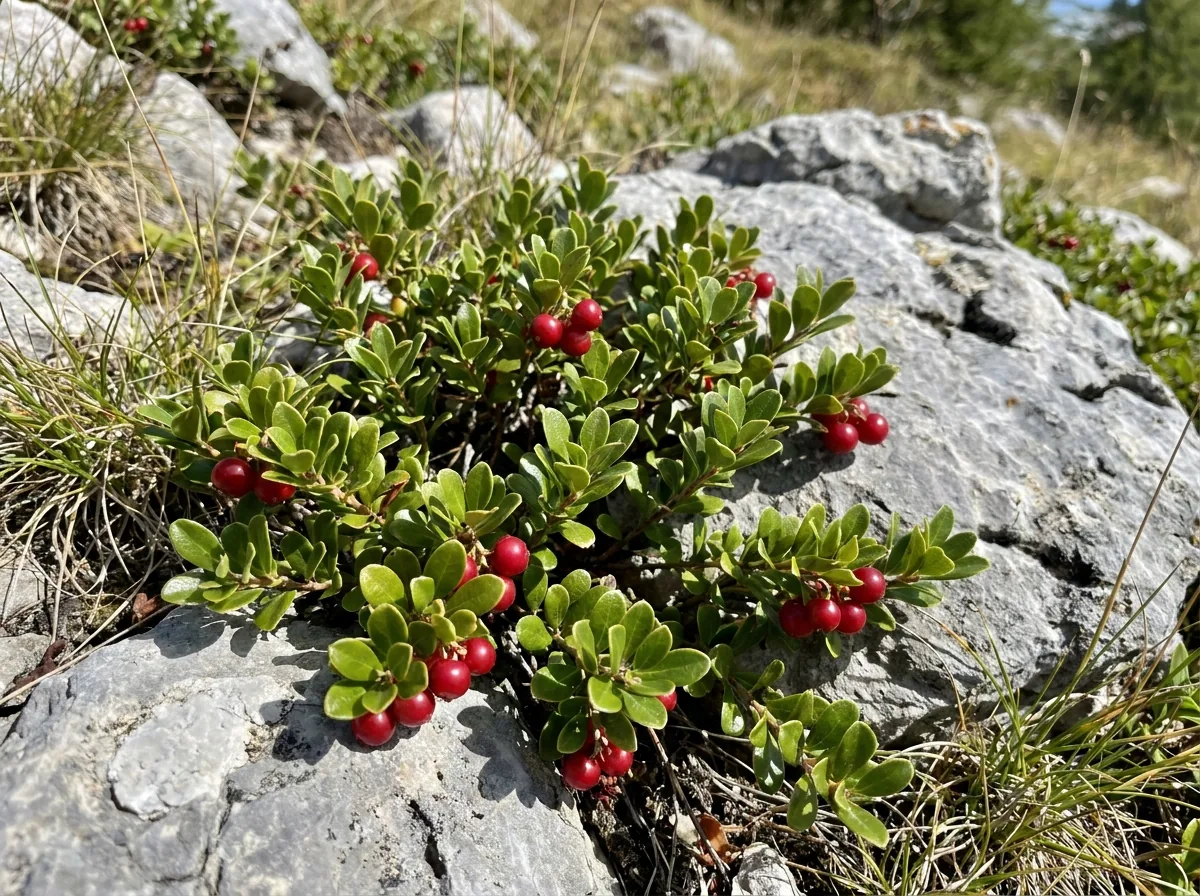
Bearberry (uva ursi)
Bearberry leaf is a traditional herbal remedy for the burning and frequency of mild bladder infections in women, but the best trials do not show that it relieves symptoms. In one it did not help symptoms at all, and in another it cut antibiotic use but left women with more symptoms and a possible excess of kidney infections than a single antibiotic dose.
Its active compound turns into hydroquinone in the body, so the EU regulator limits use to one week, and advises against it in pregnancy, kidney disorders, men and anyone under 18.
At a glance
Last reviewed 10 October 2026What it's used for
Evidence is rated per use. The same ingredient can be strong for one thing and traditional for another.
| Use | Evidence | What the research shows |
|---|---|---|
| Symptoms of uncomplicated cystitisCompare remedies for women’s health →Compare remedies for bladder & urinary → | Limited | In a placebo-controlled trial of 382 women with suspected bladder infection (ATAFUTI), uva ursi extract made no difference to frequency symptoms on days 2–4 (difference −0.06, 95% CI −0.33 to 0.21) and did not significantly reduce antibiotic use (39.9% vs 47.4%). In a German trial of 398 women, uva ursi led to 63.6% fewer antibiotic courses than fosfomycin, but symptom burden over the first week was 136.5% of the fosfomycin group's, failing the non-inferiority test, and 8 women developed kidney infection (pyelonephritis) against 2 on fosfomycin (p = 0.067). Both trials used women who could be prescribed antibiotics, so they say little about people who choose to avoid them.1,2 |
| Preventing recurrent cystitis | Limited | A German health technology assessment of herbal treatments for recurrent bladder infection found a 'hint of benefit' for one uva ursi and dandelion combination compared with placebo. It rested on a single study, of a mixed product, so it cannot separate the effect of bearberry itself. Cranberry had more consistent evidence in the same review. We did not open the underlying trial.3 |
| Relief of mild recurrent lower urinary tract symptoms (EU traditional use) | Traditional | The EU herbal regulator registers bearberry leaf as a traditional herbal medicine for burning during urination and frequent urination in women, after a doctor has excluded serious conditions. It states the indication rests exclusively on long-standing use, not on trial evidence.4 |
How much
Ranges below are what studies used and what supplements commonly contain. They are not a recommendation for you. Start at the low end.
How people take it
Safety
Who should avoid
- Pregnancy and breastfeeding — safety not established, use not recommended
- Kidney disorders — a contraindication in the EU monograph
- Children and adolescents under 18 — not recommended
- Men — not recommended without medical supervision
- Use beyond one week — the EU maximum duration
- Fever, blood in the urine or worsening symptoms — see a doctor
- Known allergy to bearberry
Known interactions
Questions people ask
Does uva ursi work for a urinary tract infection?
Not reliably. In a placebo-controlled trial of 382 women it did not improve symptoms, and in a 398-woman trial against fosfomycin it left women with more symptoms and more kidney infections, though it reduced antibiotic use. Do not treat fever, back pain or blood in the urine yourself.
How long can I safely take uva ursi?
The EU monograph says not for more than one week, and to see a doctor if symptoms persist beyond 4 days. The active compound, arbutin, is converted to hydroquinone, and long-term use has not been shown to be safe.
Who should not take uva ursi?
The EU regulator advises against use in pregnancy and breastfeeding, kidney disorders, children and adolescents under 18, and men. Its monograph gives men and under-18s as needing medical supervision because of concerns about underlying causes.
Will uva ursi change the colour of my urine?
It may. The EU monograph notes a greenish-brown coloration of the urine can occur.
Sources (7)
- RCT Moore M, Trill J, Simpson C, et al. Uva-ursi extract and ibuprofen as alternative treatments for uncomplicated urinary tract infection in women (ATAFUTI): a factorial randomized trial. Clin Microbiol Infect. 2019.
- RCT Gágyor I, Hummers E, Schmiemann G, et al. Herbal treatment with uva ursi extract versus fosfomycin in women with uncomplicated urinary tract infection in primary care: a randomized controlled trial. Clin Microbiol Infect. 2021.
- Systematic review IQWiG. Bladder infection: Do herbal remedies help with recurrent bladder infection? IQWiG Reports, Commission No. HT20-01. 2022.
- Regulator monograph European Medicines Agency HMPC. European Union herbal monograph on Arctostaphylos uva-ursi (L.) Spreng., folium (EMA/HMPC/750269/2016). 2018.
- Safety review de Arriba SG, Naser B, Nolte KU. Risk assessment of free hydroquinone derived from Arctostaphylos Uva-ursi folium herbal preparations. Int J Toxicol. 2013.
- Pharmacokinetic study Schindler G, Patzak U, Brinkhaus B, et al. Urinary excretion and metabolism of arbutin after oral administration of Arctostaphylos uvae ursi extract as film-coated tablets and aqueous solution in healthy humans. J Clin Pharmacol. 2002.
- Regulator/health agency Drugs and Lactation Database (LactMed). Uva Ursi. National Institute of Child Health and Human Development. 2024.
Last reviewed 10 October 2026 · Next review April 2027 · How we rate evidence
Reader notes
Experiences and questions from readers, read by an editor before they appear. They are personal accounts, not evidence, and are not medical advice.