
Grapefruit seed extract
Grapefruit seed extract has no credible clinical evidence as a remedy, and the antimicrobial activity attributed to it has repeatedly been traced to synthetic preservatives added to commercial products, chiefly benzethonium chloride.
Laboratory analyses in several countries found these preservatives in most products tested, and one Swedish report linked such a product to a dangerous rise in INR in a patient taking warfarin. Treat it as an unreliable product of unknown composition rather than a herbal remedy.
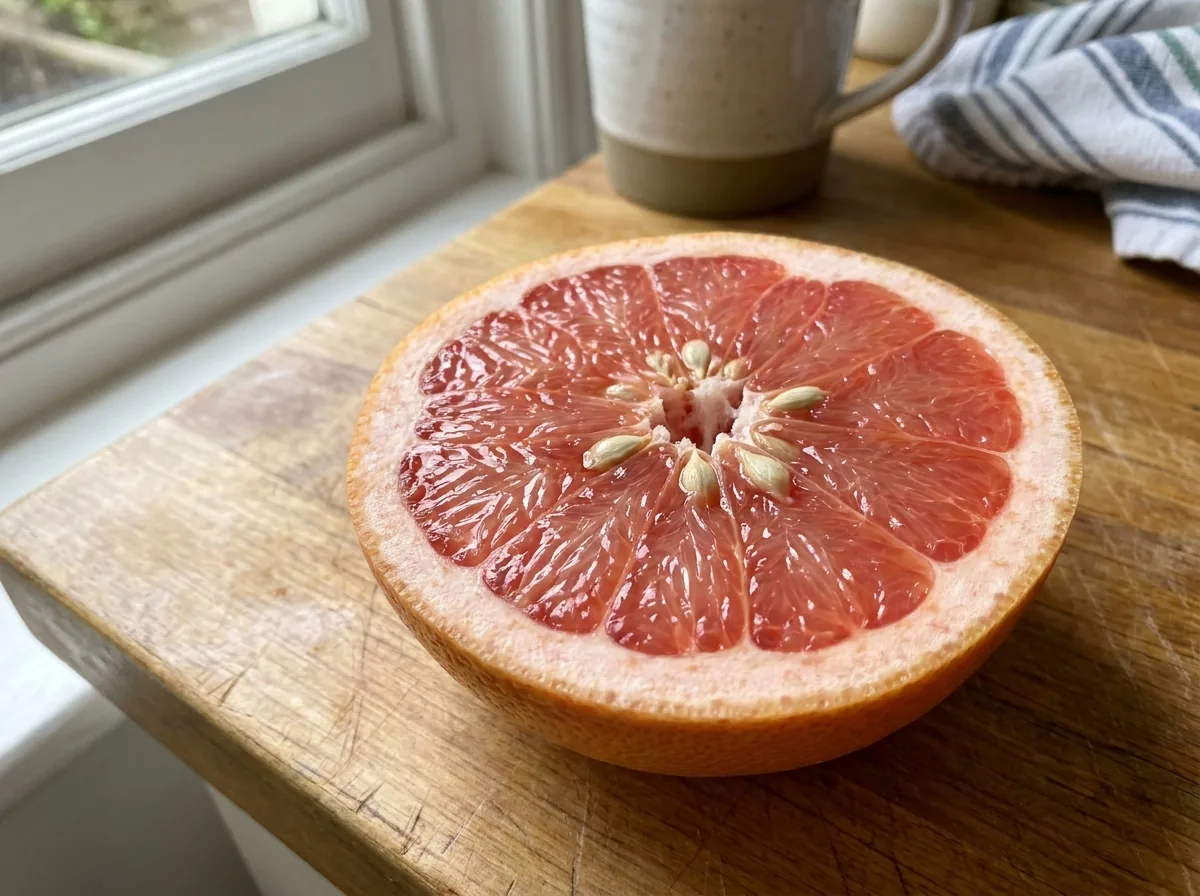
At a glance
Last reviewed 10 October 2026What it's used for
Evidence is rated per use. The same ingredient can be strong for one thing and traditional for another.
| Use | Evidence | What the research shows |
|---|---|---|
| Antimicrobial or immune support | Traditional | A 1999 German study found five of six commercial extracts inhibited bacteria and yeast, but all five contained benzethonium chloride, and the one extract without a preservative, plus home-made extracts from seed and pulp, showed no antimicrobial activity. The authors concluded the activity is due to the synthetic preservatives. We found no human trial in this review that tests a verified preservative-free extract, so the rating rests on the traditional and marketing claim alone.1,2 |
| Topical disinfectant or deodorant | Traditional | Extracts are sold in disinfectant sprays, cosmetics and food preservatives. A Japanese survey using NMR and LC/MS found synthetic disinfectants (benzethonium or benzalkonium salts) in most commercial products across food additive, supplement, cosmetic and disinfectant categories. Any disinfecting effect of such a product is plausibly from the added chemical, not the grapefruit.3,4 |
How much
Ranges below are what studies used and what supplements commonly contain. They are not a recommendation for you. Start at the low end.
How people take it
Safety
Who should avoid
- People taking warfarin — a case report links a product to INR 7.9
- Anyone taking CYP3A4 or CYP2C9 drugs — preservative inhibits both in vitro
- Pregnancy and breastfeeding — no safety data, plus unlabelled preservatives
- Anyone wanting a plant-only product — content is unreliable
Known interactions
Questions people ask
Is grapefruit seed extract a natural antibiotic or antifungal?
The evidence says the antimicrobial effect comes from synthetic preservatives found in commercial products, not from the grapefruit. In a 1999 study, an extract without a preservative and home-made seed and pulp extracts showed no antimicrobial activity.
What is actually in grapefruit seed extract products?
Several analyses found benzethonium chloride, sometimes with triclosan, methylparaben or benzalkonium chloride. The share varies: two of 17 products in a 2016 analysis, seven of nine in a 2006 study, and most products in a Japanese survey.
Does grapefruit seed extract interact with medicines like grapefruit juice does?
The documented concern is different. A Swedish report linked a product's benzethonium chloride, not grapefruit compounds, to a raised INR in a patient on warfarin, and the preservative inhibited two liver enzymes in vitro. We did not find a source applying the grapefruit juice interaction to the seed extract.
Sources (7)
- Laboratory study von Woedtke T, Schlüter B, Pflegel P, Lindequist U, Jülich WD. Aspects of the antimicrobial efficacy of grapefruit seed extract and its relation to preservative substances contained. Pharmazie. 1999.
- Laboratory analysis Avula B, Sagi S, Wang YH, et al. Liquid chromatography-electrospray ionization mass spectrometry analysis of limonoids and flavonoids in seeds of grapefruits, other citrus species, and dietary supplements. Planta Med. 2016.
- Laboratory analysis Sugimoto N, Tada A, Kuroyanagi M, et al. Survey of synthetic disinfectants in grapefruit seed extract and its compounded products. Shokuhin Eiseigaku Zasshi. 2008.
- Laboratory analysis Bekiroglu S, Myrberg O, Ostman K, et al. Validation of a quantitative NMR method for suspected counterfeit products exemplified on determination of benzethonium chloride in grapefruit seed extracts. J Pharm Biomed Anal. 2008.
- Laboratory analysis Avula B, Dentali S, Khan IA. Simultaneous identification and quantification by liquid chromatography of benzethonium chloride, methyl paraben and triclosan in commercial products labeled as grapefruit seed extract. Pharmazie. 2007.
- Laboratory analysis Ganzera M, Aberham A, Stuppner H. Development and validation of an HPLC/UV/MS method for simultaneous determination of 18 preservatives in grapefruit seed extract. J Agric Food Chem. 2006.
- Case report and in vitro study Brandin H, Myrberg O, Rundlöf T, Arvidsson AK, Brenning G. Adverse effects by artificial grapefruit seed extract products in patients on warfarin therapy. Eur J Clin Pharmacol. 2007.
Last reviewed 10 October 2026 · Next review April 2027 · How we rate evidence
Reader notes
Experiences and questions from readers, read by an editor before they appear. They are personal accounts, not evidence, and are not medical advice.