
Can You Make Your Own Sunscreen? (Why We Don't Recommend It)
No, don't make your own sunscreen. You can't know the SPF of a home mix, zinc oxide doesn't spread evenly without proper formulation, and oils give no meaningful sun protection. Instead buy a broad-spectrum SPF 30 or higher sunscreen, apply about 6 to 8 teaspoons to cover an adult's body, and reapply every 2 hours.
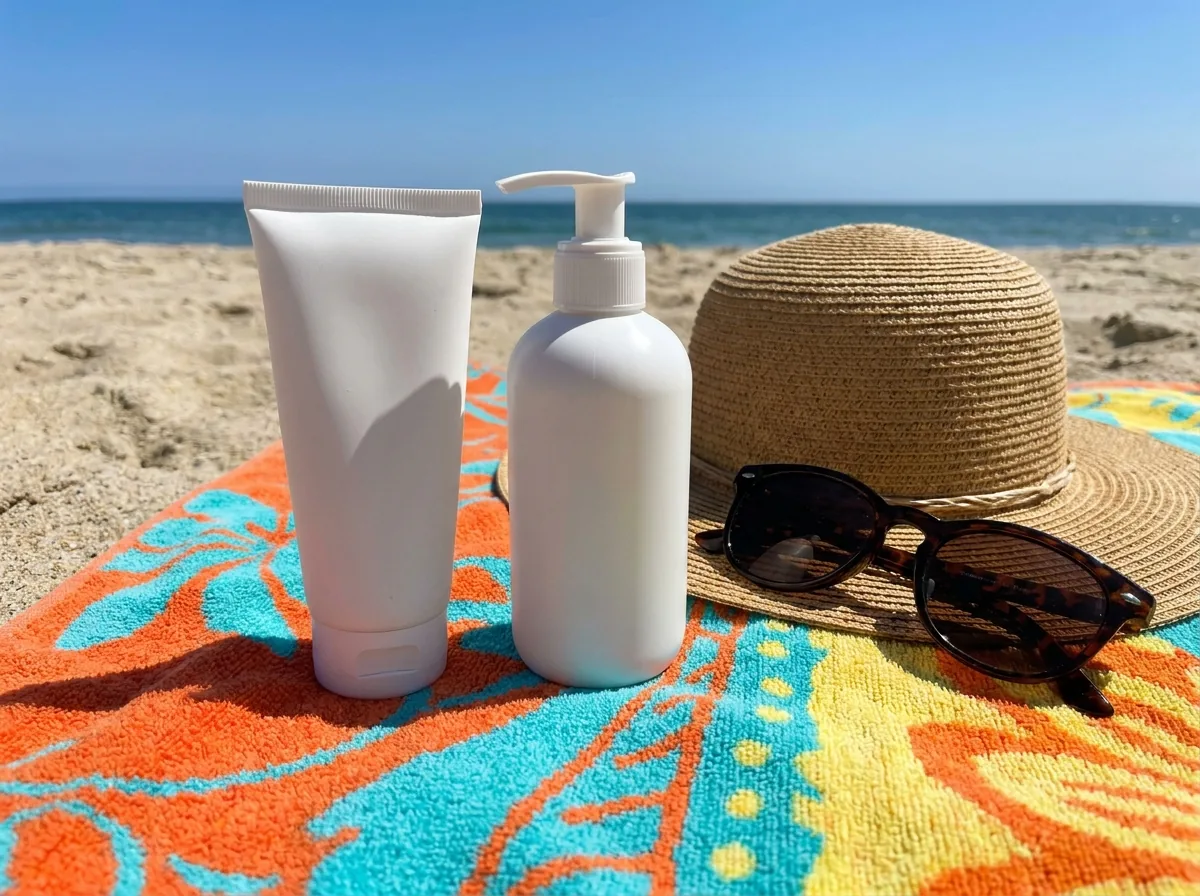
What you need
- About 6–8 teaspoons (around 30 ml) for one adult's whole body Mineral sunscreen, broad-spectrum, SPF 30 or higherLook for zinc oxide as the active ingredient, with or without titanium dioxide. Choose water-resistant if you will swim or sweat
- Read the ingredient list Titanium dioxide (as the active ingredient on the label)Often paired with zinc oxide. Both are the ingredients in mineral sunscreens
Equipment
- A sunscreen you've checked the label of
- A teaspoon, to learn what the right amount looks like
- A hat, sunglasses and clothing that covers skin
- A reminder on your phone for reapplication
Method
Check the label for broad spectrum and SPF 30+
Look for 'broad spectrum' and an SPF of at least 30. The AAD advises SPF 30 or higher, water-resistant and broad-spectrum; the NHS advises at least SPF 30 and at least 4-star UVA protection on UK products.6,7
Choose a mineral one if you prefer
A mineral sunscreen has zinc oxide or titanium dioxide as its active ingredient. Mineral is a preference, not a requirement: what matters is broad-spectrum SPF 30 or higher that you will actually use. Even among products containing them, protection varies, so the label tells you less than the test behind it.4
Use the right amount
Sunscreen is tested at 2 mg per cm² of skin, and most people apply much less. An adult needs about 6 to 8 teaspoons for the whole body (NHS), or about an ounce, a shot glass full (AAD and FDA). For the face alone, use about a teaspoon.3,6,7,2
Apply it before you go out
Put it on 15 to 30 minutes before sun exposure. The AAD says it takes about 15 minutes for the skin to absorb it, and the NHS suggests 30 minutes before.6,7
Cover the spots people miss
Don't forget your ears, neck, tops of the feet, backs of the legs and the scalp parting. Use a wide-brimmed hat for the scalp if you prefer.6
Reapply every 2 hours
Reapply at least every 2 hours, and straight after swimming, towel-drying or sweating, even with a water-resistant product. Water-resistant labels only mean 40 or 80 minutes of protection in water.2,7
Add shade, clothing and a hat
Sunscreen is one layer of protection, not a licence to stay out for hours. Use shade in the middle of the day and wear clothes and a hat that cover your skin.
Safety
- Don't rely on a homemade mix for sun protection. Its SPF is unknown, and in a study of Pinterest recipes, 68.3% of recipes gave insufficient UV protection1
- Plant oils such as coconut, raspberry seed and carrot seed had negligible in-vitro SPF in one study, so they are not sunscreens4
- Commercial sunscreens must pass SPF and broad-spectrum tests before they are sold. A home mix has had no test at all2,3
- Don't apply a thin layer to 'save' sunscreen. Applying too little cuts protection below the SPF on the label3,7
- Check babies' and children's sunscreen guidance with your pharmacist or GP. Babies under 6 months should be kept out of direct sun
Variations
Pick a fragrance-free mineral sunscreen and patch-test it on your inner arm before use. This is general practice; we found no study comparing types.
A facial sunscreen is tested the same way as a body one. Use about a teaspoon for the face and neck, per the AAD.
Make a homemade after-sun balm or lip balm for comfort instead, and buy your sunscreen. A balm has no job to do that depends on an SPF.
Does it actually work?
A 2020 study of 189 Pinterest pins for homemade sunscreen found that 95.2% portrayed them positively, 68.3% recommended recipes with insufficient UV protection, and 33.3% claimed SPFs ranging from 2 to 50. The US FDA requires sunscreens to be tested in controlled conditions on volunteers for SPF and with a spectrophotometer for broad-spectrum status; a home mix has neither.
Zinc oxide powder clumps into aggregates in a formulation, and an uneven film leaves gaps in protection. In vitro, eleven plant oils, including coconut oil, had negligible SPF, with one exception (tamanu) that fell sharply after light exposure; even cosmetic products with titanium dioxide or zinc oxide were variable.
The short answer is that oils and DIY mixes are not sunscreen. The /ingredients/zinc-oxide/ and /ingredients/titanium-dioxide/ entries cover the mineral filters.1,2,3,4,5
Evidence ratings for what goes in: Zinc oxide, Titanium dioxide.
Questions people ask
Can I make sunscreen with zinc oxide and coconut oil?
We don't recommend it. You can't measure the SPF, zinc oxide powder tends to clump and spread unevenly without proper formulation, and a patchy film leaves skin exposed. Commercial products are made and tested to give a known result.
Does coconut oil have an SPF?
Not a meaningful one. In a 2026 in-vitro study of eleven plant oils, coconut oil showed negligible SPF and UVA protection. It is not a substitute for sunscreen.
How much sunscreen should I use?
About 6 to 8 teaspoons for an adult's whole body, according to the NHS, or around an ounce (a shot glass), according to the AAD and FDA. It is tested at 2 mg per cm² of skin, which is more than most people apply.
How often should I reapply?
At least every 2 hours, and right after swimming, sweating or towel-drying. Water-resistant sunscreens are only rated for 40 or 80 minutes in water.
Sources (7)
- Content analysis Merten JW, Roberts KJ, King JL, McKenzie LB. Pinterest Homemade Sunscreens: A Recipe for Sunburn. Health Commun. 2020.
- Regulator U.S. Food and Drug Administration. Sunscreen: How to Help Protect Your Skin from the Sun.
- Regulation 21 CFR 201.327 - Over-the-counter sunscreen drug products; required labeling based on effectiveness testing. Code of Federal Regulations, Title 21.
- In vitro study Popiół-Adamska J, et al. Natural photoprotection under scrutiny: an in vitro evaluation. Photochem Photobiol Sci. 2026.
- In vitro study Detoni CB, et al. Penetration, photo-reactivity and photoprotective properties of nanosized ZnO. Photochem Photobiol Sci. 2014.
- Professional body American Academy of Dermatology. How to apply sunscreen.
- Health service NHS. Sunscreen and sun safety.
Educational only. Patch-test anything new on your skin, and stop if it irritates.
Reader notes
Experiences and questions from readers, read by an editor before they appear. They are personal accounts, not evidence, and are not medical advice.