Awaiting clinical review. This entry is sourced but has not yet been signed off by a pharmacist or clinician.
Skullcap
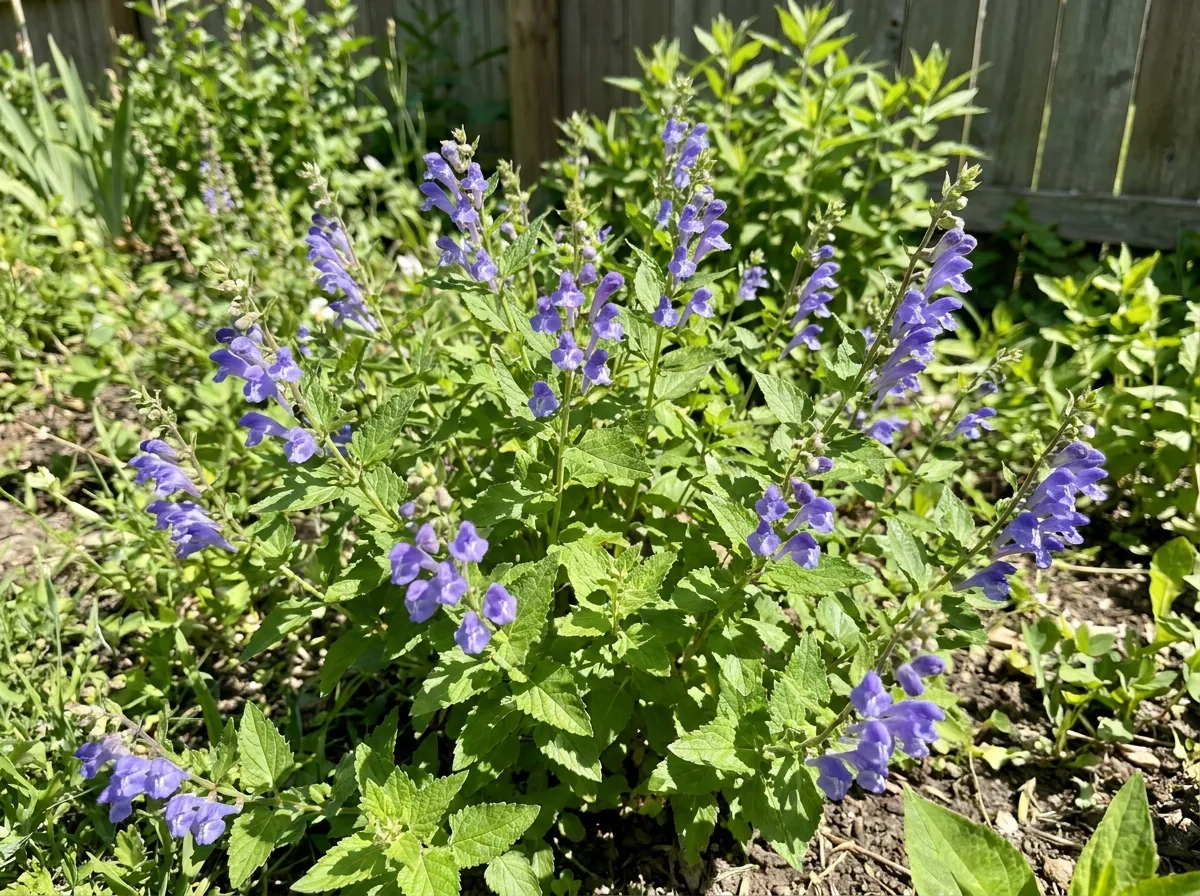
American skullcap is a traditional calming herb, but the human evidence is two small trials in healthy volunteers, and the better-documented one did not beat placebo on its anxiety measure. Liver injury has been reported with skullcap products, and the herb has been found adulterated with germander (Teucrium), a known liver toxin, so buy only from a supplier who can vouch for identity. Do not confuse it with Chinese skullcap (Scutellaria baicalensis), which is a different plant.
At a glance
Last reviewed 29 September 2026What it's used for
Evidence is rated per use. The same ingredient can be strong for one thing and traditional for another.
| Use | Evidence | What the research shows |
|---|---|---|
| Mild anxiety and low mood | Limited | In a crossover trial of 43 healthy adults, 350 mg three times daily for two weeks did not differ from placebo on the Beck Anxiety Inventory (p = 0.191), though total mood disturbance fell with skullcap and not with placebo. Carryover between phases and baseline differences between groups limit that result. An earlier small placebo-controlled study in healthy volunteers reported anxiolytic effects; its abstract gives no figures. Nobody has tested it in people with an anxiety disorder.1,2,3 |
| Sleep and general nervous tension | Traditional | Skullcap has a long record as a relaxing nervine and is used for insomnia and anxiety. We found no sleep trial of it, so this rests on traditional use.4,8 |
How much
Ranges below are what studies used and what supplements commonly contain. They are not a recommendation for you. Start at the low end.
How people take it
Safety
Who should avoid
- Liver disease, or taking other medicines that can harm the liver
- Products that do not name the species (Scutellaria lateriflora) and supplier
- Pregnancy and breastfeeding — no safety data found
Known interactions
Questions people ask
Does skullcap work for anxiety?
There is very little evidence. A 2014 trial in 43 healthy adults found no significant difference from placebo on an anxiety scale, although overall mood scores improved on skullcap. Reviews list it as promising but unreplicated.
Can skullcap harm the liver?
Liver injury has been reported with skullcap products, and skullcap appears among the herbs most often linked to herb-induced liver injury in a 2021 systematic review. Whether skullcap itself, or contamination, was responsible is unclear, because the herb has been adulterated with germander, which contains liver-toxic compounds.
What is the difference between American and Chinese skullcap?
American skullcap is Scutellaria lateriflora, the plant used as a calming nervine. Chinese skullcap is Scutellaria baicalensis, a different species used in other preparations. The research here concerns S. lateriflora only, so check the Latin name on the label.
Sources
- Randomised controlled trial Brock C, Whitehouse J, Tewfik I, Towell T. American Skullcap (Scutellaria lateriflora): a randomised, double-blind placebo-controlled crossover study of its effects on mood in healthy volunteers. Phytother Res. 2014.
- Randomised controlled trial Wolfson P, Hoffmann DL. An investigation into the efficacy of Scutellaria lateriflora in healthy volunteers. Altern Ther Health Med. 2003.
- Systematic review Sarris J, McIntyre E, Camfield DA. Plant-based medicines for anxiety disorders, part 2: a review of clinical studies with supporting preclinical evidence. CNS Drugs. 2013.
- Systematic review Sarris J, Panossian A, Schweitzer I, Stough C, Scholey A. Herbal medicine for depression, anxiety and insomnia: a review of psychopharmacology and clinical evidence. Eur Neuropsychopharmacol. 2011.
- Review Bunchorntavakul C, Reddy KR. Review article: herbal and dietary supplement hepatotoxicity. Aliment Pharmacol Ther. 2013.
- Systematic review Ballotin VR, Bigarella LG, Brandão ABM, et al. Herb-induced liver injury: Systematic review and meta-analysis. World J Clin Cases. 2021.
- Analytical study Lin LZ, Harnly JM, Upton R. Comparison of the phenolic component profiles of skullcap (Scutellaria lateriflora) and germander (Teucrium canadense and T. chamaedrys), a potentially hepatotoxic adulterant. Phytochem Anal. 2009.
- Analytical study Sandasi M, Vermaak I, Chen W, Viljoen AM. Skullcap and germander: preventing potential toxicity through the application of hyperspectral imaging and multivariate image analysis as a novel quality control method. Planta Med. 2014.
Last reviewed 29 September 2026 · Next review March 2027 · How we rate evidence