Awaiting clinical review. This entry is sourced but has not yet been signed off by a pharmacist or clinician.
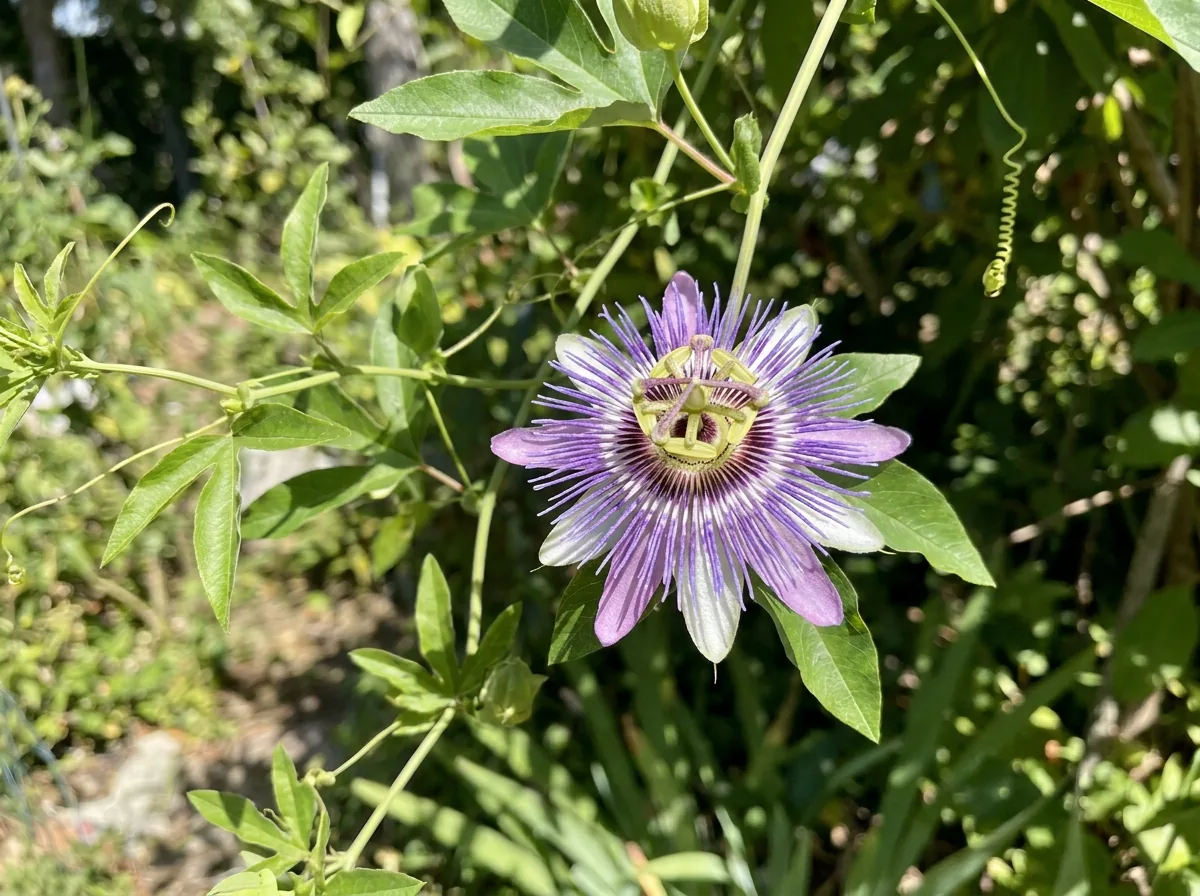
Passionflower
Passionflower may ease anxiety, including the anxiety before surgery or dental work, but the evidence is a handful of small trials, some of them negative, and no large or long trial confirms it. Small studies also suggest it can add a little total sleep time in people with insomnia. It looks safe in the short term; the main caution is that it may add to anaesthetics and sedatives, so tell your surgical team, and it should not be used in pregnancy.
At a glance
Last reviewed 29 September 2026What it's used for
Evidence is rated per use. The same ingredient can be strong for one thing and traditional for another.
| Use | Evidence | What the research shows |
|---|---|---|
| Anxiety before surgery or dental work | Limited | In a placebo-controlled trial of 60 surgical outpatients, a single 500 mg oral dose 90 minutes before surgery gave lower anxiety scores than placebo (P < 0.001) with no extra sedation. A later three-arm trial of 30 third-molar patients found no difference in anxiety scores against placebo or midazolam, though salivary cortisol fell. NCCIH says conclusions are not definite.4,5,7 |
| Generalised anxiety | Limited | One pilot trial of 36 outpatients found passionflower extract (45 drops a day) and oxazepam 30 mg a day both worked over 4 weeks, with no significant difference between them. Oxazepam acted faster, and it caused more impairment of job performance. A systematic review of nine trials found most reported lower anxiety, with less effect in people whose anxiety was mild.3,1 |
| Insomnia | Limited | In a 110-person trial of adults with insomnia disorder, two weeks of passionflower extract raised polysomnography-measured total sleep time by about 23 minutes compared with no change on placebo (p = 0.049). Sleep efficiency and time awake after falling asleep did not differ from placebo. NCCIH describes the effect on falling asleep and staying asleep as mixed.6,7 |
| Mild mental stress and aiding sleep (traditional) | Traditional | The EU herbal regulator registers passionflower herb as a traditional medicine for mild symptoms of mental stress and to aid sleep, based only on long-standing use. A 2013 review said the claimed effects were not adequately supported because trials were often poorly designed and poorly described.8,2 |
How much
Ranges below are what studies used and what supplements commonly contain. They are not a recommendation for you. Start at the low end.
How people take it
Safety
Who should avoid
- Pregnancy — NCCIH says it may induce uterine contractions
- Breastfeeding — little is known about safety
- Before surgery — tell your surgical team, NCCIH advises talking to them within 2 weeks
- Children under 12 — not established, too little data
- Before driving or operating machinery — may impair ability
- Known allergy to passionflower
Known interactions
Questions people ask
Does passionflower work for anxiety?
Small trials suggest it may, including one pilot trial of 36 people where it matched oxazepam over four weeks. But the trials are small and short, and one recent trial found no difference in anxiety scores against placebo. NCCIH says conclusions are not definite.
Is passionflower as good as oxazepam?
In one 36-person pilot trial there was no significant difference between them after 4 weeks, but oxazepam acted faster and the trial was too small to prove the two are equivalent. It does not show that passionflower can replace a prescribed medicine, and you should not change a prescription without your prescriber.
Can passionflower help you sleep?
One trial of 110 adults with insomnia found about 23 extra minutes of total sleep after two weeks compared with placebo, but other sleep measures did not differ. NCCIH calls the evidence on falling and staying asleep mixed.
Can I take passionflower before an operation?
Talk to your surgical team first. NCCIH says passionflower might interact with anaesthesia and other medicines used before and after surgery, and advises telling your provider if you take it within 2 weeks of a scheduled operation.
Sources
- Systematic review Janda K, Wojtkowska K, Jakubczyk K, Antoniewicz J, Skonieczna-Żydecka K. Passiflora incarnata in Neuropsychiatric Disorders: A Systematic Review. Nutrients. 2020.
- Review Miroddi M, Calapai G, Navarra M, Minciullo PL, Gangemi S. Passiflora incarnata L.: ethnopharmacology, clinical application, safety and evaluation of clinical trials. J Ethnopharmacol. 2013.
- Randomised trial Akhondzadeh S, Naghavi HR, Vazirian M, Shayeganpour A, Rashidi H, Khani M. Passionflower in the treatment of generalized anxiety: a pilot double-blind randomized controlled trial with oxazepam. J Clin Pharm Ther. 2001.
- Randomised trial Movafegh A, Alizadeh R, Hajimohamadi F, Esfehani F, Nejatfar M. Preoperative oral Passiflora incarnata reduces anxiety in ambulatory surgery patients: a double-blind, placebo-controlled study. Anesth Analg. 2008.
- Randomised trial Lima Neto TJ, Ribeiro NP, Souza MB, et al. Effects of Passiflora incarnata on salivary biomarkers and anxiety in patients undergoing third molar extraction surgery. Sci Rep. 2025.
- Randomised trial Lee J, Jung HY, Lee SI, Choi JH, Kim SG. Effects of Passiflora incarnata Linnaeus on polysomnographic sleep parameters in subjects with insomnia disorder: a double-blind randomized placebo-controlled study. Int Clin Psychopharmacol. 2020.
- Regulator/health agency NCCIH. Passionflower: Usefulness and Safety. National Center for Complementary and Integrative Health.
- Regulator monograph European Medicines Agency HMPC. Community herbal monograph on Passiflora incarnata L., herba (EMA/HMPC/669740/2013). 2014.
Last reviewed 29 September 2026 · Next review March 2027 · How we rate evidence