
How to Clean an Oven Naturally with Baking Soda and Vinegar
Spread a paste of baking soda and water over the cool oven interior, leave it overnight, wipe it out with a damp cloth, then spray with white vinegar and wipe again. The fizz when vinegar meets baking soda is an acid-base reaction that cancels the two out, not extra cleaning power. Never run a self-cleaning cycle with paste inside, and never mix cleaners.
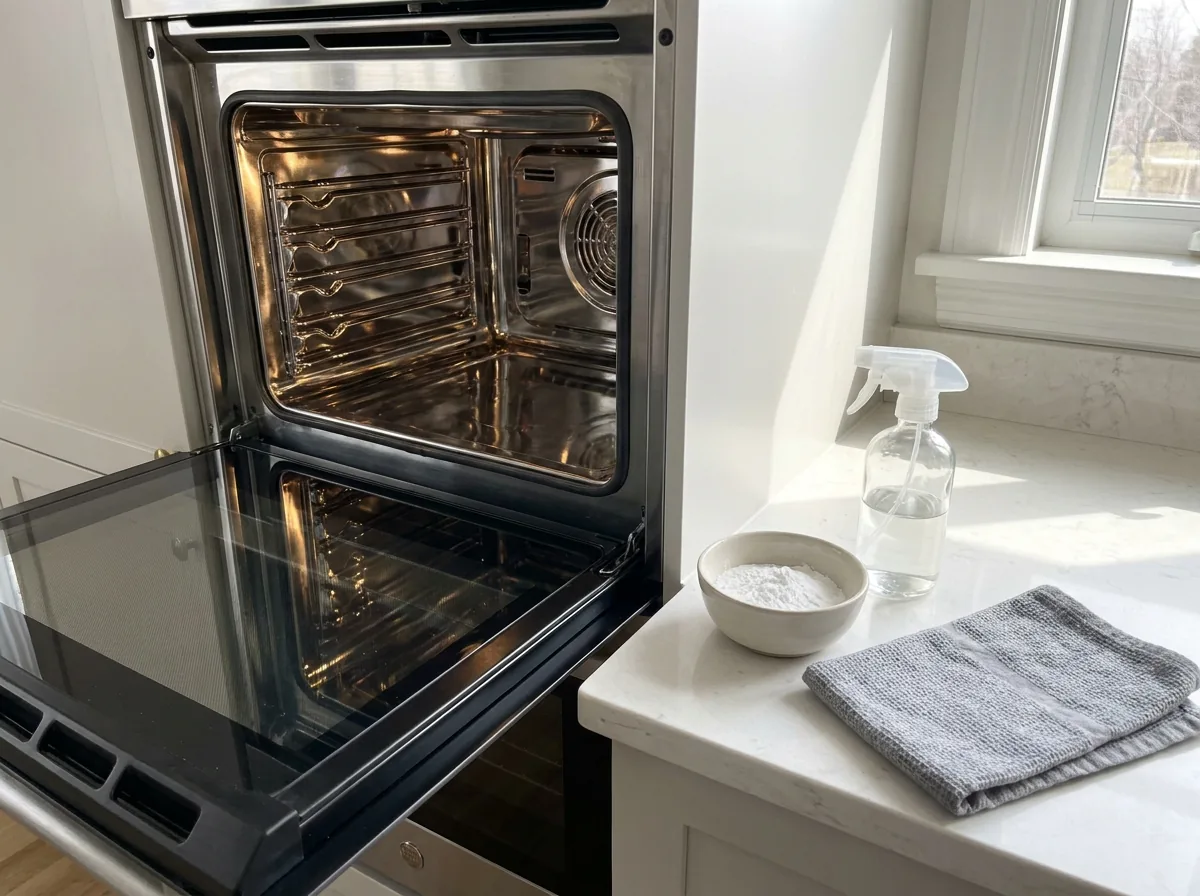
What you need
- ½ cup (about 110 g) Baking soda (bicarbonate of soda)Enough for an average oven interior. Use a little more for a large one
- 3 tbsp (45 ml), plus more as needed WaterAdd slowly to make a spreadable paste, like thick cream
- ½ cup (120 ml) White vinegarPut in a spray bottle. Undiluted or mixed 1:1 with water
- A squirt in hot water Washing-up liquid (for the racks)Racks come out and soak in the sink or bath
Equipment
- Bowl and spoon for mixing
- Rubber gloves
- Spray bottle for the vinegar
- Damp cloths, sponge and a plastic or silicone spatula
- Old towel or newspaper to protect the floor
Method
Cool the oven and take everything out
Switch the oven off and let it cool fully. Lift out the racks, trays and any thermometer. Wipe out loose crumbs and ash with a dry cloth or a dustpan and brush.
Make the baking soda paste
Stir ½ cup (110 g) baking soda with about 3 tbsp (45 ml) water in a bowl. Add a little more water if it is too stiff to spread. It should be thick, not runny.
Spread it over the greasy areas
Wearing gloves, smear the paste over the oven walls, floor and inside of the door, working it into the worst greasy patches. Keep it off the heating elements and any gas outlets or vents. The paste turns brownish as it picks up grease.
Leave it overnight
Close the door and leave the paste for 8 to 12 hours. Overnight is a convenient timing; a shorter wait works for light soiling. The paste dries and softens baked-on grease as it sits.
Wipe out the paste
Open the door and use a damp cloth and a plastic spatula to scrape away the paste and loosened grime. Rinse the cloth often. Stubborn spots can take a second layer of paste and another hour.
Spray with vinegar
Spray white vinegar over any leftover white residue. It will fizz as it reacts with the baking soda to form carbon dioxide gas, water and a salt called sodium acetate. Wipe the loosened film away with a damp cloth.1
Wipe clean and dry
Wipe everything down with a clean, damp cloth until no residue is left, then dry with a soft cloth. Leave the door open for a while to let the smell of vinegar go.
Clean the racks
Soak the racks in hot, soapy water for a few hours, or use the same paste. Scrub, rinse well and dry before putting them back.
Safety
- Never mix vinegar with bleach, which releases chlorine gas. Do not combine cleaners unless the label says you can2,3
- Do not use this paste and a shop-bought oven cleaner in the same clean. Use one at a time, rinse thoroughly, and follow the label2
- Remove all paste before running a self-cleaning cycle. That cycle runs at 427–538 °C (800–1,000 °F) and can release carbon monoxide4
- Ventilate the kitchen, and keep pet birds well away from the kitchen when a self-cleaning cycle is running4
- Keep the oven off and cool before you start, and keep paste off heating elements. Check your oven's manual for any warnings about cleaners
Variations
Sprinkle water over the oven, add a layer of baking soda, and rub with a damp sponge, then wipe off and rinse. A county extension leaflet lists baking soda with water for oven cleaning and suggests very fine steel wool for tough spots, but do not use steel wool on enamel or a non-stick coating.
While the oven is still warm, sprinkle salt on a fresh spill. Once it cools, scrape the spill away and wash the area.
Place a sheet of foil on the oven floor, under but not touching the element, to catch drips. Replace it when it is soiled.
Does it actually work?
It works on light to moderate grease, given time and some rubbing, but the fizz is not the reason.
Baking soda and vinegar react to form sodium acetate, water and carbon dioxide gas, and the bubbles are that gas escaping. An acid and a base cancel each other out, so mixing them together leaves you with something milder than either, not a stronger cleaner. The reaction is fun to watch, but we found no evidence that the fizz itself lifts baked-on grease.
The paste does the main work by sitting on the soil, and the vinegar's job is to dissolve and rinse away the chalky baking soda residue afterwards. A county extension leaflet lists baking soda for oven cleaning and vinegar for slowing grease build-up, but we found no test comparing it with commercial oven cleaners. Expect a thick, carbonised layer to need commercial cleaner, or several rounds.1,3
Evidence ratings for what goes in: Baking soda (sodium bicarbonate).
Questions people ask
How long should I leave baking soda paste in the oven?
Overnight, or 8 to 12 hours, is the usual advice for heavy grease. For a light clean, a couple of hours will do. Keep the paste damp enough to spread and wipe it off with a damp cloth and spatula.
Can I use baking soda and vinegar in a self-cleaning oven?
Yes for a hand clean, but wipe out all the paste and vinegar before you ever run the self-clean cycle. That cycle reaches 427–538 °C (800–1,000 °F) and can release carbon monoxide, so ventilate and keep pets, especially birds, away.
Why does baking soda foam with vinegar?
Vinegar is an acid and baking soda is a base. They react to make sodium acetate, water and carbon dioxide, and the gas forms the bubbles. The reaction uses both up, so it does not add cleaning power.
Is it safe to mix oven cleaner and vinegar?
No. Do not mix cleaners unless the label says you can. Some combinations, such as bleach and vinegar, release toxic chlorine gas. Use one product at a time and rinse well between them.
What if the oven is still dirty after one go?
Repeat with a fresh layer of paste and wait a few hours more. A thick, black carbonised layer is hard to shift with any home method, and you may need a commercial oven cleaner used exactly as its label says.
Sources (4)
- Professional body Royal Society of Chemistry. Bubble volcanoes.
- Poison centre Missouri Poison Center. Some Things Just Don't Mix: Poison Center Tips for Chemicals.
- University extension Dias DG. Homemade Cleaners. Johnson County Extension, K-State Research and Extension.
- University McGill Office for Science and Society. Safety and Chemistry of the Self-Cleaning Oven.
Educational only. Patch-test anything new on your skin, and stop if it irritates.
Reader notes
Experiences and questions from readers, read by an editor before they appear. They are personal accounts, not evidence, and are not medical advice.