
Natural Easter Egg Dyes from Kitchen Ingredients
Simmer red cabbage for blue, turmeric for yellow or onion skins for orange-brown in 3 cups of water with 1 tsp of vinegar; strain, cool and soak hard-boiled eggs. Beetroot juice gives pink and needs no boiling. Return eggs you plan to eat to the fridge within 2 hours, and do not eat eggs that have been hidden or played with.
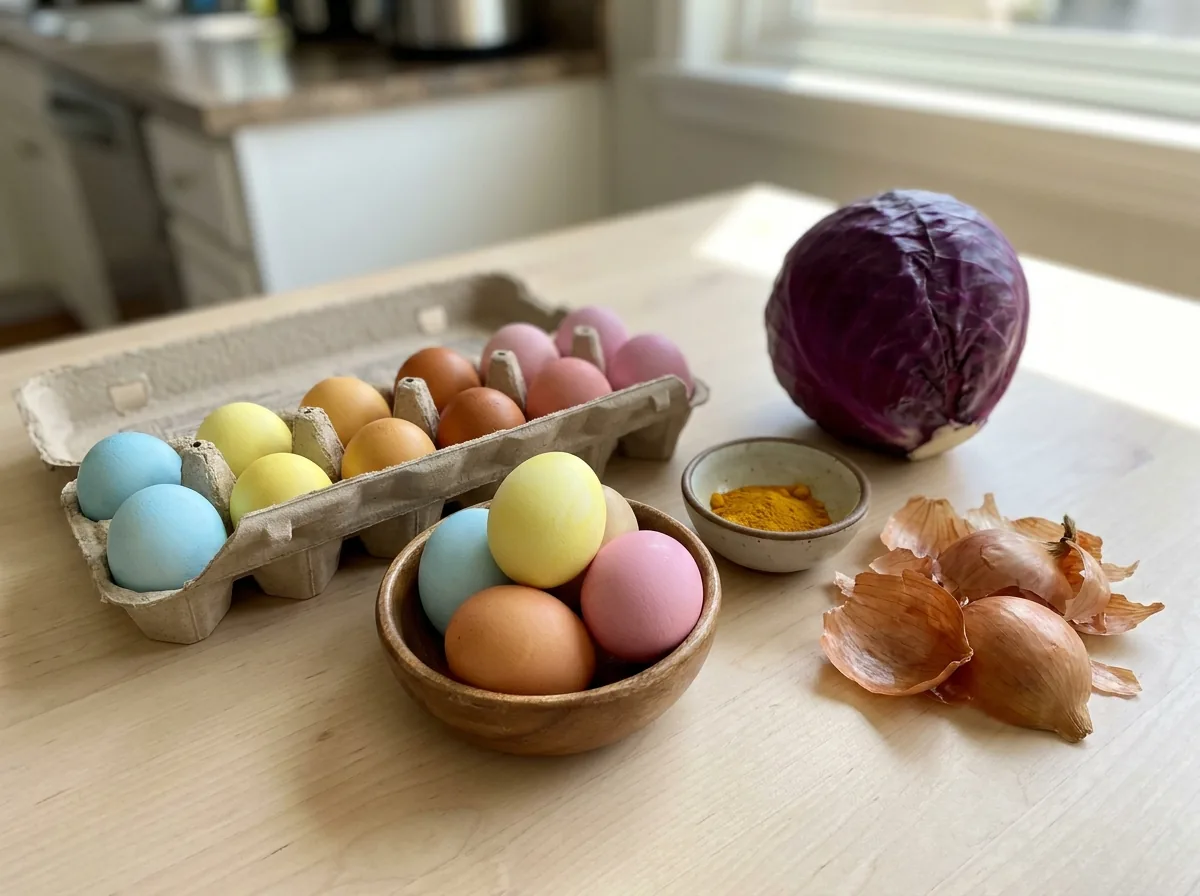
What you need
- 6 to 12 Hard-boiled eggs, cooledWhite eggs give the truest colours; brown eggs give deeper, earthier ones. Wash them in warm soapy water first
- 1 cup (about 70 g) Red cabbage, torn, loosely packed (for blue)Simmer in the dye pan. Extension recipes give blue from red cabbage
- 1 tsp (about 3 g) Ground turmeric (for yellow)Strain well: the powder leaves specks. Turmeric stains hands, cloth and worktops
- 1 cup (about 10 g), loosely packed Yellow onion skins (for orange-brown)Save the dry outer skins in advance. Red onion skins give a redder shade
- 1 cup (240 ml) Beetroot juice, strained from canned beets (for pink)This is the tested quantity. Fresh or powdered beetroot also works, but we have no tested amount for it
- 1 tsp (5 ml) per 3 cups of water; ½ tsp for the beetroot dye White vinegarIt helps the colour take on the shell
- 3 cups (720 ml) per colour WaterUse filtered or tap water
Equipment
- Saucepan for the eggs and a saucepan for each boiled dye
- Fine strainer or coffee filter
- Jars or heatproof bowls, deep enough to cover an egg
- Slotted spoon
- Egg carton or wire rack for drying
- Gloves and an old towel, as turmeric and beetroot stain
Method
Hard-boil the eggs
Cover eggs with cold water in a saucepan, bring to the boil, then simmer for about 10 to 12 minutes. Cool them in cold water. Cook eggs until the whites and yolks are firm before dyeing, and wash the shells in warm soapy water to remove grease.1,4
Make the blue, yellow and orange dyes
For each colour, put the material in a saucepan with 3 cups (720 ml) water and 1 tsp vinegar: 1 cup torn red cabbage for blue, 1 tsp turmeric for yellow, or 1 cup yellow onion skins for orange. Bring to the boil, then simmer for 30 minutes.1
Strain and cool
Strain the dye through a fine sieve or coffee filter into a jar or bowl to remove leaves, skins or turmeric grains. Let it cool to room temperature before adding eggs.1
Make the pink dye
For pink, mix 1 cup (240 ml) strained juice from canned beets, ½ tsp vinegar and 3 cups (720 ml) water. No heating is needed.1
Soak the eggs
Lower cooled eggs into the dye with a slotted spoon and soak for 30 minutes. The longer they sit, the darker they get. For the deepest colour, leave them in the dye in the fridge overnight.1,2,3
Dry and refrigerate promptly
Lift the eggs out and dry them in an egg carton or on a rack. Put eggs you plan to eat back in the fridge within 2 hours, or within 1 hour if the room is above 32 °C (90 °F).4,3
Add a shine if you like
Once dry, rub a little cooking oil on the shell with a paper towel for a gloss. Wipe off any excess.
Safety
- Return dyed eggs to the fridge within 2 hours, or 1 hour above 32 °C (90 °F). Do not eat eggs that have been left out longer4,3
- Keep the fridge at 4 °C (40 °F) or below, and eat hard-boiled eggs, in the shell or peeled, within 1 week of cooking4
- Do not eat eggs that have been hidden or played with. Bacteria and viruses on the shells can pass into the egg4
- Hard-boil eggs before colouring them. Cook until the yolk and white are firm4
- Use only food ingredients for dye. If any plant material comes from a lawn or garden, make sure it has not been sprayed with pesticides or fertiliser2
Variations
Use red onion skins in place of yellow for a redder orange. An extension recipe lists red onion skins for orange-red.
Beetroot on brown eggs gives a deeper pink or maroon, a colour you cannot get from white eggs.
For deeper colour, leave the eggs in the dye in the fridge overnight. Keep them covered, and count this time as refrigerated, not out at room temperature.
Dip half an egg in the dye for 15 minutes, dry it, then dip the other half in a second colour.
Does it actually work?
Yes, with realistic expectations. Extension recipes give red cabbage as blue, turmeric as yellow, onion skins as orange and beetroot as pink, and Nebraska Extension describes the results as shades such as robin egg blue and light pink, so expect soft, natural colours rather than the vivid ones of a shop-bought kit.
Soaking longer or overnight in the fridge deepens them. Arkansas Extension says the vinegar acid helps set the pigment on the shell, but we found no source that explains the chemistry, so we say only that it helps the dye take. Food safety matters more than colour: a natural dye does not make an egg any safer, and the usual egg rules apply.1,2,3
Evidence ratings for what goes in: Turmeric, Beetroot (juice and powder).
Questions people ask
Are naturally dyed Easter eggs safe to eat?
Yes, if the eggs were hard-boiled first, kept cold and dyed with food ingredients. Put them back in the fridge within 2 hours, or 1 hour on a hot day, and eat them within a week of cooking. Do not eat eggs that have been hidden or played with.
How do I make natural dyes stronger?
Soak the eggs for longer. Thirty minutes gives a pastel; leaving them in the fridge overnight in the dye gives the deepest colours. Brown eggs also give deeper, earthier shades than white ones.
What does vinegar do in egg dye?
Extension recipes add about 1 tsp of vinegar to 3 cups of water, and Arkansas Extension says the acid helps set the colour on the shell. Do not skip it, but do not expect it to do more than help the dye take.
How long do dyed hard-boiled eggs keep?
Use or eat hard-cooked eggs within 1 week of cooking, in the shell or peeled, and keep them in a fridge at 4 °C (40 °F) or below. Count from the day you boiled them, not the day you dyed them.
Can I use turmeric or beetroot powder?
Turmeric powder is the standard yellow: 1 tsp in 3 cups of water. We have a tested amount for canned beetroot juice only, so if you use beetroot powder, expect to adjust the amount by eye and test on one egg.
Sources (4)
- University extension University of Wisconsin-Madison College of Agricultural and Life Sciences. How to make your own plant-based egg dyes. CALS News. 2012.
- University extension Nebraska Extension in Lancaster County. Coloring Eggs with Natural Dyes.
- University extension University of Arkansas Cooperative Extension Service. Natural Egg Dyes.
- Regulator US Food and Drug Administration. What You Need to Know About Egg Safety.
Educational only. Patch-test anything new on your skin, and stop if it irritates.
Reader notes
Experiences and questions from readers, read by an editor before they appear. They are personal accounts, not evidence, and are not medical advice.