
How to Clean Brass Naturally
Test first: a magnet that sticks means brass-plated steel, and a very shiny, chip-free finish may be lacquer. Start with warm soapy water, and only if tarnish remains, rub on a paste of vinegar, salt and flour or lemon juice and salt, then rinse and dry fully. Never mix vinegar with bleach, and keep acid methods off lacquered brass.
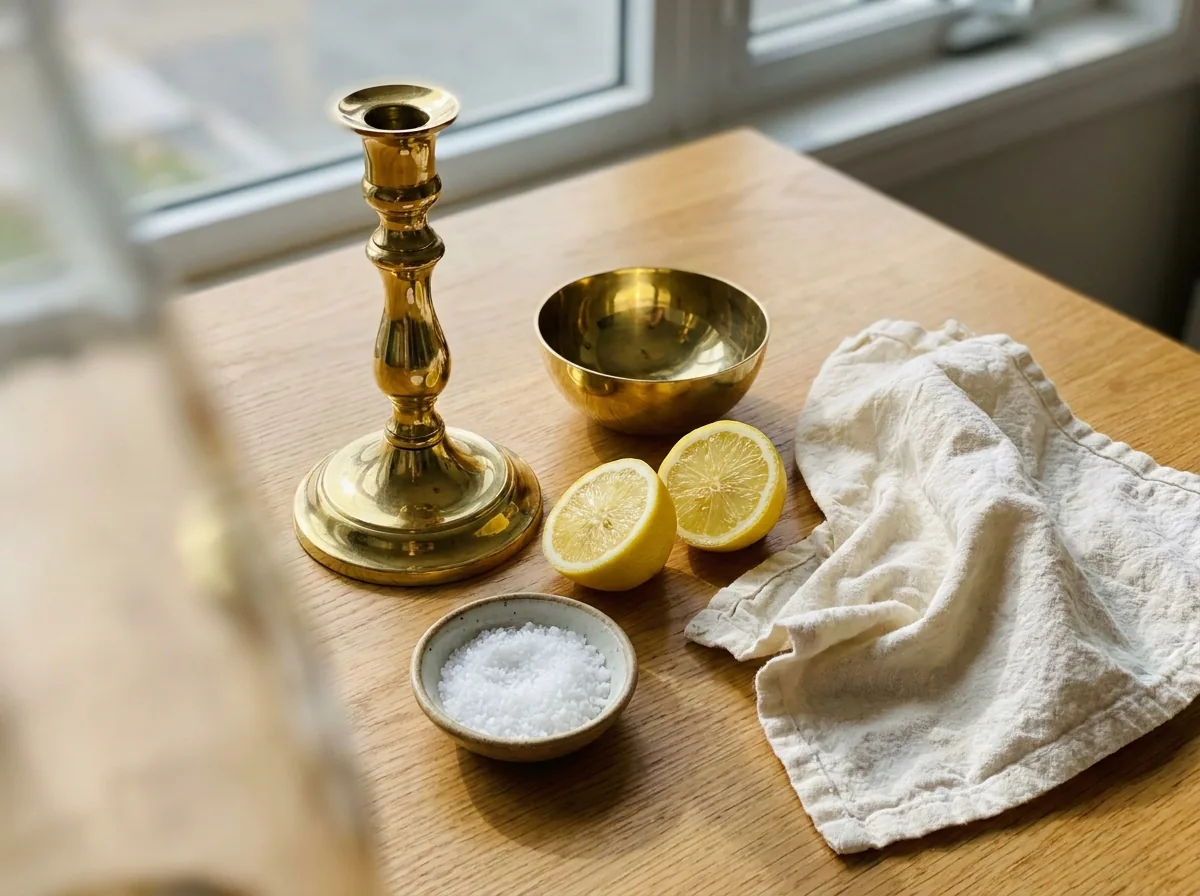
What you need
- A few drops in 1 litre (4 cups) of warm water Mild washing-up liquidWarm means about 40 °C (105 °F), comfortable on your hands
- 1 cup (240 ml) White vinegarFor the vinegar paste. Never combine with bleach
- 1 tsp (about 6 g) for the vinegar paste, plus 1 tbsp for the lemon paste Fine table saltSalt acts as a mild abrasive
- About 4–5 tbsp (30–40 g), enough for a thick paste Plain flourThickens the paste so it stays on the surface
- 1, juiced (about 3 tbsp / 45 ml) LemonAlternative to the vinegar paste, mixed with salt. Or sprinkle baking soda on a cut lemon half
- 1 tbsp (about 14 g) Baking soda (optional, with a cut lemon)Sprinkle on the cut side of the lemon and rub gently
- A thin layer, about 1 tbsp per small item Ketchup (optional)Works on light tarnish because of its vinegar content, but we found no tested source
Equipment
- A magnet (a fridge magnet is weak; a small strong magnet is clearer)
- Soft cloths, and a soft toothbrush for detail
- Bowl for the paste
- Rubber or nitrile gloves
- Clean cotton gloves for handling the finished piece
Method
Test for solid brass with a magnet
Hold the magnet to the piece. Solid brass is not magnetic, so if it sticks, the piece is probably brass-plated steel or iron. Plating is a thin layer, so go gently and skip the paste methods.
Check for lacquer
Many polished brass pieces are lacquered to protect them. Signs are a very shiny, glassy finish that never tarnishes evenly, or patches where a clear coat has flaked or peeled. Lacquer is easily damaged by chemical cleaning and abrasion, so treat lacquered brass with a damp cloth only.2
Brush off dust
Brush away loose dust and dirt with a dry, soft brush or cloth before adding any water. This stops grit scratching the surface.1
Wash with soap and water
Wash the piece in warm water with a few drops of washing-up liquid, using a soft cloth or toothbrush for crevices. Rinse with clean water and dry thoroughly. This is the safest first step and often enough for grease and light dullness.3
Make a vinegar, salt and flour paste
If it is still tarnished, dissolve 1 tsp salt in 1 cup (240 ml) white vinegar and stir in flour a spoonful at a time until you have a thick paste. Spread it on with gloves or a cloth and leave for 10 to 15 minutes. Try a hidden spot first.3
Or use lemon and salt
Mix lemon juice with salt into a paste and rub it on with a soft cloth. Alternatively sprinkle baking soda on a cut lemon half and rub the brass with it. Rinse with water and dry.3
Or try ketchup on light tarnish
Spread a thin layer of ketchup over the tarnish and leave it for 10 to 15 minutes, then wipe off. This suits light tarnish only, and it is a popular home method rather than a tested one.
Rinse well and dry completely
Rinse off every trace of paste or juice under warm running water, and dry at once with a soft cloth. Leftover residues can encourage further corrosion.1,2
Buff and protect
Buff with a clean, soft cloth. Wear clean cotton gloves to handle the finished piece, because moisture, salts and oils from fingers mark polished metal. A very thin coat of wax slows tarnishing.1
Safety
- Never mix vinegar with bleach. It releases chlorine gas. Do not combine any cleaners unless the label says you can4,3
- Keep vinegar, lemon and salt off lacquered brass. Lacquers are thin and can be damaged by even a little abrasion or chemical cleaning2
- Rubbing removes tarnish and some of the metal itself. Be gentle, and stop as soon as the tarnish lifts, especially on plated pieces1
- Rinse and dry fully. Leftover polish residues and finger oils can cause green corrosion on brass and copper1,2
- Do not polish valuable or antique pieces. Original patina can be prized; if unsure, clean without polishing or ask a conservator1
Variations
After cleaning and drying, rub a cloth lightly moistened with olive oil over the brass. A county extension leaflet says this makes it look brighter and needs less polishing.
For pieces that are handled little, a thin coat of microcrystalline paste wax buffed to a shine slows tarnishing and cuts how often you need to clean. Museum practice uses this instead of lacquer.
Sprinkle baking soda on a cut lemon half and rub the brass with it. Let it sit briefly, then rinse and dry. Good for small pieces.
Does it actually work?
Yes for tarnish, but no method is magic. A county extension leaflet lists vinegar, salt and flour, lemon and salt, and lemon with baking soda as household brass cleaners, and washing with soap and water first is the sensible start. We found no study comparing these methods, so what follows is craft practice.
The Canadian Conservation Institute makes a useful point: polishing is an abrasive process that removes tarnish and some surface metal, so repeated polishing wears detail away, and the gentlest method that works is the right one. Museums also protect cleaned brass with a thin wax coat rather than cleaning it more often.
Ketchup has no tested source at all. Lacquered brass is a different job: the clear coat is what acids and abrasives would strip, so leave it to a damp cloth.1,3
Evidence ratings for what goes in: Baking soda (sodium bicarbonate).
Questions people ask
How do I know if brass is solid or plated?
Hold a magnet to it. Solid brass is not magnetic, so if the magnet sticks, the piece is probably brass over steel or iron. Plated pieces have a thin outer layer, so clean them gently with soap and water and skip rubbing pastes.
Does vinegar damage brass?
Vinegar removes tarnish, but we found no test data on how long is safe. Keep contact to 10 to 15 minutes, rinse all of it off and dry at once. Do not use it on lacquered brass, where it can damage the coating.
How can I tell if my brass is lacquered?
Lacquered brass usually stays glossy and does not tarnish evenly. It often has patches where a clear coat has chipped or peeled. If it looks new and never dulls, clean with only a damp cloth until you are sure.
Why has my brass gone green?
Green deposits on brass and copper are corrosion, often from polish residues left behind or oils from handling. Wash off the residue, rinse and dry, and handle cleaned pieces with clean cotton gloves.
How often should I clean brass?
Only when it needs it. Cleaning too often wears the metal, so museums clean and polish only when necessary. A thin wax coat on decorative pieces reduces how often you need to.
Sources (4)
- Museum conservation Canadian Conservation Institute. CCI Notes 9/3: The Cleaning, Polishing, and Protective Waxing of Brass and Copper.
- Museum conservation Canadian Conservation Institute. Caring for metal objects - Preventive conservation guidelines for collections.
- University extension Dias DG. Homemade Cleaners. Johnson County Extension, K-State Research and Extension.
- Poison centre Missouri Poison Center. Some Things Just Don't Mix: Poison Center Tips for Chemicals.
Educational only. Patch-test anything new on your skin, and stop if it irritates.
Reader notes
Experiences and questions from readers, read by an editor before they appear. They are personal accounts, not evidence, and are not medical advice.