
How to Make Lemon Extract at Home
Lemon extract is lemon zest steeped in 40% vodka. Use the zest of about 4 lemons (roughly 25 g) per 250 ml, leave out the white pith, and steep for 4 weeks in a dark cupboard. The US has a standard of identity for vanilla extract but none for lemon extract, so this follows common home practice rather than a legal formula.
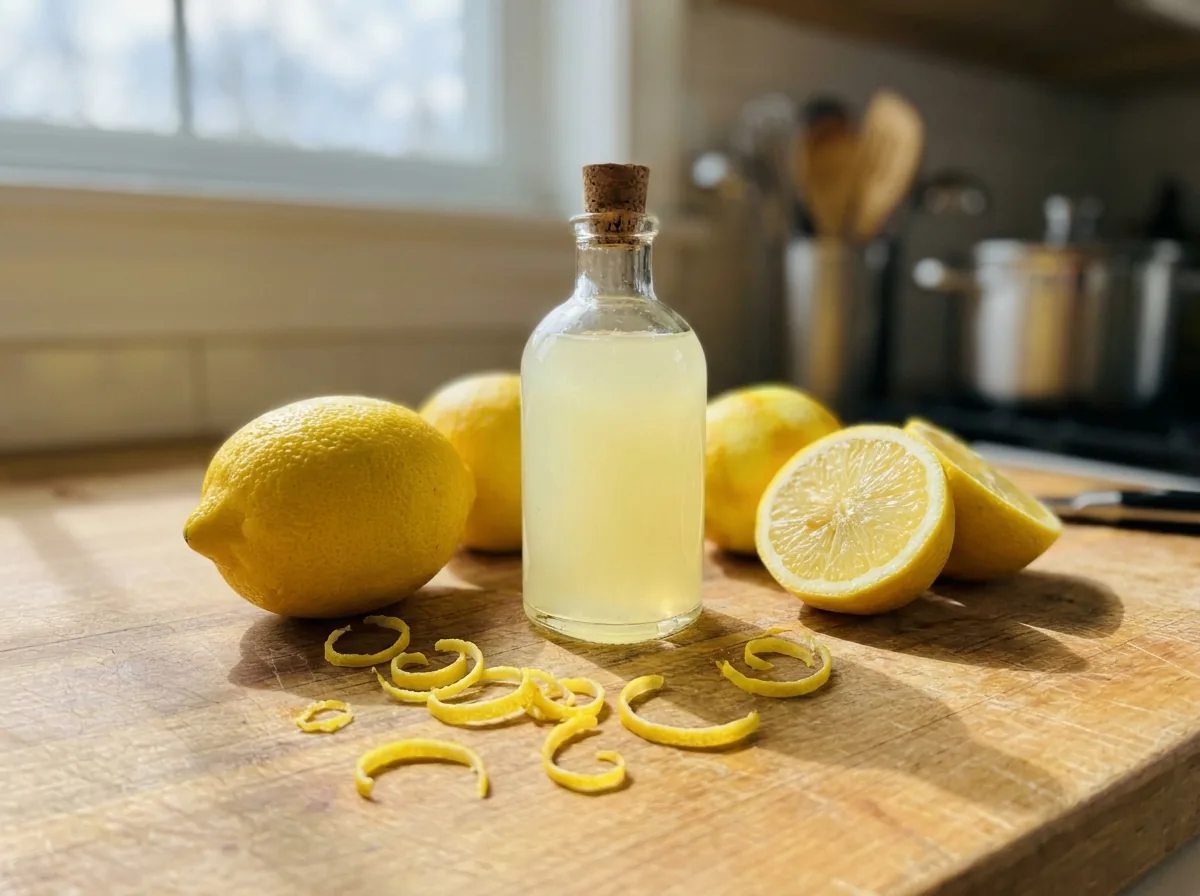
Ingredients
- 4 large lemons, for about 25 g of zest Lemons, unwaxed if you can get themOrganic or unwaxed lemons are easiest. If they are waxed, scrub them with hot water and a brush first
- 250 ml (1 cup) Vodka, 80 proof (40% alcohol by volume)Use a neutral spirit. Brandy or light rum would add their own flavour
Equipment
- Vegetable peeler or fine zester
- Small sharp knife
- Clean 350–500 ml glass jar with a tight lid
- Kitchen scales
- Fine sieve or muslin (cheesecloth), and a funnel
- Small dark glass bottle
Method
Wash the lemons
Scrub the lemons under warm water and dry them. Any wax or residue on the skin ends up in the extract, so this matters more than it sounds.
Peel off only the yellow zest
Use a vegetable peeler to remove the zest in wide strips, taking as little of the white pith beneath as you can. Scrape off any pith left on the back of a strip with the knife. Pith tastes bitter.
Weigh and slice
You want about 25 g of zest, roughly the zest of 4 large lemons. Cut the strips into thin slivers so they expose more surface to the alcohol. Keep the juiced lemons for cooking.
Fill the jar
Put the zest in the jar and cover it with 250 ml of vodka, making sure every piece is submerged. There is no US standard of identity for lemon extract, so we use the 35% minimum alcohol that the vanilla standard sets as a sensible guide.1,2
Seal, label and shake
Close the lid tightly, shake, and write the date on a strip of tape. No heat is needed.
Steep for about 4 weeks
Keep the jar in a cupboard away from light and heat, shaking it every few days. The vodka turns pale yellow and smells strongly of lemon. Four weeks is common home practice, not a tested figure. Taste a drop at 2 weeks and again at 4.
Strain and bottle
Strain through a fine sieve lined with muslin into a dark bottle, pressing the zest lightly. Discard the zest: left in for months it turns bitter.
Use it by the teaspoon
Use 1 to 2 tsp in place of the zest of one lemon in cakes, icing, biscuits or lemon drizzle. Add it towards the end of mixing for the brightest flavour.
Safety
- This is 40% alcohol. Keep it out of children's reach and use it only for cooking and baking, by the teaspoon
- Don't add lemon juice. Juice brings water and sugars that dilute the alcohol and can spoil the extract, so use zest only
- Skip any pith and any zest that is waxed or damaged. Throw the extract away if it smells off, looks cloudy or grows mould
- Lemon peel is listed by the FDA among natural flavouring extractives, but that list is about flavourings, not a recipe for a home extract3
Variations
Use the same method and weight of zest from oranges or limes. Orange needs the same care to avoid pith; lime zest is thin, so use about 6 limes.
Add one split vanilla bean to the jar for a warm, creamy lemon flavour that suits custards.
Vegetable glycerin can replace the vodka. The flavour is weaker and sweeter. Keep it in the fridge and use within a few weeks; that is our advice, not tested.
Does it actually work?
There is no health claim to test here. This is a flavouring: the aroma comes from the oils in the zest, which dissolve readily in alcohol.
The FDA sets legal standards for vanilla extract but none for lemon extract, so shop-bought lemon extract is covered only by general food and labelling rules, and a homemade extract is not held to any definition. We found no taste trial comparing home and commercial lemon extract, and yours will differ in strength, so taste it and adjust.1
Questions people ask
Is there a legal standard for lemon extract?
Not in the US. The FDA standards of identity in 21 CFR Part 169 cover vanilla products, mayonnaise and dressings only. The strength we use, 40% vodka, is borrowed from the vanilla standard's 35% minimum.
How much zest do I need for lemon extract?
About 25 g, roughly the zest of 4 large lemons, for 250 ml of vodka. That is a home-practice ratio, not a regulated figure, and you can double the zest for a stronger result.
Why does my lemon extract taste bitter?
Usually pith, the white layer under the zest, which was included or scraped badly. Leaving the zest in for many months can also add bitterness. Strain after four weeks and use only the yellow part.
Can I make lemon extract without alcohol?
You can make a lemon flavouring with glycerin, but it is weaker and sweeter and has a shorter life. For a fresh lemon flavour with no steeping, use fresh zest in the recipe instead.
Sources (3)
- Regulation 21 CFR Part 169 - Food dressings and flavorings. Code of Federal Regulations, Title 21.
- Regulation 21 CFR 169.175 - Vanilla extract. Code of Federal Regulations, Title 21.
- Regulation 21 CFR 182.20 - Essential oils, oleoresins (solvent-free), and natural extractives (including distillates). Code of Federal Regulations, Title 21.
Educational only. Patch-test anything new on your skin, and stop if it irritates.
Reader notes
Experiences and questions from readers, read by an editor before they appear. They are personal accounts, not evidence, and are not medical advice.