
Rosehip oil has gained popularity in the skincare world for its numerous benefits. Derived from the rosa canina rose bush, this natural oil is packed with vitamins, antioxidants, and essential fatty acids that work wonders for your skin.
One of the key advantages of rosehip oil is its ability to nourish and hydrate the skin. With its high concentration of essential fatty acids, it helps prevent water loss from the skin cells, keeping your skin hydrated and moisturized.
In addition to hydration, rosehip oil also has remarkable anti-aging properties. It promotes collagen formation, which is essential for maintaining skin elasticity and firmness. This can help reduce the appearance of fine lines and wrinkles, giving your skin a youthful glow.
Furthermore, rosehip oil is known for its ability to reduce inflammation, making it beneficial for individuals with skin conditions like eczema, psoriasis, and dermatitis. Its anti-inflammatory effects help calm irritation and redness, resulting in a more balanced complexion.
Another remarkable benefit of rosehip oil is its ability to fade scars and hyperpigmentation. The vitamin A and retinol present in rosehip oil promote skin cell turnover, which helps reduce the appearance of acne scars and dark spots, giving you a more even-toned complexion.
To enjoy the benefits of rosehip oil, it is important to use it correctly. Gently massage a few drops onto clean, damp skin, ensuring even distribution. It can be used as a standalone moisturizer or added to your favorite skincare products for an extra boost of nourishment. For best results, use rosehip oil consistently as part of your skincare routine.
Key Takeaways:
- Rosehip oil is rich in vitamins, antioxidants, and essential fatty acids that nourish and hydrate the skin.
- It promotes collagen formation, reducing the appearance of fine lines and wrinkles.
- Its anti-inflammatory properties calm skin irritation and redness associated with conditions like eczema and psoriasis.
- Rosehip oil aids in fading scars and hyperpigmentation, resulting in a more even-toned complexion.
- To use rosehip oil effectively, gently massage a few drops onto clean, damp skin and incorporate it into your skincare routine.
Hydration and Moisturization
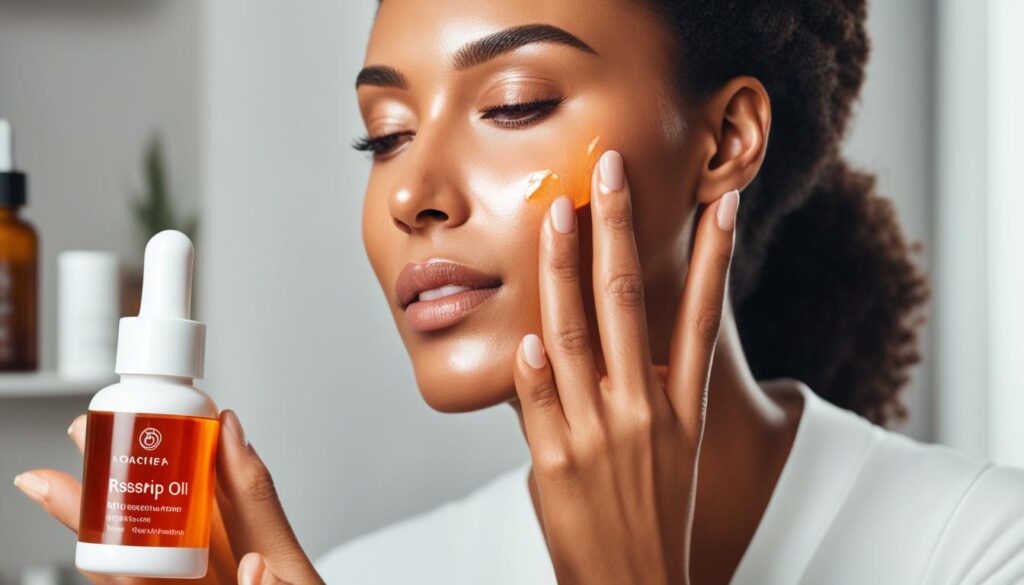
Rosehip oil is a powerhouse when it comes to providing hydration and moisturization to your skin. Its high content of essential fatty acids helps to prevent water loss from the skin cells, keeping the skin hydrated and plump.
One of the remarkable qualities of rosehip oil is its ability to deeply penetrate the skin, allowing its antioxidants to nourish and hydrate from within. This makes it an excellent option for combating dry, itchy skin. Whether you have normal, dry, oily, or combination skin, rosehip oil can act as a lightweight moisturizer without leaving a greasy residue.
In fact, a study conducted on participants who took rosehip powder orally showed noticeable improvements in their skin’s overall moisture levels. This suggests that incorporating rosehip oil into your skincare routine can have both internal and external benefits for hydration.
| Benefits of Rosehip Oil for Hydration and Moisturization: |
|---|
| Prevents water loss from skin cells |
| Deeply nourishes and hydrates the skin |
| Lightweight moisturizer suitable for all skin types |
| Improves skin’s overall moisture levels |
Exfoliation and Brightening
Rosehip oil offers more than just hydration and moisturization for your skin. It also possesses exfoliating properties that can help improve your skin’s texture and brightness. This is all thanks to its high content of vitamin A, or retinol, which promotes skin cell turnover. By stimulating the natural exfoliation process, rosehip oil helps slough off dead skin cells and unclog pores, revealing a fresh and renewed complexion.
The exfoliating action of rosehip oil can effectively reduce dullness and leave your skin looking radiant and vibrant. It’s particularly beneficial for individuals with hyperpigmentation, which refers to dark spots or patches on the skin. The combination of vitamin A, lycopene, and beta-carotene in rosehip oil exhibits skin-lightening properties, making it an excellent choice for reducing hyperpigmentation and evening out your skin tone.
If you’re struggling with dull skin or hyperpigmentation concerns, incorporating rosehip oil into your skincare routine can help address these issues. Regular use can lead to a smoother and brighter complexion, giving you the confidence to put your best face forward.
Expert Tip:
“To experience the full exfoliating benefits of rosehip oil, I recommend applying a few drops onto clean, dry skin and gently massaging it in circular motions. This will help the oil penetrate deeper into your pores and ensure maximum exfoliation. Remember to always follow up with a moisturizer to keep your skin hydrated and protected.”
Collagen Formation and Skin Elasticity
Collagen is crucial for maintaining skin elasticity and firmness. Unfortunately, as we age, our bodies naturally produce less collagen, leading to the appearance of wrinkles and sagging skin. This is where rosehip oil comes in.
Rosehip oil is abundant in vitamin A, which plays a vital role in collagen production. Studies have shown that the application of rosehip oil can increase skin elasticity, helping to restore a more youthful appearance.
Furthermore, rosehip oil has been found to inhibit the creation of an enzyme called MMP-1, which is responsible for breaking down collagen in the body. By reducing the activity of this enzyme, rosehip oil helps to preserve existing collagen to maintain the skin’s elasticity and suppleness.
Benefits of Rosehip Oil for Collagen Formation and Skin Elasticity
Here are some key benefits of rosehip oil for collagen formation and skin elasticity:
| Benefits | Explanation |
|---|---|
| Promotes collagen production | The vitamin A in rosehip oil stimulates collagen synthesis, improving skin elasticity and reducing the appearance of wrinkles. |
| Preserves existing collagen | By inhibiting the action of MMP-1, rosehip oil helps to maintain the structural integrity of collagen and prevent its breakdown. |
| Improves skin firmness | With increased collagen production and preservation, rosehip oil helps to enhance skin firmness, giving it a more youthful and lifted appearance. |
| Reduces the appearance of fine lines | The rejuvenating properties of rosehip oil contribute to smoother, plumper skin, resulting in a reduction in the visibility of fine lines. |
Incorporating rosehip oil into your skincare routine can be a natural and effective way to promote collagen formation, restore skin elasticity, and combat the signs of aging.
Inflammation Reduction and Sun Damage Protection
Rosehip oil is a natural powerhouse when it comes to calming inflammation and protecting against sun damage. Thanks to its abundance of polyphenols, anthocyanin, and vitamin E, rosehip oil has powerful anti-inflammatory effects. It can effectively soothe and calm irritated skin caused by common skin conditions such as rosacea, psoriasis, eczema, and dermatitis.
But that’s not all. The antioxidants in rosehip oil, particularly vitamins A and E, also help combat the negative effects of harmful UV exposure, reducing the risk of sun damage. While rosehip oil provides an extra layer of defense against the sun’s harmful rays, it’s important to note that it should not be used as a substitute for sunscreen. Proper sun protection is still crucial for maintaining healthy skin.
Additionally, studies have shown that rosehip oil can be beneficial in reducing the appearance of acne scars. Its unique properties help promote skin regeneration and repair, gradually fading the marks left behind by acne. As an added bonus, rosehip oil also acts as a shield against premature aging caused by cumulative sun exposure. By nurturing the skin with its nourishing antioxidants, it helps maintain skin health, resulting in a youthful and radiant complexion.
FAQ
What are the benefits of using rosehip oil for skin?
Rosehip oil is rich in vitamins, antioxidants, and essential fatty acids, making it a beneficial ingredient for your skin. It can help hydrate and moisturize the skin, reduce the visible signs of aging, clear up scarring, and even out hyperpigmentation.
How can rosehip oil hydrate and moisturize the skin?
Rosehip oil contains essential fatty acids that prevent water loss from the skin cells, keeping the skin hydrated. It easily absorbs into the skin, allowing its antioxidants to deeply nourish and hydrate. It is an excellent option for hydrating dry and itchy skin and can be used as a moisturizer for all skin types.
Does rosehip oil help with exfoliation and brightening?
Yes, rosehip oil contains vitamin A, which encourages skin cell turnover and natural exfoliation. This helps reduce dullness and leaves the skin glowing and vibrant. It also has properties that can help reduce hyperpigmentation, such as dark spots or patches on the skin.
Can rosehip oil help with collagen formation and skin elasticity?
Absolutely. Rosehip oil is rich in vitamin A, which is necessary for collagen production. Collagen is essential for skin elasticity and firmness. Additionally, rosehip oil inhibits the creation of an enzyme called MMP-1 that breaks down collagen in the body, leading to increased skin elasticity.
Does rosehip oil have anti-inflammatory properties and protect against sun damage?
Yes, rosehip oil is rich in polyphenols, anthocyanin, and vitamin E, which have anti-inflammatory effects. This makes it effective in calming irritation resulting from skin conditions like rosacea, psoriasis, eczema, and dermatitis. Its antioxidants, including vitamins A and E, also combat the negative effects of UV exposure, reducing the risk of sun damage.
Can rosehip oil help with acne scars and protect against premature aging?
Rosehip oil has been shown to reduce the appearance of acne scars. It also protects against premature aging caused by cumulative sun exposure. Its antioxidants and essential fatty acids nourish and hydrate the skin, reducing the signs of aging and promoting a more youthful appearance.


