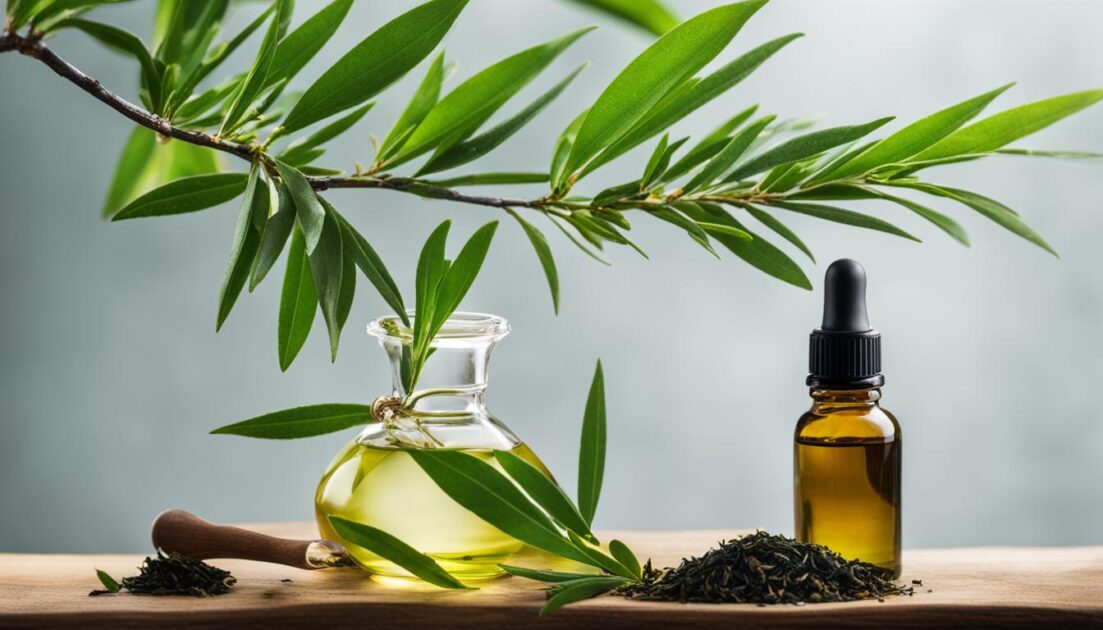
Welcome to my guide on tea tree oil benefits and uses. Tea tree oil, derived from the leaves of the Melaleuca alternifolia tree, is a versatile essential oil with numerous medicinal properties. Its antibacterial, anti-inflammatory, antiviral, and antifungal properties make it a valuable addition to your natural remedies collection.
Tea tree oil can be used for a variety of purposes, ranging from skincare to household cleaning. It is commonly used for acne treatment, insect repellent, natural deodorant, antiseptic for cuts and scrapes, wound healing, nail fungus, mouthwash, and all-purpose cleaner. Whether you want to improve your skin, safeguard your health, or maintain a clean environment, tea tree oil has got you covered.
Key Takeaways:
- Tea tree oil has antibacterial, anti-inflammatory, antiviral, and antifungal properties.
- It can be used for acne treatment, insect repellent, natural deodorant, antiseptic for cuts and scrapes, wound healing, nail fungus, mouthwash, and all-purpose cleaner.
- Tea tree oil is derived from the Melaleuca alternifolia tree and has been used for its medicinal properties by Aboriginal people in Australia.
- Using tea tree oil as a hand sanitizer can help prevent the spread of bacteria and reduce the risk of illness.
- Tea tree oil is an effective insect repellent, providing a natural alternative to chemical-based products.
What is Tea Tree Oil?
Tea tree oil, derived from the leaves of the Melaleuca alternifolia tree, is a highly versatile essential oil with a rich history of use in traditional Aboriginal medicine. This natural remedy, also known as Melaleuca oil, possesses a wide range of healing properties, making it a popular choice for various medicinal and cosmetic applications.
The key active component of tea tree oil is terpinen-4-ol, which contributes to its antibacterial, antiviral, and antifungal properties. This potent essential oil is available in both undiluted and diluted forms, allowing for flexible use depending on individual needs and preferences.
Traditional use of tea tree oil by Aboriginal people reflects its significant role in natural medicine. The Melaleuca alternifolia tree, native to Australia, has been revered for centuries, and its leaves have been used to extract the precious tea tree oil.
With its remarkable therapeutic properties, tea tree oil has gained recognition as a valuable ingredient in various personal care products, ranging from soaps and shampoos to creams and lotions.
The diverse range of applications of tea tree oil owes to its impressive effectiveness in combating bacteria, viruses, and fungi. From skincare to wound healing and beyond, tea tree oil continues to be a staple in natural health and wellness routines.
Hand Sanitizer
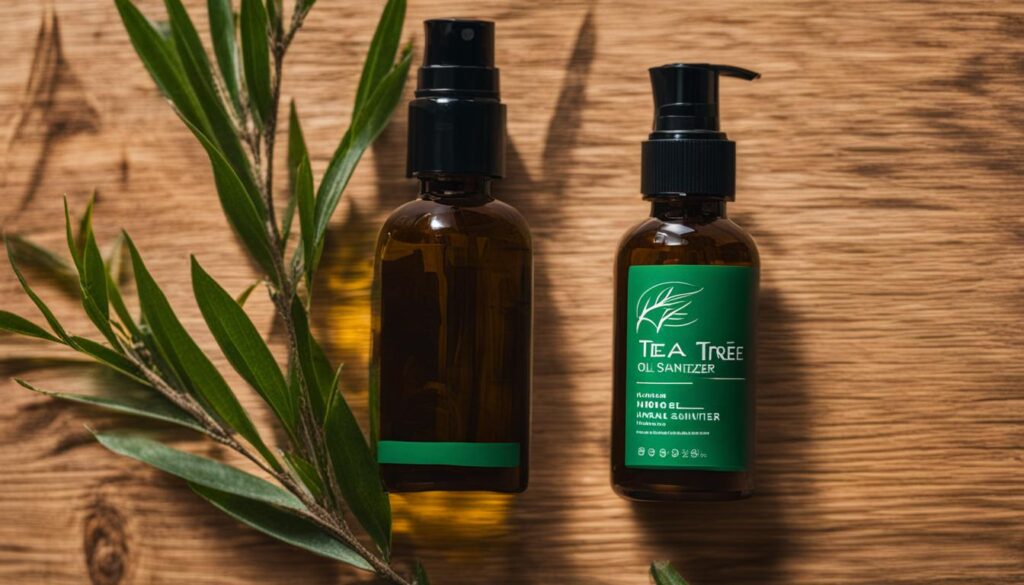
Tea tree oil can be used as a natural hand sanitizer due to its antibacterial properties. It can effectively kill certain bacteria and viruses, including E. coli and S. pneumoniae, helping to prevent illness and the spread of germs.
Studies have shown that incorporating tea tree oil into handwash can enhance its effectiveness against bacteria. Its potent antibacterial properties make it an excellent addition to hand sanitizer formulations.
“Tea tree oil has been found to exhibit antibacterial activity against a wide range of bacteria, making it a valuable ingredient in hand sanitizers.”
Using tea tree oil as a hand sanitizer provides a natural alternative to commercial sanitizers that may contain harsh chemicals. It not only helps kill bacteria and viruses on the hands but also leaves a refreshing and soothing sensation.
To create your own tea tree oil hand sanitizer, you can mix a few drops of tea tree essential oil with a carrier oil, such as coconut oil, and apply it to your hands. Alternatively, you can add tea tree oil to alcohol-based hand sanitizers for an extra antimicrobial boost.
Regularly using tea tree oil hand sanitizer can help protect against bacteria and viruses, reducing the risk of illness and promoting good hand hygiene.
| Benefits of Tea Tree Oil Hand Sanitizer | How it works |
|---|---|
| 1. Kills bacteria and viruses | The antibacterial properties of tea tree oil effectively eliminate harmful bacteria and viruses on the hands. |
| 2. Natural alternative | Tea tree oil provides a natural alternative to chemical-based hand sanitizers, reducing exposure to harsh ingredients. |
| 3. Soothing and refreshing | Tea tree oil leaves a cooling and soothing sensation on the skin, providing additional comfort. |
| 4. Promotes good hand hygiene | Using tea tree oil hand sanitizer regularly encourages proper hand hygiene by effectively removing bacteria and viruses. |
Insect Repellent
When it comes to keeping pesky insects away, tea tree oil serves as a highly effective natural alternative. Not only does it repel flies, ants, and mosquitoes, but it has also been shown to outperform DEET, a common ingredient found in commercial insect repellents. With its potent properties, tea tree oil provides a safe and chemical-free solution for warding off unwanted bugs.
Tea tree oil has been found to be particularly effective in repelling mosquitoes, making it an essential addition to your outdoor arsenal. Mosquitoes are not only a nuisance, but they can also pose health risks by transmitting diseases such as malaria, dengue fever, and the Zika virus. Using tea tree oil as an insect repellent can help safeguard against mosquito bites and the potential consequences they bring.
Here’s how you can create your own DIY tea tree oil insect repellent:
- Mix 10-20 drops of tea tree oil with 2 ounces of carrier oil, such as almond oil or coconut oil.
- Apply the mixture to exposed areas of your skin, such as your arms and legs.
- Reapply the repellent every few hours or as needed, especially if you’ve been sweating or swimming.
By using this homemade insect repellent, you can enjoy the great outdoors without the constant annoyance of buzzing insects and the worry of potential bites.
“Tea tree oil serves as a highly effective natural alternative to chemical-based insect repellents, allowing you to repel mosquitoes and other bugs without exposing yourself to unnecessary toxins.”
Mosquito Repellent Effectiveness Comparison
| Insect Repellent | Effectiveness |
|---|---|
| Tea Tree Oil | Highly effective |
| DEET | Less effective |
The table above demonstrates the superior effectiveness of tea tree oil as an insect repellent compared to DEET, a commonly used chemical insect repellent. Choosing tea tree oil not only provides a natural and safe alternative, but it also ensures effective protection against bugs.
Natural Deodorant
Combatting underarm odor can be a daily struggle for many people. The good news is that tea tree oil can be a natural alternative to help control underarm odor. Body odor is caused when sweat combines with bacteria on the skin, resulting in an unpleasant smell. Tea tree oil’s antibacterial properties make it an effective solution to combat these bacteria and reduce underarm odor without the use of harsh chemicals.
By incorporating tea tree oil into your daily routine, you can enjoy the benefits of a natural deodorant. Instead of relying on commercial deodorants loaded with synthetic fragrances and chemicals, you can turn to nature for a healthier alternative.
“Tea tree oil’s antibacterial properties make it an ideal natural alternative to commercial deodorants.”
Unlike conventional deodorants, tea tree oil deodorant works by targeting the bacteria that cause body odor. With its powerful antibacterial properties, tea tree oil helps eliminate these odor-causing bacteria, providing long-lasting freshness throughout the day.
But that’s not all. Tea tree oil also offers additional benefits to support underarm health. Its anti-inflammatory properties can soothe irritated skin, reducing discomfort and promoting a healthy underarm environment.
Using Tea Tree Oil Deodorant:
To create your own tea tree oil deodorant, you can combine a few drops of tea tree oil with a carrier oil like coconut oil. This mixture can be applied directly to the armpits, providing a natural and effective way to control underarm odor.
Alternatively, you can find pre-made tea tree oil deodorant products on the market. These products often contain a combination of natural ingredients and are free from harsh chemicals, providing odor protection while being gentle on the skin.
The Benefits of Tea Tree Oil Deodorant:
- Effectively controls underarm odor by targeting odor-causing bacteria.
- Natural alternative to commercial deodorants, free from harsh chemicals and synthetic fragrances.
- Soothes irritated skin with its anti-inflammatory properties.
- Promotes a healthy underarm environment.
With tea tree oil deodorant, you can confidently tackle underarm odor knowing that you are using a natural solution that is both effective and gentle on your skin. Say goodbye to synthetic fragrances and harsh chemicals, and embrace the power of nature in your daily routine.
Antiseptic for Minor Cuts and Scrapes
Tea tree oil is a natural antiseptic that can effectively disinfect minor cuts and scrapes. It possesses powerful antibacterial properties, making it capable of killing harmful bacteria, including S. aureus, which can cause infections in open wounds.
When using tea tree oil as an antiseptic, it is crucial to clean the cut thoroughly first. Afterward, a mixture of tea tree oil and coconut oil can be applied to the affected area. This combination not only helps prevent infection but also promotes the healing process.
Tea tree oil’s antiseptic qualities have made it a popular choice for many individuals seeking a natural alternative to commercial disinfectants. Its ability to prevent infection in minor cuts and scrapes makes it a valuable addition to any home first aid kit.
Why choose tea tree oil as an antiseptic?
Tea tree oil offers several advantages as an antiseptic:
- Antibacterial properties: Tea tree oil’s ability to kill bacteria helps prevent infection in minor cuts and scrapes.
- Natural alternative: Unlike some commercial disinfectants, tea tree oil is a natural and chemical-free option to keep wounds clean.
- Anti-inflammatory effects: Tea tree oil can help reduce inflammation around the wound, promoting faster healing.
- Gentle on the skin: Tea tree oil is generally well-tolerated by most individuals and less likely to cause skin irritation compared to some conventional antiseptics.
Tea tree oil’s antiseptic properties make it a valuable asset in wound care. Its natural composition and effectiveness in preventing infection make it a popular choice for treating minor cuts and scrapes.
Boost Wound Healing
When it comes to wound healing, tea tree oil has proven to be a natural remedy with remarkable benefits. Its unique properties, including its ability to reduce inflammation and promote healing, make it a valuable addition to wound care routines.
The antibacterial properties of tea tree oil help to prevent infection, while its antioxidant properties aid in tissue repair. By reducing inflammation, tea tree oil creates an optimal environment for healing. Additionally, tea tree oil has been shown to enhance the activity of white blood cells, further supporting the body’s natural healing process.
Studies have demonstrated the positive effects of tea tree oil on wound healing. When combined with conventional wound treatment, tea tree oil has been found to expedite the healing process, leading to faster recovery times. Applying a few drops of tea tree oil to a wound dressing can provide the added benefits of this natural healer.
Tea tree oil’s efficacy in promoting wound healing makes it a valuable tool for individuals seeking natural alternatives in their healthcare routines. Its ability to reduce inflammation, prevent infection, and promote healing provides undeniable benefits in the management of minor cuts, scrapes, and wounds.
The Science Behind Tea Tree Oil’s Role in Wound Healing
“Tea tree oil’s antibacterial and antioxidant properties contribute to the healing process by reducing inflammation and promoting tissue repair.”
– Dr. Samantha Anderson, Dermatology Specialist
Tea tree oil works by targeting inflammatory processes in the body. Research has shown that tea tree oil effectively reduces the production of pro-inflammatory cytokines, which play a crucial role in the development of chronic inflammation. By modulating these cytokines, tea tree oil helps to create a healing environment that encourages faster recovery.
In addition to its anti-inflammatory effects, tea tree oil’s antimicrobial properties protect against bacterial infections that can hinder the healing process. Research has shown that tea tree oil is effective against a wide range of bacteria, including those commonly found in wound infections. By preventing the growth of these bacteria, tea tree oil supports a clean and sterile wound environment, minimizing the risk of complications.
Tips for Using Tea Tree Oil for Wound Healing
- Cleanse the wound thoroughly before applying tea tree oil.
- Dilute tea tree oil with a carrier oil, such as coconut oil, to prevent skin irritation.
- Apply a few drops of the diluted tea tree oil to a sterile wound dressing.
- Change the dressing regularly, reapplying tea tree oil as needed.
- Monitor the wound for signs of infection or slow healing. Consult a healthcare professional if necessary.
The use of tea tree oil in wound healing is a natural and effective option. By incorporating this versatile essential oil into your wound care routine, you can promote faster healing, reduce inflammation, and protect against infection, ultimately facilitating a smoother recovery process.
Fight Acne
Tea tree oil is a powerful remedy for acne due to its antibacterial properties. It has been proven to effectively reduce the number and severity of acne lesions. Numerous studies have shown that tea tree oil can kill the bacteria responsible for acne and inhibit their activity.
Unlike benzoyl peroxide, a common anti-acne medication that often causes skin irritation and dryness, tea tree oil is a natural alternative that is gentle on the skin. It helps reduce acne without the undesirable side effects.
Tea tree oil-based acne gels are available to treat acne effectively. These gels, infused with the antibacterial power of tea tree oil, can help reduce the severity of acne and promote clearer skin.
Tea tree oil’s antibacterial activity makes it an excellent choice for tackling acne. Its natural properties target the underlying causes of acne, helping to eliminate breakouts and restore a healthy complexion.
Get Rid of Nail Fungus
If you’re dealing with the bothersome issue of nail fungus, tea tree oil can be your natural remedy. This essential oil has long been recognized for its potent antifungal properties, making it effective in treating fungal nail infections.
Studies have shown that tea tree oil, when used alone or in combination with other natural remedies, is comparable in efficacy to antifungal medications. By applying tea tree oil directly to the affected area, you can effectively treat and prevent fungal nail infections.
Not only does tea tree oil possess antifungal properties, it also has other beneficial qualities such as antibacterial and anti-inflammatory effects. These properties contribute to the overall health and appearance of your nails, promoting their natural recovery.
FAQ
How can tea tree oil be used?
Tea tree oil can be used for various purposes, such as acne treatment, insect repellent, natural deodorant, antiseptic for cuts and scrapes, wound healing, nail fungus treatment, and more.
What is tea tree oil?
Tea tree oil is an essential oil that is derived from the leaves of the Melaleuca alternifolia tree, native to Australia. It is known for its antibacterial, anti-inflammatory, antiviral, and antifungal properties.
Can tea tree oil be used as a hand sanitizer?
Yes, tea tree oil can be used as a natural hand sanitizer due to its antibacterial properties. It can kill bacteria and viruses, making it effective in preventing the spread of germs and reducing the risk of illness.
Is tea tree oil an effective insect repellent?
Yes, tea tree oil can repel insects such as flies, ants, and mosquitoes. It has been found to be more effective than DEET, a common ingredient in commercial insect repellents, providing a natural alternative to chemical-based products.
Can tea tree oil be used as a natural deodorant?
Yes, tea tree oil can help control underarm odor by fighting bacteria that cause body odor. Its antibacterial properties make it a suitable natural alternative to commercial deodorants.
How can tea tree oil be used as an antiseptic for cuts and scrapes?
To use tea tree oil as an antiseptic, clean the cut thoroughly and apply a mixture of tea tree oil and coconut oil. This can help prevent infection and promote healing in minor cuts and scrapes.
How does tea tree oil boost wound healing?
Tea tree oil can help boost wound healing by reducing inflammation and promoting the activity of white blood cells. Its antibacterial and antioxidant properties contribute to the healing process.
Is tea tree oil effective in fighting acne?
Yes, tea tree oil has antibacterial properties that can reduce the number and severity of acne lesions. It can kill acne-causing bacteria and reduce their activity, making it an effective treatment for acne.
Can tea tree oil help eliminate nail fungus?
Yes, tea tree oil has been found to be effective in treating fungal nail infections. Applying tea tree oil directly to the affected area can help treat and prevent fungal nail infections.


