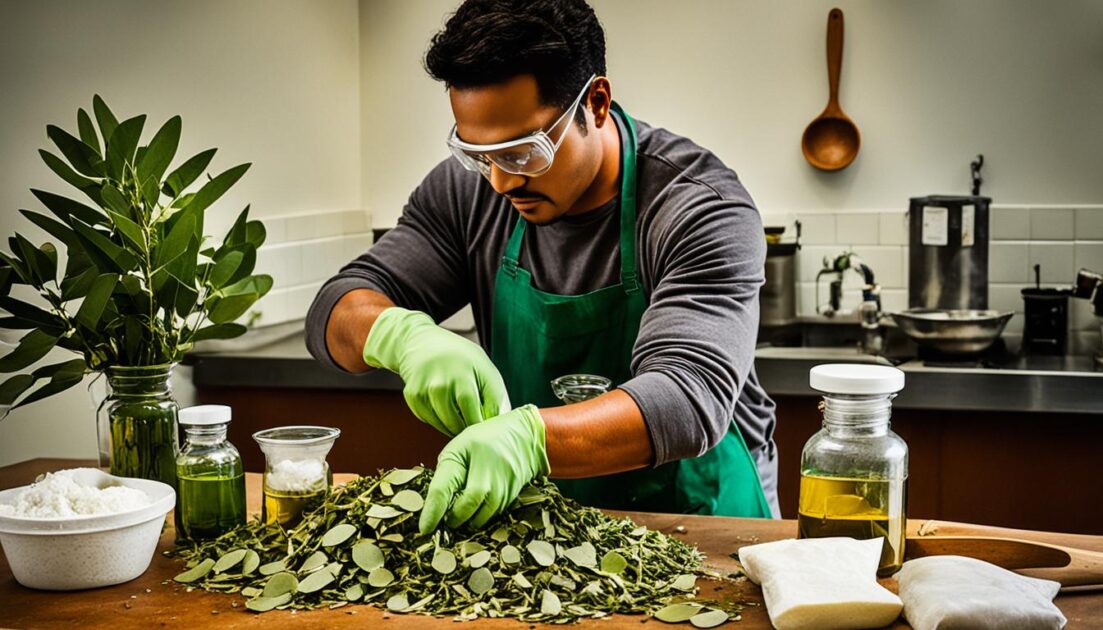
Greetings, fellow DIY enthusiasts! Today, I am excited to share with you a simple and practical guide on how to make your very own eucalyptus oil at home. With just a few easy steps, you can extract this fragrant and versatile oil that has a wide range of uses.
To begin, you will need fresh eucalyptus leaves. If you live in a warmer climate, you may find eucalyptus trees growing wild. Otherwise, you can conveniently purchase potted eucalyptus plants from nurseries. The best time to cut the leaves is early in the morning when the oil concentration is at its highest.
Start by washing the leaves thoroughly and allowing them to dry. Once dry, strip the leaves from the stems and gently crush them to release the precious oil. Next, measure one cup of a light carrier oil such as olive oil, coconut oil, or almond oil.
Now, it’s time to combine the oil and crushed leaves. Set your crock pot on low and let the mixture steep for at least 6 hours. This slow and gentle steeping process will extract all the goodness from the leaves and infuse it into the carrier oil.
After the steeping process, allow the mixture to cool down and then strain the oil through a fine mesh strainer. It’s important to use a dark glass jar to store your homemade eucalyptus oil to preserve its potency and benefits. Remember to label the jar with the type and date of production.
Key Takeaways:
- Making eucalyptus oil at home is a rewarding and easy project.
- Use fresh eucalyptus leaves and a light carrier oil like olive, coconut, or almond oil.
- Steep the leaves in the oil for at least 6 hours in a crock pot set on low heat.
- After cooling, strain the oil through a fine mesh strainer and store it in a dark glass jar.
- Label the jar with the type and date of production for future reference.
Benefits and Uses of Eucalyptus Oil
Eucalyptus oil offers a plethora of benefits and versatile uses that can enhance your well-being. Whether you’re seeking relaxation, trying to alleviate sinusitis symptoms, or aiming for natural insect repellent, eucalyptus oil has got you covered.
The Power of Aromatherapy
Eucalyptus oil for aromatherapy is a popular choice due to its soothing and stress-relieving properties. Inhaling its refreshing scent can help calm your mind, promote relaxation, and provide relief from daily stressors.
Relief for Sinusitis and Respiratory Conditions
Thanks to its antiseptic and decongestant properties, eucalyptus oil for sinusitis is highly effective in treating respiratory conditions. Inhaling the oil can help clear nasal passages, reduce inflammation, and alleviate symptoms associated with sinusitis and other respiratory ailments.
Natural Insect Repellent and Muscle Soother
When it comes to keeping pesky insects at bay, eucalyptus oil is a natural solution. Its strong aroma acts as a deterrent, making it an effective insect repellent. Additionally, eucalyptus oil can be topically applied to soothe muscle aches and pains, providing relief after a workout or a long day.
Cleaning with Antibacterial Power
Beyond personal care, eucalyptus oil can also be a valuable addition to your cleaning routine. Its antibacterial properties make it an excellent ingredient for homemade cleaning products. By adding a few drops of eucalyptus oil to your cleaning solutions, you can maintain a clean and germ-free environment.
With such a wide range of benefits and uses, eucalyptus oil is a versatile addition to your wellness arsenal. Whether you’re looking to enhance your aromatherapy experience, combat sinusitis, repel insects, or maintain a clean home, eucalyptus oil is a natural solution that delivers outstanding results.

Method 1: Using a Crock Pot
One method of making eucalyptus oil involves using a crock pot. After washing and drying the eucalyptus leaves, measure 1 cup of a light carrier oil and combine it with the leaves in the crock pot. Let the mixture steep on low heat for at least 6 hours. After cooling, strain the oil and store it in a dark glass jar. This method allows for a longer steeping time, resulting in a stronger eucalyptus oil.
| Ingredients | Instructions |
|---|---|
|
|
Method 2: Using a Glass Jar
If you prefer a different method of making eucalyptus oil, you can use a glass jar. This process is simple and yields excellent results. Here’s how it’s done:
- Crush the eucalyptus leaves to release the aromatic oils.
- Place the crushed leaves in a clean glass jar.
- Add a layer of sea salt on top of the leaves.
- Pour a carrier oil, such as olive oil, over the leaves and salt, ensuring they are completely submerged.
- Seal the jar tightly to prevent any air from entering.
- Place the jar in a sunny spot where it can soak up direct sunlight.
- Let the jar steep for at least 2 weeks, shaking it gently every few days to enhance the infusion process.
- After the steeping time is complete, strain the oil through a fine mesh strainer or cheesecloth to remove the leaves and salt.
- Transfer the freshly made eucalyptus oil into a dark glass bottle for storage.
Once stored properly, the homemade eucalyptus oil will retain its potency for an extended period, allowing you to enjoy its therapeutic benefits whenever you need. Keep in mind that the longer the steeping time, the stronger the eucalyptus oil will be.
| Method | Steeping Time | Strength |
|---|---|---|
| Crock Pot | 6 hours | Moderate |
| Glass Jar | 2 weeks | Strong |
Experiment with both methods and find the one that suits your preferences and desired potency. Whichever method you choose, making eucalyptus oil at home is a rewarding and fulfilling experience that allows you to harness the power of nature’s remedies.
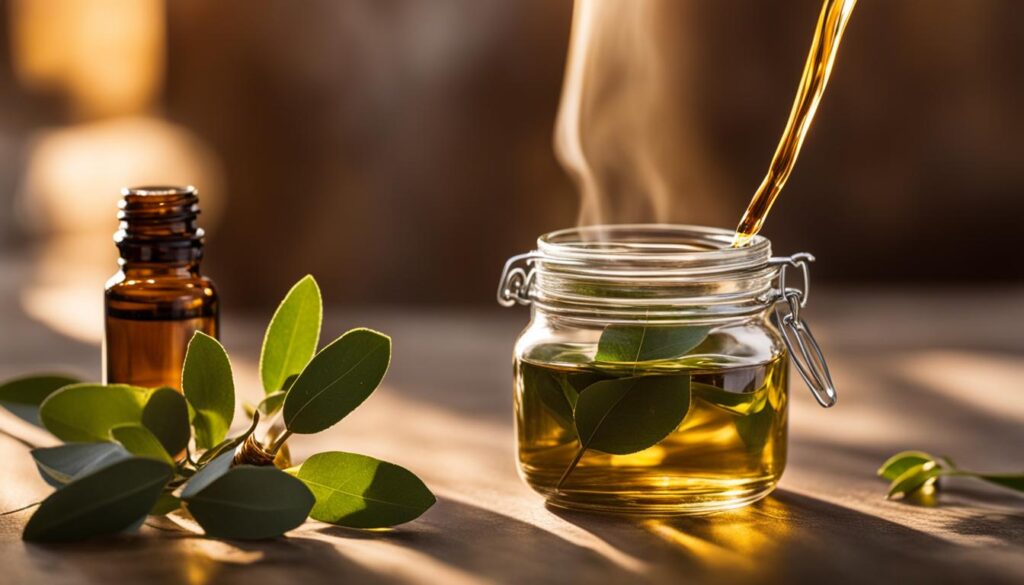
Tips for Using Eucalyptus Oil
When it comes to using eucalyptus oil, there are a few important tips to keep in mind to ensure a safe and effective experience. By following these guidelines, you can maximize the benefits of eucalyptus oil while minimizing any potential risks.
Dilute Before Applying
Eucalyptus oil is highly concentrated, so it’s crucial to dilute it before applying it to the skin. This helps to prevent any potential skin irritation or sensitization. A carrier oil, such as coconut oil or almond oil, can be used for dilution. Simply mix a few drops of eucalyptus oil with a tablespoon of carrier oil and apply it to the desired area. This ensures that the eucalyptus oil is safe to use and won’t cause any adverse reactions.
Perform a Patch Test
Prior to using eucalyptus oil topically, it’s advisable to perform a patch test to check for any allergic reactions. Apply a small amount of diluted eucalyptus oil to a small area of your skin and observe for any signs of redness, itching, or irritation. If any negative reactions occur, discontinue use immediately. This simple test can help you determine if you are sensitive to eucalyptus oil and avoid any potential discomfort or complications.
Proper Storage
Eucalyptus oil should be stored properly to maintain its potency and extend its shelf life. It’s recommended to keep the oil in a cool, dark place, away from direct sunlight and heat sources. This helps to preserve the oil’s therapeutic properties and prevent it from degrading prematurely. By ensuring proper storage, you can continue to enjoy the benefits of eucalyptus oil for an extended period of time.
Follow Instructions on Commercial Products
If you’re using commercially available eucalyptus oil products, it’s essential to read and follow the instructions provided on the label. Different products may have specific usage guidelines and dilution ratios, so it’s important to adhere to these instructions for the best results. This ensures that you are using the product safely and effectively, maximizing its benefits without any unnecessary risks.
By following these tips, you can confidently incorporate eucalyptus oil into your daily routine and reap its numerous benefits. Whether you’re using it for aromatherapy, topical application, or other purposes, eucalyptus oil can be a valuable addition to your natural health and wellness toolkit.
“When using eucalyptus oil, remember to dilute it before applying it to your skin, perform a patch test to check for any allergic reactions, store it in a cool, dark place, and always follow the instructions provided on the label.”
Conclusion
Making eucalyptus oil at home is a simple and rewarding project that allows you to enjoy the benefits of this versatile oil. Whether you choose to use a crock pot or a glass jar method, the process involves steeping eucalyptus leaves in a carrier oil and then straining the oil for use. With proper storage and usage, homemade eucalyptus oil can last for several months and provide a natural solution for various health and wellness needs. So why not give it a try and start enjoying the benefits of eucalyptus oil today?
FAQ
How do I make eucalyptus oil at home?
To make eucalyptus oil, you will need fresh eucalyptus leaves. Wash the leaves thoroughly and let them dry. Measure 1 cup of a light carrier oil such as olive oil, coconut oil, or almond oil. Strip the leaves from the stem and crush them gently to release the oil. Combine the oil and leaves in a crock pot set on low and let them steep for at least 6 hours. After cooling, strain the oil through a fine mesh strainer and store it in a dark glass jar.
What are the benefits and uses of eucalyptus oil?
Eucalyptus oil has a wide range of beneficial uses. It can be used in aromatherapy to promote relaxation and relieve stress. The oil’s antiseptic and decongestant properties make it effective for treating sinusitis and other respiratory conditions. Eucalyptus oil can also be used topically as a natural insect repellent and for soothing muscle aches and pains. Additionally, it can be added to homemade cleaning products for its antibacterial properties.
How do I make eucalyptus oil using a crock pot?
After washing and drying the eucalyptus leaves, measure 1 cup of a light carrier oil and combine it with the leaves in the crock pot. Let the mixture steep on low heat for at least 6 hours. After cooling, strain the oil and store it in a dark glass jar. This method allows for a longer steeping time, resulting in a stronger eucalyptus oil.
How do I make eucalyptus oil using a glass jar?
Crush the eucalyptus leaves and place them in the jar, followed by a layer of sea salt. Pour a carrier oil, such as olive oil, over the leaves and salt. Seal the jar and let it steep in direct sunlight for at least 2 weeks, shaking it regularly. After the steeping time, strain the oil and transfer it to a dark glass bottle for storage.
How should I use eucalyptus oil?
When using eucalyptus oil, it’s important to dilute it before applying it to the skin. You can use a carrier oil, such as coconut oil or almond oil, to dilute the eucalyptus oil. It’s also advisable to perform a patch test before using eucalyptus oil topically to check for any allergic reactions. Eucalyptus oil should be stored in a cool, dark place to prolong its shelf life. Remember to always read and follow the instructions on the label of any commercially available eucalyptus oil products.
How long does homemade eucalyptus oil last?
Homemade eucalyptus oil can last for approximately 6 months when stored in a cool, dark place. Be sure to label the oil with the type and date it was made to keep track of its freshness.


