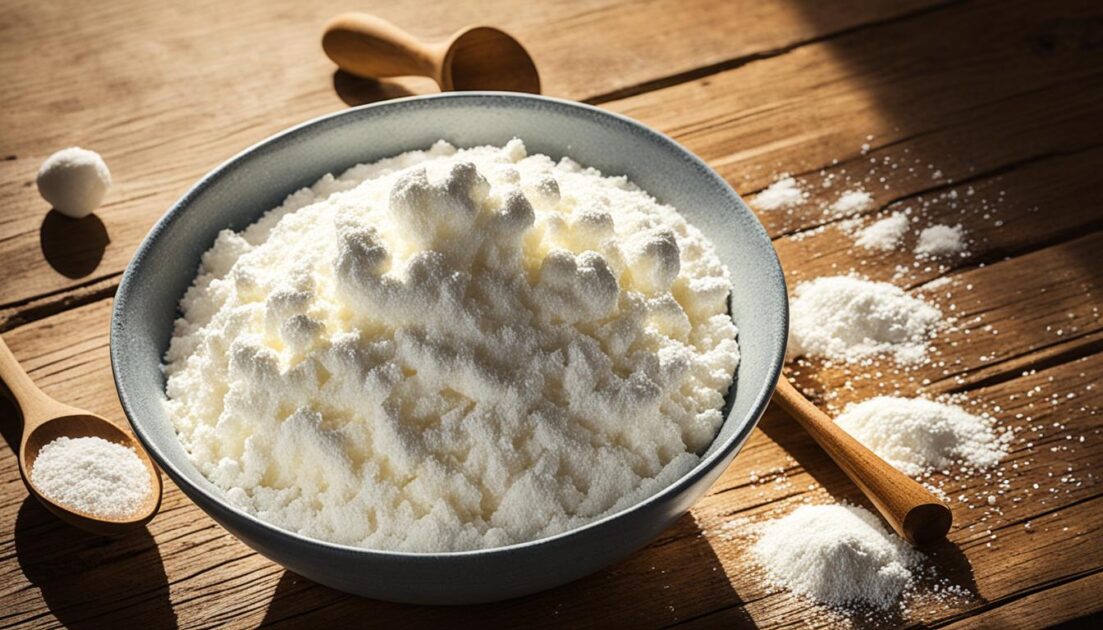
To make cornstarch from scratch, you only need two ingredients: cornstarch and water. With these simple steps, you can create your own cornstarch paste at home for crafting or as a thickening agent in cooking.
Key Takeaways:
- Making homemade cornstarch requires only cornstarch and water.
- The ratio of cornstarch to water can be adjusted for desired thickness.
- Heat the mixture in a saucepan until it thickens and becomes translucent.
- Store the homemade cornstarch paste in the refrigerator for future use.
- It can be used in crafts or as a natural thickening agent in cooking.
How to Make a Cornstarch Slurry for Thickening
A cornstarch slurry is a mixture of cornstarch and water that is commonly used as a thickening agent in a variety of dishes, including sauces, soups, and stews. It is a simple and effective way to achieve the desired consistency and texture in your favorite recipes.
To create a cornstarch slurry, you only need two ingredients: cornstarch and water. The ratio of cornstarch to water in a slurry is typically equal parts, allowing for easy measurement and preparation. For example, you can mix 1 tablespoon of cornstarch with 1 ½ tablespoons of water to create a moderate amount of thickening. This ratio can be adjusted based on your preference and the specific dish you are preparing.
Once you have prepared the cornstarch slurry, the next step is to incorporate it into your dish. Start by heating the sauce, soup, or stew in a saucepan over medium heat. As the dish reaches a gentle simmer, slowly pour the cornstarch slurry into the pot while whisking continuously. This will help prevent clumping and ensure even distribution of the cornstarch.
Pro Tip: Adding the cornstarch slurry to a hot or boiling dish helps activate the thickening properties of the cornstarch. The heat breaks down the starch molecules, causing the mixture to thicken and create a smooth and velvety texture.
As you add the cornstarch slurry, you will notice the dish gradually thickening. Continue stirring or whisking the mixture until it reaches the desired consistency. Keep in mind that the slurry may require a few minutes to fully thicken, so be patient and keep stirring until you achieve the desired results.
If you find that your sauce, soup, or stew is not thick enough after incorporating the initial cornstarch slurry, you can make additional slurry using equal parts cornstarch and water. Mix the cornstarch and water in a separate bowl until smooth, then pour the slurry into the dish while stirring continuously. Repeat this process until you achieve the desired thickness. However, be cautious not to add too much cornstarch, as it can result in a sticky or overly thick texture.
The cornstarch in the slurry must be heated to around 203°F (95°C) to activate the thickening process. As the dish continues to cook, the starch molecules will absorb the liquid and thicken the sauce, soup, or stew. It’s important to cook the dish for a few minutes after adding the cornstarch slurry to ensure that the raw cornstarch flavor is cooked out and the mixture reaches its full thickening potential.
Using a cornstarch slurry as a thickening agent not only enhances the texture of your dishes but also allows you to adjust the consistency according to your preference. By mastering the art of creating a cornstarch slurry, you can confidently prepare a wide range of flavorful and perfectly thickened recipes.
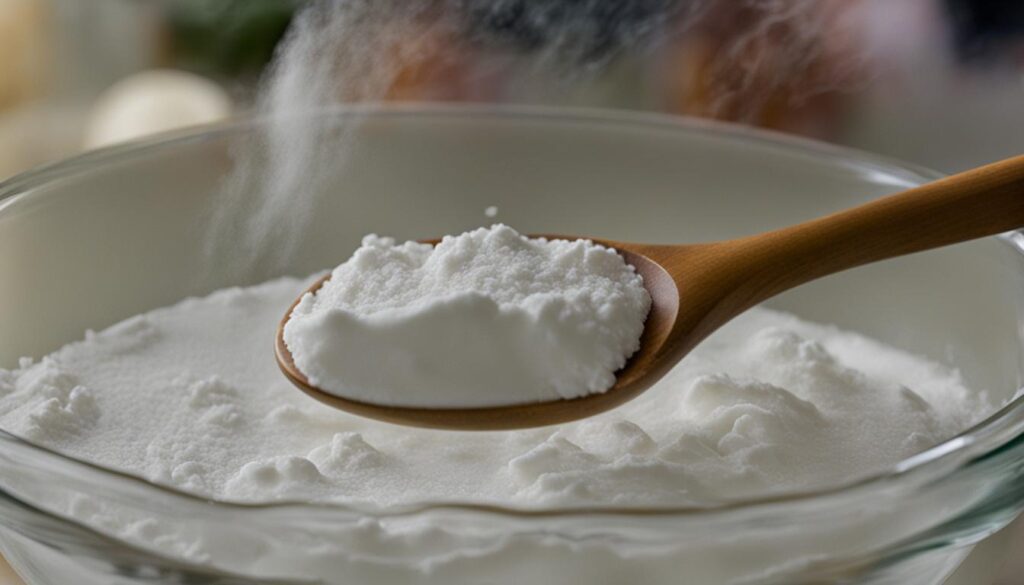
Cornstarch Slurry Recipe:
- Mix equal parts cornstarch and water in a bowl.
- Stir until the cornstarch is fully dissolved and the mixture is smooth.
- Slowly pour the slurry into a heated sauce, soup, or stew.
- Stir continuously to prevent clumping and ensure even thickening.
- Cook the dish for a few minutes to activate the thickening properties of the cornstarch.
- Continue to stir until the dish reaches the desired consistency.
Alternative Homemade Glue with Cornstarch
If you’re looking for an alternative to store-bought glue, you’ll be delighted to know that cornstarch can be used to make a DIY glue for various craft projects. It’s simple, cost-effective, and eco-friendly.
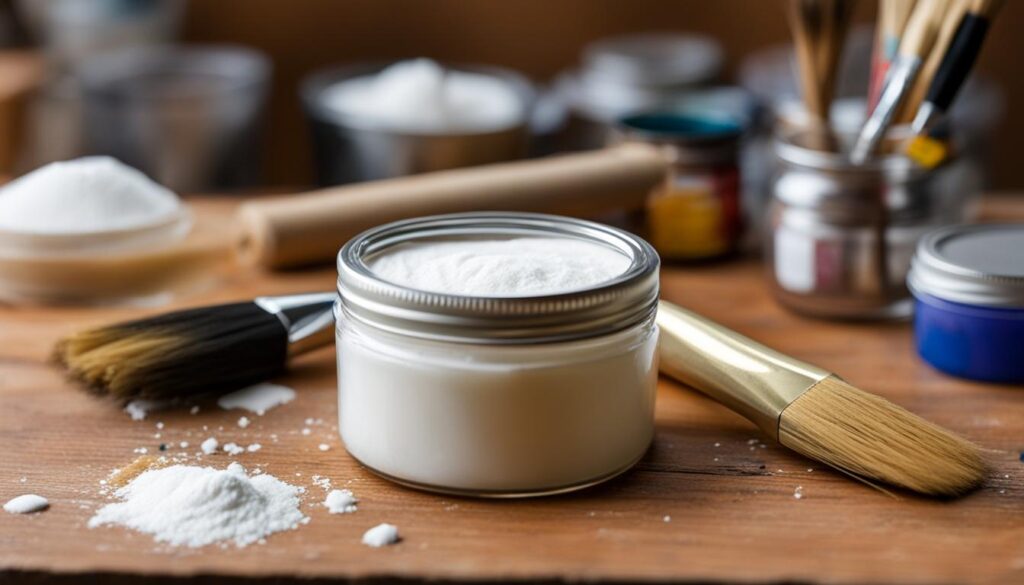
Making cornstarch glue is easy. Start by mixing cornstarch with water to create a paste. The ratio of cornstarch to water can vary depending on the desired consistency of the glue. For a thicker glue, use equal parts cornstarch and water; for a thinner glue, use more water than cornstarch.
Pro Tip: Heating the mixture until it becomes translucent will result in a quick-dry glue, perfect for projects that require a faster drying time.
To create an even stronger glue with extra bonding power, you can add a 50/50 mixture of white glue and cornstarch paste. This combination will provide added durability for projects that need a little extra strength.
Enhance the appearance of your projects: You can customize your cornstarch glue by adding essential oils for a pleasant scent or incorporating food coloring or glitter to make it visually appealing.
Whether you’re working on paper crafts, fabric projects, or other creative endeavors, cornstarch glue is a versatile and easy-to-make alternative that will adhere to your crafting needs.
Making Liquid Starch with Cornstarch
In this section, I will guide you through the process of making liquid starch using cornstarch. Liquid starch is a versatile product that can be used for various craft projects, providing a convenient and affordable alternative to store-bought options. Let’s get started!
To make homemade liquid starch, you will need the following ingredients:
- 3 3/4 cups of water
- 1 tablespoon of cornstarch
- 1/4 cup of water (for dissolving the cornstarch)
Follow these simple steps to create your own liquid starch:
- Bring the 3 3/4 cups of water to a boil in a saucepan.
- In a separate bowl, mix the 1 tablespoon of cornstarch with the 1/4 cup of water until fully dissolved.
- Slowly stir the cornstarch mixture into the boiling water, ensuring it is well combined.
- If desired, you can add a few drops of fragrant essential oil or lemon juice for a pleasant scent.
- Remove the mixture from heat and allow it to cool before using.
Once your liquid starch is ready, you can explore its numerous uses in crafting:
| Craft Project | Description |
|---|---|
| Slime | Create gooey and stretchy slime using liquid starch and other ingredients. |
| Marbling Paint | Use liquid starch to create beautiful marbled patterns on paper or fabric. |
| Paper Mache | Make a paste for paper mache projects by mixing liquid starch with flour or paper pulp. |
| Bubbles | Enhance your bubble solution by adding a small amount of liquid starch for extra durability. |

With your homemade liquid starch, you can unleash your creativity and embark on various crafting adventures. Enjoy the process and have fun experimenting with different projects!
Homemade Cornstarch Paste for Crafts
When it comes to arts and crafts projects, cornstarch paste is a versatile and effective adhesive. Making your own cornstarch paste is simple and allows you to control the consistency according to your specific crafting needs.
To make cornstarch paste, you only need two ingredients: cornstarch and water. By adjusting the ratio of cornstarch to water, you can create either a thin or thick paste, depending on the project requirements.
Making Thin Cornstarch Paste:
- Mix 3 tablespoons of cold water with 1 tablespoon of cornstarch in a saucepan.
- Heat the mixture over low heat, stirring constantly, until it thickens to a glue-like consistency.
Making Thick Cornstarch Paste:
- Mix equal parts of cold water and cornstarch in a saucepan.
- Heat the mixture over low heat, stirring constantly, until it thickens to a glue-like consistency.
Once the cornstarch paste has thickened, remove it from the heat and allow it to cool. The paste can then be transferred to a clean container and stored in the refrigerator for future use.
Now that you have your homemade cornstarch paste, you can use it in a variety of crafts. The paste works well with materials such as yarn, string, Popsicle sticks, and other crafting materials. Its adhesive properties make it perfect for creating paper crafts, collages, and even small sculptures.
With cornstarch paste, your creativity knows no bounds. Let your imagination run wild as you explore the endless possibilities of using cornstarch paste in your crafts.
Using Cornstarch as a Fabric Starch
When it comes to achieving a crisp and stiff finish for your fabric projects, cornstarch can be a fantastic alternative to commercial fabric starches. Not only is it effective, but it is also more eco-friendly and free from harsh chemicals. Here’s how you can use cornstarch as a natural fabric starch:
- Create a Cornstarch Paste: Start by mixing cornstarch and water in a bowl to create a paste. The consistency should be smooth and free from lumps. Use the following measurements as a starting point: 1 tablespoon of cornstarch to 1 cup of water.
- Dissolve the Mixture: Once you have prepared the cornstarch paste, dissolve it in a larger quantity of water. This can be done by adding the paste to a container filled with water and stirring until fully dissolved.
- Transfer to a Spray Bottle: To make application easier, pour the cornstarch mixture into a spray bottle. Make sure to shake the bottle well before each use to ensure that the cornstarch is evenly distributed.
- Apply to Fabric: Before ironing your fabric, spray a light and even layer of the cornstarch mixture onto the fabric surface. The cornstarch will help stiffen the fabric and create a crisp finish.
- Iron as Usual: After applying the cornstarch mixture, proceed to iron your fabric as usual. The heat from the iron will activate the cornstarch, helping to set the fabric and maintain its shape.
| Advantages of Using Cornstarch as Fabric Starch | Disadvantages of Using Cornstarch as Fabric Starch |
|---|---|
|
|
To achieve the best results, it’s recommended to test the cornstarch fabric starch on a small, inconspicuous area of the fabric before applying it to the entire piece. This will help ensure that the starch does not negatively impact the fabric or leave any unwanted residue.
Expert Tip:
“For a final touch, try using scented cornstarch for added freshness. Simply mix a few drops of your favorite essential oil into the cornstarch paste before dissolving it in water.”
Using cornstarch as a fabric starch can be a game-changer for your sewing and crafting projects. Give it a try and experience the benefits of this natural alternative!
Substitutes for Cornstarch in Recipes
If you don’t have cornstarch on hand, there are several alternatives that can be used as substitutes in recipes. Arrowroot starch, also known as arrowroot powder, can be used on a 1-to-1 ratio as a substitute for cornstarch. It provides a similar thickening effect and glossy shine. Other substitutes include tapioca starch and potato starch, which can often be used interchangeably with cornstarch. These alternatives are particularly useful for individuals with corn allergies or dietary restrictions.
FAQ
How can I make homemade cornstarch?
To make homemade cornstarch, you only need two ingredients: cornstarch and water. The ratio of cornstarch to water can vary based on the desired thickness of the paste. For a thin paste, use 3 tablespoons of cold water and 1 tablespoon of cornstarch. For a thick paste, use equal parts cold water and cornstarch. Heat the mixture in a saucepan over low heat until it thickens and becomes translucent. Store the paste in the refrigerator and use it for crafts or as a thickening agent in cooking.
How do I make a cornstarch slurry for thickening?
A cornstarch slurry is a mixture of cornstarch and water that is used to thicken sauces, soups, and stews. The ratio of cornstarch to water in a slurry is typically equal parts. Mix 1 tablespoon of cornstarch with 1 ½ tablespoons of water to create a moderate amount of thickening. Pour the slurry into the heated dish and stir constantly as it thickens. If the sauce is not thick enough, add more cornstarch mixed with water. Cornstarch must be heated to around 203°F for the thickening process to occur.
Can cornstarch be used to make homemade glue?
Yes, cornstarch can be used to make DIY glue for various craft projects. One method involves mixing cornstarch with water to create a paste. Heating the mixture until translucent will result in a quick-dry glue. Adding a 50/50 mixture of white glue and cornstarch paste can create a stronger glue with extra bonding power. Essential oils can be added for a pleasant scent, and food coloring or glitter can be incorporated to enhance the appearance of the glue.
How can I make liquid starch using cornstarch?
Liquid starch can be made using cornstarch and water. Bring 3 3/4 cups of water to a boil, then mix 1 tablespoon of cornstarch with 1/4 cup of water until dissolved. Slowly stir the cornstarch mixture into the boiling water until well combined. If desired, add a few drops of fragrant essential oil or lemon juice for scent. Remove from heat and let cool before using. Liquid starch can be used for a variety of craft projects, such as slime, marbling paint, paper mache, and bubbles.
How can I make cornstarch paste for crafts?
Cornstarch paste can be used in arts and crafts projects. To make the paste, combine cornstarch and water until you reach the desired consistency. Thin paste can be made with 3 tablespoons of cold water and 1 tablespoon of cornstarch, while thick paste can be made with equal parts cold water and cornstarch. Heat the mixture in a saucepan until thick and glue-like. Store the paste in a clean container in the refrigerator and use it with yarn, string, Popsicle sticks, and other crafting materials.
Can cornstarch be used as a fabric starch?
Yes, cornstarch can also be used as a natural fabric starch. To use, mix cornstarch and water to create a paste. Dissolve the mixture in water and then pour it into a spray bottle. Shake the bottle well before each use. Spray the mixture onto fabric before ironing to create a crisp and stiff finish. This method is a great alternative to commercial fabric starches, as it is more eco-friendly and free from harsh chemicals.
What can be used as a substitute for cornstarch in recipes?
If you don’t have cornstarch on hand, there are several alternatives that can be used as substitutes in recipes. Arrowroot starch, also known as arrowroot powder, can be used on a 1-to-1 ratio as a substitute for cornstarch. It provides a similar thickening effect and glossy shine. Other substitutes include tapioca starch and potato starch, which can often be used interchangeably with cornstarch. These alternatives are particularly useful for individuals with corn allergies or dietary restrictions.


