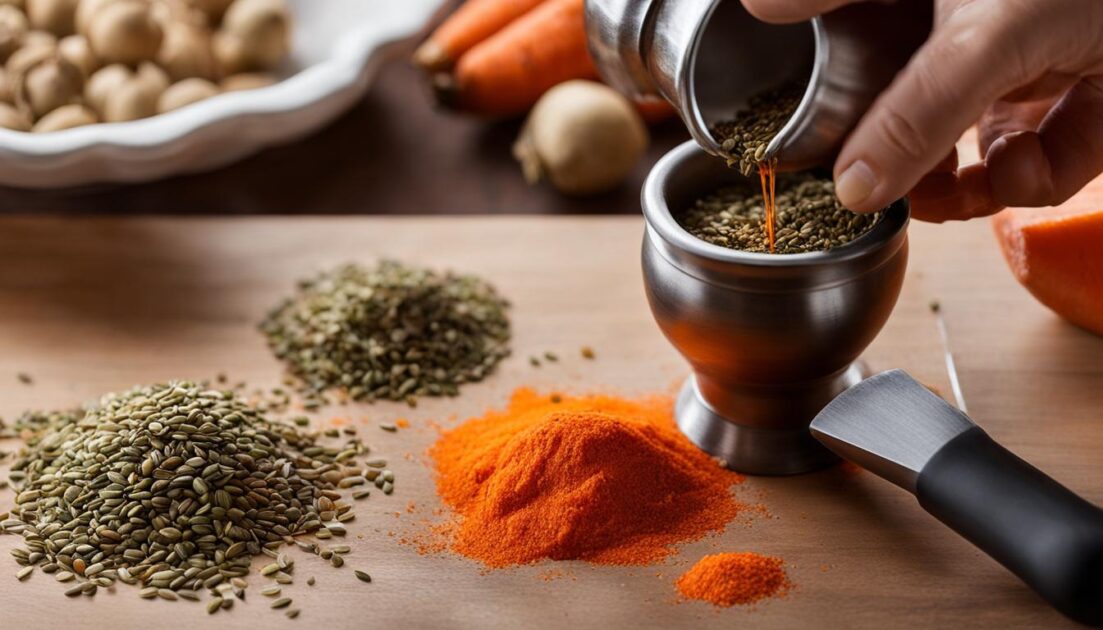
Carrot seed oil is a popular essential oil that can be made at home. It is extracted from the seeds of the Daucus carota plant through steam distillation. Carrot seed oil is known for its antibacterial, antifungal, anti-inflammatory, and antioxidant properties, making it beneficial for skin and hair care.
To make carrot seed oil, you can use two different methods: carrot-infused oil and carrot-macerated oil. The carrot-infused oil involves slowly heating grated carrots in a slow cooker with a carrier oil like olive, coconut, sunflower, or sesame oil for 24 to 72 hours and then straining the oil to remove the solids. The carrot-macerated oil is made by drying and grating carrots, heating them with a carrier oil, and then straining the mixture to obtain the oil. Both methods require the use of a carrier oil and proper storage to maintain the quality of the carrot seed oil.
Key Takeaways:
- Making carrot seed oil at home is possible through methods such as carrot-infused oil or carrot-macerated oil.
- Carrot seed oil has antibacterial, antifungal, anti-inflammatory, and antioxidant properties.
- Carrot seed oil can benefit both skin and hair health.
- It is important to dilute carrot seed oil with a carrier oil before applying it to the skin to prevent irritation.
- Carrot seed oil can be stored in a cool, dark place to maintain its potency.
Benefits of Carrot Seed Oil for Skin and Hair
Carrot seed oil offers numerous benefits for both skin and hair. Its antioxidant properties help protect the skin from oxidative damage, reducing signs of aging and improving overall skin health. Carrot seed oil also has detoxifying effects on the body, helping to eliminate toxins and water build-up in the skin. It can provide protection against UV rays and sun damage. Additionally, carrot seed oil has soothing and calming properties, making it useful for relieving stress and anxiety. Its antiseptic and antiviral properties offer protection against infections and harmful pathogens. When used on hair, carrot seed oil can promote scalp health and improve hair texture and shine.
To fully understand the benefits of carrot seed oil, let’s take a closer look at how it can enhance both skin and hair health:
Benefits for Skin:
- Antioxidant Protection: Carrot seed oil is rich in antioxidants, which combat free radicals and protect the skin from damage caused by environmental factors, such as pollution and UV rays.
- Anti-Aging Effects: The powerful antioxidants in carrot seed oil help reduce the appearance of fine lines, wrinkles, and age spots, promoting a more youthful complexion.
- Detoxification: Carrot seed oil has detoxifying properties that help cleanse the skin, removing impurities and toxins, and reducing water build-up that can lead to puffiness and bloating.
- UV Protection: The natural SPF of carrot seed oil provides some level of protection against harmful UV rays, minimizing the risk of sun damage and premature aging.
- Calming and Soothing: Carrot seed oil has a calming effect on the skin, helping to reduce inflammation, redness, and irritation. It can be especially beneficial for people with sensitive or reactive skin.
- Antiseptic Properties: Carrot seed oil possesses antiseptic properties that can help prevent and treat skin infections, reducing the risk of breakouts and promoting overall skin health.
Benefits for Hair:
- Scalp Health: Carrot seed oil promotes a healthy scalp by nourishing and moisturizing it, reducing dryness, flakiness, and dandruff.
- Improved Hair Texture: Regular use of carrot seed oil can enhance the texture of the hair, making it smoother, softer, and more manageable.
- Shine and Luster: Carrot seed oil adds shine and luster to dull, lifeless hair, giving it a healthy and vibrant appearance.
- Strengthen and Protect: The nutrients in carrot seed oil help strengthen the hair follicles, reducing hair fall and breakage. It also offers protection against environmental damage and styling tools.
With its rich array of benefits for both skin and hair, carrot seed oil is a versatile and valuable addition to your beauty routine. Now that we understand the advantages it brings, let’s explore the methods for making carrot seed oil at home in the next section.

| Benefits for Skin | Benefits for Hair |
|---|---|
| Antioxidant Protection | Scalp Health |
| Anti-Aging Effects | Improved Hair Texture |
| Detoxification | Shine and Luster |
| UV Protection | Strengthen and Protect |
| Calming and Soothing | |
| Antiseptic Properties |
Method 1: Carrot-Infused Oil
Creating homemade carrot seed oil can be done through different methods. One effective method is carrot-infused oil, which allows the oil to soak up the goodness of the carrots. Here’s a simple recipe to make your own carrot-infused oil:
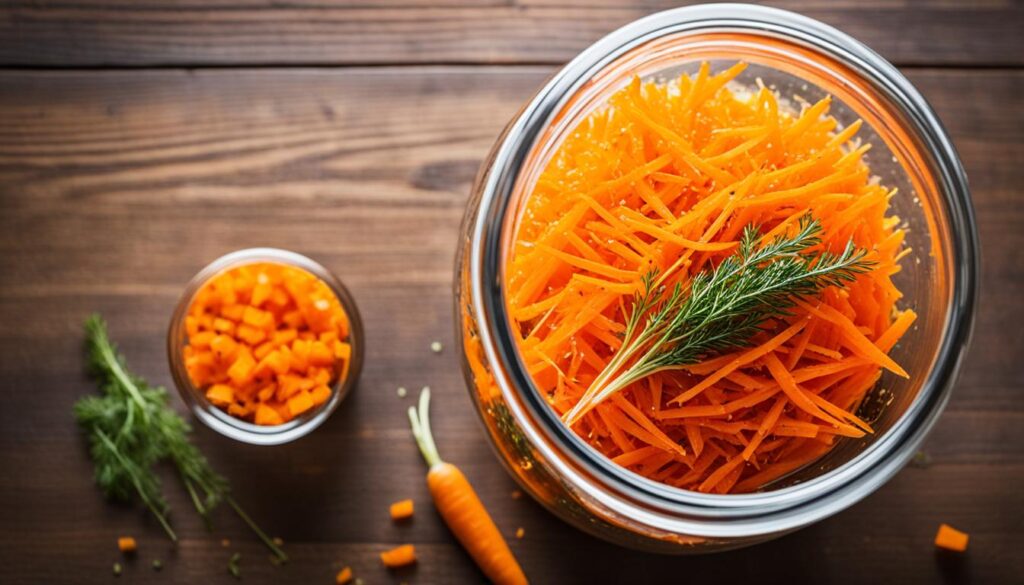
- Start by peeling and grating two carrots.
- Place the grated carrots in a small slow cooker.
- Cover the grated carrots with a carrier oil of your choice, such as olive, coconut, sunflower, or sesame oil.
- Heat the mixture on low for 24 to 72 hours, allowing the oil to infuse with the carrots.
- Once the infusion time is complete, strain the oil through cheesecloth to remove any carrot solids.
- Transfer the carrot-infused oil to a clean glass jar for storage.
- Store the jar in the refrigerator for six to eight months to maintain its freshness and potency.
Tip: The final product should have a subtle, earthy aroma and a yellow-orange hue, indicating the presence of the carrot’s beneficial properties.
Method 2: Carrot-Macerated Oil
If you’re looking for an alternative method to make homemade carrot seed oil, you can try the carrot-macerated oil technique. Follow these steps to create your own carrot-macerated oil:
- Start by washing and slicing a bunch of fresh carrots.
- Blanch the carrot slices in boiling water for three minutes to soften them.
- Transfer the blanched carrot slices to a tray and dry them in a low oven or dehydrator until fully dry.
- Once dried, place the carrot slices in a blender or food processor.
- Add olive oil or another carrier oil of your choice to cover the carrot slices.
- Pulse the mixture until the carrots are roughly ground up and the oil has turned slightly orange.
- Strain the mixture through cheesecloth to remove any solids.
- Transfer the resulting carrot oil to a clean jar for storage.
- Let the oil rest for four weeks before using it to allow the flavors to infuse.
- Store the carrot-macerated oil in the refrigerator to maintain its freshness for six to eight months.
This method offers a slightly different approach to extracting carrot seed oil, resulting in a unique aroma and potential variation in properties compared to the carrot-infused oil method.
Note: The use of a carrier oil in both methods is essential to facilitate the extraction process and dilute the potency of the carrot seed oil.
| Advantages | Disadvantages |
|---|---|
| Unique aroma and properties | Requires a blender or food processor |
| Easy to make at home | Longer wait time for infusion |
| Customizable carrier oil choice | Requires proper oil straining |
Expert Tip:
For a more potent carrot seed oil, consider using a combination of both the carrot-infused oil and carrot-macerated oil. Combining these methods can create a unique blend with enhanced properties.
Tips for Using Carrot Seed Oil
When it comes to using carrot seed oil, there are a few important tips to keep in mind. First and foremost, it is crucial to dilute the oil with a carrier oil before applying it to the skin. This helps prevent any potential skin irritation or burning sensations. To do this, simply mix a few drops of carrot seed oil with a carrier oil such as olive, coconut, sunflower, or sesame oil.
Before incorporating carrot seed oil into your skincare routine, I highly recommend performing a patch test. Apply a small amount of diluted carrot seed oil to a small patch of skin and wait for at least 24 hours to check for any adverse reactions. This step will help ensure that your skin is not sensitive to the oil.
Once you’ve determined that your skin tolerates carrot seed oil, there are various ways to incorporate it into your beauty regimen. You can use carrot seed oil as a skin serum by mixing a few drops of it with your night cream. Alternatively, you can add a couple of drops to your daily moisturizer to enjoy its benefits throughout the day.
In addition to skincare, carrot seed oil can also be utilized for hair care. Massage a small amount of diluted carrot seed oil onto your scalp to promote scalp health and stimulate hair growth. You can even add a few drops of the oil to your shampoo or conditioner to enhance its nourishing properties.
Finally, to ensure that your homemade carrot seed oil stays potent and effective, it is essential to store it properly. Keep it in a cool, dark place such as a cabinet or drawer. This will help preserve the oil’s quality and extend its shelf life.
FAQ
How can I make carrot seed oil at home?
There are two methods you can use to make carrot seed oil at home: carrot-infused oil and carrot-macerated oil. The carrot-infused oil involves heating grated carrots in a slow cooker with a carrier oil for 24 to 72 hours and then straining the oil to remove the solids. The carrot-macerated oil is made by drying, grating, and heating carrots with a carrier oil, then straining the mixture to obtain the oil.
What are the benefits of carrot seed oil for skin and hair?
Carrot seed oil has antioxidant properties that protect the skin from damage and signs of aging. It also has detoxifying effects on the body and can provide protection against UV rays and sun damage. Carrot seed oil is soothing and calming, making it useful for relieving stress and anxiety. When used on hair, it promotes scalp health and improves hair texture and shine.
How do I make carrot-infused oil?
To make carrot-infused oil, peel and grate two carrots. Place the grated carrots in a small slow cooker and cover them with a carrier oil like olive, coconut, sunflower, or sesame oil. Heat the mixture on low for 24 to 72 hours, then strain the oil through cheesecloth to remove the solids. Store the carrot-infused oil in a clean glass jar in the refrigerator.
How do I make carrot-macerated oil?
To make carrot-macerated oil, wash and slice a bunch of carrots. Blanch the carrot slices in boiling water for three minutes, then dry them in a low oven or dehydrator until completely dry. Place the dried carrot slices in a blender or food processor and cover them with olive oil or another carrier oil. Pulse the mixture until the carrots are roughly ground up and the oil has turned slightly orange. Strain the mixture through cheesecloth to remove the solids, and store the carrot oil in a clean jar in the refrigerator for four weeks before using it.
How should I use carrot seed oil?
It is important to dilute carrot seed oil with a carrier oil before applying it to the skin to prevent irritation. Perform a patch test before use, and mix carrot seed oil with your night cream or daily moisturizer as a skin serum. For hair care, massage the oil onto the scalp or add it to your shampoo or conditioner. Store homemade carrot seed oil in a cool, dark place to maintain its potency.


