
Activated charcoal is a versatile substance with numerous benefits and uses. In this DIY guide, I will provide step-by-step instructions on how to make activated charcoal at home. This process involves creating a medium-sized fire, packing a metal pot with hardwood or fibrous plant material, cooking it on an open fire, cleaning and grinding the charcoal, and finally, activating it. By following these steps, you can produce your own homemade activated charcoal and enjoy its many benefits and applications.
Key Takeaways:
- The process of making activated charcoal at home involves building a medium-sized fire and packing a metal pot with hardwood or fibrous plant material.
- The material should be as dry as possible before placing it in the pot, as this aids in the charcoal-making process.
- The packed pot should be cooked for 3 to 5 hours, allowing smoke and gas to escape and leaving behind carbon (charcoal).
- The charcoal should be cleaned with water to remove ash and debris once it has cooled down.
- The cleaned charcoal should be ground into a fine powder and allowed to air dry completely.
- Activation of the charcoal can be done by preparing a solution of calcium chloride and water and adding it to the charcoal powder.
- Activated charcoal has various practical uses, including purifying the air, filtering water, and treating bloating and gas.
By following this DIY guide, you can create your own activated charcoal at home and benefit from its many properties. From air purification to water filtration and even skincare, activated charcoal is an excellent addition to your DIY projects. Stay tuned for the detailed steps and unleash the power of homemade activated charcoal.
Building the Fire and Preparing the Charcoal
The first step in making activated charcoal is to build a medium-sized fire in a safe area. This can be done outdoors or in a home fireplace. The fire should be hot enough to cause the wood pieces to burn.
Once the fire is established, you can pack a metal pot with small pieces of hardwood or fibrous plant material, such as coconut shells. The lid of the pot should have a vent hole, and the airflow to the inside of the pot should be limited throughout the process.
The material should be as dry as possible before placing it in the pot, as this will aid in the charcoal-making process.

| Building the Fire and Preparing the Charcoal | |
|---|---|
| Step 1 | Build a medium-sized fire in a safe area. |
| Step 2 | Pack a metal pot with small pieces of hardwood or fibrous plant material. |
| Step 3 | Ensure the lid of the pot has a vent hole and limit airflow during the process. |
| Step 4 | Use dry material for better results. |
Cooking the Charcoal and Cleaning it
After packing the pot with the material, it should be placed on the fire and cooked for 3 to 5 hours. During this time, smoke and gas will escape from the vent hole in the lid, leaving only the carbon (charcoal) behind. Once no more smoke or gas is coming from the pot, it is likely finished cooking.
“Cooking the charcoal is a crucial step in the homemade activated charcoal production process. This is where the transformation takes place, as the heat eliminates impurities and reduces the wood or plant material to carbon.”
Once the charcoal has finished cooking, it is important to clean it thoroughly. This can be done by transferring the charcoal to a clean container and rinsing it with cool water to remove ash and any remaining debris. The water should be gently stirred to ensure all the charcoal is cleaned evenly.
| Materials: | Instructions: |
|---|---|
| Charcoal | 1. Transfer the cooked charcoal to a clean container. |
| Clean container | 2. Rinse the charcoal with cool water, ensuring all the ash and debris are removed. |
| Cool water | 3. Gently stir the water to clean the charcoal evenly. |
Once the charcoal has been thoroughly cleaned, it should be placed on a clean, dry surface to air dry. This can take several hours or even overnight. It is important to ensure the charcoal is completely dry before proceeding to the next step.
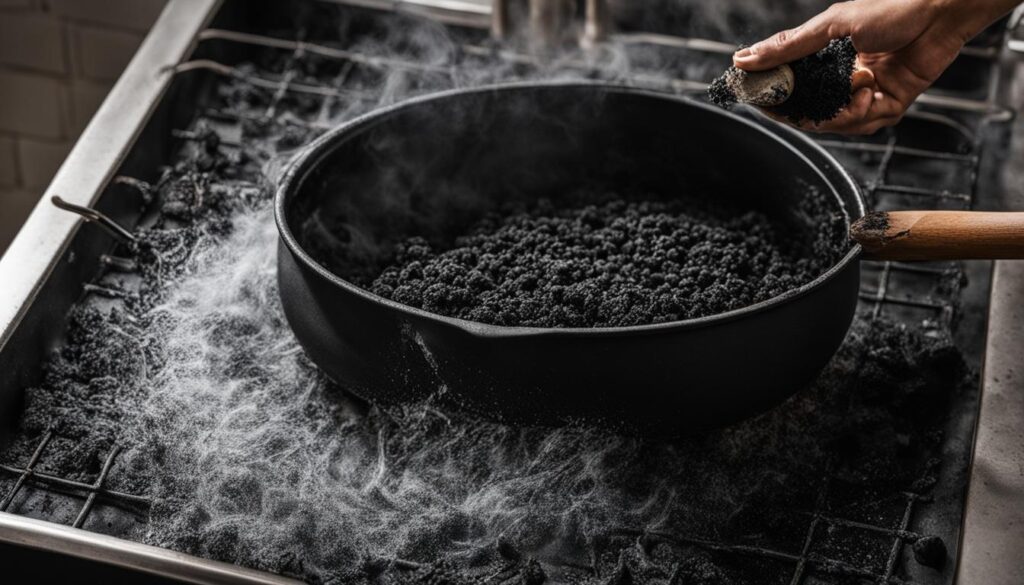
By following these steps, you can successfully cook and clean homemade activated charcoal, preparing it for the next stage of the activation process.
Grinding and Drying the Charcoal
After successfully cooking the charcoal, the next step in the charcoal making process is to grind it into a fine powder. This crucial step ensures that the charcoal is suitable for activation and enhances its absorption properties.
To grind the charcoal, there are two effective methods you can use:
- Using a mortar and pestle: Place the cooked charcoal in a sturdy mortar and use the pestle to crush it into a powder. Continue grinding until the charcoal reaches a fine consistency.
- Using a plastic bag and mallet: Transfer the charcoal into a durable plastic bag and gently crush it with a tenderizing mallet or hammer. Keep crushing until the charcoal turns into a fine powder.
Once the charcoal is ground, it’s essential to ensure that it is completely dry before proceeding. If you used a plastic bag for grinding, transfer the charcoal powder to a clean bowl. Otherwise, you can leave it in the mortar. Allow the charcoal powder to air dry for approximately 24 hours.
Pro tip: Ensure the grinding tools and containers are clean and free from any moisture or contaminants to maintain the quality of the charcoal.
Once the charcoal powder is fully dry, it is now ready for the next step in the homemade activated charcoal process.
Activating the Charcoal
Once the charcoal has been prepared and ground into a fine powder, it’s time to activate it. Activating the charcoal is an essential step that enhances its adsorption properties, making it suitable for various applications.
To activate the charcoal, you will need to prepare a solution using calcium chloride and water. If calcium chloride is not readily available, you can use alternatives like bleach or lemon juice.
Here’s a step-by-step guide on how to activate the charcoal:
- Prepare a solution of calcium chloride and water in a 1:3 ratio.
- Transfer the dry charcoal powder into a mixing bowl.
- Add the calcium chloride solution (or alternative) to the charcoal powder in small increments.
- Stir the mixture with a spoon until it reaches a paste-like consistency.
- Cover the bowl and allow the mixture to sit for 24 hours. This gives enough time for the activation process to occur.
- Drain any remaining moisture from the bowl. The charcoal should now be ready for activation.
- Cook the charcoal for an additional 3 hours on a hot fire. This final step activates the charcoal and enhances its adsorption properties.
Remember, the activated charcoal is now ready to be used in various practical applications, thanks to its enhanced adsorption capabilities.
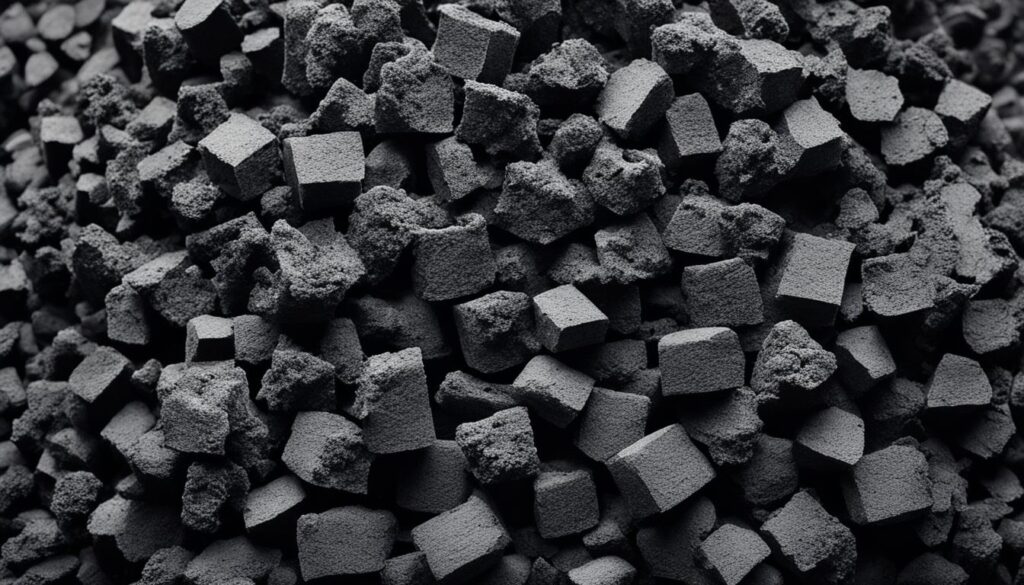
Activated Charcoal Properties
| Property | Description |
|---|---|
| High Adsorption Capacity | Activated charcoal has a large surface area and a system of pores that can effectively adsorb toxins and impurities. |
| Chemical Stability | Activated charcoal is chemically stable, meaning it does not readily react with other substances, making it suitable for various applications. |
| Low Toxicity | Activated charcoal is generally safe for use, with minimal risk of toxicity when ingested or applied topically. |
| Environmental Friendliness | Activated charcoal is a natural and renewable resource, making it an eco-friendly alternative for various purification processes. |
Practical Uses of Activated Charcoal
Activated charcoal, with its wide range of benefits and uses, is a versatile substance that can be utilized in various practical ways.
One of the practical uses of activated charcoal is its ability to purify the air in your home. Simply wrapping it in a linen sheet or cloth and placing it in areas where unpleasant odors are present can help eliminate unwanted smells and create a fresher living environment.
In addition to air purification, activated charcoal can also serve as a cost-effective water filter. By pouring water through a clean sock filled with activated charcoal, you can effectively remove impurities and contaminants, ensuring cleaner and safer drinking water in your household.
Another practical application of activated charcoal is in skincare. You can create a rejuvenating facial masque by combining activated charcoal with natural ingredients like honey or aloe vera gel. This homemade masque can help draw out toxins and impurities from the skin, leaving it refreshed and revitalized.
Moreover, activated charcoal has been known for its digestive benefits. It can help alleviate bloating and gas by absorbing excessive gas-producing substances in the digestive system. Consuming activated charcoal tablets or capsules can provide relief and promote digestive wellness.
Finally, in emergency situations or as a proactive measure, activated charcoal can be used to create a DIY gas mask. By using a face mask or cloth and adding a layer of activated charcoal, you can create a basic filtration system to protect yourself from harmful airborne particles or gases.
These practical uses of activated charcoal demonstrate its versatility and effectiveness in various aspects of everyday life. From purifying the air and water to improving skincare and digestive health, activated charcoal provides numerous benefits and applications.
FAQ
What is activated charcoal?
Activated charcoal is a versatile substance that is made by heating carbon-rich materials, such as hardwood or plant material, at high temperatures. This process creates a highly porous charcoal with a large surface area, allowing it to effectively absorb and trap toxins and impurities.
Why would I want to make activated charcoal at home?
Making activated charcoal at home allows you to have control over the ingredients and the process. It can be a cost-effective solution and a fun DIY project. Plus, you can enjoy the benefits of activated charcoal in various applications.
What materials can I use to make activated charcoal?
Activated charcoal can be made from hardwood, such as oak or maple, or from fibrous plant material, such as coconut shells. These materials are carbon-rich and produce high-quality activated charcoal.
Is it safe to make activated charcoal at home?
Making activated charcoal at home can be safe as long as proper precautions are taken, such as using a well-ventilated area and wearing protective gear. It is important to follow the step-by-step instructions carefully to ensure safety.
How long does it take to make activated charcoal at home?
The entire process of making activated charcoal at home, including building the fire, cooking the charcoal, cleaning and grinding it, and activating it, can take approximately 24 to 48 hours, depending on the specific method used and the drying time.
What are the benefits of activated charcoal?
Activated charcoal has numerous benefits, including its ability to absorb toxins and impurities, purify air and water, alleviate digestive issues, enhance oral hygiene, and promote skin health. It is commonly used as a natural remedy for various ailments.
How can I use activated charcoal?
Activated charcoal can be used in various ways. It can be used as an air purifier by placing it in areas with odors. It can also be used as a water filter, as a facial masque, for gas and bloating relief, and even for creating a DIY gas mask. The possibilities are endless!


