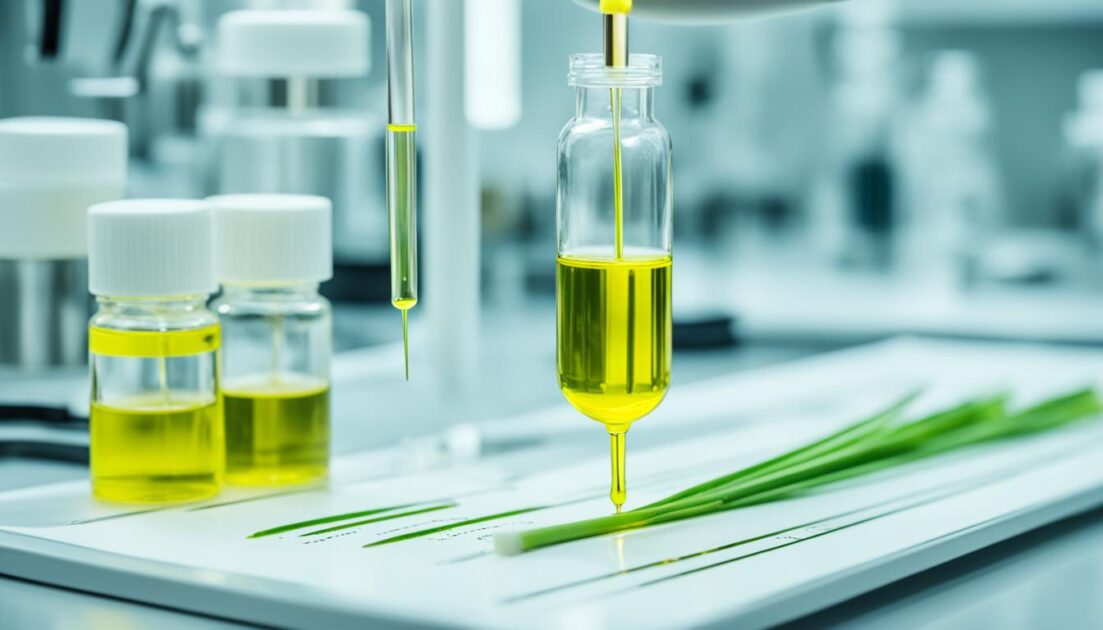
Welcome to my comprehensive guide on how to check the purity of lemongrass oil. As a professional in the industry, I understand the importance of ensuring the authenticity and quality of the oils we use. In this article, I will share with you various methods to test the purity of lemongrass oil, evaluate its authenticity, and assess its overall quality. By following these guidelines, you can be confident in the purity and integrity of the lemongrass oil you choose.
When it comes to assessing the purity of lemongrass oil, there are a few methods you can employ. One simple approach is the paper test. By placing a drop of oil on a piece of paper and observing it for any oil or grease rings after it dries, you can get an initial indication of any impurities present. Another method is to inquire with the supplier about the purity and distilling process of the oil. Getting a sample, if possible, can also provide valuable insights into the oil’s quality.
For more precise results, professional testing in a lab is recommended. These tests, such as lemongrass oil purity analysis, employ techniques like gas chromatography and mass spectrometry to determine the oil’s purity and identify any adulterants or impurities. Lab testing can provide a comprehensive analysis that ensures the authenticity and quality of the lemongrass oil you use in your daily life.
Key Takeaways:
- There are several methods to test the purity of lemongrass oil, including the paper test and professional lab testing.
- Inquire with the supplier about the purity and distilling process of the oil and request a sample for further evaluation.
- Professional lab testing, such as lemongrass oil purity analysis, can provide accurate results through techniques like gas chromatography and mass spectrometry.
- Choosing a trustworthy supplier and ensuring safe use are essential for maintaining the quality and authenticity of lemongrass oil.
- Do not ingest lemongrass oil unless directed by a trained professional, and always perform a patch test before use to check for sensitivities or adverse reactions.
Methods to Check Purity of Lemongrass Oil
When it comes to ensuring the purity of lemongrass oil, there are several methods that can be employed. These methods provide valuable insights into the quality and authenticity of the oil, allowing users to make informed decisions. Here are some effective ways to test the purity of lemongrass oil:
- The Paper Test: This simple yet effective method involves placing a drop of lemongrass oil on a piece of paper. After allowing it to dry completely for about 30-45 minutes, check for any oil or grease rings. If a ring is present, it could indicate the presence of impurities. A pure and high-quality lemongrass oil will leave no residue or oily marks.
- Supplier Inquiry: Reach out to the supplier and ask about the purity and distilling process of their lemongrass oil. A reputable supplier will be transparent and provide detailed information about the sourcing and production methods. This information can give you valuable insights into the quality of the oil.
- Packaging Evaluation: Examine the packaging of the lemongrass oil for any purity statements. Look for indications such as “100% Pure” or similar claims. While this alone may not guarantee purity, it can provide an initial indicator of the oil’s quality. Additionally, ensure that the packaging is sealed and not tampered with.
To obtain more accurate and precise results, professional testing in a laboratory setting is recommended. Techniques such as gas chromatography and mass spectrometry can be utilized for in-depth lemongrass oil purity analysis. These methods can detect any adulterants or impurities present in the oil, providing a comprehensive assessment of its purity.
By utilizing these methods, individuals can confidently evaluate the purity of lemongrass oil and make well-informed choices when purchasing or using it.
Key Factors to Consider When Buying Lemongrass Oil
When it comes to purchasing lemongrass oil, there are several key factors that I consider to ensure its quality and authenticity. These factors play a crucial role in determining the purity and overall value of the oil.
Evaluating Purity and Distilling Process
One of the most important factors is inquiring about the purity and distilling process from the supplier. Reliable information about how the oil is sourced and processed can provide valuable insights into its quality. I prefer suppliers who distill their own oils or have direct partnerships with distillers, as this often indicates a commitment to maintaining high standards.
Requesting Samples
Before making a larger purchase, I always request a sample of the lemongrass oil. It allows me to personally assess the aroma, texture, and overall quality of the oil. A supplier who is confident in their product will readily provide samples for you to try. This step helps me gauge the authenticity and purity of the oil firsthand.
Checking Packaging for Purity Statements
Another important aspect is examining the packaging for any purity statements. Reputable suppliers often include labels such as “100% Pure” or “Authentic Lemongrass Oil” to highlight the quality of their product. Additionally, ensuring that the packaging is sealed and has not been tampered with is vital to maintain the integrity of the oil.
“Reliable information about how the oil is sourced and processed can provide valuable insights into its quality.”
By considering these key factors, you can make a more informed decision when purchasing lemongrass oil. A reliable supplier who prioritizes purity and authenticity will provide you with a high-quality product that meets your expectations.
| Key Factors to Consider when Buying Lemongrass Oil |
|---|
| Evaluating Purity and Distilling Process |
| Requesting Samples |
| Checking Packaging for Purity Statements |
Conducting the Paper Test for Lemongrass Oil Purity
The paper test is a simple and effective method to check the purity of lemongrass oil. By conducting this test, you can assess the quality and authenticity of the oil. Follow the steps below to perform the paper test:
- Begin by placing a drop of lemongrass oil on a clean piece of paper. Use a small dropper or pipette for precision.
- Allow the oil to dry completely, usually in about 30-45 minutes. It is important to ensure that the oil is not disturbed during the drying process.
- After the oil has dried, carefully observe the area where the drop was placed.
- If there is an oily or greasy ring left behind, it may indicate that the lemongrass oil has been adulterated or diluted with other substances.
- On the other hand, if the paper feels completely dry without any residue, it suggests that the oil is likely pure and of high quality.
The paper test serves as a quick and accessible indicator of lemongrass oil purity. However, it is important to note that this method provides a preliminary assessment and is not as precise as professional laboratory testing.
If you have concerns about the purity of your lemongrass oil, it is recommended to consult a reputable supplier or consider sending a sample for professional testing.
Remember, by conducting the paper test, you can gain valuable insights into the purity of lemongrass oil before incorporating it into your aromatherapy or skincare routine.
| Advantages of the Paper Test | Limitations of the Paper Test |
|---|---|
|
|
Performing the paper test can help you make an informed decision about the quality of your lemongrass oil and ensure that you are using a pure and authentic product.
Sending Lemongrass Oil for Professional Testing
When it comes to determining the purity of lemongrass oil, professional testing in a lab provides the most accurate and reliable results. These tests can analyze the oil for any potential adulterants or impurities, ensuring that you are obtaining a high-quality product. Aromatherapists and naturopaths often opt for this method, especially when using the oil for professional purposes.
The two common methods used for lemongrass oil purity analysis are gas chromatography and mass spectrometry. These techniques allow for a comprehensive analysis of the oil’s composition and purity.
“Professional testing in a lab provides the most accurate and reliable results for lemongrass oil purity analysis.” – Dr. Amelia Adams, Certified Aromatherapist
Gas chromatography separates the different compounds present in the oil based on their volatility, while mass spectrometry identifies each compound by analyzing its molecular weight and structure. By combining the results of these two tests, a detailed analysis of the purity of lemongrass oil can be obtained.
The following table provides an overview of the gas chromatography and mass spectrometry methods:
| Method | Description |
|---|---|
| Gas Chromatography | Separates the different compounds in the oil based on their volatility. |
| Mass Spectrometry | Identifies each compound in the oil based on its molecular weight and structure. |
By utilizing these advanced testing methods, the purity of lemongrass oil can be accurately determined, giving you the confidence to use it in your aromatherapy or natural wellness practices.
Next, we will explore the key factors to consider when buying lemongrass oil, which further ensures the authenticity and quality of the oil.
The Importance of Trust in Lemongrass Oil Suppliers
Trust plays a crucial role when it comes to selecting a supplier for lemongrass oil. Assessing the quality and authenticity of the oil relies on choosing a supplier that prioritizes transparency and provides detailed information about the purity and distilling process of their oils. It is essential to establish a partnership with a reputable supplier who demonstrates a commitment to quality.
A trustworthy lemongrass oil supplier should be willing to offer samples to customers, allowing them to assess the product’s quality firsthand. Additionally, a genuine supplier often includes a purity statement on the packaging, showcasing their dedication to providing high-quality essential oils.
Researching the supplier’s reputation is another crucial step in assessing their trustworthiness. Reading customer reviews and testimonials can reveal valuable insights into the supplier’s authenticity, customer satisfaction, and overall product quality.
By forging a relationship with a trusted supplier, individuals can be confident in the authenticity and quality of the lemongrass oil they choose. Selecting a reputable supplier ensures that the oil has undergone stringent quality control measures, making it a reliable choice for various applications.
Quote:
“Trust is the foundation of any successful relationship, and the same principle applies when it comes to choosing a lemongrass oil supplier. Make sure to select a supplier who values transparency and demonstrates a commitment to quality at every step.”
– Sarah Thompson, Aromatherapist
Ensuring Safe Use of Lemongrass Oil
When it comes to using lemongrass oil, safety should always be a top priority. Proper handling and precautions can help prevent any unwanted side effects or adverse reactions. Here are some essential tips to ensure the safe and responsible use of lemongrass oil.
1. Avoid Ingestion
Lemongrass oil should never be ingested unless under the guidance of a trained professional. While lemongrass is commonly used as a culinary herb, the concentrated form of the essential oil is highly potent and can cause serious gastrointestinal issues if consumed. Stick to external applications to enjoy the benefits of lemongrass oil safely.
2. Perform a Patch Test
Before using a new essential oil, it’s crucial to perform a patch test on a small area of your skin to check for any sensitivities or adverse reactions. Dilute a small amount of lemongrass oil in a carrier oil, such as coconut or jojoba oil, and apply it to the inside of your forearm. Wait for 24 hours and observe for any redness, itching, or irritation. If any negative reactions occur, discontinue use immediately.
3. Work in a Well-Ventilated Space
When testing lemongrass oil at home, it’s important to work in a well-ventilated area to prevent overwhelming scents. Lemongrass oil has a strong aroma that can be overpowering in confined spaces. Open windows or use a fan to ensure proper airflow and avoid respiratory discomfort.
4. Verify Oil Purity
If you’re unsure about the quality of a lemongrass oil product, it’s recommended to hold off on buying until its purity can be verified. Assessing the purity indicators of lemongrass oil, such as conducting the paper test or seeking professional lab testing, can ensure you’re using a high-quality and authentic product. Skipping this step may result in using adulterated or impure oil, which can have negative effects on your health and well-being.
By following these safety guidelines, you can enjoy the benefits of lemongrass oil while minimizing any potential risks or adverse reactions.
Conclusion
In conclusion, ensuring the purity of lemongrass oil is crucial for maintaining its quality and authenticity. While the paper test can provide initial indications of purity, professional testing in a lab is recommended for more accurate results. Additionally, it is essential to select a trustworthy supplier and prioritize safe usage of essential oils.
By following these guidelines, individuals can have confidence in the purity and quality of the lemongrass oil they use. This ensures that they can fully experience the therapeutic benefits and enjoy the aromatic properties of lemongrass oil without any concerns about adulteration or impurities.
Remember to take the time to research suppliers, ask questions about the distilling process, and request samples if possible. Having access to transparent information and supporting suppliers who prioritize purity will contribute to a positive aromatic experience with lemongrass oil.
FAQ
How can I check the purity of lemongrass oil?
There are several methods to check the purity of lemongrass oil. One method is the paper test, where a drop of oil is placed on paper and observed for any oil or grease rings. Another method is to ask the supplier about the purity and distilling process. Additionally, checking the packaging for a purity statement, such as “100% Pure,” can provide an indication of the oil’s purity. For more accurate results, professional testing in a lab using techniques like gas chromatography and mass spectrometry can be conducted.
What factors should I consider when buying lemongrass oil?
When buying lemongrass oil, it is important to inquire about the purity and distilling process from the supplier. Choosing a supplier who distills their own oils or deals directly with distillers can be beneficial. Requesting a sample before making a larger purchase can also indicate the confidence of the supplier in their product. Additionally, checking the packaging for a purity statement, ensuring it is sealed and not tampered with, can help ensure the quality and authenticity of the oil.
How can I conduct the paper test for lemongrass oil purity?
The paper test is a simple method to check the purity of lemongrass oil. To conduct the test, place a drop of the oil on a piece of paper and allow it to dry completely, usually in about 30-45 minutes. After it dries, observe the area for any leftover ring of oil or grease. If a ring is present, it could indicate that the oil has been diluted with another substance and is less pure. If there is no ring and the paper feels completely dry without any oily or greasy residue, the oil is likely pure and of high quality.
Can I send lemongrass oil for professional testing?
Yes, for more precise results and accurate information about the purity of lemongrass oil, it can be sent to a lab for professional testing. Aromatherapists and naturopaths may choose to do this if they are using the oil for professional reasons. The two common methods of testing are gas chromatography and mass spectrometry, which can detect any adulterants or impurities in the oil. These tests are often performed together in a lab and provide a comprehensive analysis of the oil’s purity.
How important is trust in lemongrass oil suppliers?
Trust is a crucial factor when it comes to selecting a supplier for lemongrass oil. It is important to choose a supplier that provides transparency and can provide information about the purity and distilling process of their oils. A reputable supplier should be willing to offer samples or provide a purity statement on the packaging. Additionally, researching the supplier’s reputation and reading customer reviews can help assess the trustworthiness of the supplier and ensure the authenticity and quality of the lemongrass oil.
How can I ensure safe use of lemongrass oil?
When using lemongrass oil, it is important to ensure safe use. Essential oils should never be ingested unless under the guidance of a trained professional. It is also essential to do a patch test before using a new essential oil to check for any sensitivities or adverse reactions. Working in a well-ventilated space when testing oils at home can prevent overwhelming scents. If unsure about the quality of an essential oil, it is recommended to hold off buying until its purity can be verified.


