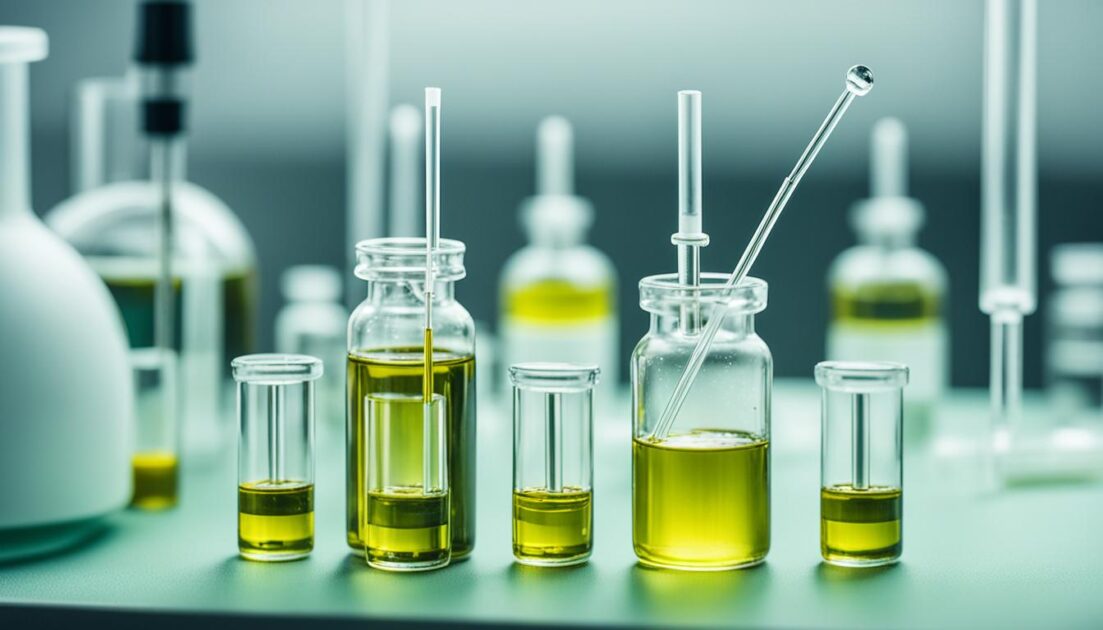
Welcome to my guide on how to check the purity of chamomile oil. Whether you’re a consumer looking for high-quality essential oils or a business owner in the aromatherapy industry, it’s important to ensure that the chamomile oil you use is pure and authentic.
One simple method to assess the purity of chamomile oil is the paper test. You can perform this test at home using just a drop of the oil and a piece of paper. By observing the characteristics of the oil, you can gain valuable insights into its quality and authenticity.
Key Takeaways:
- The paper test is a simple and effective way to check the purity of chamomile oil.
- Place a drop of the oil on a piece of paper and let it dry for 30-45 minutes.
- If there is no oil or grease ring left behind, it indicates that the oil is likely pure.
- If there is a ring or the paper feels oily to the touch, it suggests that the oil may have been mixed with another substance.
- Remember to consider other factors when purchasing chamomile oil, such as the distilling process and packaging integrity.
How to Conduct the Paper Test
To determine the purity of chamomile oil, you can perform a simple and convenient paper test. This method allows you to assess the authenticity and verify the purity of the oil. Follow the steps below to conduct the paper test:
- Place a single drop of chamomile oil on a piece of white paper.
- Allow the oil to dry for approximately 30-45 minutes.
- Observe the paper for any signs of residue or ring formation.
If the paper remains clean and there is no oil or grease ring left behind, it indicates that the chamomile oil is likely pure. However, if the paper shows an oily residue or a noticeable ring, there is a possibility that the oil has been adulterated or mixed with other substances. It is important to note that some oils with natural pigments may leave a slight tint on the paper, which is normal, as long as there is no oily residue.
Performing the paper test is an effective way to assess the purity and authenticity of chamomile oil. However, it is recommended to complement this test with other home or professional tests to ensure a comprehensive evaluation of the oil’s purity and quality.
Expert Tip:
Always use a piece of white paper for the paper test, as it helps to accurately visualize any oil residue or ring formation. Darker or colored paper can obscure the results.
Continue reading to learn about other home tests and professional methods to verify the purity of chamomile oil.
| Advantages | Disadvantages |
|---|---|
| The paper test is simple and convenient, requiring minimal equipment. | It may not provide a definitive assessment of the oil’s purity and can be subjective. |
| Results can be observed visually and do not require specialized knowledge or training. | The paper test does not provide detailed information about specific impurities or substances in the oil. |
| The test can be easily conducted at home or while on the go. | Additional home or professional tests may be necessary for a comprehensive evaluation of the oil’s purity. |
Other Home Tests for Chamomile Oil Purity
Apart from the paper test, there are other home tests you can perform to evaluate chamomile oil purity and assess its quality. These tests can provide additional insights into the authenticity of the oil and ensure that you are getting a pure product. Here are three common methods to test chamomile oil purity:
The Water Test
The water test is a simple yet effective way to determine the purity of chamomile oil. Start by placing a drop of oil in a glass of clear water. Observe the reaction of the oil with the water. If the oil mixes with the water or makes it cloudy, it could indicate adulteration with a synthetic substance or impurities. Pure chamomile oil should remain separate from water and not affect its clarity.
The Touch Test
The touch test involves comparing the texture of chamomile oil with that of a carrier oil. Pure chamomile oil should feel light and dry when rubbed between your fingers. On the other hand, carrier oils, which are often heavier and oilier, will leave a greasy residue. By comparing the textures of different oils, you can assess the purity of chamomile oil and identify any potential adulterants.
The Smell Test
The smell test is another useful method for evaluating the quality of chamomile oil. Familiarize yourself with the aroma of pure chamomile oil by smelling it alongside other oils. Pay attention to any distinct differences in scent. Pure chamomile oil should have a gentle, sweet, and herbaceous fragrance. If the oil smells off or has a synthetic or overpowering scent, it may indicate impurities or poor quality.
These home tests provide valuable insights into the purity and quality of chamomile oil. They offer a convenient way for individuals to assess the authenticity of the oil before use. However, it is important to note that professional testing methods are recommended for precise results, especially for commercial purposes or when detailed information about the oil’s chemical makeup is required.
Professional Testing for Chamomile Oil Purity
For more precise results and if you are using chamomile oil for commercial purposes, you can consider sending it to a lab for professional testing. Gas Chromatography and Mass Spectrometry are the two common tests performed in labs to determine the purity and authenticity of essential oils. These tests can detect any adulterants or synthetic components in the oil. However, professional testing may not be necessary for personal use unless you have specific concerns or require precise information about the oil’s chemical makeup.
Professional testing can provide valuable insights into the purity of chamomile oil. Gas Chromatography involves separating and analyzing the different compounds present in the oil, while Mass Spectrometry helps identify those compounds. By comparing the results with known standards, experts can determine if the oil has been adulterated or contaminated.
Benefits of Professional Testing
Professional testing for chamomile oil purity offers several benefits:
- Accurate assessment: Lab tests provide accurate and reliable information about the purity and authenticity of the oil.
- Compliance with industry standards: Professional testing ensures that your oil meets the purity standards set by regulatory authorities and industry organizations.
- Confidence in product quality: By verifying the purity of the oil, you can be confident in the quality of the products you create or sell.
- Customer trust: Demonstrating a commitment to quality through professional testing can help build trust with customers.
When to Consider Professional Testing
While professional testing can provide valuable insights, it may not be necessary for every situation. Consider professional testing when:
- You are using chamomile oil for commercial purposes and need to ensure its purity to meet regulatory requirements.
- You suspect that the oil may have been adulterated or contaminated.
- You require precise information about the chemical composition of the oil for formulation purposes.
Before sending your oil for professional testing, ensure you choose a reputable lab with experience in essential oil analysis. It’s also important to follow their specific instructions for sample collection and submission to obtain accurate results.
Factors to Consider when Buying Chamomile Oil
When purchasing chamomile oil, there are several important factors to consider in order to ensure its quality and purity. By keeping these factors in mind, you can make an informed decision and choose a product that meets your needs.
- Supplier’s Distilling Process: It is crucial to inquire about the supplier’s distilling process. This information can give you insights into how the oil is extracted and whether it undergoes any additional processing methods. Suppliers who distill their own oils or work directly with distillers are more likely to provide high-quality, pure chamomile oil.
- Availability of Samples: Ask your supplier if they offer samples of chamomile oil. Sampling allows you to assess the aroma, color, and consistency of the oil before making a purchase. It also gives you the opportunity to identify any potential impurities or inconsistencies.
- Purity Statement on Packaging: Look for a clear purity statement on the packaging, such as “100% Pure.” This indicates that the oil has undergone minimal processing and should be free from any additives or contaminants.
- Sealed Packaging: Inspect the packaging to ensure that it is properly sealed and has not been tampered with. A sealed container not only protects the oil from exposure to air and contaminants but also indicates that the product is fresh and has not been adulterated.
Considering these factors will help you evaluate chamomile oil quality and make an informed decision when purchasing. Remember, ensuring the purity and quality of the oil is crucial for reaping its full benefits.
Key Factors to Consider when Buying Chamomile Oil
| Factors | Description |
|---|---|
| Supplier’s Distilling Process | Inquire about the supplier’s distilling process to ensure the oil is extracted using high-quality methods. |
| Availability of Samples | Sampling the oil allows you to assess its quality, aroma, and consistency before making a purchase. |
| Purity Statement on Packaging | Look for a clear purity statement, such as “100% Pure,” to ensure minimal processing and no additives. |
| Sealed Packaging | Ensure the packaging is properly sealed, indicating freshness and protection against contaminants. |
Conclusion
Ensuring the authenticity and quality of chamomile oil is crucial, and there are various methods to determine its purity. Performing simple home tests, such as the paper test, can provide an initial assessment of the oil’s purity. If you want more precise results, professional testing in labs, such as Gas Chromatography and Mass Spectrometry, can detect any adulterants or synthetic components present in the oil.
When purchasing chamomile oil, it is important to consider several factors. Ask the supplier about their distilling process and check if they offer samples. Buying from reputable suppliers who distill their own oils or work directly with distillers can increase the likelihood of obtaining pure oil. Look for purity statements on the packaging, such as “100% Pure,” and ensure that the packaging is sealed and untampered.
By following these steps, you can confidently determine the authenticity and purity of chamomile oil, making informed choices when buying it. Whether you use chamomile oil for personal or commercial purposes, verifying its purity is essential for optimal results and a satisfying experience.
FAQ
How can I check the purity of chamomile oil?
You can perform a simple paper test by placing a drop of oil on a white piece of paper and letting it dry for 30-45 minutes. If there is no oil or grease ring left behind, it is likely pure. Asking your supplier about the purity and distilling process, checking for a purity statement on the packaging, and considering professional testing are also options.
What is the paper test for chamomile oil purity?
The paper test involves placing one drop of chamomile oil on a piece of white paper and letting it dry for 30-45 minutes. If there is no oil or grease ring left behind, it suggests that the oil is likely pure. However, if there is a ring or the paper feels oily to the touch, it may have been mixed with another substance.
Are there other home tests to determine chamomile oil purity?
Yes, apart from the paper test, you can try the water test, the touch test, and the smell test. The water test involves placing a drop of oil in a glass of clear water to check for mixing or cloudiness. The touch test compares the texture of chamomile oil with a carrier oil, where pure chamomile oil should feel light and dry. The smell test compares the aroma of the oil to other oils to determine its quality.
Should I consider professional testing for chamomile oil purity?
Professional testing, such as Gas Chromatography and Mass Spectrometry, can provide more precise results and detect any adulterants or synthetic components in the oil. However, it may not be necessary for personal use unless you have specific concerns or require detailed information about the oil’s chemical makeup.
What factors should I consider when buying chamomile oil?
When purchasing chamomile oil, it is important to ask your supplier about their distilling process and if they provide samples. Buying from a reputable supplier who distills their own oils or works directly with distillers can increase the chances of obtaining pure oil. Additionally, look for a purity statement on the packaging, such as “100% Pure,” and ensure that the packaging is sealed and not tampered with.
Why is it important to verify the purity of chamomile oil?
Verifying the purity of chamomile oil is essential to ensure its authenticity and quality. Pure chamomile oil contains the natural beneficial compounds that make it effective for various uses, such as aromatherapy and skincare. By determining the purity of the oil, you can make informed choices when buying it and ensure that you are getting a genuine and high-quality product.


