
When it comes to skincare, we often search for natural and versatile ingredients that can provide multiple benefits. One such ingredient that has gained popularity in recent years is coconut oil. But what makes coconut oil so special for our face? Let’s explore the radiant skin benefits of using coconut oil for the face.
Coconut oil, with its high saturated fat content and unique composition, is an excellent moisturizer and protective barrier for the skin. It has antiviral, antibacterial, antifungal, and antimicrobial properties, making it effective in defending the skin against damaging microorganisms. Moreover, coconut oil effectively moisturizes dry and cracked skin, bringing back its natural softness and suppleness.
Coconut oil also possesses anti-inflammatory properties that can help reduce inflammation and acne. Its healing properties make it a valuable ingredient for promoting skin repair and reducing the signs of aging, such as wrinkles and fine lines. Furthermore, coconut oil contributes to a more even skin tone while providing a naturally glowing complexion.
The composition of coconut oil, including fatty acids such as caprylic acid, lauric acid, myristic acid, palmitic acid, stearic acid, oleic acid, and linoleic acid, plays a significant role in its benefits for the skin. These fatty acids help restore moisture, nourish the skin, and maintain its overall health.
It’s important to note that not all coconut oils are created equal. For optimal results, choose organic, unrefined, and virgin coconut oil. These variants retain more of the beneficial properties compared to refined options.
Key Takeaways:
- Coconut oil is a versatile oil that offers numerous benefits for the face.
- Its high saturated fat content and unique composition make it a great moisturizer and protective barrier for the skin.
- Coconut oil has antiviral, antibacterial, antifungal, and antimicrobial properties, making it effective against harmful microorganisms.
- It moisturizes dry and cracked skin, reduces inflammation, and treats acne.
- The composition of coconut oil, including fatty acids, contributes to its overall benefits for the skin.
Is Coconut Oil Good for Skin?
The benefits of coconut oil for the skin are well-deserved. Coconut oil contains acids that are antiviral, antibacterial, antifungal, and antimicrobial, making it effective in defending the skin against harmful microorganisms. It can help treat acne, moisturize dry skin, support healing, reduce inflammation, and improve the overall appearance of the skin. The composition of coconut oil, including fatty acids such as caprylic acid, lauric acid, myristic acid, palmitic acid, stearic acid, oleic acid, and linoleic acid, contributes to its benefits for the skin.
| Benefits of Coconut Oil for Skin | Uses of Coconut Oil for Skin |
|---|---|
| 1. Moisturizes dry skin | 1. Face and body moisturizer |
| 2. Treats acne | 2. Makeup remover |
| 3. Supports healing | 3. Natural shaving cream |
| 4. Reduces inflammation | 4. Hand moisturizer |
| 5. Improves overall skin appearance | 5. Body lotion |
| 6. Massage oil |
Coconut oil offers a range of benefits for the skin, making it a popular choice for skincare routines. However, it is important to note that coconut oil may not be suitable for everyone, especially those with acne-prone skin. As with any skincare product, it is recommended to perform a patch test before applying coconut oil to the face or body.
Protecting the Skin with Coconut Oil
“Coconut oil contains natural antimicrobial properties that can help protect the skin against harmful microorganisms.” – Dr. Samantha Johnson, Dermatologist
Using coconut oil as part of a regular skincare routine can help nourish and protect the skin. Its moisturizing properties can help maintain hydration, while its anti-inflammatory effects can soothe irritated skin. Whether used on its own or in combination with other natural ingredients, coconut oil can be a valuable addition to any skincare regimen.
Coconut Oil for Skin
Coconut oil is widely recognized as a versatile ingredient in skincare products, and it can also be applied directly to the skin in its raw form. The benefits of coconut oil for the skin are diverse and extensive, making it a popular choice for many individuals seeking natural skincare solutions.
One of the primary uses of coconut oil for the skin is its moisturizing properties. The oil deeply penetrates the skin, providing hydration and nourishment to dry and cracked skin. It forms a protective barrier that helps to retain moisture, leaving the skin feeling soft and supple. Coconut oil is particularly effective for individuals with eczema, as it can soothe and alleviate dryness and itching.
Another valuable benefit of coconut oil for the skin is its ability to reduce inflammation. The anti-inflammatory properties of coconut oil help to calm redness and irritation, making it beneficial for individuals with sensitive or irritated skin. It can help alleviate symptoms of conditions such as acne, psoriasis, and dermatitis.
Coconut oil also possesses natural antimicrobial properties, making it effective in preventing infections and promoting healing. The Lauric acid, caprylic acid, and capric acid present in coconut oil have antimicrobial properties that can help combat bacteria, viruses, and fungi, keeping the skin healthy and protected.
Moreover, coconut oil can promote collagen production in the skin, contributing to a more youthful and plump appearance. Collagen is a vital protein that helps maintain the skin’s elasticity and firmness. By supporting collagen production, coconut oil can help reduce the appearance of wrinkles, fine lines, and sagging skin.
Coconut Oil for Various Skin Uses
Coconut oil’s versatility extends beyond moisturizing and healing properties. With its natural composition and rich texture, coconut oil can be used for multiple skin purposes:
- As a natural shaving cream, coconut oil provides a smooth glide while moisturizing the skin, leaving it feeling soft and hydrated.
- As a hand moisturizer, coconut oil can be applied to dry and rough hands, offering instant nourishment and restoration.
- As a body lotion, coconut oil can be used all over the body to lock in moisture and leave the skin smooth and radiant.
- As a massage oil, coconut oil’s soothing and moisturizing properties make it an excellent choice for a relaxing and hydrating massage.
While there is ongoing debate about the health implications of cooking with coconut oil due to its high saturated fat content, its benefits for topical application on the skin are well-established. For optimal results, choose organic, unrefined coconut oil that is free from additives and processing.
Overall, coconut oil offers a natural and effective solution for maintaining healthy and radiant skin. Its moisturizing, anti-inflammatory, antimicrobial, and collagen-boosting properties make it a valuable addition to any skincare routine.
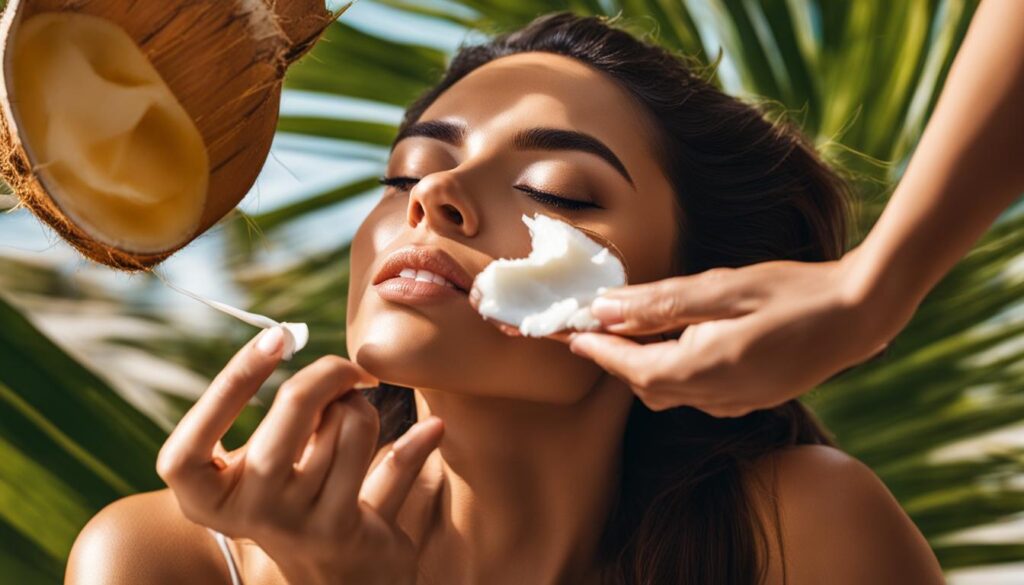
Table: Comparative Analysis of Coconut Oil Uses for Skin and Their Benefits
| Skin Use | Key Benefits |
| ————- | ——————————————————- |
| Moisturizer | – Deeply hydrates and nourishes the skin |
| | – Forms a protective barrier to retain moisture |
| Redness Relief| – Calms inflammation and reduces redness |
| | – Soothes irritated skin conditions |
| Antimicrobial | – Prevents infections caused by bacteria, viruses, fungi |
| | – Promotes healing of minor skin issues |
| Collagen Boost| – Stimulates collagen production for younger-looking skin|
| | – Reduces the appearance of wrinkles and fine lines |
How to Use Coconut Oil on Face
Coconut oil is a versatile ingredient that can be effectively used on the face to nourish and pamper the skin. Whether you’re looking to moisturize, remove makeup, or indulge in a rejuvenating face mask, coconut oil can be a game-changer in your skincare routine.
1. Nighttime Moisturizer
To use coconut oil as a nighttime moisturizer, simply liquefy a tablespoon of organic, unrefined coconut oil and gently apply it to your face and neck. Massage it into your skin in circular motions, allowing the oil to absorb. For excessive residue, you can gently remove it with a tissue. This routine will leave your skin feeling hydrated and supple, ready to take on the day ahead.
2. Makeup Remover
If you’re looking for an effective and natural makeup remover, look no further than coconut oil. Its moisturizing properties make it gentle on the skin, while its ability to dissolve makeup makes it a fantastic option. Apply a small amount of coconut oil to a cotton pad or your fingertips and gently massage it onto your face, focusing on areas with makeup. Rinse off with warm water or use a gentle cleanser to remove any remaining residue.
3. Emollient Treatment
For an indulgent and nourishing treat for your skin, you can use coconut oil as an occasional or once-a-week emollient treatment. Begin by cleansing your face with a gentle cleanser, then apply a thin layer of coconut oil to your skin. Leave it on for 10-15 minutes to allow the oil to penetrate and nourish your skin. Afterward, rinse off with lukewarm water and pat your face dry. This treatment will leave your skin feeling deeply moisturized and refreshed.
4. Face Mask
A coconut oil face mask is an excellent way to pamper your skin and promote a radiant complexion. You can combine coconut oil with other natural ingredients such as honey and green tea to enhance its benefits. Honey is moisturizing and soothing, while green tea has antioxidant properties that can help rejuvenate the skin. Mix a tablespoon of coconut oil with a teaspoon of honey and a teaspoon of cooled green tea. Apply the mask to your face and let it sit for 15-20 minutes before rinsing off. Your skin will feel nourished and glowing.
When using coconut oil on your face, always opt for organic, unrefined, and virgin coconut oil to ensure the best results. Remember to patch test before applying it to your entire face, especially if you have sensitive or acne-prone skin. Coconut oil can work wonders for most skin types, but it’s essential to find what works best for you.

Conclusion
Coconut oil has proven to be a highly beneficial ingredient for the face and skin, offering a wide range of advantages. Its moisturizing properties can keep the skin hydrated and prevent dryness, while its anti-inflammatory abilities help reduce redness and irritation. Additionally, coconut oil’s antimicrobial properties can protect the skin from infection and promote faster healing.
Furthermore, coconut oil promotes collagen production, which can contribute to a more youthful and radiant complexion. Its versatility makes it suitable for various skincare routines and treatments, such as using it as a moisturizer, makeup remover, or even as an occasional face mask. However, it is crucial to select organic, unrefined, and virgin coconut oil to ensure optimal results.
While coconut oil may not be suitable for individuals with acne-prone skin, it can still be a valuable addition to the skincare routine of many individuals. As with any skincare product, it is essential to consider your own skin type and any specific concerns you may have before incorporating coconut oil into your routine.
FAQ
What are the benefits of using coconut oil for the face?
Coconut oil has numerous benefits for the face. It is a natural moisturizer, reduces inflammation, prevents infection, and promotes collagen production, leading to radiant, healthy-looking skin.
Is coconut oil good for the skin?
Yes, coconut oil is good for the skin. It contains acids that have antiviral, antibacterial, antifungal, and antimicrobial properties, making it effective in defending the skin against harmful microorganisms. It can help treat acne, moisturize dry skin, support healing, reduce inflammation, and improve the overall appearance of the skin.
How can I use coconut oil on my face?
There are various ways to use coconut oil on the face. It can be applied as a moisturizer at nighttime, used as a makeup remover, or as an occasional or once-a-week emollient treatment. Coconut oil can also be incorporated into a face mask by combining it with other ingredients such as honey and green tea for radiant skin.
What is the best type of coconut oil for the face?
It is important to choose organic, unrefined, and virgin coconut oil for optimal results on the face. These types of coconut oil undergo minimal processing and retain more of their natural nutrients and properties.
Can coconut oil be used on both the face and hair?
Yes, coconut oil is versatile and can be used on both the face and hair. It can be applied as a moisturizer for the face and as a conditioning treatment or serum for the hair.
Can coconut oil help with acne on the face?
Yes, coconut oil can help with acne on the face. Its anti-inflammatory properties can help reduce inflammation and the appearance of acne. However, it may not be suitable for everyone, especially those with acne-prone skin. It is best to test it on a small area of the skin before applying it to the entire face.
Can coconut oil be used as a natural shaving cream?
Yes, coconut oil can be used as a natural shaving cream. Its moisturizing properties make it a great alternative to traditional shaving creams, leaving the skin smooth and hydrated.
Can coconut oil be used as a hand moisturizer and body lotion?
Yes, coconut oil can be used as a hand moisturizer and body lotion. Its rich consistency and moisturizing properties make it an effective natural option for nourishing and hydrating the skin.
Is coconut oil suitable for all skin types?
While coconut oil may not be suitable for everyone, especially those with acne-prone skin, it can be a beneficial addition to a skincare routine for many individuals. It is recommended to patch test it on a small area of the skin before applying it to the entire face.


