As a skincare enthusiast, I’m always on the lookout for natural, effective ingredients that can help achieve radiant and healthy skin. One such ingredient that I’ve come across is almond oil. Not only does it have numerous benefits for the skin, but it is also versatile and easy to incorporate into your skincare routine.
Almond oil is packed with essential nutrients like vitamin E, monounsaturated fatty acids, proteins, potassium, and zinc. These components make it a moisturizing powerhouse, with anti-inflammatory and antioxidant properties. Whether you have dry, sensitive, or aging skin, almond oil can be a game-changer in your skincare regimen.
One of the primary benefits of almond oil is its ability to moisturize and nourish the skin. It penetrates deeply, locking in moisture and leaving your skin soft and supple. This makes it an excellent choice for those with dry and flaky skin.
Additionally, almond oil offers protection against sun damage. Its vitamin E content acts as a natural sunscreen, shielding your skin from harmful UV rays. Regular use of almond oil can help prevent sunburn and premature aging caused by sun exposure.
Furthermore, almond oil can improve skin texture by smoothing out rough patches and enhancing overall radiance. It also has anti-aging properties, helping to diminish the appearance of fine lines and wrinkles, making your skin look youthful and vibrant.
For those with sensitive and irritated skin, almond oil can work wonders. Its anti-inflammatory properties help soothe redness, calm irritations, and reduce itchiness. Additionally, almond oil is non-comedogenic, meaning it won’t clog your pores, making it suitable for sensitive skin types.
It’s important to note that while almond oil is highly beneficial for most skin types, it may not be suitable for very oily and acne-prone skin. The rich moisturizing properties of almond oil can potentially exacerbate these conditions. It’s always best to perform a patch test before using almond oil on your face or switch to lighter alternatives.
When it comes to finding products that incorporate almond oil, there are plenty of options to choose from. Cleansers, face oils, and shower oils are just a few examples of skincare products that harness the power of almond oil to promote skin health and radiance.
Key Takeaways:
- Almond oil is a versatile and effective ingredient for radiant skin care.
- It moisturizes, protects from sun damage, improves texture, and slows down the signs of aging.
- Almond oil is especially beneficial for dry, sensitive, and irritated skin.
- However, it may not be suitable for very oily and acne-prone skin types.
- There are various skincare products available that contain almond oil.
How to Use Almond Oil for Skin
Almond oil is a versatile and beneficial ingredient for your skin. It can be used in various ways to address different skin concerns and achieve a healthy, radiant complexion.
If you have dry and flaky skin, almond oil can be your savior. Apply it all over your face and body to moisturize and nourish your skin. The rich vitamin E content in almond oil helps to replenish moisture and keep your skin hydrated throughout the day.
To protect your skin from sun damage, apply vitamin E-rich almond oil regularly. The antioxidants in almond oil can help neutralize free radicals caused by sun exposure and prevent premature aging. Simply massage a few drops of almond oil onto your skin before stepping out into the sun.
Almond oil is also effective in improving skin texture and reducing the appearance of scars and stretch marks. Massage the oil onto the affected areas in gentle, circular motions to promote blood circulation and encourage skin regeneration.
If you’re looking for an anti-aging solution, almond oil is your ally. It contains vitamin A, which helps stimulate collagen production and reduce the signs of aging. Incorporate almond oil into your skincare routine to maintain a youthful and radiant complexion.
For those with sensitive and irritated skin, almond oil’s anti-inflammatory properties can provide relief and soothe the skin. Its gentle nature makes it suitable for sensitive skin types, effectively calming redness and irritation.
However, it’s important to note that almond oil may not be suitable for oily and acne-prone skin types. The richness of almond oil could potentially exacerbate oiliness and clog pores, leading to breakouts. If you have oily or acne-prone skin, it’s best to consult a dermatologist before using almond oil.
Here’s a summary of how to use almond oil for different skin types and concerns:
| Skin Type/Concern | How to Use Almond Oil |
|---|---|
| Dry and flaky skin | Apply almond oil all over the face and body as a moisturizer. |
| Sun protection and healing | Massage vitamin E-rich almond oil onto the skin before sun exposure. |
| Improving skin texture and scars | Gently massage almond oil onto the affected areas in circular motions. |
| Anti-aging | Incorporate almond oil into your skincare routine for a youthful complexion. |
| Sensitive and irritated skin | Use almond oil to soothe redness and calm the skin. |
| Oily and acne-prone skin | Consult a dermatologist before using almond oil. |
Remember, everyone’s skin is unique, and what works for one person may not work for another. It’s crucial to patch test almond oil before using it on your face or body to ensure you don’t have any adverse reactions.

Almond Oil as a Carrier Oil and Other Uses
Almond oil is not only beneficial for skin care but also serves as a versatile carrier oil for various purposes. When combined with essential oils like rosemary oil, almond oil enhances their effectiveness, making it a popular choice in aromatherapy and massage.
One of the main uses of almond oil is its potential to reduce the appearance of stretch marks. Its moisturizing properties help nourish the skin, improving its elasticity and promoting the fading of stretch marks over time.
Contrary to popular belief, almond oil does not clog pores. It is non-comedogenic, meaning it does not block the skin’s pores, making it suitable for overnight use without the risk of breakouts or acne.
Almond oil can also be utilized as a pre-shower scalp treatment to stimulate hair growth and address dry and dehydrated hair. Massaging a few drops of almond oil onto the scalp before shampooing can help nourish and moisturize the hair follicles, promoting healthier and more lustrous hair.
Additionally, almond oil can be used in cooking as a healthier alternative to other oils. It is ideal for sautéing, roasting, frying, or grilling, adding a distinct nutty flavor to dishes.
However, individuals with allergies to almonds or tree nuts should exercise caution and avoid using almond oil, both topically and in cooking, to prevent adverse reactions.
Summary of Uses of Almond Oil
| Use | Description |
|---|---|
| Reduction of Stretch Marks | Moisturizes the skin, enhances elasticity, and fades stretch marks. |
| Non-Comedogenic Moisturizer | Suitable for overnight use to moisturize the skin without clogging pores. |
| Scalp Treatment for Hair Growth | Stimulates hair growth and addresses dry and dehydrated hair. |
| Cooking Ingredient | A healthier alternative for sautéing, roasting, frying, or grilling. |
Almond oil offers a range of uses beyond skin care. From its role as a carrier oil to its potential for reducing stretch marks and its versatility in cooking, almond oil is a valuable addition to any beauty and wellness routine.
The Difference Between Sweet and Bitter Almond Oil
When it comes to almond oil, there are two main types: sweet almond oil and bitter almond oil. While both types are derived from almond seeds, they have distinct characteristics and uses in the world of skincare. Understanding the difference between sweet and bitter almond oil can help you choose the right product for your specific skincare needs.
Sweet Almond Oil
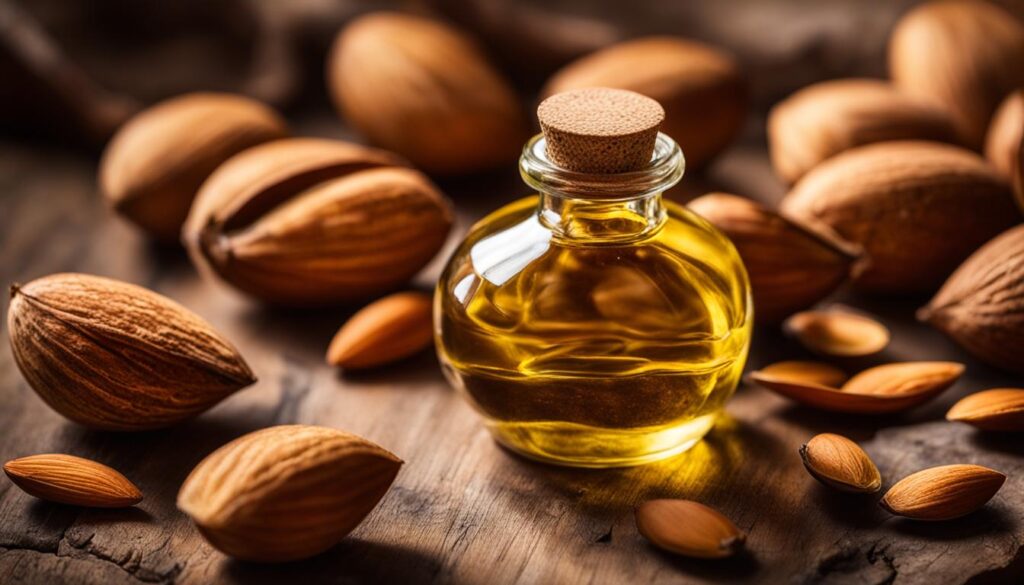
Sweet almond oil is popularly used in skincare products due to its moisturizing and soothing properties. It is extracted from edible almonds and is rich in essential fatty acids, vitamins, and minerals that nourish the skin. The high levels of vitamin E present in sweet almond oil make it an effective emollient that helps lock in moisture, keeping the skin hydrated and supple.
One of the benefits of sweet almond oil is its ability to replenish and protect the skin’s moisture barrier. It can be used as a natural remedy for dry, flaky skin, providing deep hydration and promoting a healthy complexion. Additionally, sweet almond oil has anti-inflammatory properties that can help soothe irritated or sensitive skin.
Bitter Almond Oil
On the other hand, bitter almond oil is primarily used for its fragrance rather than its skincare benefits. It is extracted from bitter almonds, which contain amygdalin—a compound that produces a characteristic almond scent. Bitter almond oil is commonly used in perfumes, soaps, and other cosmetic products to add a natural almond aroma.
It’s important to note that bitter almond oil should not be used directly on the skin or ingested without proper dilution or under the guidance of a trained professional. Bitter almonds contain a toxic substance called hydrogen cyanide, which can be harmful if not handled correctly.
In conclusion, sweet almond oil is the preferred choice for skincare purposes due to its moisturizing and nourishing properties. It can be used in various products, such as moisturizers, serums, or body oils, to promote healthy and radiant skin. Bitter almond oil, on the other hand, is primarily used for its fragrance and is not recommended for direct skin application. When incorporating almond oil into your skincare routine, opt for sweet almond oil to enjoy its numerous benefits.
Almond Oil and Exfoliation
When it comes to achieving a glowing complexion, exfoliation plays a crucial role. One effective method is using almond oil as an exfoliant. By combining finely ground almonds with almond oil, you can create a nourishing and invigorating scrub that not only helps in removing dead skin cells but also deeply moisturizes the skin.
The combination of almond oil and finely ground almonds provides a gentle yet effective exfoliation experience. As you massage the scrub onto your skin, the almond oil works to hydrate and replenish, leaving your skin feeling softer and smoother. This natural exfoliator is a great way to improve the texture of your skin and reveal a more youthful and radiant complexion.
If you’re looking for a ready-to-use option, consider trying the Almond & Honey Face Scrub. This product combines the power of almond oil and finely ground almonds with the nourishing properties of honey, providing a luxurious exfoliating experience. By incorporating this almond oil honey face scrub into your skincare routine, you can achieve the benefits of exfoliation while enjoying the moisturizing effects of almond oil.
FAQ
What are the benefits of almond oil for skin?
Almond oil is rich in vitamin E, monounsaturated fatty acids, proteins, potassium, and zinc, making it moisturizing, anti-inflammatory, and antioxidant. It can moisturize the skin, protect it from sun damage, improve texture, and slow down the signs of aging.
How can I use almond oil for my skin?
Almond oil can be applied all over the face and body to moisturize dry and flaky skin. It can also be used to protect and heal the skin from sun damage by applying it regularly. Almond oil can improve skin texture, scars, and striae. It can be used for anti-aging purposes due to its vitamin A content. However, it may not be suitable for oily and acne-prone skin types.
Can almond oil be used as a carrier oil?
Yes, almond oil is often used as a carrier oil in combination with essential oils for various purposes. It can help reduce the appearance of stretch marks and moisturize the skin for pregnant women. Almond oil is non-comedogenic, meaning it does not clog pores, making it suitable for overnight use to moisturize the skin. It can also be used as a pre-shower scalp treatment for hair growth and to ease dehydrated hair.
What is the difference between sweet and bitter almond oil?
Sweet almond oil is used as an emollient in skin care products and is known for its moisturizing and soothing properties. Bitter almond oil, on the other hand, is used as an essential oil and primarily for fragrance purposes in products. When it comes to skin benefits, it is sweet almond oil that is most commonly used and recommended.
Can almond oil be used for exfoliation?
Yes, almonds can be finely ground and combined with almond oil to create an exfoliating scrub. This combination helps to moisturize the skin while gently exfoliating its surface, revealing softer and smoother skin. This type of exfoliation can be beneficial for improving skin texture and achieving a more youthful complexion.


