
Greetings! In this article, I will share my expert insights on the topic of activated charcoal and its supposed health benefits. Activated charcoal has gained significant popularity in recent years as a health supplement and beauty ingredient. However, it is important to approach the claims surrounding activated charcoal with caution, as the scientific evidence supporting its benefits is limited.
While some people may believe that activated charcoal offers detoxification and improved digestive health, it is crucial to note that these claims are not strongly supported by scientific research. Activated charcoal primarily serves as a gastrointestinal decontaminant for medical emergencies, rather than a daily supplement or cosmetic ingredient.
While there may be individuals who experience positive effects from using activated charcoal, it is not a necessary addition to a healthy lifestyle and may not provide the health benefits it claims to offer.
Key Takeaways:
- Activated charcoal’s benefits are not strongly supported by scientific evidence.
- Medical experts primarily recommend activated charcoal for gastrointestinal decontamination during emergencies.
- The effectiveness of activated charcoal as a daily supplement or cosmetic ingredient is questionable.
- Consult with a healthcare professional before incorporating activated charcoal into your routine.
- Activated charcoal is not a necessary component of a healthy lifestyle.
What is Activated Charcoal?
Activated charcoal, also known as activated carbon, is a black powder made by heating carbon-rich materials like coconut shells or wood at high temperatures. This process creates tiny pores in the charcoal, increasing its surface area and enabling it to absorb substances it comes into contact with.
Historically, activated charcoal has been used in emergency medicine to treat drug overdoses and poisoning due to its ability to trap and bind toxins. It is often administered orally or through a tube, where it can bind to harmful substances in the gastrointestinal tract and prevent their absorption into the bloodstream. This makes activated charcoal an effective treatment for acute poisoning incidents.
Another common application of activated charcoal is in water filtration systems. The porous structure of the charcoal allows it to trap impurities and pollutants, providing clean and safe drinking water.
While activated charcoal has these well-established uses, its effectiveness in other areas, such as detoxification and skincare, is subject to debate and limited scientific evidence.
Production Process
The production process of activated charcoal involves several steps:
- Collection and preparation of carbon-rich materials: Coconut shells, wood, or other carbon-rich materials are collected and prepared for carbonization.
- Carbonization: The carbon-rich materials are heated at high temperatures without the presence of oxygen. This process drives off the volatile compounds and leaves behind carbonized materials.
- Activation: The carbonized materials are exposed to an activating agent, such as steam or chemicals, at high temperatures. This process creates pores in the charcoal, increasing its surface area and enhancing its adsorption capability.
- Washing and drying: The activated charcoal is washed and dried to remove any impurities and moisture.
- Size reduction: The activated charcoal may be mechanically processed to the desired particle size for different applications.
The resulting activated charcoal is a finely powdered substance with a high adsorption capacity, making it suitable for various practical uses.
The Limited Scientific Evidence
When it comes to activated charcoal, the scientific evidence supporting its popular uses is limited. While there have been studies suggesting potential benefits, many of these studies are small in scale and lack the robustness needed to validate the claims surrounding activated charcoal’s health benefits. As such, it is important to approach the topic with caution and skepticism until more high-quality research can provide more conclusive evidence.
One of the key limitations of activated charcoal studies is the variability in its effectiveness. Factors such as the dosage, timing of consumption, and individual differences can all play a role in determining its efficacy. This makes it challenging to draw definitive conclusions about the overall effectiveness of activated charcoal across different scenarios.
Despite the limited scientific evidence, it’s important to note that some individuals may still experience positive effects from using activated charcoal. However, it is crucial to understand that these anecdotal experiences do not replace the need for rigorous scientific research.
Scientific Research on Activated Charcoal
While there is still a lack of comprehensive scientific evidence on activated charcoal, some areas have been explored to a certain extent. Here are a few key findings from the existing research:
- In a study published in the Journal of Oral Rehabilitation, researchers investigated the effects of activated charcoal toothpaste on tooth staining. The study found that the toothpaste had a significant whitening effect, suggesting its potential as a cosmetic dental product.
- A study published in the Journal of Clinical Toxicology examined the use of activated charcoal in pesticide poisoning cases. The research indicated that activated charcoal can be effective in reducing absorption of toxic substances in such situations.
- Another study published in the Journal of Burn Care & Research explored the use of activated charcoal dressings in burn wound management. The research suggested that activated charcoal dressings can help promote wound healing by absorbing and neutralizing toxins.
While these studies highlight potential benefits, they are limited in scope, and more extensive research is needed to confirm and expand upon these findings.
The Need for Further Investigation
To gain a more comprehensive understanding of activated charcoal’s potential benefits and limitations, further scientific research is necessary. Large-scale studies with diverse populations and controlled conditions would help provide more meaningful insights into activated charcoal’s effectiveness.
Additionally, conducting research that explores various applications of activated charcoal, such as its use in skincare or digestive health, would help address unanswered questions and provide a clearer picture of its potential benefits or limitations in these specific areas.
It is crucial to acknowledge the current limitations of activated charcoal studies and remain open to future scientific developments that may shed new light on its applications and effectiveness. Until then, it is advisable to approach claims about activated charcoal’s health benefits with caution and consider consulting with healthcare professionals before incorporating it into your wellness routine.
The Potential Downsides
While activated charcoal is generally considered safe when used in small doses, it is important to be aware of the potential drawbacks and risks associated with its use. Here are some important points to consider:
Interference with Medication and Nutrient Absorption
Activated charcoal has the ability to bind to medications and nutrients in the digestive system, reducing their absorption and effectiveness. This can be problematic, especially for individuals who rely on certain medications for their health.
In addition, activated charcoal can also interfere with the absorption of essential vitamins and minerals from food, potentially leading to nutrient deficiencies over time.
Gastrointestinal Side Effects
Long-term and high-dose use of activated charcoal may cause gastrointestinal side effects such as constipation or blockages. This is especially true when activated charcoal is not accompanied by adequate fluid intake.
Consultation with a Healthcare Professional
Before incorporating activated charcoal into your routine, it is important to consult with a healthcare professional, especially if you are taking medications or have any underlying medical conditions. They can provide personalized guidance and help you determine the potential risks and benefits based on your specific situation.
Remember, activated charcoal should not be seen as a magical solution and its use should be approached with caution. It is always best to prioritize a well-balanced and nutritious diet as the foundation of a healthy lifestyle.

Activated Charcoal for Specific Uses
While the scientific evidence for many popular uses of activated charcoal is limited, some people still find certain applications beneficial.
- Activated charcoal for teeth: Activated charcoal is often used in toothpaste and oral care products to remove stains and improve oral hygiene.
- Activated charcoal for skin: It is also used in skincare products to absorb excess oil and impurities from the skin.
- Activated charcoal for digestion: Some individuals use activated charcoal for digestive health, claiming that it helps reduce bloating and gas.
While individual experiences may vary, it is important to note that these uses are not backed by substantial scientific evidence.
The Realities of Detoxes
The concept of detoxification is popular, but the idea that activated charcoal is necessary for detoxing the body is a myth.
The human body has its own natural detoxification systems, such as the liver and kidneys, which effectively eliminate toxins.

Consuming activated charcoal as part of a detox regimen may not provide any additional benefits and can potentially interfere with the body’s natural detoxification processes.
It is always best to focus on maintaining a balanced and nutritious diet, staying hydrated, and supporting the body’s natural detoxification mechanisms.
Eating Activated Charcoal
While it is possible to consume activated charcoal in small amounts, there are potential risks involved. Activated charcoal can bind not only to toxins but also to vitamins, minerals, and medications, potentially interfering with nutrient absorption and medication effectiveness. While some people enjoy incorporating activated charcoal into their meals, it is important to be cautious and consider the potential effects on overall nutrition and health. It is recommended to consult with a healthcare professional before regularly consuming activated charcoal or incorporating it into your diet.
Potential Benefits of Activated Charcoal
While the scientific evidence for many benefits of activated charcoal is limited, some potential benefits have been suggested. Activated charcoal may help in teeth whitening by absorbing stains and bacteria from the teeth and gums. It has also been used in wound dressings to draw out toxins and promote wound healing.
However, it is important to note that these uses are not universally supported by strong scientific evidence, and individual experiences may vary. It is always best to approach any health-related claims with caution and consider consulting with a healthcare professional.
| Potential Benefits | Evidence Level |
|---|---|
| Teeth Whitening | Limited scientific evidence suggests activated charcoal may help remove stains and bacteria from teeth and gums. |
| Wound Healing | Some studies indicate that activated charcoal in wound dressings can draw out toxins and support the healing process. |
Activated Charcoal Side Effects and Dosage
While activated charcoal can provide certain benefits, it is important to be aware of potential side effects and understand the appropriate dosage for safe use.
Side Effects of Activated Charcoal
When consumed in small amounts for a short period, activated charcoal is generally well-tolerated with minimal side effects. However, long-term and high-dose use can lead to several adverse reactions:
- Constipation: Activated charcoal can slow down bowel movements, resulting in constipation in some individuals.
- Vomiting: In rare cases, activated charcoal may cause nausea and vomiting as a side effect.
- Gastrointestinal Blockages: Excessive consumption of activated charcoal can potentially cause blockages in the digestive system, leading to abdominal pain and discomfort.
It is important to note that these side effects are more commonly associated with high-dose and prolonged use of activated charcoal. When used correctly and in moderation, side effects are usually minimal.
Activated Charcoal Dosage
The dosage of activated charcoal varies depending on the intended use and should be determined by a healthcare professional. Depending on the situation, the recommended dosage may differ:
- In cases of acute poisoning or drug overdose, a higher dose may be administered in a medical setting to help absorb the harmful substances.
- For general detoxification or digestive health support, a lower dose may be recommended for daily use.
It is crucial to follow the recommended dosage and consult a healthcare professional before using activated charcoal, especially if you are taking medications or have any underlying health conditions. They can provide personalized guidance based on your specific needs and help mitigate any potential risks or interactions.
Remember, activated charcoal should not be used as a substitute for medical treatment. If you believe you have ingested a harmful substance or experience severe symptoms, seek immediate medical attention.
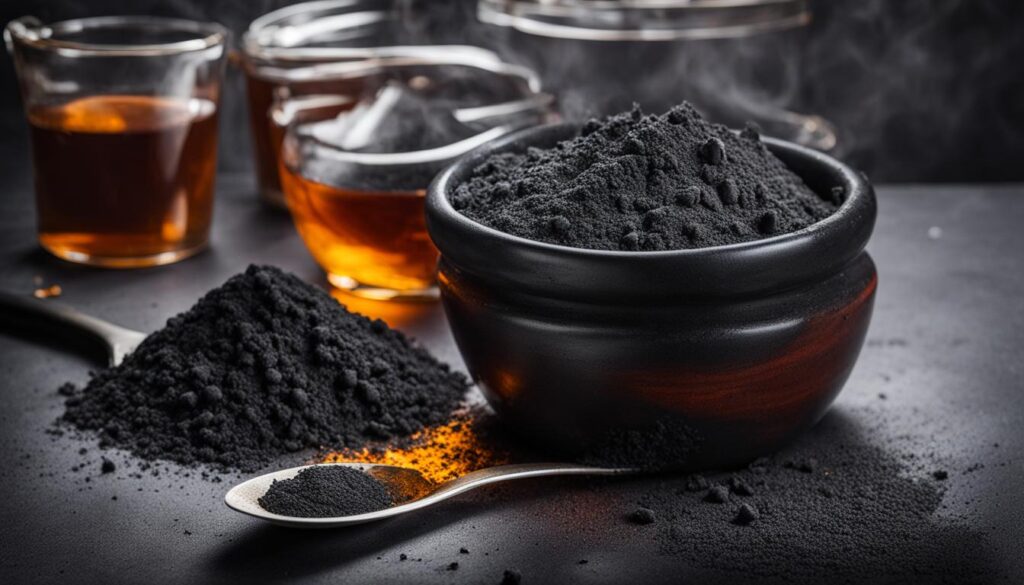
Is Activated Coconut Charcoal the Same?
Activated coconut charcoal is a variation of activated charcoal that is specifically derived from coconut shells. While both substances share detoxifying properties and are utilized for similar purposes, they are not identical. Activated coconut charcoal is capable of offering the same benefits as regular activated charcoal, such as toxin absorption and wound healing. However, it’s crucial to note that the scientific evidence supporting these claims is limited. Therefore, when it comes to activated coconut charcoal, it’s advisable to approach it with critical thinking and consult a healthcare professional before incorporating it into your routine.
To better understand the differences between activated charcoal and activated coconut charcoal, let’s take a closer look at their production processes:
| Activated Charcoal | Activated Coconut Charcoal |
|---|---|
|
|
While the production process differs slightly, the fundamental properties and potential benefits of both activated charcoal and activated coconut charcoal remain comparable.
The Benefits of Activated Coconut Charcoal
Activated coconut charcoal, much like activated charcoal, may provide several potential benefits:
“Activated coconut charcoal has detoxifying properties and can aid in toxin absorption.”
However, it’s important to emphasize that substantial scientific evidence supporting the specific benefits of activated coconut charcoal is limited. Individual experiences may vary, and it’s important to exercise caution before using it. Consulting with a healthcare professional can help ensure the safest and most appropriate use of activated coconut charcoal.
Conclusion
In conclusion, the widespread belief in the health benefits of activated charcoal is not firmly supported by scientific evidence. While activated charcoal has become popular as a dietary supplement and skincare ingredient, the claims surrounding its detoxification properties and other supposed benefits lack substantial backing. The limited research available suggests that activated charcoal primarily functions as a gastrointestinal decontaminant in emergency situations, rather than providing significant everyday health advantages.
While some individuals may experience positive effects from using activated charcoal, it is not an essential addition to a healthy lifestyle. It is crucial to approach its use with caution and consult with a healthcare professional before incorporating activated charcoal into your routine, especially if you are taking medications or have any pre-existing medical conditions. Its potential drawbacks, such as interfering with nutrient absorption and medication effectiveness, should not be overlooked.
In summary, while activated charcoal may have certain limited applications, such as teeth whitening or wound healing, the scientific support for its widespread benefits is lacking. Therefore, it is prudent to rely on scientifically established methods and consult with healthcare professionals for personalized health recommendations. It is always important to prioritize evidence-based interventions and consider the potential risks and limitations associated with the use of activated charcoal or any other alternative health products.
FAQ
Is activated charcoal a proven health supplement?
The benefits of activated charcoal as a health supplement are not strongly supported by scientific evidence. While some people may experience positive effects, it is not a necessary addition to a healthy lifestyle.
What is activated charcoal?
Activated charcoal, also known as activated carbon, is a black powder made by heating carbon-rich materials like coconut shells or wood at high temperatures. This process creates tiny pores in the charcoal, increasing its surface area and enabling it to absorb substances it comes into contact with.
Is there scientific evidence to support the popular uses of activated charcoal?
The scientific evidence supporting the popular uses of activated charcoal, such as detoxification and improved digestive health, is limited. More high-quality research is needed to validate these claims.
Are there any potential downsides to using activated charcoal?
Yes, there are potential risks and downsides to using activated charcoal. It can interfere with the absorption of medications and nutrients, and long-term and high-dose use may cause gastrointestinal side effects.
What are some specific uses of activated charcoal?
Activated charcoal is often used in toothpaste for teeth whitening, in skincare products for absorbing excess oil, and some people use it for improved digestion.
Is activated charcoal necessary for detoxing the body?
No, the concept of using activated charcoal for detoxification is a myth. The human body has its own natural detoxification systems, and consuming activated charcoal may not provide any additional benefits.
Can activated charcoal be safely consumed?
While activated charcoal is generally safe when consumed in small amounts for a short period, there are potential risks involved. It can interfere with nutrient absorption and medication effectiveness.
Are there any potential benefits of using activated charcoal?
Some potential benefits of activated charcoal include teeth whitening and wound healing, although the scientific evidence supporting these claims is limited.
What are the side effects of activated charcoal, and how much should be taken?
Side effects of activated charcoal can include constipation, vomiting, and gastrointestinal blockages. The dosage should be determined by a healthcare professional.
Is activated coconut charcoal the same as regular activated charcoal?
Activated coconut charcoal is similar to regular activated charcoal but is specifically made from coconut shells. They have similar properties but may offer slightly different benefits.
Source Links
- https://www.consumerreports.org/dietary-supplements/activated-charcoal-fad-not-a-magic-health-bullet/
- https://www.hollandandbarrett.com/the-health-hub/vitamins-and-supplements/supplements/charcoal-supplements/5-reasons-using-activated-charcoal/
- https://health.usnews.com/health-news/blogs/eat-run/articles/what-does-activated-charcoal-do


